
Ressources
Explorez une large gamme de ressources sur le GCED afin d’approfondir votre compréhension et de renforcer vos activités de recherche, de plaidoyer, d’enseignement et d’apprentissage.
1,983 résultats trouvés
 Securitisation, Counterterrorism and the Silencing of Dissent: The Educational Implications of Prevent Année de publication: 2016 Auteur: Aislinn O'Donnell Auteur institutionnel: Society for Educational Studies | Taylor & Francis This paper outlines some of the implications of counterterrorist legislation, including Prevent, for the pedagogical relationship and for educational institutions. The concept of ‘radicalization’, central to the Prevent Strategy, is one that is contested in the field of counterterrorism, yet educators are now expected to identify and refer students ‘at risk of radicalization’. Based on the experience of teaching IRA and INLA prisoners in the Republic of Ireland, the author outlines a set of philosophical and ethical principles that ought to underpin education. It is argued that education must not be subordinated to security and intelligence agendas on pragmatic, educational and ethical grounds. Securitisation, Counterterrorism and the Silencing of Dissent: The Educational Implications of Prevent Année de publication: 2016 Auteur: Aislinn O'Donnell Auteur institutionnel: Society for Educational Studies | Taylor & Francis Le présent document décrit quelques impacts de la législation antiterroriste, y compris la prévention, sur l’approche pédagogique et les établissements d'enseignement. Le concept de « radicalisation » qui figure au cœur de la stratégie « Prévenir » est contesté dans le domaine de la lutte contre le terrorisme. Toutefois, les éducateurs sont maintenant en mesure d'identifier et d’orienter les élèves « en voie de radicalisation ». Sur la base de l'expérience de l'enseignement dispensé aux prisonniers de l'IRA et de l'INLA dans la République d'Irlande, l'auteur décrit un ensemble de principes philosophiques et éthiques qui devraient soutenir l'éducation. On fait valoir l’idée que l'éducation ne doit pas être subordonnée aux questions de sécurité et de renseignement pour des raisons pragmatiques, éducatives et éthiques.
  What Makes a Quality Curriculum?: In-Progress Reflection No.2 on Current and Critical Issues in Curriculum and Learning Année de publication: 2016 Auteur: Philip Stabback Auteur institutionnel: UNESCO International Bureau of Education (IBE) Sustainable Development Goal Four has to do with education in the post-2015 development agenda. It aims to “ensure inclusive and equitable quality education and promote lifelong learning opportunities for all”.Given the essential role of curriculum in enabling quality learning and in articulating and supporting education that is relevant to holistic development, our purpose in this paper is to identify what makes a quality curriculum, so as to support curricular innovation in UNESCO Member States to the end of the realization of Sustainable Development Goal Four.In this we are assuming that curriculum, given its essential role in the provision of quality learning for all children and young people, and in articulating and supporting education that is relevant to holistic development, is critical in the realization of SDG 4. It is the curriculum that determines to a large extent whether education is inclusive, thus playing a significant role in ensuring that provision is equitable. It is the curriculum that provides the structure for the provision of quality learning, especially where teachers might be under-qualified and inexperienced, their classrooms under-resourced, and their students lacking the prior frameworks within which to situate their learning. And it is the curriculum that articulates both the competencies necessary for lifelong learning and the competencies needed for holistic development.We thus argue that curriculum lies at the crossroads of these four key aspects of SDG 4: that education should be (1) inclusive and equitable, (2) characterized by quality learning, (3) promoting lifelong learning, and (4) relevant to holistic development. Curriculum, in other words, provides the bridge between education and development – and it is the competencies associated with lifelong learning and aligned with development needs, in the broadest, holistic sense of the term, that span that bridge.
  Global Security, Religion and Education Development: a Crisis for the Field of Comparative Education? Année de publication: 2011 Auteur: Yusuf Sayed | Lynn Davies | Mike Hardy | Abbas Madandar Arani | Lida Kakia | Masooda Bano Auteur institutionnel: Taylor & Francis Building common ground on shared values should be a high priority for a diverse and devout society in an era of religious conflict. Otherwise we might fall into the equally false and far more dangerous illusion that we agree on nothing at all – and perhaps we tend to assume that education helps to do this, which is not necessarily the case. There is a greater concern that education is not just failing to step up effectively to the task of contesting undifferentiated and negative views of religions, but that it might not always be a force for good at all. It may in some cases help reinforce difference and create the conditions for conflict.The relationship, therefore, between religious difference, security and the assumed supportive role of education is far from a simple one. Global security, religion and education development: a crisis for the field of comparative education? Année de publication: 2011 Auteur: Yusuf Sayed | Lynn Davies | Mike Hardy | Abbas Madandar Arani | Lida Kakia | Masooda Bano Auteur institutionnel: Taylor & Francis Partager des valeurs communes devrait être une priorité absolue dans une société diversifiée et dévote en cette période de conflits religieux. Autrement, on pourrait tomber dans l’illusion, fausse et dangereuse, que nous sommes d’accord en rien - et on pense, probablement que l'éducation contribue à cet état de choses, alors que ce n’est pas forcément le cas. On est de plus en plus préoccupé par la question suivante : celle de considérer que non seulement l'éducation échoue quand il s’agit de contester d’une manière solide et efficace les points de vues non nuancés et négatifs en matière de religions, mais aussi que l’éducation n’est finalement pas une bonne chose. Dans certains cas, elle peut contribuer à renforcer la différence et créer les conditions d'un conflit. La relation, donc, entre la différence religieuse, la sécurité et le rôle présumé de soutien de l'éducation est loin d'être simple.
 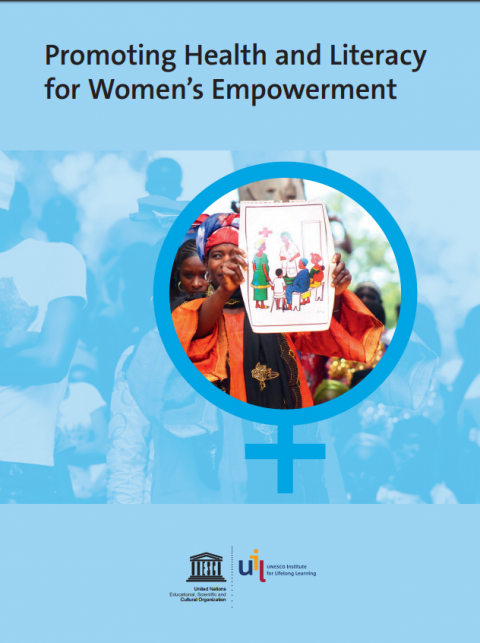 Promoting health and literacy for women's empowerment Année de publication: 2016 Auteur: Anna Robinson-Pant This publication is the third in a series of research studies focused on literacy and women’s empowerment. Its aim is to contribute to the development of crosssectoral approaches to the provision of adult literacy, education and training, traversing policy on education, family, integration, citizenship, health, social welfare and public finance. This paper uses a number of specific examples to show how literacy programmes for young people and adults, with a particular focus on young and adult women, can contribute to the achievement of the Sustainable Development Goals. Autonomiser les femmes par la promotion de la santé et de l'alphabétisme Année de publication: 2016 Auteur: Anna Robinson-Pant This publication is the third in a series of research studies focused on literacy and women’s empowerment. Its aim is to contribute to the development of crosssectoral approaches to the provision of adult literacy, education and training, traversing policy on education, family, integration, citizenship, health, social welfare and public finance. This paper uses a number of specific examples to show how literacy programmes for young people and adults, with a particular focus on young and adult women, can contribute to the achievement of the Sustainable Development Goals.
 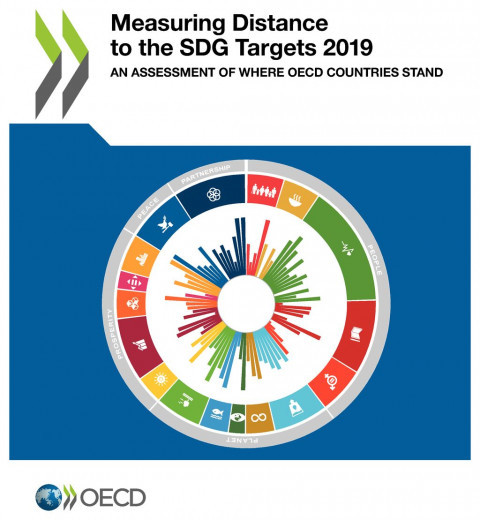 Measuring Distance to the SDG Targets 2019 - An Assessment of Where OECD Countries Stand Année de publication: 2019 Auteur institutionnel: Organisation for Economic Co-operation and Development (OECD) The Sustainable Development Goals (SDGs) set a broad and ambitious programme for the world to achieve by 2030. With 17 Goals, underpinned by 169 Targets, the complex and integrated nature of the 2030 Agenda presents national governments with huge challenges for implementation. To assist countries, the OECD has developed a unique methodology allowing comparison of progress across SDG goals and targets. Based on the UN Global List of 244 indicators, this study evaluates the distance that OECD countries need to travel to meet SDG targets for which data is currently available. This 2019 edition of the study presents the latest results for OECD countries, both on average and individually, as well as new exploratory approaches to assessing progress over time and transboundary aspects of the SDGs. By providing a high-level overview of countries’ strengths and weaknesses in performance across the SDGs, this study aims to support member countries in navigating the SDGs and in setting their own priorities for action within the broad 2030 Agenda.
  HARNESSING THE POWER OF DATA FOR GENDER EQUALITY: Introducing the 2019 EM2030 SDG Gender Index Année de publication: 2019 Auteur institutionnel: Equal Measures 2030 In the 2019 Global Report “Harnessing the power of data for gender equality: Introducing the 2019 EM2030 SDG Gender Index”, the Equal Measures 2030 (EM2030) introduces the 2019 SDG Gender Index. The index is a comprehensive tool available to explore the state of gender equality across 129 countries (covering 95% of the world’s girls and women), 14 of the 17 Sustainable Development Goals (SDGs), and 51 targets linked to issues inherent in the SDGs. The 2019 SDG Gender Index finds that, with just 11 years to go until 2030, nearly 40% of the world’s girls and women – 1.4 billion – live in countries failing on gender equality. Another 1.4 billion live in countries that “barely pass”. Even the highest-scoring countries have more to do, particularly on complex issues such as climate change, gender budgeting and public services, equal representation in powerful positions, gender pay gaps, and gender-based violence. No country in the world has reached the “last mile” on gender equality. 2019 Global Report overview: Section 1: A foreword from Equal Measures 2030’s partners: The African Women’s Development and Communication Network (FEMNET), The Asian-Pacific Resource & Research Centre for Women (ARROW), Bill & Melinda Gates Foundation, the Committee for Latin America and the Caribbean for the Defense of Women’s Rights (CLADEM), Data2X, International Women’s Health Coalition (IWHC), KPMG, ONE Campaign, Plan International, Women Deliver. Section 2: Key findings from the 2019 SDG Gender Index. Section 3: Introducing the 2019 SDG Gender Index, the approach, what makes this index unique and how the findings should be interpreted. Section 4: Key global findings, patterns and comparisons of index scores between and within the different regions: Asia and the Pacific, Europe and North America, Latin America and the Caribbean, the Middle East and North Africa, Sub-Saharan Africa. Section 5: Regional overviews of index scores and gender equality context, and thematic deep drives on 1) inequalities in girls’ education, 2) women in science and technology research positions, 3) girls’ and women’s physical safety, 4) legal barriers for women, 5) women in government. Section 6: Leaving no one behind: multiple and intersecting forms of discrimination of girls and women. Section 7: Recommendations for action.
  Trends Shaping Education 2019 Année de publication: 2019 Auteur institutionnel: Organisation for Economic Co-operation and Development (OECD) This book, published every two to three years, is designed to give policy makers, researchers, educational leaders, administrators and teachers a robust, non-specialist source to inform strategic thinking and stimulate reflection on the challenges facing education, whether in schools, universities or programmes for older adults. Trends Shaping Education 2019 is designed to support long-term strategic thinking in education. It provides an overview of key economic, social, demographic and technological trends and raises pertinent questions about their impact on education. This book fills an important need: decision makers and practitioners in education often have only anecdotal or local information on the megatrends that play out in their context; too often they do not have solid facts in front of them, especially about trends.`