
Ressources
Explorez une large gamme de ressources sur le GCED afin d’approfondir votre compréhension et de renforcer vos activités de recherche, de plaidoyer, d’enseignement et d’apprentissage.
948 résultats trouvés
 تطوير سياسات التعليم والتدريب لتعليم الكبار من أجل تنمية مستدامة: دراسة حالة دولة الكويت Année de publication: 2017 Auteur: Sabika Hussain Bursli Auteur institutionnel: Tanta University في هذه المقالة ، يعرض المؤلف حالة الكويت فيما يتعلق بتعليم الكبار. يحلل المقال السياسات الكويتية الحالية المتعلقة بتعليم الكبار في ضوء متطلبات التنمية المستدامة.
 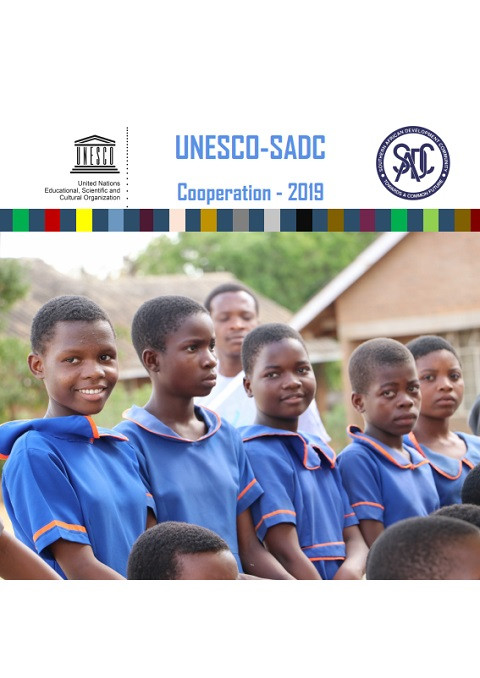 UNESCO-SADC: Cooperation 2019 Année de publication: 2020 Auteur institutionnel: UNESCO Harare UNESCO and SADC have a long standing history that culminated in the signing of a Memorandum of Understanding (MOU) in 1996. In 2017, UNESCO and SADC developed a Joint Programme of Action (JPA) which identifies concrete area of cooperation. These include education; technical and vocational education and training (TVET); youth; HIV and health education; science, technology and innovation (STI); water security, renewable energy and disaster risk management; culture; communication and information (including media for SDGs); and data for development.The purpose of this magazine is to highlight UNESCO’ work to improve education quality in the southern Africa region in partnership with SADC.
 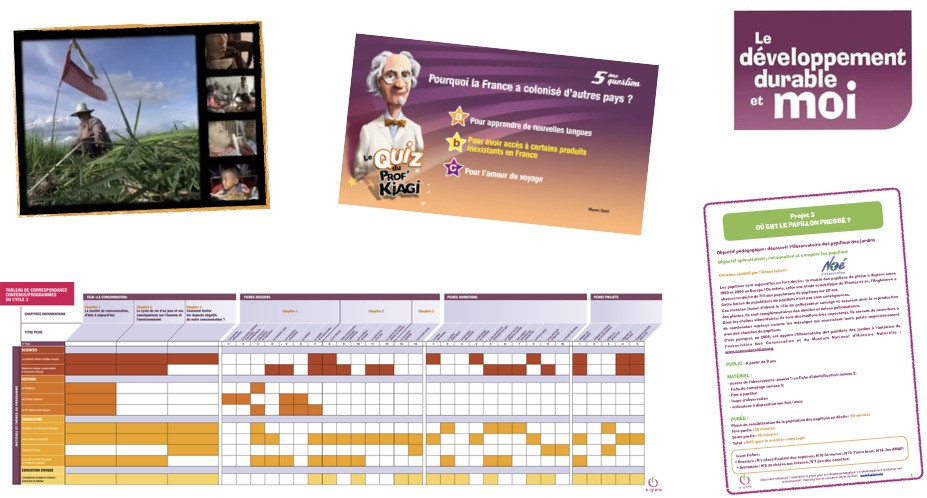 Le développement durable et moi Année de publication: 2010 Auteur institutionnel: E-graine Les mallettes pédagogiques constituent un des supports historiques d’e-graine dans sa batterie d’outils pédagogiques. Destinées en premier lieu aux enseignants dans les années 2010, elles ont été pensées comme des outils clés en mains pour éduquer au développement durable et à la solidarité internationale. A l’aide d’un tableau de correspondance pédagogique fourni avec la mallette, un enseignant pouvait, dans les différentes disciplines, intégrer facilement ces vidéos à ses cours. Le dispositif était idéal pour appuyer les écoles ne disposant pas toujours des moyens financiers permettant de faire appel à des animateurs spécialisés. Il était également possible pour le grand public de se procurer ces mallettes pour une utilisation dans le cadre familial.Pour toucher le plus grand nombre et parcequ’elle modernise ses outils pour rester à la pointe de l’innovation pédagogique, e-graine fait le choix de les proposer gratuitement en ligne pour le plus grand nombre. Le contenu que vous trouverez ci-dessous en vidéo demeure évidemment une bonne base d’initiation pour une cible 8-12 ans. Teaching kits are one of e-graine's long-standing educational tools. First designed for teachers in the 2010s, they were conceived as turnkey tools for teaching sustainable development and international solidarity. Using a pedagogical correspondence table supplied with the kit, teachers could easily integrate the videos into their lessons in any subject. The system was ideal for supporting schools that don't always have the financial resources to hire specialized animators. It was also possible for the general public to purchase the kits for use in the home. In order to reach as many people as possible, and because it is constantly updating its tools to remain at the cutting edge of educational innovation, e-graine has decided to make them available free of charge online. The video content you'll find below is obviously a good introduction for 8-12 year-olds.
  Low-tech en rénovation énergetique: les podcasts Auteur: Anna Chavepayre | Alexandre Pointet | Christine Lecerf | Patrice Brière | Ivan Fouquet | Vania Dormoy | Milena Karanesheva | Clotilde Auteur institutionnel: Profeel Des praticiens, maîtres d’ouvrage, maîtres d’œuvre et entreprises racontent : faire de la rénovation, c’est déjà une démarche low-tech qui prend en compte l’énergie grise, l’économie des ressources. Ils font du low-tech pour la transition climatique, pour le plaisir d’une utilisation simple et robuste, pour inventer des choses en partant du déjà-là, du paysage. C’est la marche de l’histoire. Practitioners, owners, project managers and contractors tell us that renovation is already a low-tech approach that takes into account grey energy and resource conservation. They do low-tech for the climate transition, for the pleasure of simple, robust use, to invent things based on what's already there, on the landscape. It's the march of history.
  Mapping Cultural Policies in Small Island Developing States: Amplifying SIDS Voices in the Global Policy Dialogue on Culture and Sustainable Development Année de publication: 2025 Auteur institutionnel: UNESCO Mapping Cultural Policies in Small Island Developing StatesSpanning three sub-regions – the Atlantic, Indian Ocean and South China Sea (AIS), the Caribbean, and the Pacific – the Small Island Developing States (SIDS) represent 39 UNESCO Member States and 9 Associate Members. Countries and regional organizations have increasingly demonstrated their commitment in the context of fast-evolving policy landscape and cultural ecosystems, encompassing the different dimensions of culture through its diversity and a wide spectrum of concerned stakeholders. Today, a SIDS-specific, culture-led development vision is on the rise.Culture has a multifaceted impact on sustainable development pathways of the SIDS, from climate action, biodiversity protection and food security to economic diversification, social inclusion, gender equality or urban sustainability. The voices and aspirations of SIDS must be heard in the global policy dialogue, in acknowledgement of their priorities, opportunities and insights. International cooperation efforts by UNESCO and other organizations are also essential in identifying areas for future policy investment and adaptation at the national and regional levels.Following the UNESCO World Conference on Cultural Policies and Sustainable Development – MONDIACULT 2022, SIDS are championing culture for sustainable development towards the adoption of a new Programme of Action, the Antigua and Barbuda Agenda for SIDS 2024-2034. Cartographie des politiques culturelles dans les Petits États Insulaires en développement : faire émerger la voix des PEID dans le dialogue politique mondial sur la culture et le développement durable Année de publication: 2025 Auteur institutionnel: UNESCO Cartographie des politiques culturelles dans les Petits États insulaires en développement Répartis dans trois sous-régions - l’Atlantique, l’océan Indien et la mer de Chine méridionale (AIS), les Caraïbes et le Pacifique - les petits États insulaires en développement (PEID) représentent 39 États membres de et 9 membres associés de l’UNESCO. Les pays et les organisations régionales ont progressivement démontré leur engagement dans un paysage politique et des écosystèmes culturels en évolution rapide, englobant les différentes dimensions de la culture, à travers sa diversité et son large éventail de parties prenantes. Aujourd’hui, une vision du développement spécifique aux PEID et axée sur la culture est en plein essor. La culture a un impact multiforme sur les voies du développement durable des PEID - qu’il s’agisse de la lutte contre le changement climatique, de la protection de la biodiversité, de la sécurité alimentaire, de la diversification économique, de l’inclusion sociale, de l’égalité entre les genres ou de la durabilité urbaine. Leurs voix et leurs aspirations doivent être entendues dans le dialogue politique mondial, en reconnaissance de leurs priorités, de leurs opportunités et de leurs idées innovantes. Les efforts de coopération internationale portés par l’UNESCO et d’autres organisations sont également essentiels pour identifier les domaines d’investissement et d’adaptation des politiques futures aux niveaux national et régional. Dans la continuité de la Conférence mondiale de l’UNESCO sur les politiques culturelles et le développement durable - MONDIACULT 2022, les PEID œuvrent en faveur de la culture pour le développement durable en vue de l’adoption d’un nouveau programme d’action, l’Agenda d’Antigua-et-Barbuda pour les PEID 2024-2034. Cartografía de las políticas culturales en los Pequeños Estados Insulares en desarrollo: amplificando las voces de los PEID en el diálogo mundial en materia de políticas sobre cultura y desarrollo sostenible Année de publication: 2025 Auteur institutionnel: Organización de las Naciones Unidas para la Educación, la Ciencia y la Cultura (UNESCO) Cartografía de las políticas culturales en los Pequeños Estados Insulares en Desarrollo Abarcando tres subregiones – el Atlántico, el océano Índico y el mar de China meridional, el Caribe y el Pacífico – los Pequeños Estados Insulares en Desarrollo (PEID) representan 39 Estados miembros de la UNESCO y 9 Miembros Asociados. Los países y las organizaciones regionales han demostrado cada vez más su compromiso en el contexto de un panorama de políticas y unos ecosistemas culturales en rápida evolución, que abarcan las distintas dimensiones de la cultura a través de su diversidad y de un amplio espectro de partes interesadas. Actualmente, está en auge la visión del desarrollo específica para los PEID, basada en la cultura. La cultura tiene un impacto multidimensional en las vías de desarrollo sostenible de los PEID, desde la acción por el clima, la protección de la diversidad biológica y la seguridad alimentaria hasta la diversificación económica, la inclusión social, la igualdad de género o la sostenibilidad urbana. En el diálogo mundial en materia de políticas deben escucharse las voces y aspiraciones de los PEID, en reconocimiento de sus prioridades, oportunidades y puntos de vista. Las iniciativas de cooperación internacional de la UNESCO y otras organizaciones también son esenciales para determinar los ámbitos de inversión y adaptación de las políticas futuras a escala nacional y regional. Tras la Conferencia Mundial de la UNESCO sobre Políticas Culturales y el Desarrollo Sostenible – MONDIACULT 2022, los PEID defienden la cultura para el desarrollo sostenible con vistas a la adopción de un nuevo Programa de Acción, la Agenda de Antigua y Barbuda para los PEID 2024-2034
  World Social Report 2023 : Leaving No One Behind in an Ageing World Année de publication: 2023 Auteur institutionnel: UN. Department of Economic and Social Affairs (UN. DESA) Population ageing is a defining global trend of our time. People are living longer, and more are older than ever before. Spectacular improvements in health and survival and reductions in fertility have driven this momentous shift, which has begun or is expected to begin soon in all countries and areas. This change brings both challenges and opportunities as countries strive to achieve the Sustainable Development Goals (SDGs). In 2022, the world marked the twentieth anniversary of the adoption of the Madrid International Plan of Action on Ageing. To commemorate this landmark, the World Social Report 2023 explores the economic and social implications of the ageing of the human population. It builds on the Plan of Action’s framework for national policies to create equitable, inclusive societies for people of all ages, providing recommendations to put the rights and well-being of older persons at the centre, across the life course. Population ageing is an inevitable result of the demographic transition towards longer lives and smaller families. While the shift towards older populations is largely irreversible, collective actions and policy decisions shape its path and consequences. Postponing critical measures that allow societies to benefit from and adapt to population ageing would impose high social, economic, fiscal and health-related costs, for both current and future generations. By contrast, with appropriate foresight and planning, Governments can manage the challenges from population ageing while enhancing opportunities for all people to thrive and ensuring that no one is left behind. As elaborated in this report, population ageing needs to be widely understood as more than just a set of discrete concerns mainly for one group of people who have advanced beyond a given age. Ageing touches all parts of economies and societies, from health care and education to employment and taxation. Each stage of life can contribute to or detract from well-being at older ages.
  The Sustainable Development Goals Report 2017 Année de publication: 2017 Auteur institutionnel: United Nations (UN) In adopting the 2030 Agenda for Sustainable Development, world leaders resolved to free humanity from poverty, secure a healthy planet for future generations, and build peaceful, inclusive societies as a foundation for ensuring lives of dignity for all.This report provides a snapshot of our efforts to date. It stresses that high-level political leadership and new partnerships will be essential for sustaining momentum. It also underscores the need for reliable, timely, accessible and disaggregated data to measure progress, inform decision-making and ensure that everyone is counted.
  Faith for Earth : a Call for Action Année de publication: 2020 Auteur institutionnel: United Nations Environment Programme (UNEP) | Inter-Agency Network on Women and Gender Equality (IANWGE) The UN Environment Programme (UNEP) and the Parliament of the World’s Religions today released a new book, "Faith for Earth — A Call for Action", which gives readers a wide-ranging look at the history and diversity of faith teachings and their advocacy for the protection of the environment. The online book and its print edition were launched on 8 October 2020 during the Faith for Nature Global Conference, (5th - 8th October) in Skálhol, Iceland. The book provides a comprehensive overview of the faith traditions and scientific findings that underpin the understandings and reflections of world religions concerning environmental sustainability. It includes clear statements from sacred scripts and faith leaders. It underlines that protecting the Earth, restoring ecosystems, preventing pollution, and leaving behind a healthy environment for the next generations is an ethical, moral and spiritual responsibility. With more than one hundred million houses of worship around the globe, adapting green building principles is a massive demonstration of commitment to sustainability.