
Ressources
Explorez une large gamme de ressources sur le GCED afin d’approfondir votre compréhension et de renforcer vos activités de recherche, de plaidoyer, d’enseignement et d’apprentissage.
980 résultats trouvés
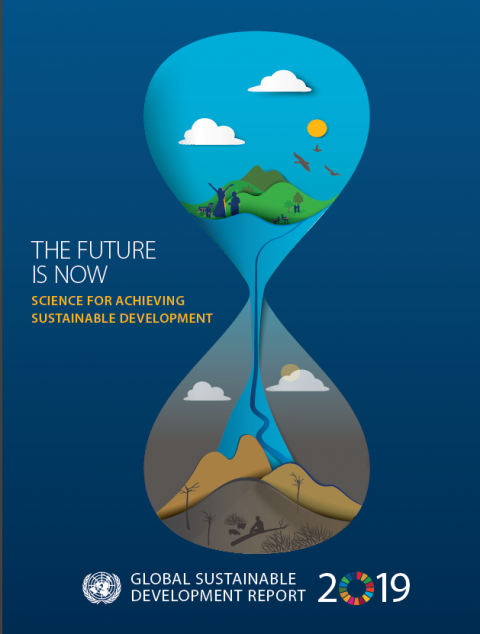 Global Sustainable Development Report 2019: The Future is Now Année de publication: 2019 Auteur institutionnel: United Nations (UN) The Report, requested by all countries to evaluate progress on the 2030 Sustainable Development Agenda, is the first of its kind since the landmark Sustainable Development Goals (SDGs) were adopted four years ago. Entitled “The Future is Now: Science for Achieving Sustainable Development,” the report finds that the current development model is not sustainable, and the progress made in the last two decades is in danger of being reversed through worsening social inequalities and potentially irreversible declines in the natural environment that sustains us. The scientists concluded that a far more optimistic future is still attainable, but only by drastically changing development policies, incentives and actions.The report argues that understanding the interconnections between the individual SDGs and the concrete systems that define society today will be essential to devise policies that manage difficult trade-offs.
 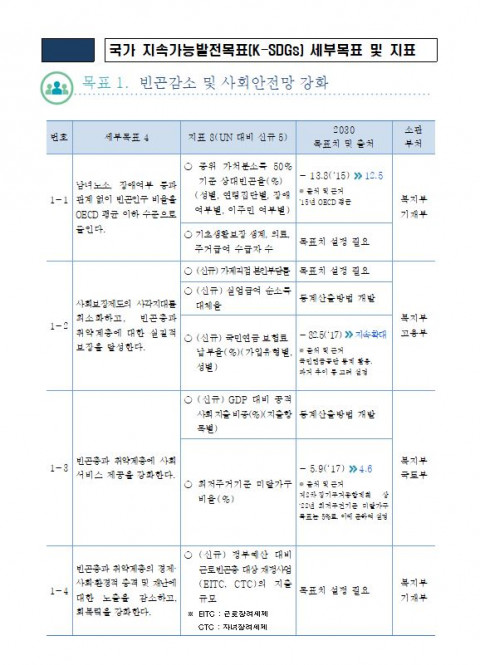 국가 지속가능발전목표(K-SDGs) 세부목표 및 지표 Année de publication: 2019 Auteur institutionnel: 대한민국 환경부 지속가능발전위원회 K-SDGs는 국제적 정세에 대응하여 수립한 한국형 SDGs이며, 경제, 사회, 환경 등 국정 전 분야를 아울러 대한민국이 가야 할 2030년까지 이정표를 설정한 것이다.K-SDGs는 기존에 행정부처에서 각종 정책 및 계획 등을 먼저 수립한 후 관계 전문가와 국민 의견을 수렴하는 하향식(Top-down) 방식과는 다른 상향식(Bottom-up) 방식으로 추진되었다. 초안을 마련하는 단계부터 192명의 민간 작업반이 참여하여 우리 사회의 지속가능성을 위해 요구되는 사항들을 반영한 세부목표, 지표체계(안)를 마련했다.이에 대해 환경부는 90개 이상의 기관과 단체가 포함된 이해관계자그룹(K-MGoS, Korea Major Groups and other Stakeholders)의 운영과 두 차례에 걸친 국민 대토론회 개최 등을 통한 국민 의견 수렴 후 그 결과를 관계부처와 협의하여 확정했다. 또한, 향후 K-SDGs의 이행과 보완 과정에서도 이해관계자그룹 등 국민 협치(거버넌스) 체계를 계속 유지할 계획이다.
 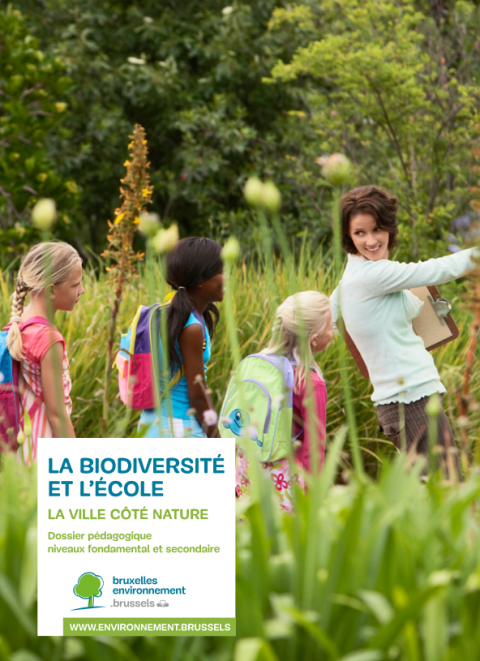 La biodiversité et l'école: la ville côté nature Année de publication: 2019 Auteur institutionnel: Bruxelles Environnement Ce dossier pédagogique donne des infos de qualité sur la thématique et des pistes pour mener des activités concrètes au sein de l'école. Les activités proposées allient pédagogie et actions. Ce dossier vous propose divers outils et activités pédagogiques pour passer à l’action avec votre classe ou école : simple découverte de la biodiversité pour motiver vos élèves ; activités pour mieux comprendre la biodiversité à Bruxelles, son importance et les pressions qui pèsent sur elle, et actions concrètes pour la protéger ou la développer, au départ de l’école ou du quartier.
  A Report on Korean-Sustainable Development Goals (K-SDGs) 2019 Année de publication: 2019 Auteur institutionnel: 대한민국 환경부 지속가능발전위원회 South Korea's Commission on Sustainable Development set up the Korean Sustainable Develpment Goals(K-SDGs) in 2018 by applying the international sustainable development goal system to domestic circumstances. 국가 지속가능발전목표(K-SDGs) 수립보고서 2019 Année de publication: 2019 Auteur institutionnel: 대한민국 환경부 지속가능발전위원회 K-SDGs는 국제적 정세에 대응하여 수립한 한국형 SDGs이며, 경제, 사회, 환경 등 국정 전 분야를 아울러 대한민국이 가야 할 2030년까지 이정표를 설정한 것이다.
  SDG 4 on Ensuring Inclusive and Equitable Quality Education: A Toolkit of Legal & Institutional Practices Année de publication: 2019 Auteur institutionnel: Centre for International Sustainable Development Law (CISDL) CISDL, in cooperation with the Dalhousie Schulich School of Law, Balsillie School of International Affairs/University of Waterloo, McGill University Faculty of Law/ Faculté de droit Université de Montréal, University of Victoria Peter A. Allard School of Law, and a consortium of institutional partners, held a multisite symposium on March 14, 2019 convening legal experts across Canada to discuss areas of opportunity to inform Canada’s 2030 agenda. This toolkit is a part of a series, which builds upon legal research conducted in collaboration with UN Environment. The by-projects of this research looking at legal measures for achievement of the SDGs in Canada is intended to inform policy-making moving forward.
  Accountability from a Human Rights Perspective: The Incorporation and Enforcement of the Right to Education in the Domestic Legal Order Année de publication: 2017 Auteur institutionnel: ActionAid International | Right to Education Initiative (UK) The aim of this paper is to reframe States’ political commitment to education under Education 2030 as a legal commitment the vast majority of States have already made under international human rights law. By recasting the content of SDG Four as part of the right to education, the legal obligations owed to that content can be invoked. This renders various elements of SDG Four, ifthe State in question has legally committed to the right to education and incorporated the right to education in their domestic legal orders, amenable to adjudication by competent mechanisms, offering the possibility of legal accountability through legal enforcement.
  Gender in Education Network in Asia-Pacific (GENIA) Toolkit: Promoting Gender Equality in Education Année de publication: 2019 Auteur institutionnel: UNESCO Bangkok The GENIA Toolkit was originally designed in 2003 when the Gender in Education Network in Asia Pacific was established. The fifth edition of the GENIA Toolkit (25 tools) is designed for use by gender focal points and education planners and implementers. It introduces key concepts and theoretical debates, and outlines practical approaches for mainstreaming gender equality throughout the education system, and within education policy.The toolkit is designed to be used selectively, depending on the user’s needs. It can be used as a self-study tool. Readers can select topics that they have identified as priority learning areas to help them improve their own understanding and practical capacity. The toolkit can also be used by trainers to facilitate training sessions. Trainers can choose tools from the kit that best match the needs of their trainees.
  How to Hit a Moving Target: 35 Years of Gender and Sexual Diversity in Teacher Education Année de publication: 2019 Auteur: Lee Airton | Austen Koecher This essay shares findings from an exhaustive review of the English-language published scholarship on integrating gender and sexual diversity in teacher education (GSDTE) since 1982. The 158 sources substantiate a largely USA-based field with an array of studied pedagogies and a citational reliance on statistics that reveal the school-sited suffering of gender and sexual minority youth. Implications for the field are shared, including: critical questions about the field's construction, objects and beneficiaries; the importance of citing GSDTE and teacher education research and not only youth outcome research; and preparing teachers for gender and sexual diversities that are presently unimaginable. Highlights • A review of the literature on integrating gender and sexual diversity in teacher education.• There is a citational reliance on the school-sited suffering of gender and sexual minority youth.• It is important to cite GSDTE and teacher education research and not only youth outcome research.• This will help prepare teachers for gender and sexual diversities that are presently unimaginable.
  Entre el reloj y la brújula: desafíos en la garantía del derecho a la educación y al aprendizajede personas jóvenes y adultas en América Latina y el Caribe; documento de trabajo Année de publication: 2019 Auteur: Henry Renna Auteur institutionnel: UNESCO Santiago Este documento tiene por objetivo proporcionar una visión general de la educación y del aprendizaje de personas jóvenes y adultas como derecho humano y social. Los instrumentos de derecho vinculante y no vinculante que la sustentan son históricos y de larga data, como también contingentes, amplios y extensos en su alcance, con presencia regional e internacional. El documento muestra —sobre la base de los Indicadores del Objetivo de Desarrollo Sostenible 4 (ODS 4 Agenda 2030)— que los principales desafíos para los países de América Latina y el Caribe tienen relación con la lentitud de los progresos (el desafío del reloj) dejando a muchas y muchos jóvenes y adultos al margen de oportunidades educativas, de conocimientos, habilidades y aptitudes, y privados de alcanzar el bienestar integral. Este informe también sostiene —basado en los informes nacionales del Tercer Reporte Global de Educación y Aprendizaje de Adultos— que muchos desafíos están vinculados con la dirección de las políticas (el desafío de la brújula), con sentidos reduccionistas y homogeneizadores detrás de las instituciones y de la acción pública, lo que precariza y fragiliza la garantía del derecho a la educación y al aprendizaje de las personas jóvenes y adultas. Este documento es consistente con el llamado de la UNESCO a «repensar la educación» e invita a reconstruir en el siglo XXI un mundo y una educación sin muros, donde se difuminen las fronteras mentales e institucionales que reducen, dividen y aislan los sistemas educativos, con el fin de liberar su poder transformador para todos y todas.