
Ressources
Explorez une large gamme de ressources sur le GCED afin d’approfondir votre compréhension et de renforcer vos activités de recherche, de plaidoyer, d’enseignement et d’apprentissage.
983 résultats trouvés
 Oбзор национальной политики в области образования: Казахстан, Кыргызская Pеспублика и Таджикистан 2009; Учащиеся с особыми потребностями и ограниченными возможностями Année de publication: 2009 Auteur institutionnel: Organisation for Economic Co-operation and Development (OECD) В данной публикации ОЭСР предлагается обзор текущей образовательной политики в отношении детей с с особыми образовательными потребностями и ограниченными возможностями в Казахстане, Кыргызской Республике и Таджикистане. Дается представление о социальноисторическом контексте, системах образования и соответствующего законодательства, критически анализируются принятые взгляды на доступ к образованию для самой уязвимой группы детского населения в данных странах. Особое внимание уделяется политическим мерам, направленным на обеспечения инклюзивности образования, процедурам идентификации и оценки, общей координации предоставления образовательных услуг, интеграции в общеобразовательную систему, а также наиболее успешным практикам и роли НПO и общественных доноров.
 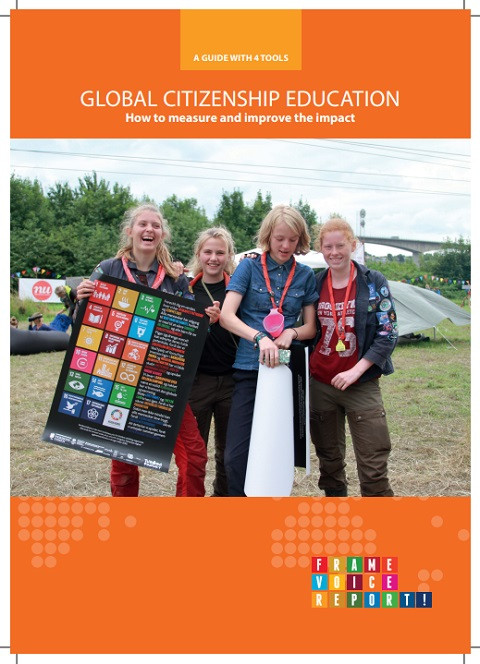 Global Citizenship Education: How to Measure and Improve the Impact Année de publication: 2020 Auteur: Jan Van Ongevalle Auteur institutionnel: Frame Voice Report! Project | Civil Society in Development (CISU) | European Union (EU) This guide presents 4 methods and tools that can help organisations set up an easy-to-use monitoring system for learning about the effects of global citizenship education (GCE) projects. The methods can be used for planning as well as monitoring and evaluating the changes a project has contributed to. At best the methods can keep on strengthening the project in the implementation phase thereby contributing to greater change.
  Climate Crisis: The Need for Global Citizenship Education Année de publication: 2020 Auteur institutionnel: Bridge 47 This video talks about the climate crisis which is also a human rights crisis, a political crisis, and an economic crisis. And it calls for the fundamental transformation of how we live our lives. To face these global challenges, it emphasizes that we need education that enables us to think critically, connect our actions with their impacts, and act as empowered active global citizens to face.
 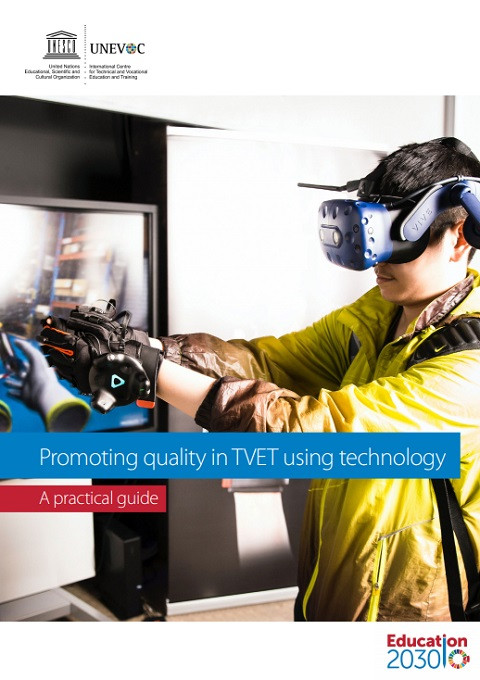 Promoting Quality in TVET Using Technology: A Practical Guide Année de publication: 2020 Auteur institutionnel: UNESCO International Centre for Technical and Vocational Education and Training (UNEVOC) Technology has altered many aspects of life, including education and training. As a result of technological developments, technical and vocational education and training (TVET) has become more accessible to students, and the quality of education and training has improved too. Teachers and trainers can use digital tools to manage their tasks effectively and engage learners in digital rich environments. Learners can also use technology to learn new skills and to collaborate and interact with teachers and trainers. The COVID-19 pandemic has however underlined the current difficulties in effectively integrating technologies in the delivery of education and training. Institutions need to make constant assessments of their capacity and readiness to provide technology-rich environment for learning. At the same time, teachers’ and trainers’ readiness is also of particular importance to adopt appropriate pedagogic approaches with technology. This practical guide addresses institutions and teachers and trainers. It helps TVET institutions to understand the organizational plans to build up their capacity to stimulate digital learning. It also guides teachers that want to develop their competencies, improve their pedagogical strategies with use of technology, and learn from existing practice. By showing how technology is used in an integrated instruction model and providing helpful resources, this guide helps teachers and trainers to effectively plan their own tasks and delivery of instruction with the right technology tools.
 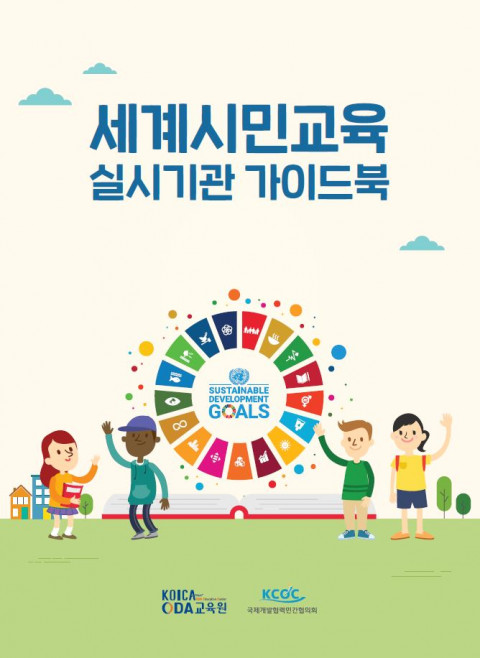 세계시민교육 실시기관 가이드북 Année de publication: 2019 Auteur institutionnel: KOICA ODA 교육원 | 국제개발협력민간협의회 다양한 기관과 NGO 등에서 운영하고 있는 다채로운 세계시민교육 프로그램과 각 기관에 대한 소개 및 교재와 교구 등 참고자료를 수록하고 있다.이 가이드북은 단순히 세계시민교육을 제공하는 기관의 리스트가 아니라 기관의 특성과 운영 프로그램 · 교육 대상을 담고 있다는 점에서 세계시민교육과 세계시민교육 프로그램에 관심 있는 이들에게 유용한 안내서가 될 것이다.
  Building Cross-Sectoral Cooperation: Estonian Coalition for Sustainable Development Année de publication: 2020 Auteur institutionnel: Estonian Roundtable for Development Cooperation (AKÜ) | Bridge 47 | European Union (EU) This publication presents the members of Estonian Coalition for Sustainable Development, examples of their actions towards a more sustainable future and also some of the activities that the partnerships together have carried over the past few years. It is a great example of a cross-sectoral cooperation and a way of sharing knowledge.
 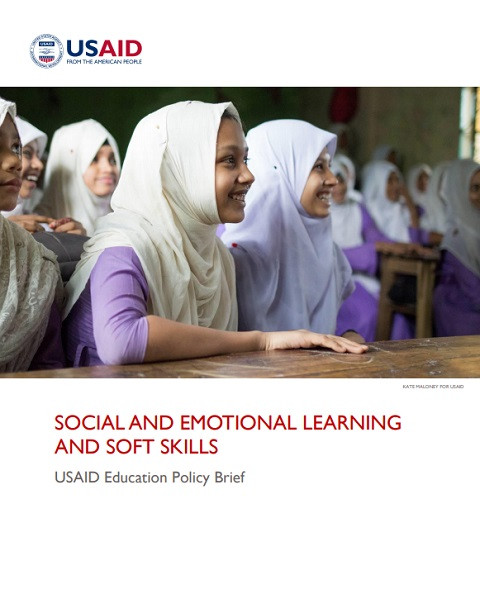 Social and Emotional Learning and Soft Skills: USAID Education Policy Brief Année de publication: 2019 Auteur: Kalene Resler | Anjuli Shivshanker | Samantha Alvis | Chris Capacci-Carneal | Melissa Chiappetta | Lauren Greubel | Julie Hanson Swanson | Ashley Henderson | Josh Josa | Laura Lartigue | Rebeca Martinez | Leah Maxson | Olga Merchan | Yolande Miller-Grandvaux | Sandy Oleksy-Ojikutu | Rebecca Pagel | Nancy Taggart | Nina Weisenhorn | Wendy Wheaton Auteur institutionnel: United States Agency for International Development (USAID) Both the 2018 USG Strategy on International Basic Education and the 2018 USAID Education Policy emphasize the importance of social and emotional skills or soft skills in assuring the long-term success of children and youth. Through the Strategy and Policy, USAID is providing new opportunities to systematically design, measure, implement, and understand the impact of programs that build social and emotional skills or soft skills for children and youth.To support USAID staff and implementing partners in this work, this brief: Provides an introductory understanding of what USAID means by the terms “social and emotional skills” and “soft skills” and how to communicate about them. Specifies the desired outcomes and quality standards for programming that teach social and emotional skills or soft skills. Identifies areas in which evidence and best practices still have gaps, and areas in which we should consider investing in further learning.
  Stepping Stones for the Sustainable Development Goals: A Workbook for Community and Adult Education Practitioners Année de publication: 2020 Auteur: Jennifer Harris Auteur institutionnel: Development Perspectives | Irish Aid The aim of this workbook is to provide a tool for Adult and Community groups and their leaders to understand the Sustainable Development Goals (SDGs) and to take meaningful action on those Goals. It aims to support adult and community educators in integrating the SDGs into their work using the principles and methodologies embraced by Development Education (DE)and Global Citizenship Education (GCE).
 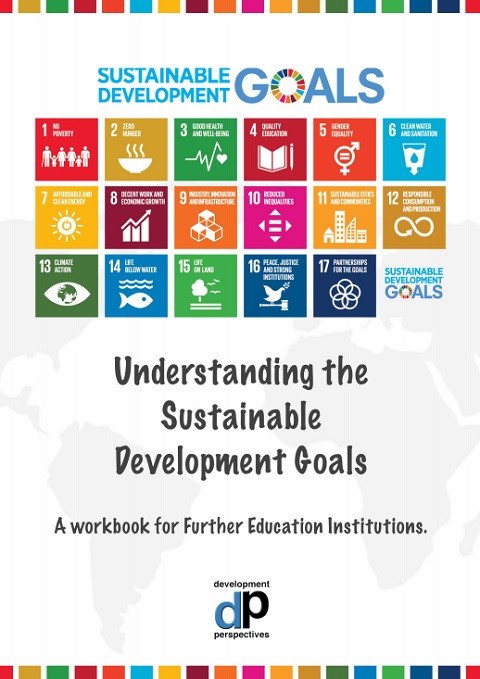 Understanding the Sustainable Development Goals: A Workbook for Further Education Institutions Année de publication: 2020 Auteur: Peggy Flanagan | Stephanie Kirwan Auteur institutionnel: Development Perspectives | Irish Aid This Sustainable Development Goals (SDG) workbook has been developed and produced specifically for the use of Further Education tutors. Through their partnerships, practitioners have requested that Development Perspectives develop a workbook with sessions on the SDGs specifically for adults in formal and non-formal learning contexts including groups in the community sector. This is an easy to use workbook with sessions for each of the 17 SDGs that could be delivered individually based on the interest of the adults and communities involved in each session.
 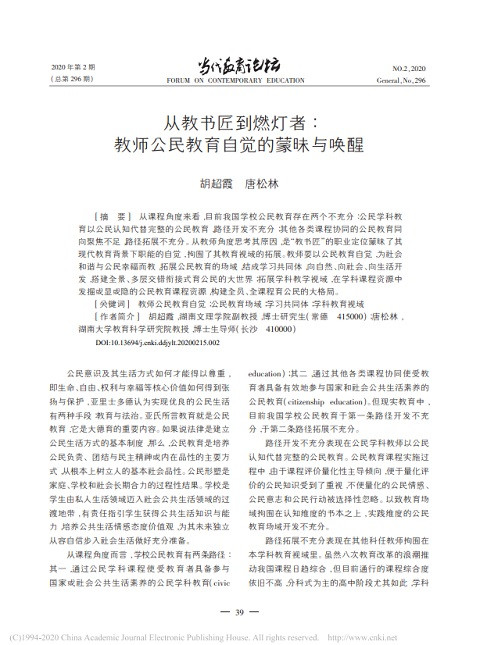 From Teaching Craftsmen to Lamplighters: Ignorance and Recovery of Teachers’ Citizenship Education Consciousness (Forum on Contemporary Education; No. 296) Année de publication: 2020 Auteur: Hu Chaoxia | Tang Songlin Auteur institutionnel: Hunan Academy of Educational Science From the perspective of curriculum, there are two major shortcomings of citizenship education in schools in China: civic education replaces complete citizenship education with citizenship cognition, and the path development is inadequate; the concentric focus of citizenship education with other courses is inadequate, and the path expansion is inadequate. From the perspective of teachers, the reason is that the professional orientation of “teaching craftsmen” ignores the self-consciousness of their functions under the background of modern education, which restricts the expansion of their educational horizons. Teachers should be conscious of citizenship education, teach for social harmony and citizen happiness, expand the field of citizenship education, form a learning community, develop toward nature, society and life, build a panoramic, multi-level interlaced world of citizenship education, expand the horizon of disciplinary education, and explore reveal or conceal in subject curriculum resources. The curriculum resources of citizenship education should build a general pattern of citizenship education through the whole staff and the whole curriculum.