
Ressources
Explorez une large gamme de ressources sur le GCED afin d’approfondir votre compréhension et de renforcer vos activités de recherche, de plaidoyer, d’enseignement et d’apprentissage.
948 résultats trouvés
 [Summary] Global Education Monitoring Report 2021/2: Non-state Actors in Education: Who Chooses? Who Loses? Année de publication: 2022 Auteur institutionnel: UNESCO Non-state actors’ role extends beyond provision of schooling to interventions at various education levels and influence spheres. Alongside its review of progress towards SDG 4, including emerging evidence on the COVID-19 pandemic’s impact, the 2021/2 Global Education Monitoring Report urges governments to see all institutions, students and teachers as part of a single system. Standards, information, incentives and accountability should help governments protect, respect and fulfill the right to education of all, without turning their eyes away from privilege or exploitation. Publicly funded education does not have to be publicly provided but disparity in education processes, student outcomes and teacher working conditions must be addressed. Efficiency and innovation, rather than being commercial secrets, should be diffused and practiced by all. To that end, transparency and integrity in the public education policy process need to be maintained to block vested interests. The report’s rallying call – Who chooses? Who loses? – invites policymakers to question relationships with non-state actors in terms of fundamental choices: between equity and freedom of choice; between encouraging initiative and setting standards; between groups of varying means and needs; between immediate commitments under SDG 4 and those to be progressively realized (e.g. post-secondary education); and between education and other social sectors.
  Prevention of Violence in Educational Institutions of the Kyrgyz Republic Année de publication: 2015 Auteur: D. Abdyldaeva | V. Gorkina Auteur institutionnel: UNESCO The methodological manual provides information on the nature and causes of violence in educational institutions, its forms and consequences; parties involved; ways to prevent and resolve conflict situations. Particular attention is paid to gender-based violence. The manual provides practical advice on organizational and educational measures, and algorithms for the actions of the management and staff of an educational organization to respond to facts of violence and provide assistance to victims. Предотвращение насилия в образовательных организациях Кыргызской Республики: Методическое пособие для педагогических работников Année de publication: 2015 Auteur: D. Abdyldaeva | V. Gorkina Auteur institutionnel: UNESCO В методическом пособии представлена информация о природе и причинах насилия в образовательных организациях, его формы и последствия; вовлеченные стороны; способы предотвращения и разрешения конфликтных ситуаций. Особое внимание уделяется гендерному насилию. В пособии представлены практические советы по организационным и воспитательным мерам, алгоритмы действий руководства и персонала образовательной организации по реагированию на факты насилия и оказанию помощи пострадавшим.
  Revised Recommendation Concerning Education for International Understanding, Co-operation and Peace and Education Relating to Human Rights and Fundamental Freedoms ('1974 Recommendation') Année de publication: 2022 Auteur institutionnel: UNESCO The revision of the 1974 Recommendation provides the international community with the opportunity to strengthen the instrument so that it can support the design and implementation of effective educational policies and programmes, which can put the world on a pathway to lasting peace and sustainable development for all, in line with the requirements of the 2030 Agenda and the body of international legal norms adopted since 1974. Recommandation révisée sur l’éducation pour la compréhension, la coopération et la paix internationales et l’éducation relative aux droits de l’homme et aux libertés fondamentales (« Recommandation de 1974 ») Année de publication: 2022 Auteur institutionnel: UNESCO La révision de la Recommandation de 1974 offre à la communauté internationale l'occasion de renforcer l'instrument afin qu'il puisse soutenir la conception et la mise en œuvre de politiques et de programmes éducatifs efficaces, susceptibles de mettre le monde sur la voie d'une paix durable et du développement durable pour tous, conformément aux exigences de l'Agenda 2030 et à l'ensemble des normes juridiques internationales adoptées depuis 1974.
  Culture in Times of COVID-19: Resilience, Recovery and Revival Année de publication: 2022 Auteur institutionnel: UNESCO | United Arab Emirates. Department of Culture and Tourism Culture in Times of COVID-19: Resilience, Recovery and Revival offers key insights on trends and structural transformations that can boost the culture sector as a cornerstone of an economy built on sustainability and well-being.A set of strategic development considerations are put forward for governments and their partners, in both the public and private sectors, to promote the value of culture as a public good, encourage cross-sector collaboration and holistically address the essential needs of the sector, while supporting cultural professionals in adapting to a changing world and providing equal access and opportunities across the culturalvalue chain.
  [Summary] Media and Information Literacy: The Time to Act is Now! Année de publication: 2021 Auteur institutionnel: UNESCO UNESCO has developed a comprehensive Curriculum which provides a framework for training teachers. But it is also a foundation that will also be of help to others: to learners, to content providers like internet companies and news media outlets, and to citizens of all ages as they consume, create and use content, including information.The second edition of the learning resource has been significantly expanded since the first publication in 2011. The MIL Curriculum reflects the changing nature of the information landscape. It now includes insight from a broader range of content providers than before, including libraries, archives, museums, media, and digital communications companies.The Curriculum is designed to empower educators and learners in general – from schoolteachers to those involved in training, the media and libraries, governments, and NGOs – to train people to spot misrepresentations and disinformation, and most importantly develop critical thinking competencies.
 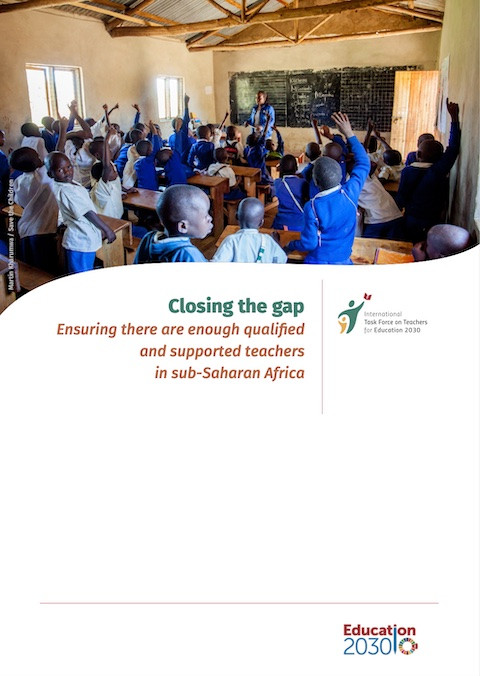 Closing the Gap: Ensuring There Are Enough Qualified and Supported Teachers in Sub-Saharan Africa Année de publication: 2021 Auteur institutionnel: International Task Force on Teachers for Education 2030 | UNESCO The fourth Sustainable Development Goal (SDG 4) aims to ensure better learning opportunities and outcomes and more equitable and inclusive education for all. SDG target 4.c calls for an increase in the supply of qualified teachers, particularly in low-income countries. To achieve this ambitious target, the international community needs to pay renewed attention to teacher support and preparation.This advocacy brief considers what it will take to increase the supply of qualified teachers in sub-Saharan Africa, the region where the teacher shortage is most acute. It analyses the causes for teacher shortages, looks at trends affecting the region and describes the scale of the shortages. It examines the fiscal pressures on low-income countries to cover salary costs and the costs of initial teacher education and continuing professional development, and it proposes some recommendations for governments and the international community to achieve the essential target of substantially increasing the supply of well qualified teachers.
 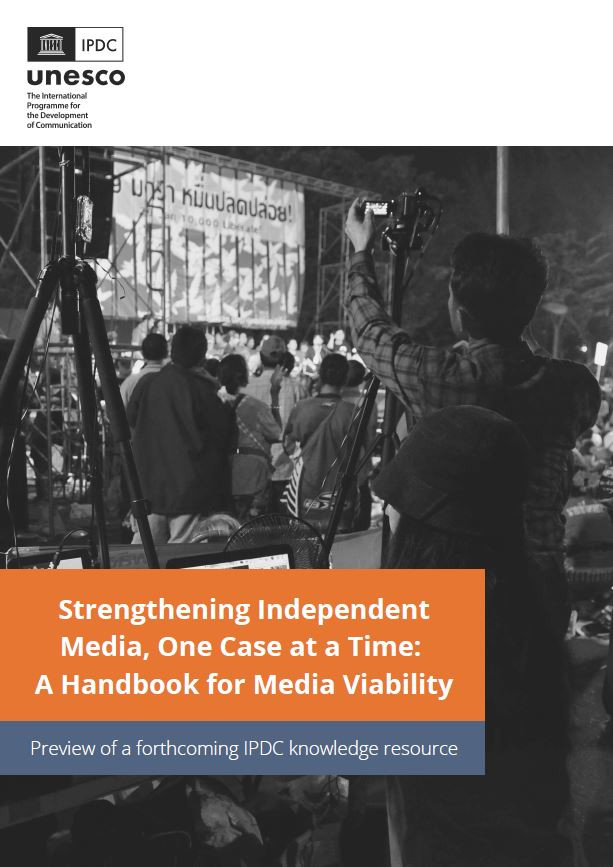 Strengthening Independent Media, One Case at a Time: A Handbook for Media Vability; Preview of a Forthcoming IPDC Knowledge Resource Année de publication: 2021 Auteur institutionnel: UNESCO “Strengthening Independent Media, One Case at a Time: A Handbook for Media Viability” will include case studies of innovative ideas from a wide variety of news media companies, mostly in the developing world, that are succeeding in difficult times and have lessons to share with others who are struggling. The handbook project was announced during the 65th meeting of the Bureau of the Intergovernmental Council of the International Programme for the Development of Communication (IPDC).This brochure includes highlights of some of the cases to be included, from community media in South Africa to a pure-play digital success in Indonesia, to a fact-checking network in Brazil to a covid response in Pakistan, and much more. The Handbook will be published in September 2021 and will be available for free on the website of the IPDC.
  Reimaginar juntos nuestros futuros: un nuevo contrato social para la educación Année de publication: 2021 Auteur institutionnel: International Commission on the Futures of Education | UNESCO Nuestra humanidad y el planeta Tierra están bajo amenaza. La pandemia solo ha servido para demostrar nuestra fragilidad y nuestra interconexión. Ahora se necesita una acción urgente, tomada en conjunto, para cambiar el rumbo y reimaginar nuestro futuro. Este informe de la Comisión Internacional sobre el Futuro de La educación reconoce el poder de la educación para generar cambios profundos. Nos enfrentamos al doble desafío de cumplir la promesa incumplida de garantizar el derecho a una educación de calidad para todos los niños, niñas, jóvenes y adultos y realizar plenamente el potencial transformador de la educación como vía para futuros colectivos sostenibles Para ello, necesitamos un nuevo contrato social para la educación que pueda reparar las injusticias mientras transforma el futuro. Este nuevo contrato social debe fundamentarse en los derechos humanos y basarse en los principios de no discriminación, justicia social, respeto por la vida, la dignidad humana y la diversidad cultural. Debe abarcar una ética del cuidado, la reciprocidad y la solidaridad. Debe fortalecer la educación como un esfuerzo público y un bien común. Este informe, que se preparó durante dos años y se basó en un proceso de consulta global en el que participaron alrededor de un millón de personas, invita a los gobiernos, instituciones, organizaciones y ciudadanos de todo el mundo a forjar un nuevo contrato social para la educación que nos ayudará a construir un futuro pacífico, justo y futuros sostenibles para todos. Las visiones, principios y propuestas que aquí se presentan son meramente un punto de partida. Traducirlos y contextualizarlos es un esfuerzo colectivo. Ya existen muchos puntos brillantes. Este informe intenta capturarlos y construir sobre ellos. No es ni un manual ni un anteproyecto, sino la apertura de una conversación vital.