
Ressources
Explorez une large gamme de ressources sur le GCED afin d’approfondir votre compréhension et de renforcer vos activités de recherche, de plaidoyer, d’enseignement et d’apprentissage.
2,255 résultats trouvés
 2019 유네스코 ESD 정책 포럼: 2030년을 위한 지속가능발전교육(ESD), 한국은 어떻게 준비할 것인가 Année de publication: 2019 Auteur institutionnel: 대한민국 교육부 | 유네스코한국위원회 2019년 11월에 유네스코한국위원회(ESD한국위원회)에서 주최한 '2019 유네스코 지속가능발전교육 정책 포럼'의 자료집으로 행사개요와 토론자료, 지속가능발전교육에 대한 부록을 수록하고 있다.2030년을 위한 지속가능발전교육(ESD), 한국은 어떻게 준비할 것인가를 주제로 ESD for 2030 체계 수립 및 이행 준비에 대한 국제사회 최신 동향 공유, 국가 이니셔티브 구축 관련 한국 차원의 정책적 준비 및 운영 체계 수립 방안 논의, GAP 참여기관 등 국내 ESD 이행 핵심 주체별 활동 내용 공유 및 제언 등이 주요 내용이다.
  Neuroscience Applied to Everyday Life: David del Rosario, Neuroscience Researcher (Full Version) Année de publication: 2022 Auteur: David del Rosario Auteur institutionnel: Banco Bilbao Vizcaya Argentaria (BBVA) Why are we unhappy even when everything is going well? What is thought? Do we know how our mind and body works? "Knowledge, if not applied, is useless," says scientist David del Rosario. In this video, the researcher analyzes different experiments and questions our relationship with what we think to address what he calls "everyday neuroscience". Neurociencia aplicada al día a día: David del Rosario, investigador en neurociencia (Versión Completa) Année de publication: 2022 Auteur: David del Rosario Auteur institutionnel: Banco Bilbao Vizcaya Argentaria (BBVA) ¿Por qué somos infelices incluso cuando todo va bien? ¿Qué es el pensamiento? ¿Conocemos cómo funciona nuestra mente y nuestro organismo? "El conocimiento, si no se aplica, no sirve para nada", asegura el científico David del Rosario. En este vídeo, el investigador analiza diferentes experimentos y cuestiona nuestra relación con lo que pensamos para abordar lo que él llama "neurociencia del día a día".
  UNESCO Framework for Culture and Arts Education: Implementation Guidance Année de publication: 2025 Auteur institutionnel: UNESCO Culture and the arts are integral to inclusive, equitable and quality education. They nurture creativity, critical thinking, and respect for cultural diversity, empowering learners to engage meaningfully with the world and to build more just, sustainable and peaceful societies. Yet, countries have not systematically incorporated culture and arts education across all levels of education. This Implementation guidance for the UNESCO Framework for Culture and Arts Education is a collective invitation to reimagine education by placing culture and the arts at its heart and advancing a transformative vision of education for all.Through a holistic approach, the Guidance supports the integration of culture and the arts across formal, non-formal and informal education, throughout life. It offers practical orientations to help Member States fulfil the commitment enshrined in the UNESCO Framework for Culture and Arts Education, adopted by Ministers of Culture and Education in 2024. With a global perspective, this Guidance will equip policy-makers, educators and cultural actors in developing inclusive, context-relevant policies, curricula and learning environments.The Guidance is a milestone on a shared journey, inviting countries to harness their cultural strengths, respond to emerging challenges, and work together towards a more inclusive education for all.
 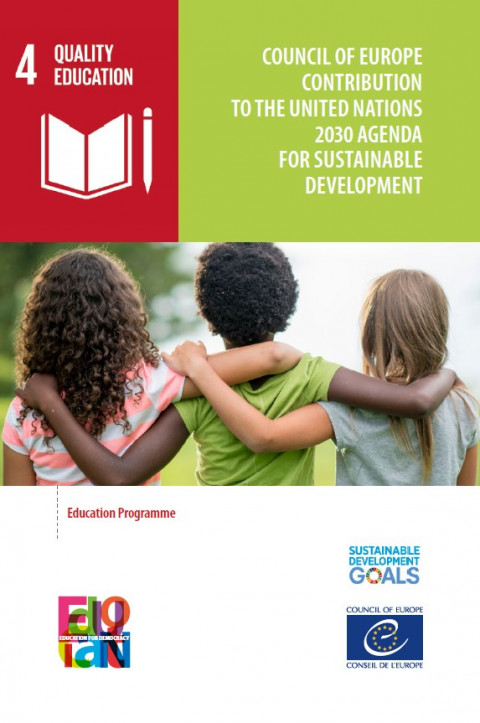 COUNCIL OF EUROPE CONTRIBUTION TO THE UNITED NATIONS 2030 AGENDA FOR SUSTAINABLE DEVELOPMENT Auteur institutionnel: Council of Europe On 1 January 2016, the World started implementing the “UN 2030 Agenda for Sustainable Development”, an ambitious and universal vision, based on 17 Sustainable Development Goals (SDGs) and 169 associated targets, which are all integrated, indivisible and interlinked. They apply universally to all and are highly relevant for the Council of Europe; countries are expected to take ownership and establish national frameworks for the achievement of the 17 goals. Most, if not all, of the Council of Europe’s activities are relevant and contribute to the implementation of the UN 2030 Agenda and the achievement of the SDGs. Recognising the intrinsic links between sustainable development and the protection of human rights, the Council of Europe is committed to working with and supporting its 47 member states in implementing the UN 2030 Agenda through a wide range of actions. CONTRIBUTION DU CONSEIL DE L'EUROPE AU PROGRAMME DE DÉVELOPPEMENT DURABLE A L’HORIZON 2030 DE L’ONU Auteur institutionnel: Conseil de l'Europe Le 1er janvier 2016, le monde a entrepris la mise en œuvre du «Programme de développement durable de l’ONU à l’horizon 2030», vision ambitieuse et universelle axée sur 17 Objectifs de Développement Durable (ODD) assortis de 169 cibles intégrées, indissociables et intimement liées. Les objectifs ont une application universelle et sont très pertinents pour le Conseil de l'Europe ; les États s’engagent à se les approprier et à définir des cadres nationaux de réalisation des 17 objectifs. La plupart des activités du Conseil de l'Europe, sinon toutes, peuvent contribuer à la mise en œuvre du Programme 2030 de l’ONU et à la réalisation des ODD. Reconnaissant les liens intrinsèques entre développement durable et protection des droits de l’homme, le Conseil de l'Europe s’attache à travailler avec ses 47 États membres et à les soutenir dans la mise en œuvre du Programme 2030 pour toute une série de mesures.
  Digital Citizenship Education Project (DCE): 10 Domains Année de publication: 2018 Auteur institutionnel: Council of Europe The aim of the DCE project launched by the Council of Europe’s Education Policy Division is to empower children to participate actively in digital society. This involves providing them with an education that develops a sense of critical analysis and the effective use of digital technologies while fostering a notion of citizenship based on respect for human rights and democratic culture. Éducation à la citoyenneté numérique (ECN): Les 10 thématiques Année de publication: 2018 Auteur institutionnel: Conseil de l'Europe Le projet ECN de la Division des Politiques Educatives du Conseil de l’Europe a pour objectif de permettre aux enfants de participer activement et de manière autonome à la société numérique. Ceci passe par une éducation qui développe un sens d’analyse critique et l’utilisation efficace des technologies numériques intégrant une notion de citoyenneté fondée sur le respect des droits de l’homme et la culture démocratique.
  Digital Citizenship... and Your Child What Every Parent Needs to Know and Do Année de publication: 2019 Auteur institutionnel: Council of Europe The Council of Europe has created this guide to help you: better understand digital citizenship, and how it shapes online behaviour discuss digital citizenship with your children take steps to help your children master the competences digital citizenship is built on encourage your children’s school to play its role in educating competent young digital citizens. La citoyenneté numérique... et votre enfant: Ce que tout parent a besoin de savoir et de faire Année de publication: 2019 Auteur institutionnel: Conseil de l'Europe Le Conseil de l’Europe a préparé le présent guide pour vous aider : à mieux comprendre la citoyenneté numérique et ses effets sur les comportements en ligne; à parler de la citoyenneté numérique avec vos enfants; à agir pour aider vos enfants à maîtriser les compétences indispensables à la citoyenneté numérique; à encourager les établissements scolaires de vos enfants à s’associer avec compétence à l’éducation à la citoyenneté numérique.