
Ressources
Explorez une large gamme de ressources sur le GCED afin d’approfondir votre compréhension et de renforcer vos activités de recherche, de plaidoyer, d’enseignement et d’apprentissage.
2,275 résultats trouvés
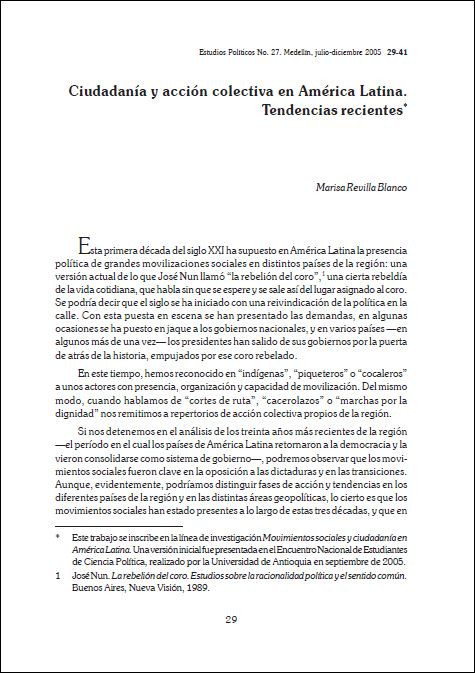 Citizenship and Collective Action in Latin America. Recent Trends Année de publication: 2005 Auteur: Marisa Revilla Blanco The following text intends to analyze those forms of collective action through which citizens have been present in the streets of the region during the last thirty years. It seeks to understand the actors and the conditions of their appearance and continuity; In this way, it is also intended to make a small contribution to the theoretical development of the analysis of social movements in Latin America. Ciudadanía y Acción Colectiva en América Latina. Tendencias Recientes Année de publication: 2005 Auteur: Marisa Revilla Blanco En el siguiente texto se pretende analizar esas formas de acción colectiva mediante las cuales la ciudadanía se ha estado haciendo presente en las calles de la región durante los treinta años más recientes. Se busca comprender los actores y las condiciones de su aparición y continuidad; de este modo, también se pretende hacer un pequeño aporte al desarrollo teórico del análisis de los movimientos sociales en América Latina.Este artículo está publicado en Estudios Políticos. [en linea] 2005, (Julio-Diciembre)
 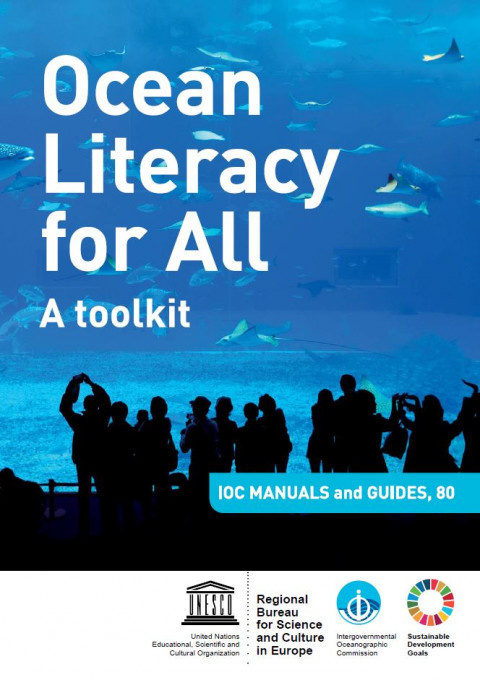 Ocean Literacy for All: A Toolkit (IOC Manuals and Guides, 80) Année de publication: 2017 Auteur: Francesca Santoro | Selvaggia Santin | Gail Scowcroft | Géraldine Fauville | Peter Tuddenham Auteur institutionnel: UNESCO Venice Ocean literacy programs and projects, until now, have been mainly focusing on developing resources, lesson plans and activities targeting Science, Technology, Engineering and Mathematics (STEM) education. Currently, and in particular after the adoption of the Sustainable Development Goal (SDG) 14, we have assisted to a shift in the focus towards the inclusion of approaches closer to those developed under the UNESCO framework of Education for Sustainable Development (ESD).ESD aims to improve access to quality education on sustainable development at all levels and in all social contexts, to transform society by reorienting education and help people develop knowledge, skills, values and behaviors needed for sustainable development. Individuals are encouraged to be responsible actors who resolve challenges, respect cultural diversity and contribute to creating a more sustainable world. This publication is made of two parts. The first part presents the history of ocean literacy, and describes its framework made of 7 essential principles, and connects them to international ocean science programs that contributes to enhancing ocean knowledge and observations. Moreover, marine scientists and educators were interviewed to share their professional experiences on ocean literacy as well as their views on its future. The last chapter of part 1 describes the existing challenges to marine education, as well as the path for the development of successful ocean literacy activities in the context of the 2030 Agenda. One of the most important factors identified is related to the creation of multi-sector partnerships among the education, government, and private sector that have jointly built ocean literacy programs for all formal educational levels from the primary school to the university level as well as for non-formal learners. Worldwide examples of such programs are presented. The second part, after introducing the methodological approach based on the multi-perspective framework for ESD developed by UNESCO, presents 14 activities that could provide tested examples and support for the implementation of marine education initiatives. The aim is not to provide a one size-fits-all ready to use collection, but rather to offer support and examples of what could be then adapted for different geographical and cultural contexts. The resources are designed to be relevant for all learners of all ages worldwide and to find their application in many learning settings, while in their concrete implementation they will, naturally, have to be adapted to the national or local context. Cultura oceánica para todos: kit pedagógico (COI Manuales y guías, 80) Année de publication: 2017 Auteur: Francesca Santoro | Selvaggia Santin | Gail Scowcroft | Géraldine Fauville | Peter Tuddenham Auteur institutionnel: UNESCO Venice Más que un concepto, la cultura oceánica es una herramienta fundamental para mejorar el conocimiento sobre el océano y estimular la participación activa de los ciudadanos y de las partes interesadas en la implementación de acciones sostenibles. Es también una manera de promover prácticas de producción sostenible, formular sólidas políticas públicas marinas, promover una ciudadanía más responsable, y animar a los jóvenes a iniciar una carrera en la economía azul o en las ciencias oceánicas. Esta publicación pretende describir y revisar los actuales enfoques, iniciativas, programas y proyectos sobre cultura oceánica. La primera parte ilustra los principios esenciales de la cultura oceánica y evidencia el conocimiento científico subyacente a través de estudios de casos, datos históricos e información cultural. Asimismo, muestra los esfuerzos actuales que realiza la cultura oceánica desde una perspectiva multidisciplinaria mediante entrevistas a expertos, educadores y científicos que trabajan y estudian en todo el mundo. La segunda parte presenta catorce actividades que proporcionan herramientas y buenas prácticas basadas en las competencias clave necesarias para que alumnos de todas las edades conozcan y se comprometan activamente con los temas sobre el desarrollo sostenible. Estas actividades pueden ser adaptadas a las necesidades y a los recursos disponibles. Las referencias adicionales que se proporcionan sirven para ampliar la información de los temas propuestos. Con este manual, la UNESCO y su Comisión Oceanográfica Intergubernamental (COI) pretenden que los países y las partes interesadas participen en el desarrollo de actividades interdisciplinarias y culturalmente diversas sobre cultura oceánica a escala mundial.
  Mémorial de la Shoah - Musée, Centre de documentation juive contemporaine The Shoah Memorial provides access to various resources on the Holocaust, mostly in French.
 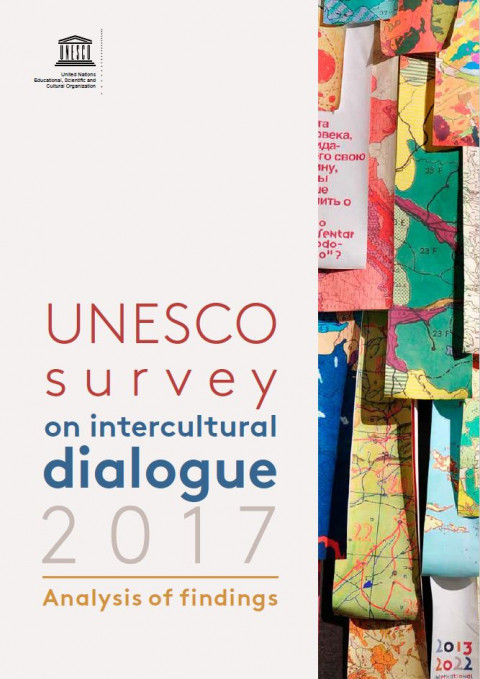 UNESCO Survey on Intercultural Dialogue, 2017: Analysis of Findings Année de publication: 2018 Auteur institutionnel: UNESCO Institute for Statistics (UIS) The present report sets out the key findings of the first UNESCO survey on intercultural dialogue conducted among its Member States. The survey takes stock of the current understanding and operational mechanisms and strategies of intercultural dialogue at national level. It assesses the main issues and opportunities, current policies and legislation, available data and resources, and main stakeholders in this field. The resulting information permits an initial inventory of countryspecific intercultural dialogue policies that will function as a point of analysis for future monitoring and inform future policy-making.The questionnaire for the survey was distributed to 199 National Commissions for UNESCO in six official United Nations languages with a submission deadline of Spring 2017. There was a response rate of 21.622%. The respondents represent all geographic regions, including countries with large, middle and small populations, and over half are from developing economies.
  Enseignement de l'Holocauste: Shoa comme un événement clé du XXe siècle: les contributions pour un programme éducatif dans le présent Ce rapport examine les faits historiques importants, mais il est essentiellement une combinaison de plusieurs documents de recherche sur l'Holocauste et de la résilience et la question de la transmission. Yad Vashem: The world Holocaust remembrance center The world’s largest repository of information on the Holocaust, Yad Vashem’s website provides easy access to digital collections, e-learning for professionals, a database of Shoah victims’ names, and a wealth of historical information in several languages. Yad Vashem: Le centre de commémoration de l'Holocauste dans le monde Le plus grand référentiel au monde de l'information sur l'Holocauste, le site de Yad Vashem offre un accès facile aux collections numériques, e-learning pour les professionnels, une base de données des noms des victimes de la Shoah, et une richesse d'informations historiques en plusieurs langues. Unterrichtsmaterialien zur Auseinandersetzung mit dem Holocaust This website provides photos and texts for studying the Holocaust. Succinct texts in which survivors tell about their life situations at that time. / Ce site fournit des photos et des textes pour l'étude de l'Holocauste. textes succincts dans lesquels les survivants racontent leurs situations de vie à ce moment-là.