
Ressources
Explorez une large gamme de ressources sur le GCED afin d’approfondir votre compréhension et de renforcer vos activités de recherche, de plaidoyer, d’enseignement et d’apprentissage.
2,275 résultats trouvés
 Basic Elements of Forgiveness and Reconciliation Theory Année de publication: 2018 Auteur: Leonel Narváez Gómez Auteur institutionnel: Fundación para la Reconciliación This text presents the theoretical bases for forgiveness and reconciliation that support the pedagogy and actions of the Foundation for Reconcilation. Elementos básicos de la teoría del Perdón y la Reconciliación Année de publication: 2018 Auteur: Leonel Narváez Gómez Auteur institutionnel: Fundación para la Reconciliación En este texto se presentan las bases teóricas para el perdón y la reconciliación que sustentan la pedagogía y acciones de la Fundación para la Reconcliación.
 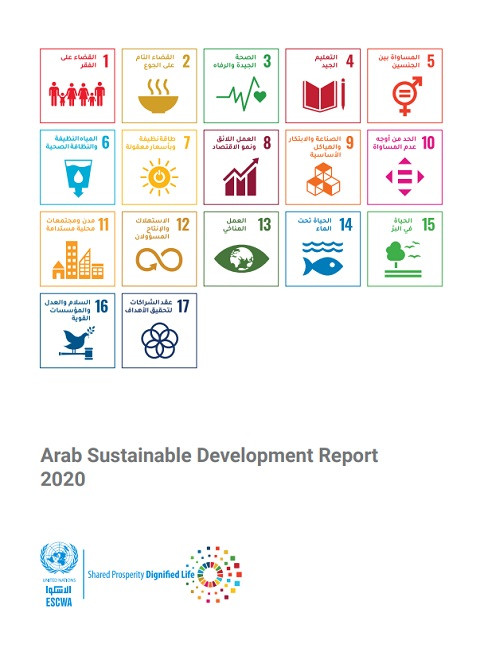 Arab Sustainable Development Report 2020 Année de publication: 2020 Auteur institutionnel: United Nations Economic and Social Commission for Western Asia (ESCWA) The 2030 Agenda calls for transformative change and paradigm shifts. Mobilizing domestic and external resources is a pressing challenge in the Arab region, and the pace of efforts on the SDGs must accelerate. However, transformative change not only requires financial resources and an acceleration of efforts but, above all, demands a shift in orientation and approach towards policy integration, environmental sustainability, and universal human rights with their emphasis on equality, justice, inclusion, fundamental freedoms and participatory politics.The story of the SDGs in the Arab region, therefore, is also a story of human rights, gender equality, sustainability and integrated development. The gravity of the task, and the scale of the ambition, are greater than measuring progress at goal, target and indicator level. Five years into the era of the 2030 Agenda and the SDGs, the present report is a reminder that the starting point for implementation and the horizon for achievement must be aligned for change to be transformative. It is only through the alignment of policies and other interventions with the overarching framework of the 2030 Agenda that the region, and the world, can hope to achieve the 2030 Agenda. How close, or how far, the Arab region is from this alignment is the story the present report aims to tell.
 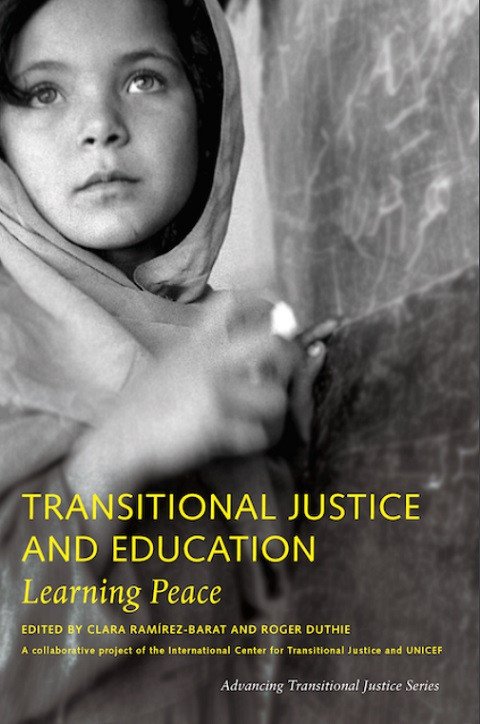 Transitional Justice and Education: Learning Peace (Advancing Transitional Justice Series) Année de publication: 2017 Auteur: Clara Ramírez-Barat | Roger Duthie Auteur institutionnel: Social Science Research Council (SSRC) | United Nations Children's Fund (UNICEF) After periods of conflict and authoritarianism, education institutions often need to be reformed or rebuilt. But in settings where education has been used to support repressive policies and human rights violations, or where conflict and abuses have resulted in lost educational opportunities, legacies of injustice may pose significant challenges to effective reform. Peacebuilding and development perspectives, which normally drive the reconstruction agenda, pay little attention to the violent past. Transitional Justice and Education: Learning Peace presents the findings of a collaborative research project of the International Center for Transitional Justice and UNICEF on the relationship between transitional justice and education in peacebuilding contexts. The book examines how transitional justice can shape the reform of education systems by ensuring programs are sensitive to the legacies of the past, how it can facilitate the reintegration of children and youth into society, and how education can engage younger generations in the work of transitional justice.
  Global Citizenship Education: Solidar Foundation Policy Paper Année de publication: 2020 Auteur institutionnel: Solidar Foundation | Erasmus+ The purpose of this paper is to provide recommendations supported by our members, based on their work in formal, non-formal and informal education, to expand GCE at national and European level. Considering how GCE is linked many times with formal education, the recommendations reveal the work of our members outside of this, building upon the need for a multi-stakeholder approach that spans across the entire learning process. This policy paper guides SOLIDAR Foundation’s work in influencing developments related to the EU’s Updated Skills Agenda, European Education Area, Action Plan for the Implementation of the European Pillar of Social Rights, and the European Green Deal, given how all provide an opportunity for GCE to be embraced as a necessity rather than an added-value. التقرير العربي للتنمية المسـتدامة 2020 Année de publication: 2020 Auteur institutionnel: United Nations Economic and Social Commission for Western Asia (ESCWA) تدعو خطة عام 2030 إلى تغيير جذري وتحوّل في الأنماط السائدة. فحشد الموارد المحلية والخارجية يُعدّ من التحدّيات الملحة في المنطقة العربية، كما يُعدّ تكثيف الجهود نحو تحقيق أهداف التنمية المستدامة أمراً مُلحاً. إلّا أنّ التحوّل الجذري، لا يستلزم موارد مالية وتسريع الجهود فحسب، بل يتطلب، أكثر ما يتطلب، تحولًا في التوجه والنهج نحو التكامل في السياسات والاستدامة البيئية والحقوق مع التركيز على المساواة، والعدالة، والشمول الاجتماعي، والحريات الأساسية، والمشاركة في السياسة.قصة أهداف التنمية المستدامة في المنطقة العربية هي إذاً قصة الحقوق والمساواة بين الجنسين والاستدامة والتنمية المتكاملة. ولهذه المهمة من الضخامة والطموح ما يتعدى قياس التقدم على مستوى الأهداف والمقاصد والمؤشرات. وهذا التقرير، الصادر بعد مرور خمسة أعوام على اعتماد خطة عام 2030 وأهداف التنمية المستدامة، هو بمثابة تذكير بضرورة تحديد نقطة الانطلاق في التنفيذ على ضوء الإنجاز المنشود، حتى يكون في التغيير تحوّلٌ حقيقي. وإنّما المواءمة بين السياسات وسائر التدخلات مع الإطار الشامل لخطة عام 2030 هي الطريق الوحيد لعبور المنطقة والعالم إلى تنفيذ خطة عام 2030. أما مدى قرب المنطقة العربية من هذه المواءمة أو بعدها عنها، فهو ما يسرده هذا التقرير.
 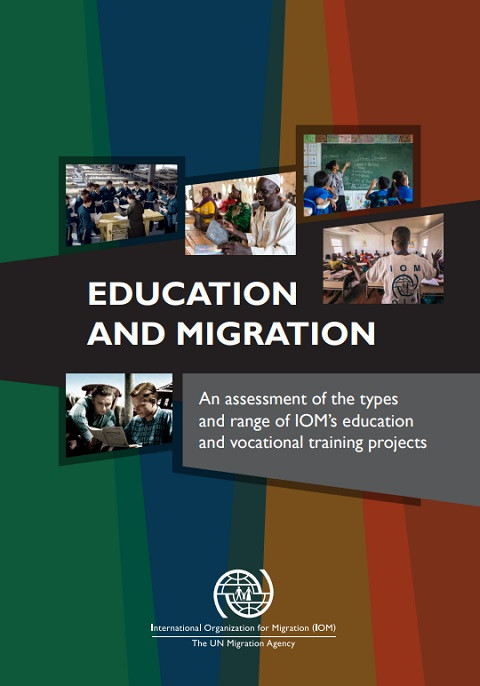 Education and Migration: An Assessment of the Types and Range of IOM’s Education and Vocational Training Projects Année de publication: 2018 Auteur: Rocio Sanz Auteur institutionnel: International Organization for Migration (IOM) This report presents the results of the assessment of the range and types of IOM’s education and vocational training programmes as of December 2017. Within an overall framework of reviewing the Organization’s role in supporting the development and implementation of migration policy, the purpose of this assessment is to understand how these programmes contribute to education and vocational training outcomes, especially in the specific context of SDG 4 (Quality Education) of the 2030 Agenda for Sustainable Development.
 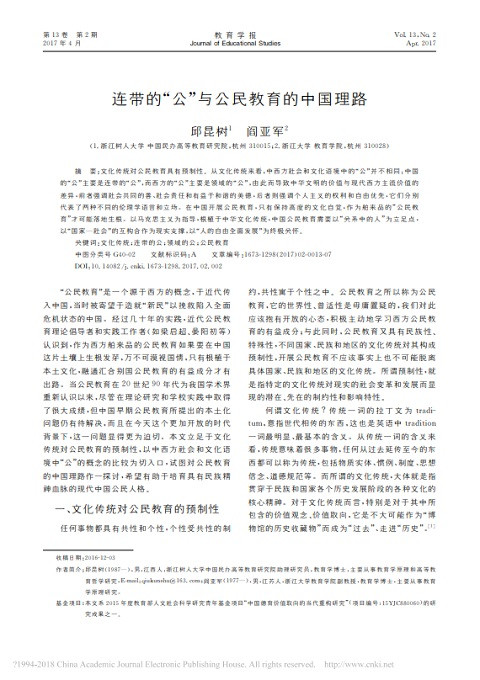 The Connective “Public” and the Chinese Logic of Citizenship Education (Journal of Educational Studies; Vol. 13, No. 2) Année de publication: 2017 Auteur: Qiu Kunshu | Yan Yajun Auteur institutionnel: Beijing Normal University Cultural tradition has pre-conditionality on citizenship education. From the point of view of cultural tradition, the “public” in citizenship education has different meaning in China and the West: Chinese “public” is mainly a kind of connective “public”, while the western “public” mainly means domanial “public”. This lead to the difference in Chinese and modern western main stream values. The former emphasizes the common goodness of the whole society, social responsibility and virtue which is favorable to harmony, while the later emphasizes individualist rights and priority of freedom. They represent two kinds of ethics language and position. It is essential to maintain high cultural awareness for the implementation of citizenship education in China and the localization of exotic “citizenship education”. Guided by Marxism and rooted in Chinese cultural tradition, Chinese citizenship education should be based on “people in relation”, use the actual support of “state-society” cooperation, and offer ultimate concern to “the free and comprehensive development of human”. 连带的“公”与公民教育的中国理路 (教育学报; Vol. 13, No. 2) Année de publication: 2017 Auteur: Qiu Kunshu | Yan Yajun Auteur institutionnel: Beijing Normal University 文化传统对公民教育具有预制性。从文化传统来看,中西方社会和文化语境中的“公”并不相同:中国 的“公”主要是连带的“公”,而西方的“公”主要是领域的“公”,由此而导致中华文明的价值与现代西方主流价值的 差异,前者强调社会共同的善、社会责任和有益于和谐的美德,后者则强调个人主义的权利和自由优先,它 们 分 别 代表了两种不同的伦理学语言和立场。在中国开展公民教育,只有保持高度的文化自觉,作 为 舶 来 品 的“公 民 教 育”才可能落地生根。以马克思主义为指导,根植于中 华 文 化 传 统,中国公民教育需要以“关 系 中 的 人”为 立 足 点, 以“国家—社会”的互构合作为现实支撑,以“人的自由全面发展”为终极关怀。
 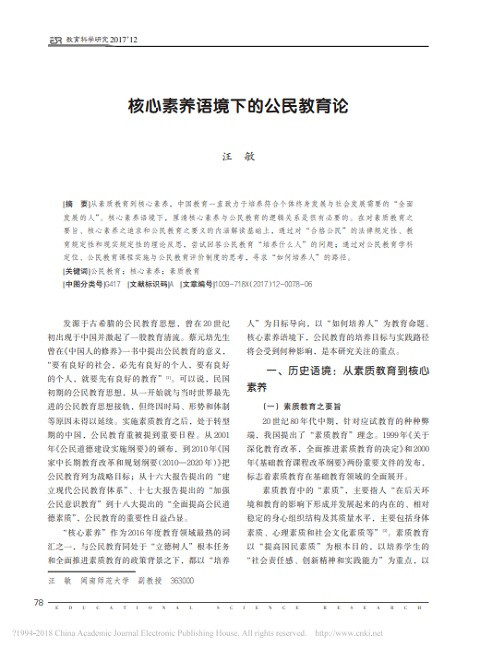 The Theory of Civic Education in the Context of Key Competence (Educational Science Research) Année de publication: 2017 Auteur: Wang Min Auteur institutionnel: Beijing Open University From quality-oriented education to key competence, Chinese education has always been committed to cultivating “well-rounded people” who meet the needs of individual lifelong development and social development. In the context of key competence, it is necessary to clarify the logical relationship between key competence and civic education. On the basis of understanding the essence of quality education, the pursuit of key competence and the connotation of civic education, this paper attempts to answer the question of “who to train” in civic education through theoretical reflection on the legal, educational and practical provisions of “qualified citizen”. Through thinking about the subject orientation, curriculum implementation and evaluation system of civic education, this paper seeks the way of “how to train people”.