
Ressources
Explorez une large gamme de ressources sur le GCED afin d’approfondir votre compréhension et de renforcer vos activités de recherche, de plaidoyer, d’enseignement et d’apprentissage.
2,255 résultats trouvés
 Bridge Zambia Project Report Année de publication: 2019 Auteur institutionnel: Korean National Commission for UNESCO | Zambia National Commission for UNESCO The Bridge Zambia Project (the Project) has been implemented jointly between the Korean National Commission for UNESCO (KNCU) and its partners in Zambia since October 2010. In March 2019, KNCU’s involvement in the Project will come to an end and Zambia will take over full responsibility for the Project as it goes forward. The Project has supported grassroots activities through the establishment of a Community Learning Centre (CLC), which acts as a hub of community-led development activities in non-formal education. The Project has mobilized and empowered communities and local leadership to take charge of non-formal education programmes with the aim of assisting Zambia to attain UNESCO’s Education for All goals and UN Sustainable Development Goal 4 (SDG 4), concerning education quality.
  Message from Ms Audrey Azoulay, Director-General of UNESCO, on the occasion of World Environment Day, 5 June 2018 Année de publication: 2018 Auteur institutionnel: UNESCO. Director-General, 2017-2025 (Azoulay, A.) This message was delivered by Audrey Azoulay, Director-General of UNESCO, on the occasion of World Environment Day, on 5 June 2018. 联合国教科文组织总干事奥德蕾·阿祖莱 世界环境日致辞:“塑战速决” Année de publication: 2018 Auteur institutionnel: UNESCO. Director-General, 2017-2025 (Azoulay, A.) 2018年6月5日, 联合国教科文组织总干事奥德蕾·阿祖莱世界环境日致辞
 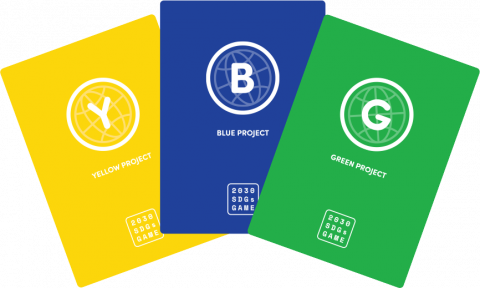 2030 SDGs GAME Année de publication: 2016 Auteur institutionnel: Imacocollabo The 2030 SDGs Game is a multiplayer, in-person, card-based game that simulates taking the “real world” into the year 2030. Designed in Japan in 2016, this experience has become a powerful and impactful social phenomenon in Japan, earning extensive media coverage and reaching over 12,000 participants last year. 2030 SDGs Game events are held in corporate, governmental, educational, and community settings, and now has over 100 trained facilitators in a rapidly growing community within Japan. Now, due to a growing demand to bring the game to the rest of the world, we have created an English edition and are beginning to introduce it to a wider audience overseas. The game is designed to be played with anywhere from 5 to 50 players. (That number can be expanded to a maximum of around 200 with multiple parallel ‘worlds’ operating at the same time.) Play time is approximately 1 hour; with the necessary explanation and reflection afterward, it requires a minimum of 90 minutes, and generally works best in a 2 ½ hour time frame.
  تقرير أهداف التنمية المستدامة 2017 Année de publication: 2017 Auteur institutionnel: United Nations (UN) يستعرض تقرير أهداف التنمية املستدامة لعام 2017 التقدم المحرز نحو تحقيق الأهداف السبعة عشر في السنة الثانية من تنفيذ خطة التنمية المستدامة لعام 2030 .ويستند التقرير إلى أحدث البيانات المتاحة. وهو يسلط الضوء على المكاسب والتحديات في الوقت الذي يتحرك فيه المجتمع الدولي صوب تحقيق الطموحات والمباديء التي تبناها في خطة عام 2030.
 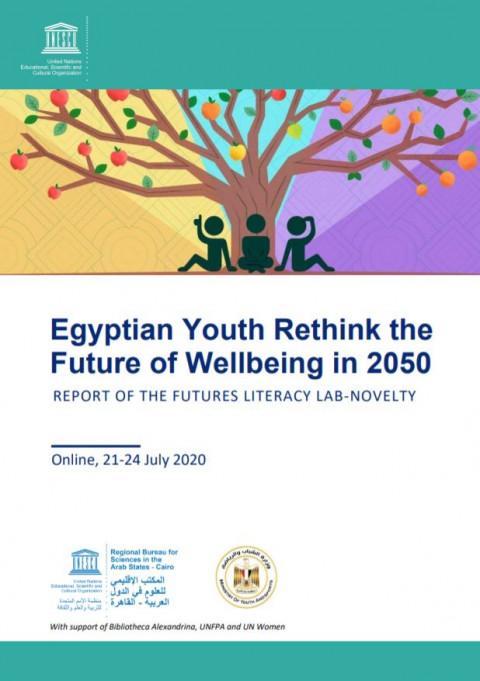 Egyptian Youth Rethink the Future of Wellbeing in 2050: Report of the Futures Literacy Lab-novelty; Online, 21-24 July 2020 Année de publication: 2020 Auteur institutionnel: UNESCO Cairo The UNESCO (Cairo Office and Research, Policy and Foresight Section) and the Egyptian Ministry of Youth and Sport, with support of Bibliotheca Alexandrina, UNFPA and UN Women, organized a Futures Literacy Laboratory - Novelty (FLL-N) entitled “Egyptian Youth Rethink the Future of Wellbeing in 2050”. Held online during 21-24 July 2020, and deploying the latest advances in anticipatory systems thinking and collective intelligence processes, the Lab brought together around 30 persons from across Egypt for 8-hours intensive work spread over a week’s time.Thirty young participants explored the topic of ‘wellbeing’ in Egypt in 2050 using a tool called the Futures Literacy Lab-Novelty (FLL-N). Wellbeing is an open concept that invites many different ways of defining what it means to ‘live well’. The participants engaged in learning-by-doing activities that exercised their imaginations, exploring questions like, how do people in 2050 in Egypt describe ‘wellbeing’? What is daily life like such that people in 2050 believe that they have achieved ‘wellbeing’? By working together to imagine the future this Lab provided an opportunity to better understand the origins of what we imagine, why and how we create the images of the future, and crucially the powerful influence such images have on our fears and hopes, perceptions and choices.
 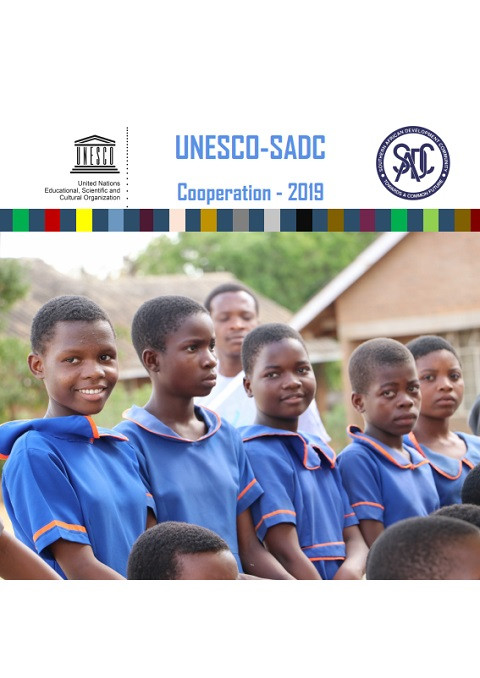 UNESCO-SADC: Cooperation 2019 Année de publication: 2020 Auteur institutionnel: UNESCO Harare UNESCO and SADC have a long standing history that culminated in the signing of a Memorandum of Understanding (MOU) in 1996. In 2017, UNESCO and SADC developed a Joint Programme of Action (JPA) which identifies concrete area of cooperation. These include education; technical and vocational education and training (TVET); youth; HIV and health education; science, technology and innovation (STI); water security, renewable energy and disaster risk management; culture; communication and information (including media for SDGs); and data for development.The purpose of this magazine is to highlight UNESCO’ work to improve education quality in the southern Africa region in partnership with SADC.
  Eighth National Communication and Fifth Biennial Report of the Republic of Kazakhstan to the UN Framework Convention on Climate Change Année de publication: 2023 Auteur institutionnel: UNDP Kazakhstan The 8th National Communication and the 5th Biennial Report of the Republic of Kazakhstan to the UN Framework Convention on Climate Change was prepared by a group of national experts under a joint project of the Ministry of Ecology, Geology and Natural Resources of the Republic of Kazakhstan and the United Nations Development Programme in Kazakhstan with the financial support of the Global Environment Facility. The publication contains all available information on climate change issues in accordance with internationally available guidance. Information from open sources, data from national and international organizations, including governmental departments and agencies were used for composing this report.
 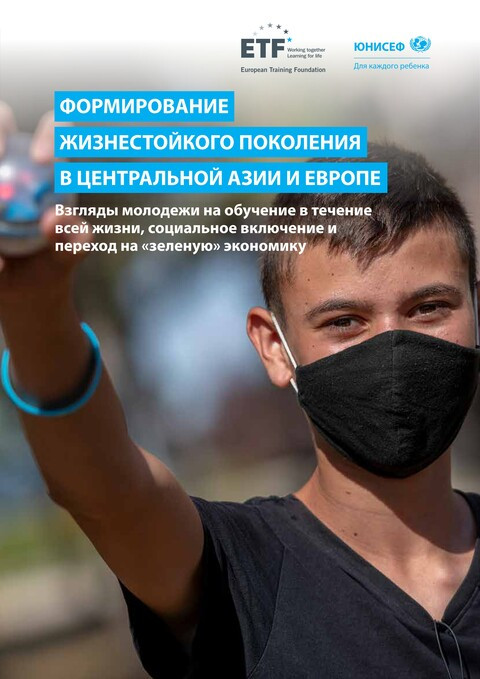 Formation of a Resilient Generation in Central Asia and Europe Année de publication: 2021 Auteur institutionnel: ЮНИСЕФ | Европейский фонд образования In this joint report of the United Nations Children's Fund (UNICEF) and the European Education Foundation (ETF) reflect the views, views and sentiments of young people in Central Asia and Europe, which will be taken into account in regional and international discussions on options for creating more effective lifelong learning systems, more inclusive communities and a more "green" society. Формирование жизнестойкого поколения в Центральной Азии и Европе Année de publication: 2021 Auteur institutionnel: ЮНИСЕФ | Европейский фонд образования В этом совместном отчете Детского фонда ООН (ЮНИСЕФ) и Европейского фонда образования (ЕФО) отражены точки зрения, взгляды и настроения молодежи в регионе ЕЦА, которые будут учитываться в региональных и международных обсуждениях вариантов создания более эффективных систем обучения в течение всей жизни, более инклюзивных сообществ и более «зеленого» общества.