
Ressources
Explorez une large gamme de ressources sur le GCED afin d’approfondir votre compréhension et de renforcer vos activités de recherche, de plaidoyer, d’enseignement et d’apprentissage.
2,255 résultats trouvés
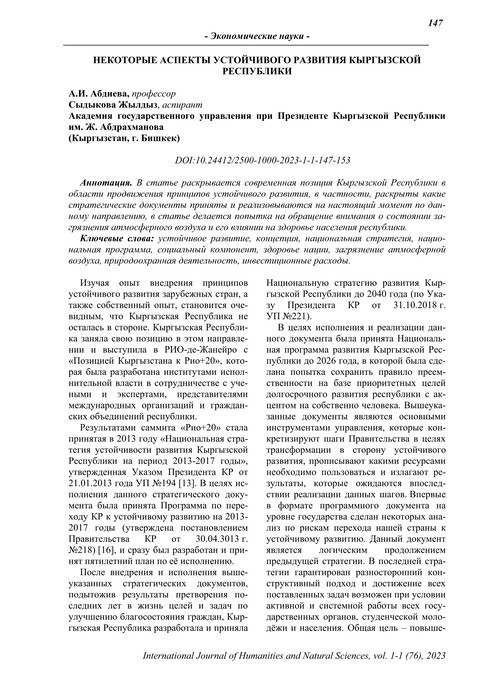 Some Aspects of Sustainable Development of the Kyrgyz Republic (International Journal of Humanities and Natural Sciences; Vol.1-1, No.76) Année de publication: 2023 Auteur: А.И. Абдиева | Сыдыкова Жылдыз The article reveals the modern position of the Kyrgyz Republic in the field of promoting the principles of sustainable development, in particular, it discloses what strategic documents have been adopted and are currently being implemented in this area, the article attempts to draw attention to the state of air pollution and its impact on the health of the population of the republic. Некоторые аспекты устойчивого развития Кыргызской республики (Международный журнал гуманитарных и естественных наук; Vol.1-1, No.76) Année de publication: 2023 Auteur: А.И. Абдиева | Сыдыкова Жылдыз В статье раскрывается современная позиция Кыргызской Республики в области продвижения принципов устойчивого развития, в частности, раскрыты какие стратегические документы приняты и реализовываются на настоящий момент по данному направлению, в статье делается попытка на обращение внимания о состоянии загрязнения атмосферного воздуха и его влиянии на здоровье населения республики.
 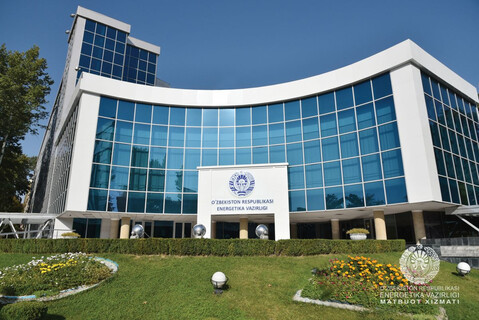 Transition to “Green Economy” in Uzbekistan: Opportunities and Challenges Année de publication: 2023 Auteur: Nodira Mukhammadkulova | Shakhrizoda Rakhimova Auteur institutionnel: Central Asian Bureau for Analytical Reporting (CABAR) Climate change issues and the crisis in the energy market have led to the development of technologies for the use of alternative, more environmentally friendly and possibly renewable resources, which are called “green” technologies. In Uzbekistan, the program of transition to a green economy and green growth until 2030 was adopted at the end of 2022. According to the program, by 2030, the share of renewable energy sources (RES) used will be about 30% of the country’s total electricity generation. The issue of awareness of the population as consumers about the relevance of diversification of energy consumption, advantages and disadvantages of alternative energy sources is relevant. Возможности и вызовы перехода на "зеленую экономику" в Узбекистане Année de publication: 2023 Auteur: Nodira Mukhammadkulova | Shakhrizoda Rakhimova Auteur institutionnel: Central Asian Bureau for Analytical Reporting (CABAR) Вопросы изменения климата и кризис на рынке энергоресурсов обусловили развитие технологий по использованию альтернативных, более экологичных и по возможности возобновляемых ресурсов, которые получили название «зеленые» технологии. В Узбекистане программу перехода к “зеленой” экономике и “зеленому” росту до 2030 года приняли в конце 2022 года. Согласно программе, к 2030 году доля используемых возобновляемых источников энергии (ВИЭ) будет составлять около 30% общей выработки электроэнергии в стране. Актуальным является вопрос осведомленности населения как потребителей об актуальности диверсификации энергопотребления, преимуществах и недостатках альтернативных видов источников энергии.
  The SDG second half: Ideas for doing things differently Année de publication: 2023 Auteur: Amar Bhattacharya | Margaret Biggs | Matthew Bishop | Caren Grown | George Ingram | Homi Kharas | John W. Mcarthur | Sarah E. Mendelson | Jane Nelson | Tony Pipa | Naheed Sarabi | Jacob Taylor | Priya Vora | Rebecca Winthrop Auteur institutionnel: Center for Sustainable Development at Brookings This short compendium captures a cross section of SDG-focused insights and recommendations from CSD-affiliated scholars. Each brief essay describes something with the potential to be done differently during the second half of the SDG era. Across a dozen contributions, topics range from reframing media coverage of the SDGs to measuring and elevating the role of the private sector; from participatory approaches to transforming education systems to new learning paradigms for human rights; from better risk-taking in fragile countries to improving infrastructure and services for care; from fit-for-purpose multilateral development banks to a purpose-driven fund to end extreme poverty; from turbo-charged Canadian SDG approaches to renewed American SDG leadership; from breakthroughs in digital public infrastructure to innovative frontiers in the digitally empowered methods of collective behavior science.
  Le guide qui rend ton évènement plus éco-citoyen Auteur institutionnel: eventecocitoyen Ce guide sert à faciliter le passage à l’action de tous et toutes en proposant des conseils, outils, témoignages et ressources pratiques pour rendre les concerts et/ou festivals de Belgique plus éco-citoyens ! Pour permettre un questionnement, une remise en question en soi, qui implique ensuite des changements de comportements. Ici on vous donne des conseils/trucs et astuces mais aussi des ressources pour vous permettre de réfléchir autrement, d’agrandir notre angle de vue. This guide serves: To help everyone take action by offering advice, tools, testimonials and practical resources to make Belgium's concerts and/or festivals more eco-citizen! To enable questioning, self-questioning, which then implies changes in behavior. Here we give you tips and tricks, but also resources to help you think differently, to widen our angle of vision.
  Восьмое Национальное Сообщение и Пятый Двухгодичный Доклад Республики Казахстан Рамочной конвенции ООН об изменении климата Année de publication: 2023 Auteur institutionnel: UNDP Kazakhstan 8-е Национальное Сообщение и 5-й Двухгодичный Доклад Республики Казахстан Рамочной Конвенции ООН об Изменении Климата подготовлен группой национальных экспертов в рамках совместного проекта Министерства экологии, геологии и природных ресурсов Республики Казахстан и Программы развития ООН при финансовом содействии Глобального Экологического Фонда. В публикации содержится вся доступная информация о вопросах изменения климата в соответствии с международным доступным руководством. Для составления данного доклада использовалась информация из открытых источников, данные национальных и международных организаций, включая правительственные ведомства и агентства.
  World Social Report 2023 : Leaving No One Behind in an Ageing World Année de publication: 2023 Auteur institutionnel: UN. Department of Economic and Social Affairs (UN. DESA) Population ageing is a defining global trend of our time. People are living longer, and more are older than ever before. Spectacular improvements in health and survival and reductions in fertility have driven this momentous shift, which has begun or is expected to begin soon in all countries and areas. This change brings both challenges and opportunities as countries strive to achieve the Sustainable Development Goals (SDGs). In 2022, the world marked the twentieth anniversary of the adoption of the Madrid International Plan of Action on Ageing. To commemorate this landmark, the World Social Report 2023 explores the economic and social implications of the ageing of the human population. It builds on the Plan of Action’s framework for national policies to create equitable, inclusive societies for people of all ages, providing recommendations to put the rights and well-being of older persons at the centre, across the life course. Population ageing is an inevitable result of the demographic transition towards longer lives and smaller families. While the shift towards older populations is largely irreversible, collective actions and policy decisions shape its path and consequences. Postponing critical measures that allow societies to benefit from and adapt to population ageing would impose high social, economic, fiscal and health-related costs, for both current and future generations. By contrast, with appropriate foresight and planning, Governments can manage the challenges from population ageing while enhancing opportunities for all people to thrive and ensuring that no one is left behind. As elaborated in this report, population ageing needs to be widely understood as more than just a set of discrete concerns mainly for one group of people who have advanced beyond a given age. Ageing touches all parts of economies and societies, from health care and education to employment and taxation. Each stage of life can contribute to or detract from well-being at older ages.
 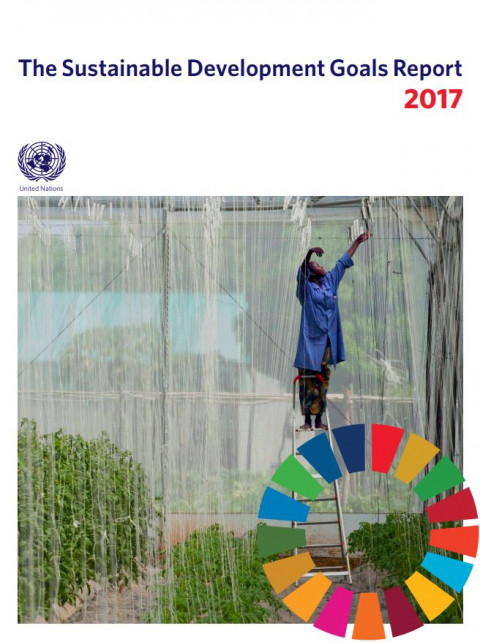 The Sustainable Development Goals Report 2017 Année de publication: 2017 Auteur institutionnel: United Nations (UN) In adopting the 2030 Agenda for Sustainable Development, world leaders resolved to free humanity from poverty, secure a healthy planet for future generations, and build peaceful, inclusive societies as a foundation for ensuring lives of dignity for all.This report provides a snapshot of our efforts to date. It stresses that high-level political leadership and new partnerships will be essential for sustaining momentum. It also underscores the need for reliable, timely, accessible and disaggregated data to measure progress, inform decision-making and ensure that everyone is counted.
  Faith for Earth : a Call for Action Année de publication: 2020 Auteur institutionnel: United Nations Environment Programme (UNEP) | Inter-Agency Network on Women and Gender Equality (IANWGE) The UN Environment Programme (UNEP) and the Parliament of the World’s Religions today released a new book, "Faith for Earth — A Call for Action", which gives readers a wide-ranging look at the history and diversity of faith teachings and their advocacy for the protection of the environment. The online book and its print edition were launched on 8 October 2020 during the Faith for Nature Global Conference, (5th - 8th October) in Skálhol, Iceland. The book provides a comprehensive overview of the faith traditions and scientific findings that underpin the understandings and reflections of world religions concerning environmental sustainability. It includes clear statements from sacred scripts and faith leaders. It underlines that protecting the Earth, restoring ecosystems, preventing pollution, and leaving behind a healthy environment for the next generations is an ethical, moral and spiritual responsibility. With more than one hundred million houses of worship around the globe, adapting green building principles is a massive demonstration of commitment to sustainability.