
Ressources
Explorez une large gamme de ressources sur le GCED afin d’approfondir votre compréhension et de renforcer vos activités de recherche, de plaidoyer, d’enseignement et d’apprentissage.
2,255 résultats trouvés
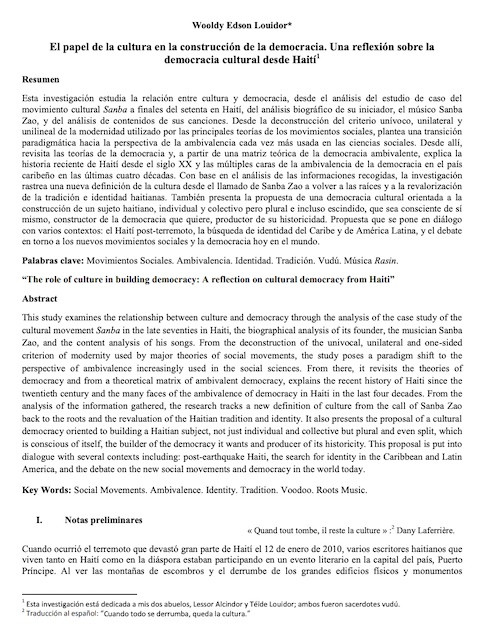 El papel de la cultura en la construcción de la democracia: Una reflexión sobre la democracia cultural desde Haití Année de publication: 2015 Auteur: Wooldy Edson Louidor Auteur institutionnel: Latin American Council of Social Sciences (CLACSO) Esta investigación estudia la relación entre cultura y democracia, desde el análisis del estudio de caso del movimiento cultural Sanba a finales del setenta en Haití, del análisis biográfico de su iniciador, el músico Sanba Zao, y del análisis de contenidos de sus canciones. Desde la deconstrucción del criterio unívoco, unilateral y unilineal de la modernidad utilizado por las principales teorías de los movimientos sociales, plantea una transición paradigmática hacia la perspectiva de la ambivalencia cada vez más usada en las ciencias sociales. Desde allí, revisita las teorías de la democracia y, a partir de una matriz teórica de la democracia ambivalente, explica la historia reciente de Haití desde el siglo XX y las múltiples caras de la ambivalencia de la democracia en el país caribeño en las últimas cuatro décadas. Con base en el análisis de las informaciones recogidas, la investigación rastrea una nueva definición de la cultura desde el llamado de Sanba Zao a volver a las raíces y a la revalorización de la tradición e identidad haitianas.
  The 2030 Agenda and the Regional Gender Agenda: Synergies for Equality in Latin America and the Caribbean (Asuntos de Género; no. 143) Année de publication: 2017 Auteur: Nicole Bidegain Ponte Auteur institutionnel: UN. Economic Commission for Latin America and the Caribbean (ECLAC) This document analyzes the 2030 Agenda for Sustainable Development and its Sustainable Development Goals (SDGs) in light of the challenges and priorities for gender equality and the rights and autonomy of women in Latin America and the Caribbean. Illustrative examples of the interrelationships between goals and targets of the 2030 Agenda are presented, and it warns about the importance of a comprehensive approach to ensure that progress in some of the SDGs is not made through means that may hinder the achievement of the goals and targets related to gender equality and women's rights. La Agenda 2030 y la Agenda Regional de Género: Sinergias para la igualdad en América Latina y el Caribe (Asuntos de Género; no. 143) Année de publication: 2017 Auteur: Nicole Bidegain Ponte Auteur institutionnel: UN. Economic Commission for Latin America and the Caribbean (ECLAC) En este documento se analiza la Agenda 2030 para el Desarrollo Sostenible y sus Objetivos de Desarrollo Sostenible (ODS) a la luz de los desafíos y prioridades para la igualdad de género y los derechos y la autonomía de las mujeres en América Latina y el Caribe. Se presentan ejemplos ilustrativos sobre las interrelaciones entre objetivos y metas de la Agenda 2030, y se advierte sobre la importancia de un abordaje integral para asegurar que el progreso en algunos de los ODS no se realice a través de medios que puedan obstaculizar el logro de los objetivos y metas vinculados a la igualdad de género y los derechos de las mujeres.
 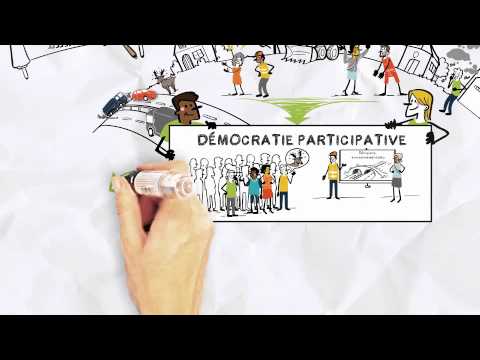 Why and How to Move Towards Participatory Democracy Année de publication: 2015 Auteur institutionnel: Fondation pour la Nature et l'Homme Co-constructing tomorrow's solutions is the major challenge of participatory democracy. However, the participation of citizens in decisions is not always obvious and today many projects are contested in the territory. Solutions exist to involve citizens more directly in environmental decisions, discover these issues and solutions in 3 minutes! Pourquoi et comment aller vers une démocratie participative Année de publication: 2015 Auteur institutionnel: Fondation pour la Nature et l'Homme Co-construire les solutions de demain, tel est l’enjeu majeur de la démocratie participative. Cependant, la participation des citoyens aux décisions n’est pas toujours évidente et aujourd’hui de nombreux projets sont contestés sur le territoire. Des solutions existent pour impliquer plus directement les citoyens dans les décisions environnementales, découvrez en 3 minutes ces enjeux et solutions !
  Global Citizenship Education, Year 2019-2020 Année de publication: 2020 Auteur institutionnel: CRÉDIL Joliette As part of our 2019-2020 Annual General Meeting, our colleague, Laura Vergara has created this video to keep you informed of the highlights of this year's Global Citizenship Education component! Discussion on living together, intercultural dialogue, recognition and respect for cultural diversity, migration issues in Quebec and around the world, climate change and social justice and gender equality. Éducation à la citoyenneté mondiale, année 2019-2020 Année de publication: 2020 Auteur institutionnel: CRÉDIL Joliette Dans le cadre de notre assemblée générale annuelle 2019-2020, notre collègue, Laura Vergara a créé cette vidéo pour vous tenir informer des aspects marquants du volet Éducation à la citoyenneté mondiale de cette année! Discussion sur le vivre-ensemble, le dialogue interculturel, la reconnaissance et le respect de la diversité culturelle, les enjeux migratoires au Québec et dans le monde, les changements climatiques et la justice sociale et l’égalité femme-homme.
 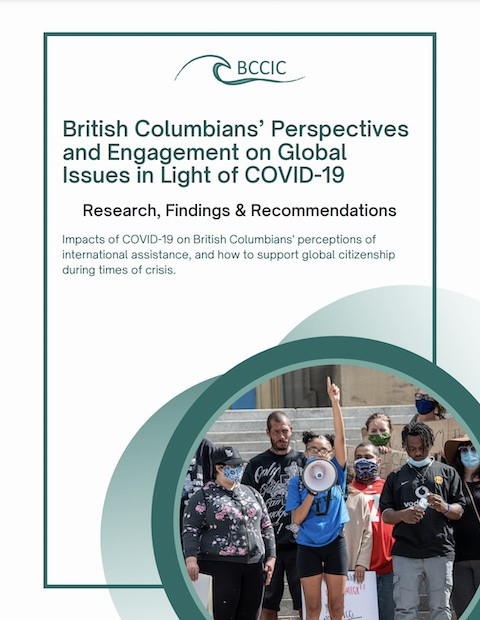 British Columbians’ Perspectives and Engagement on Global Issues in Light of COVID-19 Année de publication: 2022 Auteur: Kaylie D. Higgs Auteur institutionnel: British Columbia Council for International Cooperation (BCCIC) | Kenoli Foundation | Global Affairs Canada (GAC) The COVID-19 pandemic has presented immense challenges and injustices, while also highlighting acts of resilience and possibilities to transition to a more social and environmentally just society. This context of challenge and possibility has led to new and renewed questions around how to navigate these times to promote a just, sustainable and resilient future. For the British Columbia Council for International Cooperation (BCCIC), these questions prompted primary research to explore current public perspectives and to support thriving public engagement and global citizenship initiatives, especially considering the perspectives of British Columbians who are typically less engaged in international cooperation. Compiled and reflected in this report, the key findings of this research are summarized, along with ten recommendations to support public engagement that emerged from this research.
 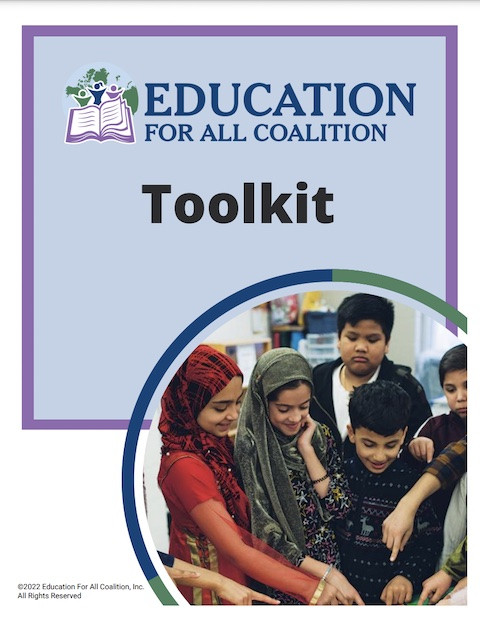 Education for All Coalition: Toolkit Année de publication: 2022 Auteur institutionnel: Education for All Coalition (EFAC) Education for All Coalition (EFAC), Inc. is a global organization that is dedicated to creating education opportunities and finding solutions that empower displaced and disadvantaged children in emergency situations, refugee camps and settlements around the world. We focus on advocacy, capacity building, climate education, and social-emotional learning to enhance the overall well-being of children. We promote the physical, social, and cognitive development of all children. Fostering healthy life habits and environmental sustainability are integral parts of our programs to improve conditions for all children so they can become thriving global citizens with global competencies and unlimited potentialThe goal of the “Where Friendship Blooms” resource guide is to foster a fun-filled program for early learners up to age 8 that will result in evidence-based positive outcomes. The package includes: Lesson plans Coping strategies Activities and play Breathing exercises Classroom Growth Chart Tool Classroom Climate Scale Tool Student Goal Setting Chart Measurement & Evaluation
  Citizenship and Civics: Learn From These Young Senegalese Leaders Année de publication: 2020 Auteur institutionnel: Vibe Radio Senegal This is a video of young Senegalese leaders presenting on Citizenship and civics.