
Ressources
Explorez une large gamme de ressources sur le GCED afin d’approfondir votre compréhension et de renforcer vos activités de recherche, de plaidoyer, d’enseignement et d’apprentissage.
2,255 résultats trouvés
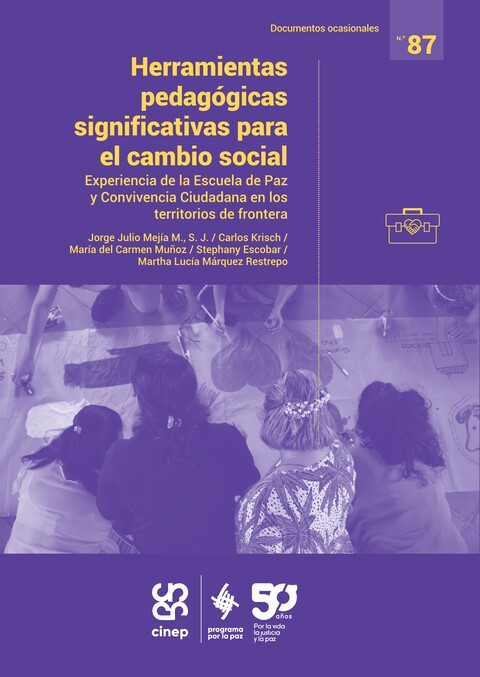 Herramientas pedagógicas significativas para el cambio social Année de publication: 2023 Auteur: Jorge Julio Mejía | Carlos Krisch | Sthepany Escobar | Martha Lucía | Márquez Restrepo | María Del Carmen Muñoz Auteur institutionnel: Center for Research and Popular Education / Program for Peace (CINEP/PPP) En este documento se recogen las herramientas pedagógicas significativas para promover procesos de cambio social a través de experiencias formativas durante doce años en territorios de la frontera colombo-venezolana. Mediante talleres y actividades, los participantes han experimentado transformaciones en actitudes y prácticas que les han resultado útiles para comprender la frontera como un espacio compartido.
 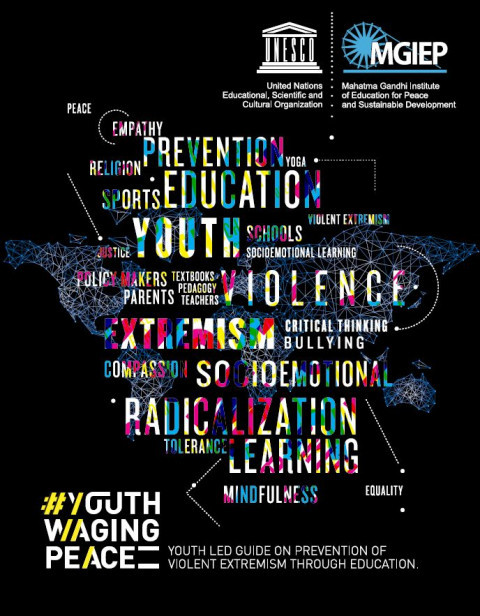 Youth Led Guide on Prevention of Violent Extremism through Education Année de publication: 2017 Auteur: Carolyn Nash | Yulia Nesterova | Kenneth Primrose | Wing Yu Alice Chan | Rios, Paul A. Chan | María José Velásquez Flores | Aniqah Zowmi Auteur institutionnel: Mahatma Gandhi Institute of Education for Peace and Sustainable Development (MGIEP) In September 2016, the education sector from the UNESCO headquarters and the UNESCO category 1 research Institute, the UNESCO Mahatma Gandhi Institute of Education for Peace and Sustainable Development(MGIEP) organised the first International Conference on Prevention of Violent Extremism through Education: Taking Action, in New Delhi, India. The usual plethora of reports and guides produced by experts on the subject, roundtables and expert panels were organised.But something different also happened. UNESCO MGIEP brought 50 youth from across the world rigorously selected through six week online discussion on the subject to participate in a first of its kind, “Talking Across Generations on Education (TAGe)” event. This event organised as a plenary session—not a side or lunch event—brought together these youth in a non-hierarchical “flat” dialogue with about 12 senior policymakers on the challenges and opportunities the youth see in preventing violent extremism through education.The conference culminated with the presentation of a “Youth Action Plan” containing three clear tangible action points. One action point was the development of a youth-led guide on Prevention of Violent Extremism through Education. This Guide is the result of that call to action.The Institute circulated a global call to youth who were willing to take up the challenge of producing the Guide. After a rigorous search based on a well-defined set of criteria, two coordinating lead authors were identified. These authors were then tasked to find the remaining authors who they saw fit to contribute to the Guide and this team then reached out to the wider group of youth to solicit their experiences and guidance in producing the Guide. The youth have done their part. They have reached out to more than 2,000 young people from more than 50 countries, collated their ideas and experiences and finally featured more than 150 unique voices into this document.
  A Documentary about Different Cultures and Civilizations Année de publication: 2017 Auteur institutionnel: Egypt News The documentary talks about the differences between cultures and civilizations. It talks about the importance of cross-fertilization between civilizations for a happy life and sustainable development. فيلم تسجيلى عن اختلاف الثقافات والحضارات Année de publication: 2017 Auteur institutionnel: Egypt News يتحدث الفيلم الوثائقي عن الاختلافات بين الثقافات والحضارات. ويتحدث عن اهمية التلاقح بين الحضارات للعيش السعيد والتنمية المستدامة.
  The Sultan Qaboos Project for the Humanitarian Année de publication: 2019 Auteur institutionnel: Al Shabiba The program deals with the Human Recombinant Project, its importance and objectives. The project came with the blessing of the late Sultan in order to gather the efforts of nations to improve human lives, and to raise human awareness of the importance of a shared global ethics system. مشروع السلطان قابوس للمؤتلف الإنساني Année de publication: 2019 Auteur institutionnel: Al Shabiba البرنامج يتطرق لمشروع المؤتلف الإنساني وأهميته وأهدافه. المشروع جاء بمباركة من السلطان الراحل من أجل جمع جهود الأمم في تحسين حياة البشر، ولإثارة الوعي الانساني بأهمية منظومة الاخلاق العالمية المشتركة.
  The Ratio of the National and Universal in the Sphere of Spirituality (on the example of Central Asia) Année de publication: 2015 Auteur: Ranokhon Tursunova The ratio national and universal in the sphere (Central Asia)» on the spiritual revival in the region, the place of human values in the reforms. The transformation of national and universal values in Central Asia, which is represented by a wide range of multiculturalism, ethnic groups, religions, languages traditions and customs. Соотношение национального и общечеловеческого в сфере духовности (на примере Центральной Азии) Année de publication: 2015 Auteur: Ranokhon Tursunova Статья «Соотношение национального и общечеловеческого в сфере духовности (на примере Центральной Азии)» о духовном возрождении в регионе, о месте общечеловеческих ценностях в проводимых преобразованиях. О трансформации национальных и общечеловеческих ценностей в Центральной Азии, которая представлена широким спектром мультикультур, этносов, конфессий, языков, традиций и обычаев.
  Beyond COVID-19: A Feminist Plan for Sustainability and Social Justice Année de publication: 2021 Auteur institutionnel: United Nations Entity for Gender Equality and the Empowerment of Women (UN Women) As the world learns to live with COVID-19, to emerge from the current crisis, and to “build back better”, UN Women’s new Feminist Plan for Sustainability and Social Justice is a visionary but practical roadmap for putting gender equality, social justice, and sustainability at the centre of the recovery. The Feminist Plan maps the ambitious and transformative policies – on livelihoods, care, and the environment – that are needed to build a more equal and sustainable future. To get there, calls for context-specific policy pathways, tailored political strategies, and financing. The plan identifies key levers that can create change and the actors at global, national, local levels that need to take action to move towards this vision. Au-delà du COVID-19 : Un plan féministe de durabilité et de justice sociale Année de publication: 2021 Auteur institutionnel: United Nations Entity for Gender Equality and the Empowerment of Women (UN Women) Alors que le monde apprend à vivre avec le COVID-19, à « reconstruire en mieux » et est mobilisé pour sortir de la crise actuelle, le nouveau « Plan féministe » d’ONU Femmes fournit une feuille de route visionnaire mais concrète visant à placer l’égalité des sexes, la justice sociale et la durabilité au centre de la relance. Le « Plan féministe » cartographie les politiques ambitieuses et transformatrices relatives aux moyens de subsistance, aux soins et à l'environnement qui sont nécessaires pour construire un avenir plus équitable et durable. Pour y parvenir, il appelle à des approches politiques spécifiques au contexte, à des stratégies politiques adaptées et à un financement. Le plan identifie les leviers clés qui peuvent créer un changement ainsi que les actrices et acteurs aux niveaux mondial, national et local qui doivent prendre des mesures pour avancer vers cette vision.