
Ressources
Explorez une large gamme de ressources sur le GCED afin d’approfondir votre compréhension et de renforcer vos activités de recherche, de plaidoyer, d’enseignement et d’apprentissage.
2,275 résultats trouvés
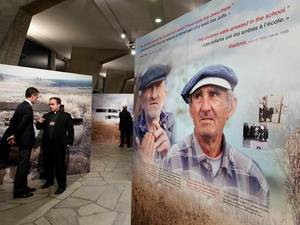 UNESCO Education about the Holocaust The website of UNESCO is a good place to begin an exploration of Holocaust and human rights education. It provides an international structural framework for examining the connection between the Holocaust and genocide and human rights issues. UNESCO Education about the Holocaust Le site de l'UNESCO est un bon endroit pour commencer une exploration de l'Holocauste et éducation aux droits de l’homme. Il fournit un cadre structurel international pour étudier le lien entre les questions d’Holocauste et de génocide et de questions liées aux droits de l'homme.
 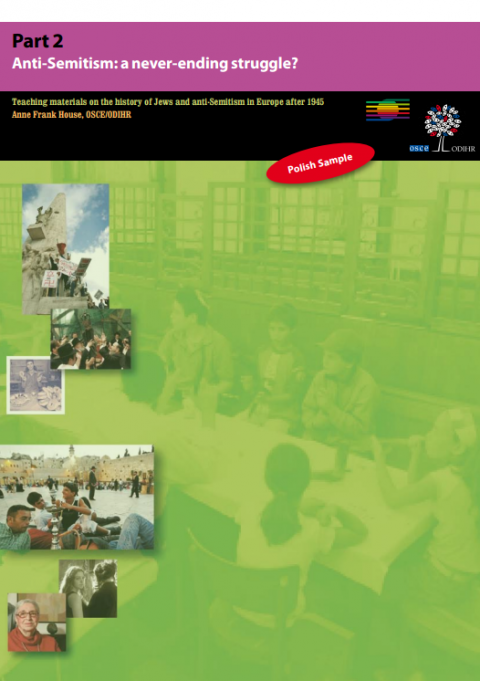 Anti-Semitism: A Never-ending Struggle? (Vol 2) These teaching materials were developed by ODIHR and the Anne Frank House in Amsterdam, in co-operation with experts from several OSCE participating States. Part 2 covers contemporary forms of anti-Semitism. The version available here is an English translation of the Polish version.
  L'Holocauste et le Programme d'information des Nations Unies Des informations détaillées sur le Programme de communication des Nations Unies pour l'Holocauste et peut être trouvé sur ce site. Le matériel pédagogique ainsi que des possibilités de perfectionnement professionnel sont présentés. Addressing Anti-Semitism: Why and How? A Guide for Educators These guidelines provide suggestions for teachers and other educators who feel the need to address issues pertaining to contemporary anti-Semitism. Recognizing that the context may vary in every country, or even in individual classrooms, this document provides educators with a general overview of common manifestations of contemporary anti-Semitism, as well as with some key educational principles and strategies for addressing this complex and challenging subject.
  The Lazy Person’s Guide to Saving the World Auteur institutionnel: United Nations (UN) End extreme poverty. Fight inequality and injustice. Fix climate change. Whoa. The Sustainable Development Goals are important, world-changing objectives that will require cooperation among governments, international organizations and world leaders. It seems impossible that the average person can make an impact. Should you just give up?No! Change starts with you. Seriously. Every human on earth—even the most indifferent, laziest person among us—is part of the solution. Fortunately, there are some super easy things we can adopt into our routines that, if we all do it, will make a big difference.Have a look at just a few of the many things you can do to make an impact!For more information: https://www.un.org/sustainabledevelopment/takeaction/
 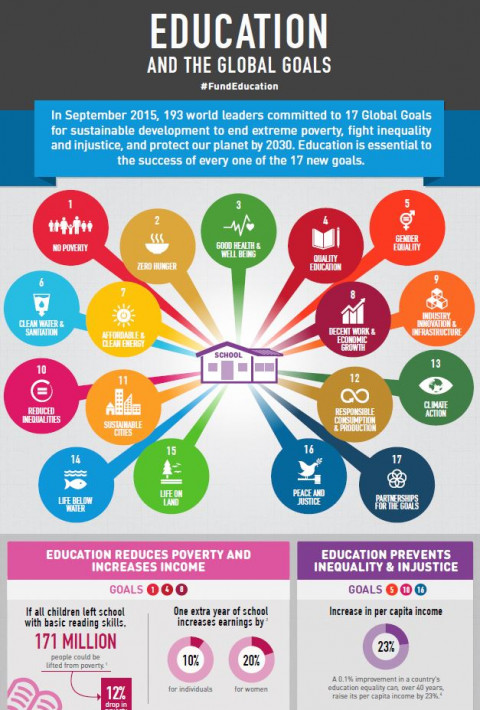 Education and the Global Goals Année de publication: 2015 Auteur institutionnel: Global Partnership for Education (GPE) In September 2015, 193 world leaders committed to 17 Global Goals for sustainable development to end extreme poverty, fight inequality and injustice, and protect our planet by 2030. Education is essential to the success of every one of the 17 new goals.To learn more: https://www.globalpartnership.org/blog/17-ways-education-influences-new-17-global-goals
  UNITED NATIONS HUMAN RIGHTS MECHANISMS and the Right to Education in Insecurity and Armed Conflict Auteur: Takhmina Karimova | Gilles Giacca | Stuart Casey-Maslen Auteur institutionnel: Geneva Academy of International Humanitarian Law and Human Rights This publication, United Nations Human Rights Mechanisms and the Right to Education in Insecurity and Armed Conflict, seeks to respond to the acute need to identify trends in the practice, and contribution, of United Nations human rights mechanisms to the protection of education in times of insecurity and conflict. It is the result of a one-year research project carried out by researchers at the Geneva Academy of International Humanitarian Law and Human Rights (Geneva Academy). The research was overseen by a Legal Advisory Committee and subject to multi-disciplinary peer review. Accompanying the publication is a summary policy document intended to guide future work in this area. An electronic version of each publication is available at http://www.geneva-academy.ch and at http://www.educationandconflict.org.United Nations Human Rights Mechanisms and the Right to Education in Insecurity and Armed Conflict is the second in a series of legal research documents commissioned by Protect Education in Insecurity and Conflict (PEIC) on the protection of education during insecurity and armed conflict. PEIC is a programme of the Education Above All Foundation, an independent organization chaired by Her Highness Sheikha Moza Bint Nasser of Qatar, UNESCO Special Envoy for Basic and Higher Education. A policy, research, and advocacy organization, PEIC is concerned with the protection of education during insecurity and armed conflict. PEIC’s Legal Programme contributes to such protection through the strategic use of international and national law. Its legal research papers are authored by academics and/or practicing lawyers. They are aimed at a varied audience, including international and national lawyers; non-legally trained education experts and policy-makers within governments; political, social, and cultural bodies; and civil society. The Geneva Academy aims to provide instruction of a high academic standard, conduct and promote scientific research, organize training courses and expert meetings, and provide legal expertise in the branches of international law relating to situations of armed conflict. Founded in 2007, the Academy replaces the University Centre for International Humanitarian Law created in 2002 by the Faculty of Law of the University of Geneva and the Graduate Institute of International Studies, now the Graduate Institute of International and Development Studies(IHEID).
  Éducation à la citoyenneté mondiale : Un guide pédagogique Année de publication: 2010 Auteur institutionnel: Fondation Éducation et Déveleoppement L’«éducation à la citoyenneté» a pour but d’enseigner les interdépendances mondiales en faisant des liens globaux. Les élèves étudient les différents aspects du même thème à travers les interdé-pendances, les intérêts divergents, les différentes perceptions et valeurs. Ils doivent être capables de se situer dans un monde globalisé et de développer leurs propres valeurs et attitudes. Le Guide d’éducation à la citoyenneté mondiale propose aux enseignant-e-s une méthode d’enseignement qui permettra à leurs élèves de comprendre les interdépendances mondiales.Les bases théoriques vous présentent le concept de l’éducation à la citoyenneté mondiale. Un guide didactique vous aide à préparer votre enseignement.Des exemples vous proposent des idées de mise en œuvre et du matériel pédagogique.
 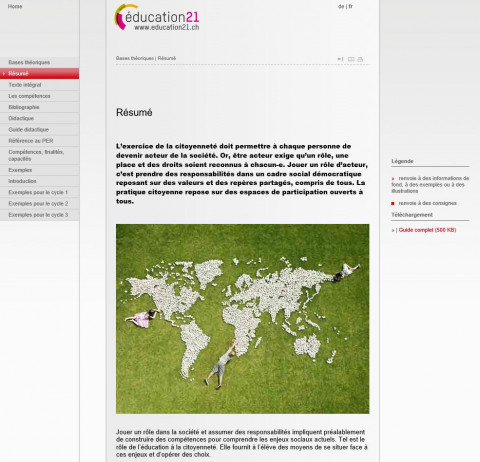 [Résumé] Éducation à la citoyenneté mondiale : Un guide pédagogique Auteur institutionnel: Éducation 21 L’exercice de la citoyenneté doit permettre à chaque personne de devenir acteur de la société. Or, être acteur exige qu’un rôle, une place et des droits soient reconnus à chacun-e. Jouer un rôle d’acteur, c’est prendre des responsabilités dans un cadre social démocratique reposant sur des valeurs et des repères partagés, compris de tous. La pratique citoyenne repose sur des espaces de participation ouverts à tous.