
Ressources
Explorez une large gamme de ressources sur le GCED afin d’approfondir votre compréhension et de renforcer vos activités de recherche, de plaidoyer, d’enseignement et d’apprentissage.
1,852 résultats trouvés
 Interrupting Extremism by Creating Educative Turbulence Année de publication: 2014 Auteur: Lynn Davies Auteur institutionnel: Curriculum Inquiry Cet article développe l'idée qu'il est important d'analyser les processus de désapprentissage, autant que d'apprentissage, qui conduisent un individu à adopter des attitudes extrémistes ou violentes. Des exemples tirés de trois pays sont mobilisés pour montrer comment des rencontres intergroupes conduisent à infléchir des comportements rigides : le travail entre groupes ethniques au Sri Lanka, la lutte contre les divisions religieuses en Irlande du Nord à l'aide de classes mixtes, et des initiatives visant à prévenir l'extrémisme violent au Royaume-Uni. Les implications pédagogiques d'une approche par le "désapprentissage" nécessitent de mobiliser les quatre "D": déradicalisation, désubjectivation, désengagement et désistance.
  Education as a Security Issue Auteur: Ian Jamison Auteur institutionnel: Tony Blair Faith Foundation The use of education as both tool and target of religious extremists globally is perhaps one of the most important generational challenges we face today. To ensure that the next generation is open to a more pluralistic world, we must ensure that their education equips them to safely encounter the 'Other'. This not only means improving knowledge, understanding and interaction, but also critically requires investment in developing essential soft skills that can ensure these are properly employed. Education as a Security Issue Auteur: Ian Jamison Auteur institutionnel: Tony Blair Faith Foundation Le recours des extrémistes religieux à l'éducation comme, à la fois, outil et cible est peut-être l'un des défis les plus importants de cette génération, auquel nous sommes confrontés aujourd'hui dans le monde. Pour que la prochaine génération soit ouverte à un monde plus pluraliste, nous devons veiller à ce que leur éducation les prépare à des échanges pacifiques avec « l’Autre ». Cela signifie non seulement d’améliorer les connaissances, la compréhension et l'interaction, mais aussi d’investir urgemment dans le développement des compétences générales essentielles qui en garantissent une bonne utilisation.
  유네스코 이슈 브리프 2024년 제2호: 유네스코 ‘1974 권고’ 개정과 ‘2023 권고’ 채택 이후 한국의 세계시민교육 추진에 대한 시사점 Année de publication: 2024 Auteur: 박순용 Auteur institutionnel: 유네스코한국위원회 Ⅰ. 서론: ‘1974 권고’는 무엇이며 왜 개정이 필요했는가?Ⅱ. 새로운 권고(2023 평화, 인권, 국제이해, 협력, 기본적 자유, 세계시민성, 지속가능발전을 위한 교육 권고: ‘2023 권고’)를 위한 개정 작업 및 채택 과정1. 개정 권고안의 제안 배경2. 권고 개정을 위한 협의와 조율 과정3. 권고 개정안에 대한 한국의 입장Ⅲ. ‘2023 권고’에는 무엇을 새롭게 담았는가?Ⅳ. 결론: ‘2023 권고’ 이행과 한국의 세계시민교육 추진에 대한 시사점
 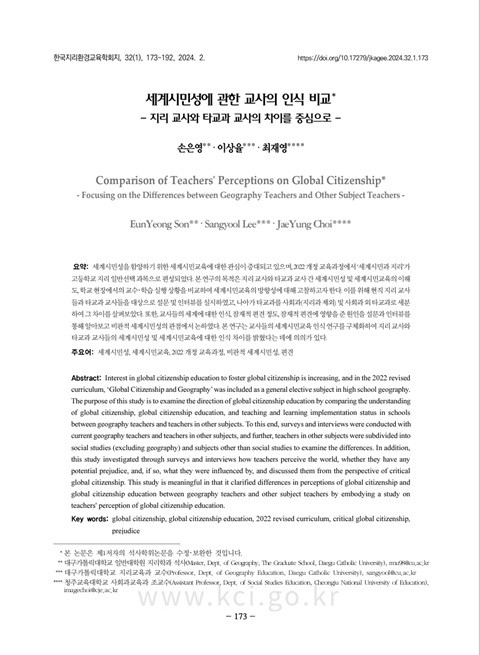 세계시민성에 관한 교사의 인식 비교: 지리 교사와 타교과 교사의 차이를 중심으로 (한국지리환경교육학회지; Vol. 32, No. 1) Année de publication: 2024 Auteur: 손은영 | 이상율 | 최재영 Auteur institutionnel: 한국지리환경교육학회 세계시민성을 함양하기 위한 세계시민교육에 대한 관심이 증대되고 있으며, 2022 개정 교육과정에서 ‘세계시민과 지리’가고등학교 지리 일반선택 과목으로 편성되었다. 본 연구의 목적은 지리 교사와 타교과 교사 간 세계시민성 및 세계시민교육의 이해도, 학교 현장에서의 교수・학습 실행 상황을 비교하여 세계시민교육의 방향성에 대해 고찰하고자 한다. 이를 위해 현직 지리 교사들과 타교과 교사들을 대상으로 설문 및 인터뷰를 실시하였고, 나아가 타교과를 사회과(지리과 제외) 및 사회과 외 타교과로 세분하여 그 차이를 살펴보았다. 또한, 교사들의 세계에 대한 인식, 잠재적 편견 정도, 잠재적 편견에 영향을 준 원인을 설문과 인터뷰를통해 알아보고 비판적 세계시민성의 관점에서 논하였다. 본 연구는 교사들의 세계시민교육 인식 연구를 구체화하여 지리 교사와타교과 교사들의 세계시민성 및 세계시민교육에 대한 인식 차이를 밝혔다는 데에 의의가 있다.
  Установки молодежи современного Казахстана на проявление социальной активности Année de publication: 2018 Auteur: O.V. Kaldybayeva | F.M. Mussataeva | G.Ye. Okasova В статье поднимается проблема исследования социальной активности среди современной молодежи, от степени которой во многом зависит эффективность реализации многих государственных программ. Выводы основаны на результатах социологического исследования, реализованного Научно-исследовательским центром «Молодежь» во второй половине 2017 г. в Республике Казахстан.
  Analysis of Cultural Values of Russian Youth and Central Asian Migrants at the Present Stage (by G. Hofstede methodology) Année de publication: 2022 Auteur: A.I. Evdokimov | I.V. Ponomareva This paper is a summary analysis of cultural values in young Russians and migrants from Central Asian countries, conducted in 2019- 2021 according to the methodology of the Dutch scientist Geert Hofstede. In the sociological The study involved 404 people: 182 representatives of Russian youth and 222 representatives of the migration communities of the Central Asian states. Анализ культурынх ценностей Российской молодежи и мигрантов из стран Центральной Азии на современном этапе (по методике Г. Хофстеде) Année de publication: 2022 Auteur: A.I. Evdokimov | I.V. Ponomareva Данная работа является обобщающим анализом культурных ценностей у молодых россиян и мигрантов из стран Центральной Азии, проведенной в 2019– 2021 гг. по методике голландского ученого Герта Хофстеде. В проведенном социологическом исследовании принимали участие 404 человека: 182 представителя российской молодежи и 222 представителя миграционных сообществ государств Центральной Азии.
 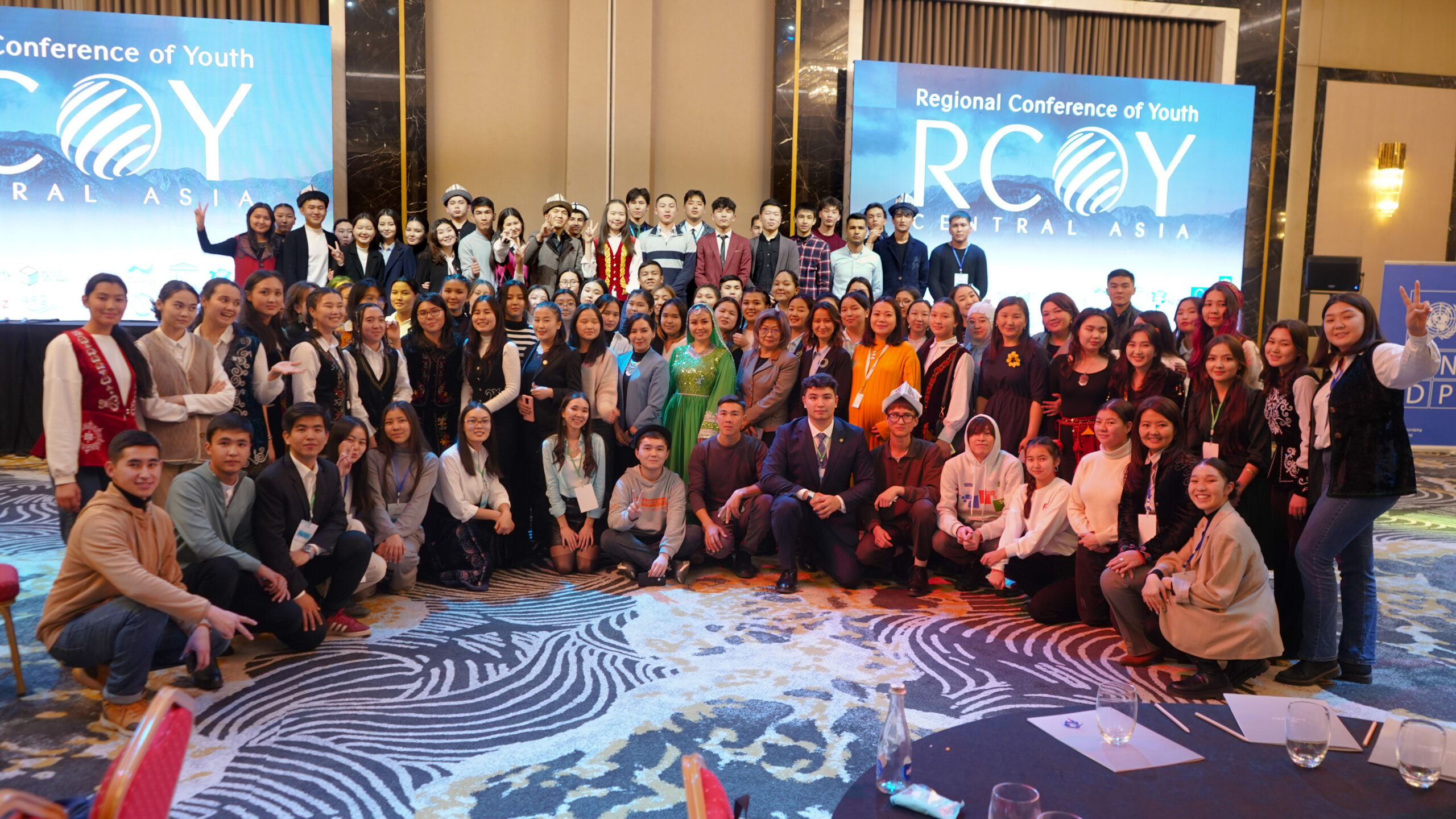 Youth Involvement in Climate Issues in Kazakhstan and Tajikistan: Illusion or Reality? Année de publication: 2024 Auteur: Anisa Abibulloyeva | Mukhtar Amanbayuly Auteur institutionnel: Central Asian Bureau for Analytical Reporting (CABAR) Government agencies in Central Asian countries and international organizations that deal with environmental issues, especially climate change, do not sufficiently take into account the opinions of young environmentalists, according to young experts from Tajikistan and Kazakhstan, Anisa Abibulloyeva and Mukhtar Amanbayuly. Вовлечение молодежи в климатические вопросы в Казахстане и Таджикистане: иллюзия или реальность? Année de publication: 2024 Auteur: Anisa Abibulloyeva | Mukhtar Amanbayuly Auteur institutionnel: Central Asian Bureau for Analytical Reporting (CABAR) Государственные органы стран Центральной Азии и международные организации, которые занимаются проблемами окружающей среды, особенно изменения климата, недостаточно учитывают мнения молодых экологов, считают молодые эксперты из Таджикистана и Казахстана Аниса Абибуллоева и Мухтар Аманбайулы.