
Ressources
Explorez une large gamme de ressources sur le GCED afin d’approfondir votre compréhension et de renforcer vos activités de recherche, de plaidoyer, d’enseignement et d’apprentissage.
55 résultats trouvés
 Reconceptualising global education from the grassroots: the lived experiences of practitioners Année de publication: 2015 Auteur institutionnel: DEEEP This research aims to conceptualise and reflect on DEEEP's understanding of Globalcitizenship Education(i.e., GE) in a way that is practice-led and rooted in practitioners’ experiences. We argue that the strategies practitioners use to negotiate the institutional and conceptual challenges of GE should be more systematically engaged with and central to our understanding of GE, and provide critical lessons for how practitioners can be supported, but also how we can understand the GE that results.
  Education Reform in Pakistan Année de publication: 2014 Auteur institutionnel: International Crisis Group In April 2010, the eighteenth constitutional amendment committed Pakistan to free and compulsory education for all children between the ages of five and sixteen. Yet millions are still out of school, and the education system remains alarmingly impoverished. The madrasa (religious school) sector flourishes, with no meaningful efforts made to regulate the seminaries, many of which propagate religious and sectarian hatred. Militant violence and natural disasters have exacerbated the dismal state of education. The public education system needs to foster a tolerant citizenry, capable of competing in the labour market and supportive of democratic norms within the country and peace with the outside world. Education Reform in Pakistan Année de publication: 2014 Auteur institutionnel: International Crisis Group En Avril 2010, le Pakistan s’est engagé, l'amendement constitutionnel XVIII, à mettre en place une éducation gratuite et obligatoire pour tous les enfants âgés de cinq à seize ans. Pourtant, des millions d’enfants ne sont encore à l'école et le système éducatif s’appauvrit d’une façon alarmante. Le secteur de la madrasa (école religieuse) fleurit, sans que des efforts significatifs soient déployés pour réglementer les séminaires, qui propagent souvent la haine religieuse et le sectarisme. La violence militante et les catastrophes naturelles ont aggravé l'état lamentable de l'éducation. Le système public de l'éducation doit favoriser une citoyenneté tolérante, compétitive sur le marché du travail et apportant son soutien aux normes démocratiques dans le pays et à la paix avec le monde extérieur.
 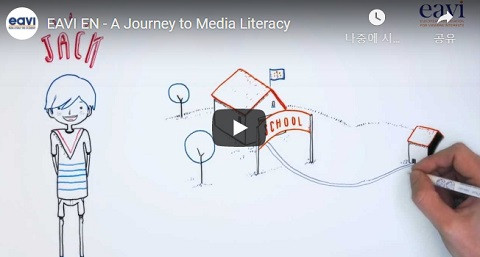 A Journey to Media Literacy Année de publication: 2013 Auteur: Paolo Celot | Susie Jones Auteur institutionnel: European Association for Viewers Interests (ENVI) “A Journey to Media Literacy” is EAVI’s seven minute cartoon, designed to explain, in a fun and simple way, what Media Literacy is all about and why it is essential in order to live freely and participate fully in society. It was born thanks to a suggestion by Paolo's 3 kids, who being unable to understand what their father did at work, came up with the idea of making an adventure cartoon to explain ML.
 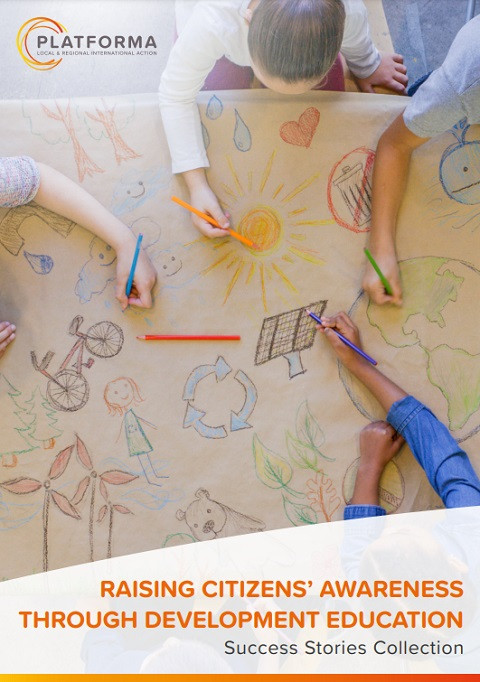 Raising Citizens' Awareness Through Development Education: Success Stories Collection Année de publication: 2020 Auteur: Lur Fernandez Salinas Auteur institutionnel: PLATFORMA Development Education and Awareness Raising (DEAR) are natural lines of action for local and regional governments active in development cooperation and tie in perfectly with their territorial strategies.Awareness-raising among citizens, through the action of municipalities and regions, remains a core component of the co-responsibility, solidarity, mutual knowledge and mutual understanding needed to mobilise and unite communities.Discover this Success Stories Collection which aims to showcase concrete, impactful and transformative experiences of local and regional governments and their associations actively engaged in DEAR projects and decentralised cooperation strategies.
 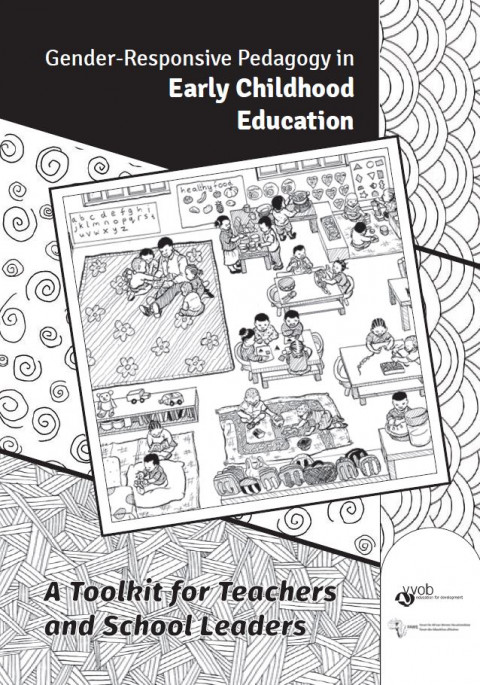 Gender-responsive Pedagogy for Early Childhood Education: A Toolkit for Teachers and School Leaders Année de publication: 2019 Auteur institutionnel: VVOB | Forum for African Women Educationalists (FAWE) The Gender-Reponsive Pedagogy for Early Childhood Education Toolkit targets early childhood education teachers and all other practitioners who deal with younger children. It is a practical guide that can be adapted to any context and the related needs as well as a source of ideas and resources that individual teachers and school leaders can put to immediate use in their classrooms and schools. The toolkit is also a useful resource for researchers, school-parent committees and governing bodies, civil society organisations, community leaders and education policy makers.
  Citizenship and Lifelong Learning Monitor 2019: Continuous Digital and Intercultural Education for EU Citizens’ Societal Inclusion and Active Participation Année de publication: 2020 Auteur: Andrei Frank Auteur institutionnel: SOLIDAR Foundation | Foundation for European Progressive Studies (FEPS) The Citizenship and Lifelong Learning Monitor 2019 is a research report jointly released by SOLIDAR Foundation and FEPS, on the topic of policy developments in the field of attainment of skills, through lifelong learning, for active participation in society.The skills on which it focuses are:digital skillscivic competences andintercultural education competences.The document is composed of an analysis of the policies on the topic, and a presentation of best practices, coming from SOLIDAR Foundation member organisations.It culminates with recommendations, stemming from a comparative analysis of the 8 country reports conducted (featuring Austria, Croatia, Denmark, Germany, Italy, Serbia, Spain, and the UK as investigated countries).The online Conference “Civic responsibilities online and offline: Lifelong learning for digital and traditional citizenship education“, held together with FEPS, presented and discussed the outcomes of the Citizenship & Lifelong Learning Monitor.
 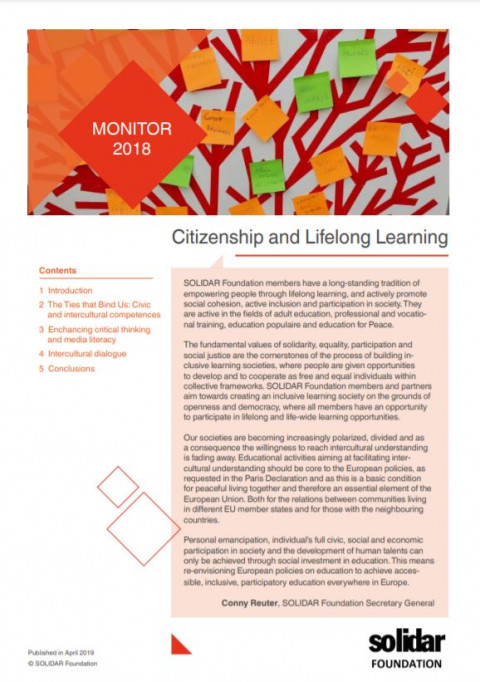 Citizenship and Lifelong Learning Monitor 2018 Année de publication: 2019 Auteur: Sara Gharsalli Auteur institutionnel: SOLIDAR Foundation Over the last couple of years, the world has witnessed the harsh impact of populist politics. In the European Union, this rise in nationalism and populism has translated into an old member state leaving the Union for good, and “illiberal” countries rising up against civil society which could bring a major overhaul in the European Parliament for the May 2019 elections. Struggling with how to deal with extremist parties and their leaders, the EU has nonetheless attempted to cautiously restrain possible conflicts by peaceful means and promotion of participation of its citizens to bring people together despite far-right challenges ahead of the next European Parliament elections in May 2019.To counter and prepare citizens to reinforce and strengthen core European democratic values, the Union has pledged to promote citizenship through education after ministers convened in Paris on March 2015 to set up common objectives. Having derived the 2017 report based on three thematic issues directly taken from the declaration’s objectives, this year the monitor aims to go further into understanding the processes and methods for the promotion and delivery of citizenship education in Europe by non-formal education providers.This Monitor is a contribution to further examine the relationship between citizenship and lifelong learning experiences and policy outcomes in and outside of the classroom in various European countries. Mapping the different approaches that SOLIDAR Foundation members have taken in promoting EU values in relation to citizenship education and lifelong learning for greater democratic participation of citizens, the outcomes will be disseminated towards European and national policy-makers and offers an array of best practices to collect, use and transfer among networks. The SOLIDAR Education and Lifelong Learning Forum will further work on the topic and develop a long term sustainable advocacy strategy for CSOs towards national and EU-wide authorities to influence the debate and revision of national curricula and education systems.
  Charte durabilité pendant la présidence belge UE2024 Année de publication: 2023 Auteur institutionnel: Présidence belge du Conseil de l’UE La Belgique attache une grande importance à la durabilité et a donc élaboré une charte durabilité pour la Présidence UE2024. En outre, la Belgique souhaite se concentrer sur les tâches essentielles d'une présidence tournante et opte donc délibérément pour la sobriété. Cette charte traduit l’engagement des entités fédérales et fédérées impliquées dans la Présidence UE2024 à œuvrer pour une organisation la plus durable possible de leurs événements Sustanibility has a great importance for Belgium and so, it greated a sustainibility charter for Presidency EU2024. Moreover, Belgium wish to concetrate on essential tasks a rotating presidency and therefore deliberately opts for sobriety. This Charter reflects the commitment of federal and federated entities involved in Presidency EU2024 to work for an organisation as sustainable as possible during their events.
 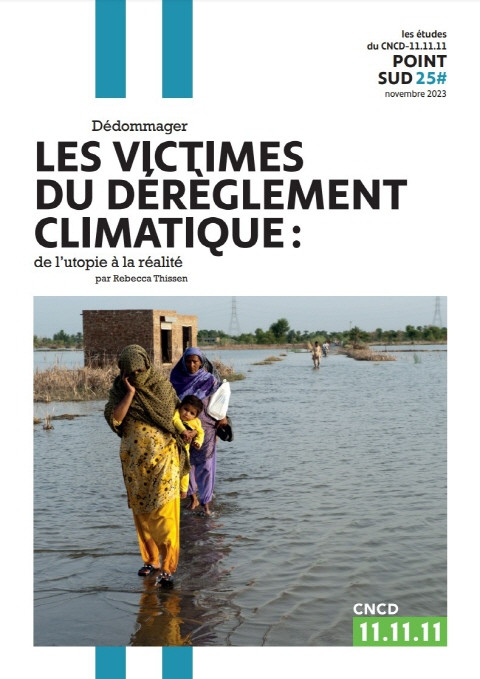 Les victimes du dérèglement climatique : de l'utopie à la réalité Année de publication: 2023 Auteur: Rebecca Thissen Auteur institutionnel: CND 11.11.11 «Pourquoi devrions-nous, au Pakistan, payer pour des inondations catastrophiques que nous n’avons pas causées ?» Telle était la question lancée par la ministre pakistanaise de l’Environnement en amont de la COP27, au moment où un tiers de son pays se retrouvait sous les eaux à cause de terribles inondations. Il a fallu attendre 30 ans pour que la question du dédommagement des victimes climatiques avance dans les négociations internationales : fin 2022, lors de la COP27, les Nations Unies ont décidé d’établir un fonds et des arrangements financiers spécifiques. L’étude « Pertes et préjudices, de l’utopie à la réalité » vise à donner une compréhension plus fine des pertes et préjudices, tout en les replaçant dans leur contexte historique, ce qui permet de comprendre les dynamiques en présence et l’aboutissement de la décision de la COP27. Il se veut également être une porte d’entrée quant à la réflexion sur le financement des pertes et préjudices en tant que tel, détaillant les pistes de solutions pour définir son rôle, à qui il devrait bénéficier, via quel mécanisme il devrait être acheminé et quelles sources de financement permettraient de l’alimenter. " Why should we, in Pakistan, pay for catastrophic floods that we did not cause?" That is the question posed by the Pakistani Minister of Environment ahead of the COP27, at a time when one-third of her country was submerged due to devastating floods. It took 30 years fo the issues of compensation for climate victims to progress in international negotiations: by the end of 2022, during the COP27, the United Nation decided to established a fund and specific financial arrangements. The study « Loss and Prejudices , from utopia to reality » aims at giving a more detailled comprehension of loss and prejudices, while placing them in their historical context, which helps understanding the dynamics at play and the outcome of the COP27 decision. It also aims at serving as a gateway to the consideration of financing losses and damages per se, outlining potential solutions to define its role, who should benefit from it, through which mechanism it should be channeled, and what funding sources would contribute to it.