
Ressources
Explorez une large gamme de ressources sur le GCED afin d’approfondir votre compréhension et de renforcer vos activités de recherche, de plaidoyer, d’enseignement et d’apprentissage.
32 résultats trouvés
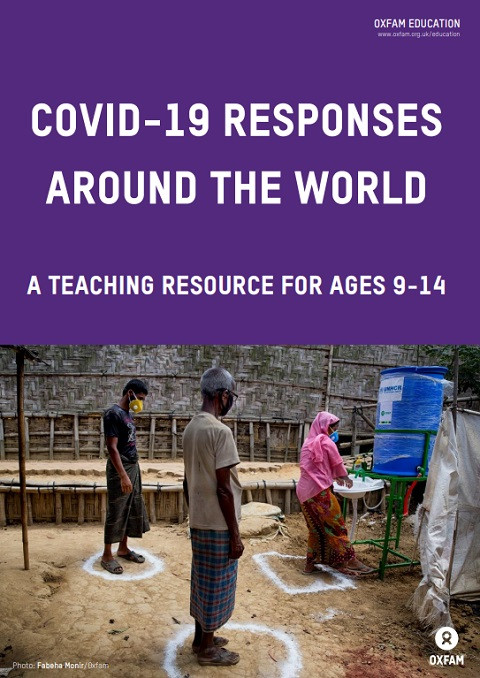 COVID-19 Responses Around the World: A Teaching Resource for Ages 9-14 Année de publication: 2021 Auteur institutionnel: Oxfam GB This resource helps learners to discuss their thoughts and feelings about the pandemic with others. Learners will also find out about ways to stop the current ‘infodemic’ – the rapid spread of misinformation and disinformation about COVID-19.This material will help learners to:discuss their thoughts and feelings about COVID-19.investigate some of the incredible ways in which people have been responding to this crisis.understand the difference between information, disinformation and misinformation.consider their own responses to the pandemic and possible actions that they might take to manage their own wellbeing and support others.
  Inequalities in Learning in Vietnam: Teachers’ Beliefs About and Classroom Practices for Ethnic Minorities (RISE Working Paper Series; 21/061) Année de publication: 2021 Auteur: Joan DeJaeghere | Vu Dao | Bich-Hang Duong | Phuong Luong Auteur institutionnel: Research on Improving Systems of Education (RISE) Global and national education agendas are concerned with improving quality and equality of learning outcomes. This paper provides an analysis of the case of Vietnam, which is regarded as having high learning outcomes and less inequality in learning. But national data and international test outcomes may mask the hidden inequalities that exist between minoritized groups and majority (Kinh) students. Drawing on data from qualitative videos and interviews of secondary teachers across 10 provinces, we examine the role of teachers’ beliefs, curricular design and actions in the classroom (Gale et al., 2017). We show that teachers hold different beliefs and engage in curricular design – or the use of hegemonic curriculum and instructional practices that produce different learning outcomes for minoritized students compared to Kinh students. It suggests that policies need to focus on the social-cultural aspects of teaching in addition to the material and technical aspects.
 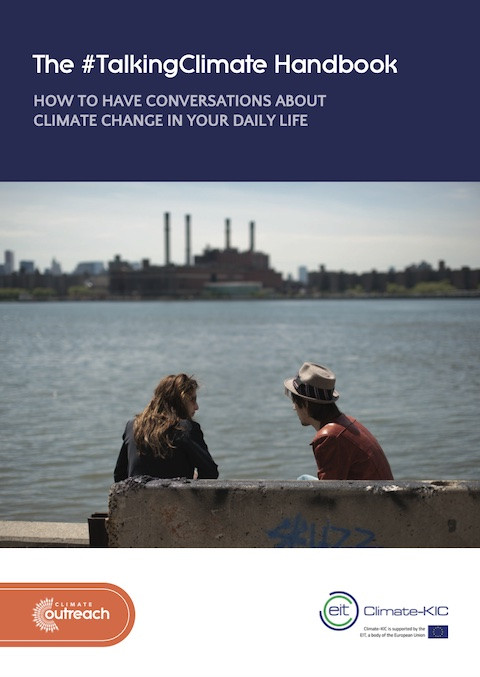 The #Talking Climate Handbook: How to Have Conversations About Climate Change in Your Daily Life Année de publication: 2019 Auteur: Robin Webster | George Marshall Auteur institutionnel: Climate Outreach | EIT Climate-KIC This handbook is for anyone who wants to have constructive day-to-day conversations about the climate crisis. It provides pragmatic and evidence-based guidance on how to talk about climate change with friends and family, acquaintances and strangers - on the bus, at work, at a sports event or at home over dinner. The handbook is informed by the idea that you don’t have to be a scientist, or live in a certain place, to care about and want to talk about climate change. It is a topic for everybody, whoever and wherever we are.
 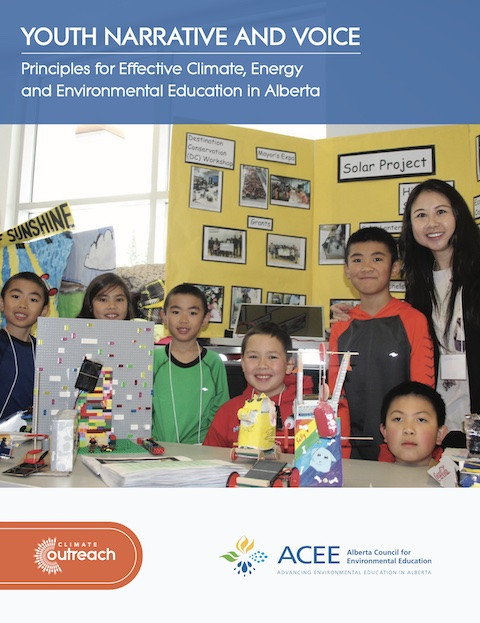 Youth Narrative and Voice: Principles for Effective Climate, Energy and Environmental Education in Alberta Année de publication: 2020 Auteur: Christopher Shaw | Amber Bennett | Susie Wang Auteur institutionnel: Climate Outreach | Alberta Council for Environmental Education (ACEE) This report provides educators with 10 principles for developing new energy and climate change education resources in Alberta, and example narratives and language to engage students. The findings and recommendations are drawn primarily from a series of workshops with Alberta students held during the fall of 2019. A survey of Alberta youth conducted by Leger, a literature review and interviews with Alberta teachers provided additional insights that deepened, broadened and ‘sense checked’ the workshop results.
 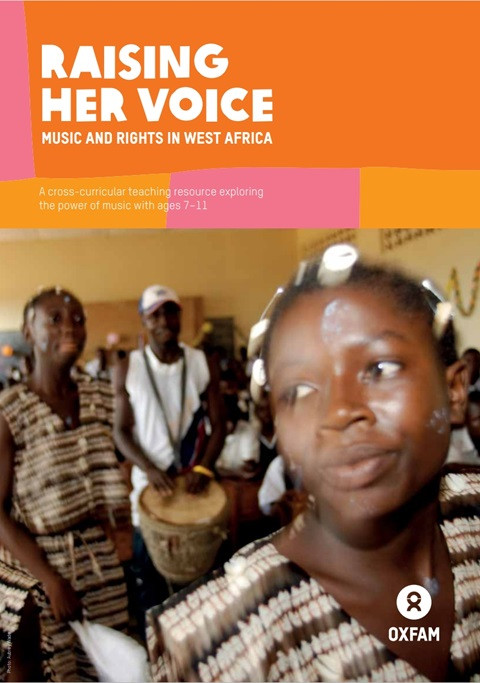 Raising Her Voice: Music and Rights in West Africa Auteur institutionnel: Oxfam GB Investigate the power of music with these classroom activities for ages 7-11. Focusing on West Africa, this teaching resource will guide learners through an exploration of aspects of the culture, history and experiences of people in Benin, Mali and Senegal, and of how music can be used to express people's voices. These activities could be used alongside the Raising our Voices education resource.
 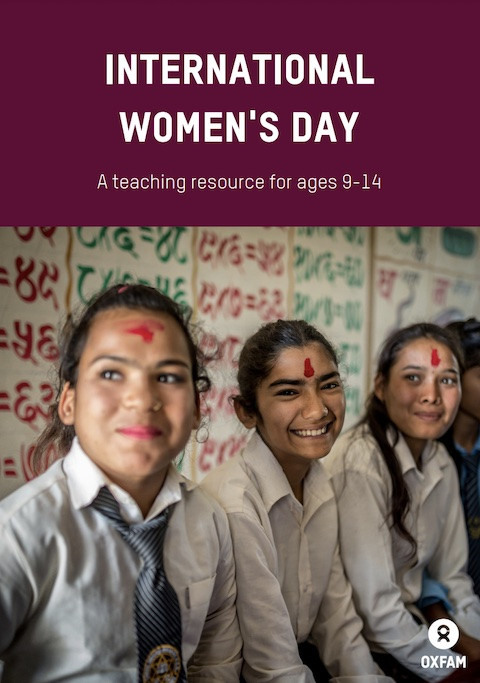 International Women’s Day: A Teaching Resource for Ages 9-14 Année de publication: 2022 Auteur institutionnel: Oxfam GB This teaching resource could be used on International Women's Day or on any day of the year, to introduce issues related to gender equality, support critical thinking, and encourage young people to consider possible action they might like to take in response. These cross-curricular activities are designed to be flexible and easily adapted for use in an assembly, form time or to support more in-depth classroom learning. Depending on the availability of time and other learning taking place, the activities could be taught sequentially over a series of lessons or selected and delivered as standalone sessions. The suggested age range is 9-14 but some of the activities could be adapted to suit the needs of younger and older learners. Depending on learners’ age and the context, teachers may also wish to acknowledge and discuss inequality issues connected to LGBT+.
 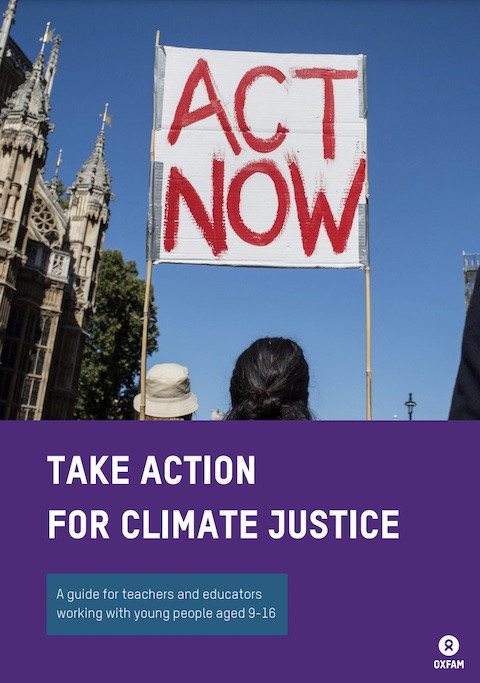 Take Action for Climate Justice: A Guide for Teachers and Educators Working With Young People Aged 9-16 Année de publication: 2022 Auteur institutionnel: Oxfam GB Aimed at teachers and educators, this short guide contains practical advice, classroom activities and helpful planning tools to inspire and motivate young people aged 9-16 to take action for our planet and its people.There are many ways in which we can all take climate action, from making individual lifestyle changes to participating in collective community responses that target the systemic causes of the climate emergency, and all are important. Taking action can develop young people’s sense of agency, build skills such as leadership and decision-making, and help them to build empathy and manage eco-anxiety. This guide supports young people to take action by sharing the message about climate justice, raising awareness and influencing others to help make change happen.A recent survey by Inter Climate Network found that more than 80 per cent of young people aged 11–18 were concerned about climate change, with half of them already choosing to take climate action. Almost all of those taking action are doing so at home, with only a third acting on climate change in school. Another key finding was that many young people do not feel they have the power to effect change, citing barriers such as a lack of knowledge about what they can do, insufficient time provided in school for positive climate action, and a sense that individual actions have little impact without wider structural change.
 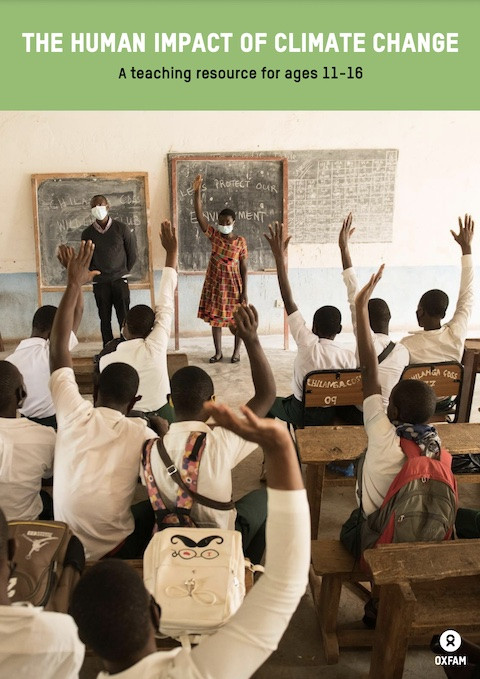 The Human Impact of Climate Change: A Teaching Resource for Ages 11-16 Année de publication: 2021 Auteur institutionnel: Oxfam GB These activities for ages 11-16 explore the human impact of the climate emergency and provide new spaces, approaches and opportunities for climate education and social action. This is in response to the call to action by Teach the Future (2020) who presented research on the current state and future of climate education in the UK. Their report discovered an overwhelming demand for climate education in schools alongside low levels of teacher knowledge about how to effectively deliver climate education and a narrow range of curriculum areas where it is taught. This resource frames the climate emergency as a human rights and people-centred issue and supports teachers to promote a sense of agency and empowerment within young people. This in turn is recognised as one strategy to help young people manage eco-anxiety, as well as disillusionment and disengagement with climate issues. This resource is suitable as both a curriculum resource and to inform social action by young people (for example, in GCSE Citizenship Studies)
  INTRAC in Central Asia 1994-2018: A Story of the Past, the Present and the Future; Special Series Paper Année de publication: 2019 Auteur: Charles Buxton | Anne Garbutt | Janice Giffen | Chynara Irisova | Konstantin Kovtunets | Anara Moldosheva | Brian Pratt | Medet Tiulegenov | Chris Wardle | Nazgul Zakiriaeva Auteur institutionnel: International Non-Governmental Organisation Training and Research Centre (INTRAC) This publication is a special newsletter which marks the next phase of support provided by INTRAC to civil society in Central Asia. The articles in this special bulletin describe the history of INTRAC in Central Asia from the very first days to the present, and also provide a glimpse into the future. ИНТРАК в Центральной Азии с 1994 по 2018 годы: прошлое, настоящее и будущее; Специальный выпуск Année de publication: 2019 Auteur: Charles Buxton | Anne Garbutt | Janice Giffen | Chynara Irisova | Konstantin Kovtunets | Anara Moldosheva | Brian Pratt | Medet Tiulegenov | Chris Wardle | Nazgul Zakiriaeva Auteur institutionnel: International Non-Governmental Organisation Training and Research Centre (INTRAC) Это издание является специальным бюллетенем, который ознаменует следующий этап поддержки, оказываемой ИНТРАК гражданскому обществу в Центральной Азии. Статьи в этом специальном бюллетене описывают историю ИНТРАК в Центральной Азии с самых первых дней и до настоящего времени, а также позволяют заглянуть в будущее.