
Ressources
Explorez une large gamme de ressources sur le GCED afin d’approfondir votre compréhension et de renforcer vos activités de recherche, de plaidoyer, d’enseignement et d’apprentissage.
875 résultats trouvés
 Podcast: Aprendizaje para el futuro; Educación para la sustentabilidad Année de publication: 2024 Auteur: Alicia Santi | Maximiliano Molina Auteur institutionnel: Chile Foundation | Educarchile En esta edición del podcast: Aprendizaje para el Futuro desarrollamos, junto a CEDEUS, el tema de la "Educación para la Sustentabilidad" y la mirada multidimensional de este fenómeno en los establecimientos educacionales.
 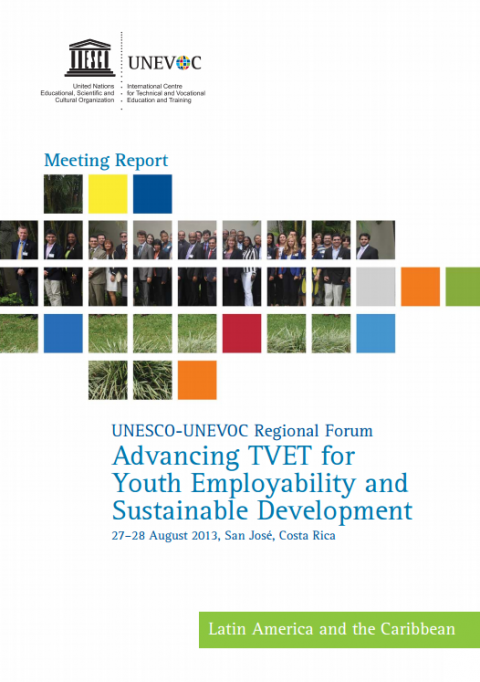 UNESCO-UNEVOC regional forum: advancing TVET for youth employability and sustainable development, Latin America and the Caribbean, 27-28 August 2013, San José, Costa Rica; meeting report Année de publication: 2013 Auteur institutionnel: UNESCO International Centre for Technical and Vocational Education and Training (UNEVOC) The Regional Forum of UNEVOC centres in Latin America and the Caribbean (LAC) presented in this report was one of a series of activities aiming to strengthen global and regional harmonization for the advancement of TVET transformation through the capacities of UNEVOC’s unique global network of specialized TVET institutions and affiliated partners, following the UNESCO Third International Congress on Technical and Vocational Education and Training (TVET) that took place in China in May 2012. The Forum also provided the opportunity to present evidence on the two priority thematic areas for UNESCO-UNEVOC for 2013, Youth and Skills and Greening TVET. This was achieved through the presentation and discussion of several promising practices in these two areas. UNESCO-UNEVOC forum régional: Promouvoir l'EFTP pour l'employabilité des jeunes et le développement durable, en Amérique latine et dans les Caraïbes, 27-28 Août 2013, San José, Costa Rica; rapport de la réunion Année de publication: 2013 Auteur institutionnel: UNESCO International Centre for Technical and Vocational Education and Training (UNEVOC) Le Forum régional des centres UNEVOC en Amérique latine et dans les Caraïbes (ALC), présenté dans le présent rapport fait partie d'une série d'activités visant à renforcer l'harmonisation mondiale et régionale pour la promotion de la transformation de l'EFTP à travers les capacités de réseau mondial unique de UNEVOC de l'EFTP spécialisée institutions et partenaires affiliés, suite à l'UNESCO Troisième Congrès international sur l'enseignement technique et professionnel et de la formation (EFTP) qui a eu lieu en Chine en mai 2012. le Forum a également été l'occasion de présenter des preuves sur les deux domaines thématiques prioritaires pour l'UNESCO-UNEVOC pour 2013, la jeunesse et les compétences et l'écologisation de l'EFTP. Ceci a été réalisé grâce à la présentation et à la discussion de plusieurs pratiques prometteuses dans ces deux domaines.
 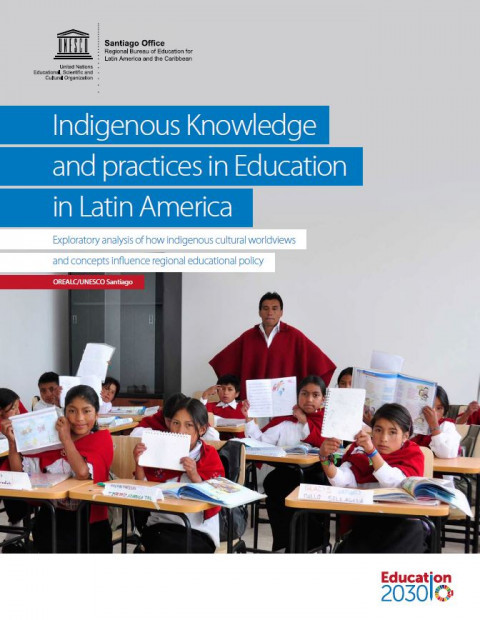 Indigenous Knowledge and practices in Education in Latin America: Exploratory Analysis of How Indigenous Cultural Worldviews and Concepts Influence Regional Educational Policy Année de publication: 2017 Auteur institutionnel: UNESCO Santiago This study presents a preliminary exploration of the approaches, processes and tools through which indigenous worldviews and concepts of knowledge and well-being can and have influenced education policies in Latin America. First, it addresses the principal theoretical approaches used in the area of indigenous knowledge and education policies, taking into account the persistence of an “epistemic otherness” and the need for a dialogue between the predominant approaches. Second, it addresses the normative framework and intercultural educational policies, emphasizing how and to what extent the countries in the region take indigenous knowledge into consideration and include it in their education policies and practices. Third, it presents a number of “relevant practices” in terms of dialogue with indigenous knowledge in education policies, taking into account the factors that favour the relevance of education to indigenous views and cultural practices, facilitating their replicability and sustainability. Furthermore, these practices respond to key criteria like recognizing learners as ‘carriers’ and producers of culture, valuing the use of schools as centres of social and cultural activities and favouring the inclusive learning of indigenous and non-indigenous students. Finally, the study unveils challenges for the advancement of the dialogue between indigenous knowledge and education policies, at the same time proposing key concepts to be approached in depth. Conocimiento Indígena y Políticas Educativas en América Latina: Análisis exploratorio de cómo las cosmovisiones y conceptos culturales indígenas de conocimiento inciden, y pueden incidir, en la política educativa en la región Année de publication: 2017 Auteur institutionnel: UNESCO Santiago El presente estudio explora la idea de una ‘alternativa epistémica’, construyendo desde el conocimiento y los valores que sustentan las prácticas sociales y educacionales indígenas de la región. En particular, explora cómo estos valores y formas de conocimiento han sido adoptados en las políticas educacionales de tres países de la región andina: Bolivia, Ecuador y Perú, que hace poco atravesaron reformas políticas y constitucionales con el fin de reconocer la composición de sus poblaciones multiculturales, multiétnicas y multilingüísticas. Esta publicación es una invitación a considerar el conocimiento indígena como una fuente legítima de inspiración para las políticas educacionales que puedan contribuir al bienestar de todos y a la sostenibilidad del planeta.
 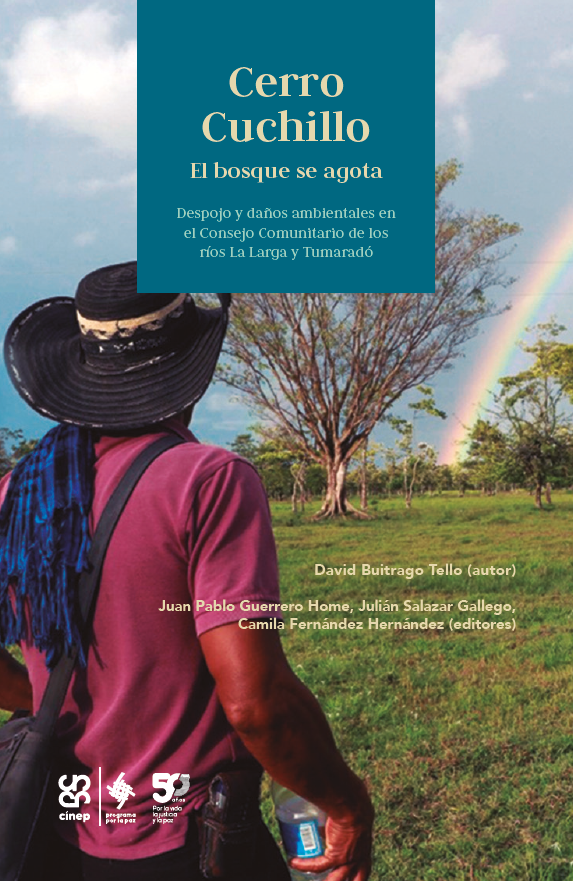 Cerro Cuchillo: The Forest is Exhausted Année de publication: 2022 Auteur: David Buitrago Tello Auteur institutionnel: Centro de Investigación y Educación Popular (CINEP) This report presents different aspects around the "Cerro Cuchillo" territory and its inhabitants. The ecosystems and their relationships with the communities are described, the alterations they have suffered, the processes of change and damage and the protection and restoration measures of the strategic ecosystems. All this, through qualitative research tools, which allowed identifying the processes of change and abandonment of the territory. Cerro cuchillo: el bosque se agota Année de publication: 2022 Auteur: David Buitrago Tello Auteur institutionnel: Centro de Investigación y Educación Popular (CINEP) En este informe se presentan distintos aspectos que rodean al territorio Cerro Cuchillo y a sus habitantes. Se describe los ecosistemas y sus relaciones con las comunidades, las alteraciones que han sufrido, los procesos de cambio y daño y las medidas de protección y restauración de los ecosistemas estratégicos, con base en las opiniones de las comunidades más relacionadas con este lugar, todo esto por medio de herramientas de investigación cualitativa, que permitieron identificar los procesos de cambio y abandono del territorio.
 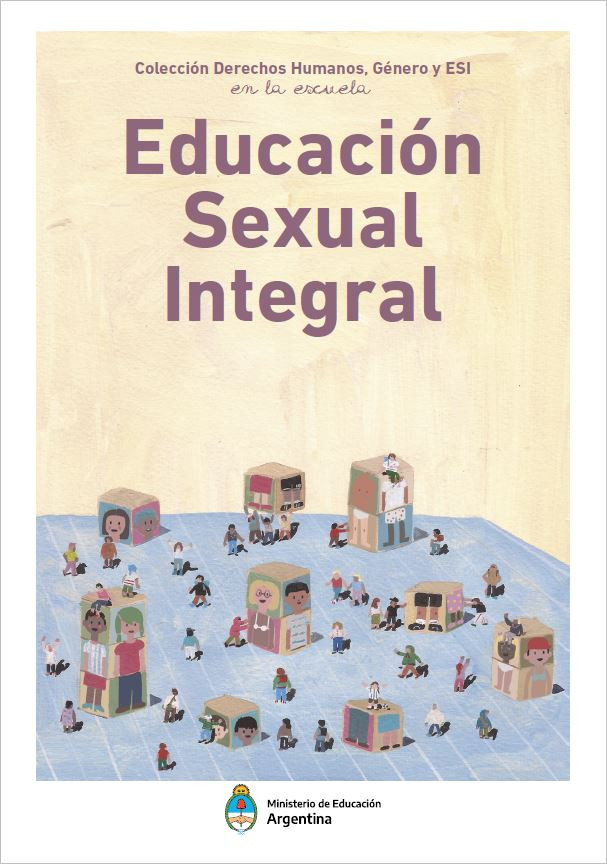 Comprehensive Sex Education Année de publication: 2021 Auteur institutionnel: Ministry of Education, Argentina What are we talking about when we say Comprehensive Sex Education? What challenges does integrality take on? In this issue of the Human Rights, Gender and CSE at school collection you will find a series of activities to work in the classroom and a theoretical framework to think about CSE. Educación Sexual Integral Année de publication: 2021 Auteur institutionnel: Ministry of Education, Argentina ¿De qué hablamos cuando decimos Educación Sexual Integral? ¿Qué desafíos asume la integralidad? En este número de la colección Derechos Humanos, Género y ESI en la escuela encontrarán una serie de actividades para trabajar en el aula y un marco teórico para pensar ESI.
  Learning to live together: education for conflict resolution, responsible citizenship, human rights and humanitarian norms Année de publication: 2013 Auteur: Margaret Sinclair Auteur institutionnel: Education Above All (Qatar) Education cannot offer immediate remedies to the local and global problems that we see on the news screens every day, but it can contribute to solving them over the longer term. This book examines specifically the contribution that education for learning to live together can make, even in countries where teacher training and classroom resources are limited. Many countries have diverse populations (ethnic, linguistic, religious, etc) and seek to maintain harmony among the different groups. In some countries, however, especially where economic stress or climate change have intensified arguments over resources, tensions have led to armed conflict. This brings with it all the misery of death, injury, displacement and poverty, along with disruption of education systems. In some instances education itself has been a contributory factor to the outbreak of conflict, notably through unequal education opportunities for different groups, and through biased school curricula.Civil conflict has brought untold suffering in recent years, and in a globalised world it has negative spill-over effects to neighbouring and other countries. It is vital to develop education policies and curricular reforms that can help convey values and skills for learning to live together to young people, to help lessen tensions, within and between countries.Education policy-makers can help lay the foundations for a better future by adjusting the content and process of education to reflect skills and values for human rights, humanitarian norms, peaceful resolution of conflicts, sustainable development and other issues as elements of local, national and global citizenship.Education reform is not enough, of course, to resolve the numerous problems of our times. The focus of this volume is on the contribution that can be made through aligning the content of education to the goal of learning to live together. This work will have greater impact when it takes place within education systems and policies that are consistent with human rights values and of course when other sectors besides education make their respective contributions.This book shows that transformative education for conflict resolution and peace, for local, national and global citizenship, for human rights and humanitarian values can be implemented even under difficult conditions if there is a policy commitment to do so. Authors have provided examples and lessons learned from their own experiences as eminent practitioners in the field.