
Ressources
Explorez une large gamme de ressources sur le GCED afin d’approfondir votre compréhension et de renforcer vos activités de recherche, de plaidoyer, d’enseignement et d’apprentissage.
3,229 résultats trouvés
 Snapshot Report: SDGs in the UNECE Region Année de publication: 2019 Auteur institutionnel: United Nations Economic Commission for Europe (UNECE) This document provides a brief snapshot of some aspects of SDG performance in the UNECE region. It covers the SDGs that will be discussed at the 2019 Regional Forum on Sustainable Development for the UNECE region but it does not attempt to provide an exhaustive assessment. It only uses the available information in the UN SDG Global Database and the sources referenced there to illustrate a selected number of SDG issues. In a very few cases, when no data is available from this database and associated sources, information from other international organizations is used to provide some context to the discussions.
  Are We There Yet?: Education Unions Assess the Bumpy Road to Inclusive Education Année de publication: 2018 Auteur institutionnel: Education International (EI) | Tania Principe This report is based on a global membership survey that Education International conducted in 2017-18. The report shows that while many countries have integrated the UN Conventions into their national laws, implementation is running far behind. School materials and facilities are often not accessible, teachers are not adequality supported or consulted, and there are too few education support personnel. In addition, public services are not consistently made available for families with children and youth with disabilities, which can be a major barrier to school attendance. The survey results are a wake-up call for governments to take action and show that a thorough rethinking of past policy-making and current implementation is urgently needed.
  Global Education Digest 2015-2017: Compiled by the Development Education Research Centre Année de publication: 2018 Auteur institutionnel: Development Education Research Centre (DERC) This is the first edition the Global Education Digest, a bibliography of recent published academic and research material relevant to the field of global education. This Digest has been compiled by Development Education Research Centre (DERC) on behalf of Global Education Network Europe (GENE) in the framework of ANGEL activities. ANGEL (Academic Network on Global Education & Learning) is the academic network of global education researchers and academics. The Digest is divided into eight themes/ areas of work, and within each we have identified policy reports, books, academic articles and doctoral research related to global education. Items for inclusion were found through keyword searches of Scopus, Web of Science, Google Scholar, and British Library (including ETHOS and Proquest) databases, as well as through informal discussions with colleagues in the field. The core focus of the Digest is on literature on global education. Selected literature with a focus on related concepts, such as global citizenship, environmental education, and education for sustainable development, has also been included where these have clear links to concerns in global education.
  SDG 4 Data Book: Global Education Indicators 2018 Année de publication: 2018 Auteur institutionnel: UNESCO Institute for Statistics (UIS) This publication presents the global monitoring indicators used by countries and the international development community to monitor progress towards Sustainable Development Goal 4 (SDG 4) on education. The indicators were produced by the UNESCO Institute for Statistics (UIS), based on the latest available data.The UIS is the official source of internationally-comparable education data and the custodian agency for SDG 4 data.This mandate reflects the trust of the international community in UIS data and its proven track record in methodological work and standard-setting with national statistical offices, line ministries and technical partners in every region.This publication presents a snapshot of the data used to monitor progress towards the global education goal and targets. It complements the UIS Quick Guide to Education Indicators for SDG 4, which provides more detailed information on the development, interpretation and use of the indicators.
 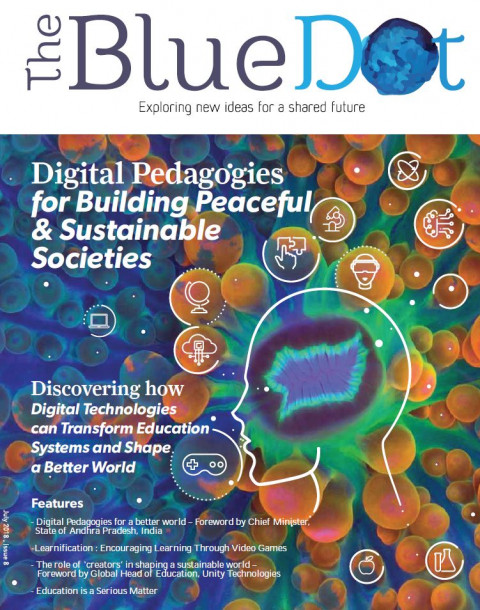 Digital Pedagogies for Building Peaceful & Sustainable Societies (The Blue Dot Issue 8, 2018) Année de publication: 2018 Auteur institutionnel: Mahatma Gandhi Institute of Education for Peace and Sustainable Development (MGIEP) In this issue of The Blue Dot (Digital Pedagogies for Building Peaceful and Sustainable Societies), some of the most prominent experts in the field of digital pedagogies share with us their views and perspectives in the growing field for education. Foreword by the visionary Chief Minister, Honourable Nara Shri Chandrababu Naidu of the State of Andhra Pradesh, India, pretty much lays the ground for the future of EdTech and the way he sees its role in his state as well as for the global community. The second foreword by the Global Head of Education, Unity Technologies, one of the world’s largest provider of game engines, demonstrates the willingness of the private sector to engage with educators to provide the platform to develop learners as creative explorers.
 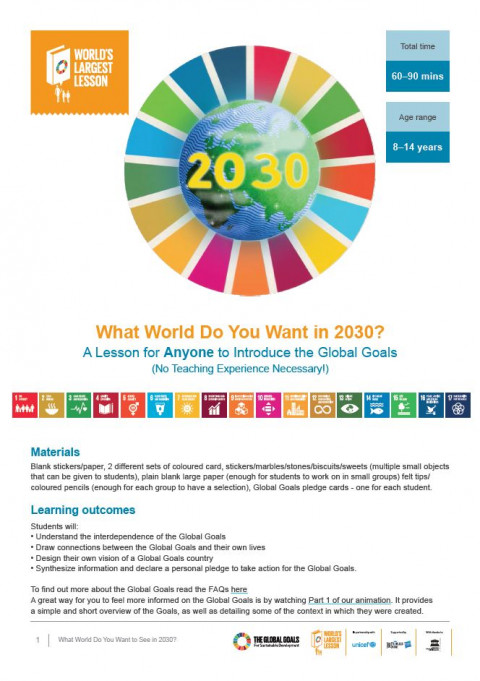 What World Do You Want in 2030?: A Lesson for Anyone to Introduce the Global Goals Année de publication: 2018 Auteur institutionnel: World’s Largest Lesson MaterialsBlank stickers/paper, 2 different sets of coloured card, stickers/marbles/stones/biscuits/sweets (multiple small objects that can be given to students), plain blank large paper (enough for students to work on in small groups) felt tips/coloured pencils (enough for each group to have a selection), Global Goals pledge cards - one for each student. Learning outcomesStudents will:• Understand the interdependence of the Global Goals• Draw connections between the Global Goals and their own lives• Design their own vision of a Global Goals country• Synthesize information and declare a personal pledge to take action for the Global Goals.
 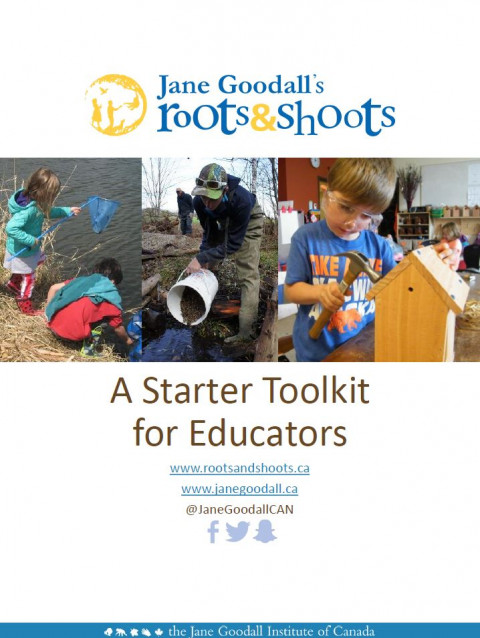 Jane Goodall's Roots & Shoots: A Starter Toolkit for Educators Année de publication: 2016 Auteur institutionnel: Jane Goodall Institute of Canada This toolkit (Jane Goodall's Roots and Shoots) is designed to assist you as you guide young people on their Roots & Shoots journey. Whether you’re an educator, parent or trusted adult, you’ll find something useful to inspire the youth around you to make a positive difference for people, animals and the environment we all share.Jane Goodall’s Roots & Shoots is humanitarian and environmental education and youth empowerment program of the Jane Goodall Institute and is active in 87 countries. The program inspires and prepares young people to become compassionate conservation leaders who are globally mindful and locally active by guiding them through youth-led, community projects that help people, other animals and the environment. This toolkit will help educators or parents looking to inspire young people to make a positive difference in the community or young people wanting to lead the change themselves.
 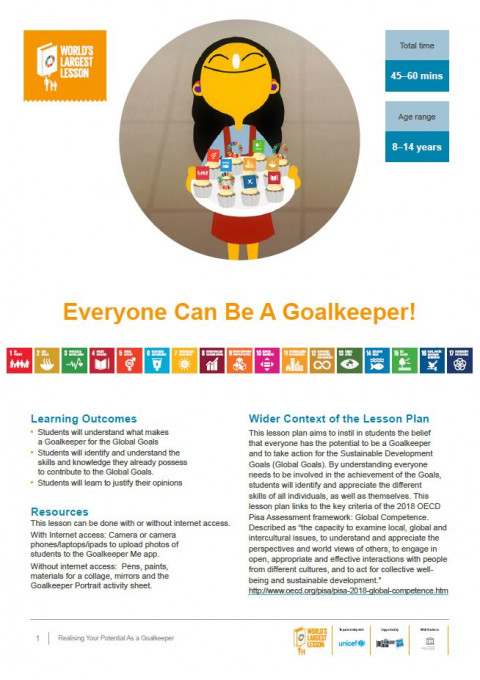 Everyone Can Be a Goalkeeper! Auteur institutionnel: World’s Largest Lesson Learning Outcomes• Students will understand what makes a Goalkeeper for the Global Goals• Students will identify and understand the skills and knowledge they already possess to contribute to the Global Goals.• Students will learn to justify their opinions Resources This lesson can be done with or without internet access.With Internet access: Camera or camera phones/laptops/ipads to upload photos of students to the Goalkeeper Me app.Without internet access: Pens, paints, materials for a collage, mirrors and the Goalkeeper Portrait activity sheet. Wider Context of the Lesson PlanThis lesson plan aims to instil in students the belief that everyone has the potential to be a Goalkeeper and to take action for the Sustainable Development Goals (Global Goals). By understanding everyone needs to be involved in the achievement of the Goals, students will identify and appreciate the different skills of all individuals, as well as themselves. This lesson plan links to the key criteria of the 2018 OECD Pisa Assessment framework: Global Competence.Described as “the capacity to examine local, global and intercultural issues, to understand and appreciate the perspectives and world views of others, to engage in open, appropriate and effective interactions with people from different cultures, and to act for collective wellbeing and sustainable development.”
  The influence of the European Union on Central Asia: review, analysis and forecast Année de publication: 2017 Auteur: V. Paramonov | A. Strokov | Z. Abduganieva The book is intended for government officials and representatives of large businesses, analysts and experts, scientists and teachers of higher educational institutions - in general, all those who are professionally interested in Central Asia are studying the European Union and his policies. The book is the result of a study conducted under the guidance of VVParamonova in the period 2014-2016, built in the form of an analytical report.In this article, we consider the legal aspects of combating extremism in Central Asia, as well as educational and ideological components to combat this phenomenon and cooperation of all three republics with international organizations and other countries of the world in the fight against extremism. Влияние Европейского Союза на Центральную Азию: обзор, анализ и прогноз Année de publication: 2017 Auteur: V. Paramonov | A. Strokov | Z. Abduganieva Книга предназначена для государственных деятелей и редставителей крупного бизнеса, аналитиков и экспертов, ученых и преподавателей высших учебных заведений – в целом всех тех, кто профессионально интересуется Центральной Азией, занимается изучением Евросоюза и его политики. Книга является результатом исследования, роведенного под руководством В.В.Парамонова в период 2014–2016 годов, построена в форме аналитического доклада.