
Ressources
Explorez une large gamme de ressources sur le GCED afin d’approfondir votre compréhension et de renforcer vos activités de recherche, de plaidoyer, d’enseignement et d’apprentissage.
2,162 résultats trouvés
 [DIALOG #13] Information and methodological bulletin on multilingual and multicultural education in Central Asia Année de publication: 2017 Auteur institutionnel: Организация по безопасности и сотрудничеству в Европе (ОБСЕ) | United Nations Children's Fund (UNICEF) The website and the informational and methodological bulletin "Dialogue" was created in order to assist educational organizations of the countries of Central Asia in the implementation of multilingual education programs. The website is supported by the Central Asian Education Program of the OSCE HCNM, the UN Children's Fund UNICEF and the Center for Social Integration.The bulletin is addressed to teachers and school leaders, representatives of education authorities, researchers and experts in the field of education. The bulletin is intended to quarterly inform about initiatives and significant events in the field of multilingual and multicultural education in Central Asia and around the world. In each issue of the bulletin you can find a variety of materials: interviews with experts, a review of the experience of multilingual schools, methodological articles and lesson development, announcements of events and publications, links to Internet resources. [ Диалог #13 ] Информационно-методический вестник по многоязычному и поликультурному образованию в странах Центральной Азии Année de publication: 2017 Auteur institutionnel: Организация по безопасности и сотрудничеству в Европе (ОБСЕ) | United Nations Children's Fund (UNICEF) Сайт и информационно-методический вестник "Диалог" создан в целях оказания содействия образовательным организациям стран Центральной Азии в реализации программ многоязычного образования. Работу сайта поддерживают Центральноазиатская образовательная программа ВКНМ ОБСЕ, Детский фонд ООН ЮНИСЕФ и Центр социальной интеграции.Вестник адресован преподавателям и руководителям школ, представителям органов управления образованием, исследователям и экспертам в сфере образования. Вестник призван ежеквартально информировать об инициативах и значимых событиях в сфере многоязычного и поликультурного образования в Центральной Азии и по всему миру. В каждом выпуске вестника можно найти разнообразные материалы: интервью с экспертами, обзор опыта многоязычных школ, методические статьи и разработки уроков, анонсы мероприятий и публикаций, ссылки на интернет-ресурсы.
  INSPIRE: семь стратегий по ликвидации насилия в отношении детей Année de publication: 2016 Auteur institutionnel: World Health Organization (WHO) Cборник информационных материалов, основанных на фактических данных и предназначенных для всех, кто заинтересован в профилактике насилия в отношении детей и подростков и принятии ответных мер — от государственных деятелей до обычных граждан и от организаций гражданского общества до представителей частного сектора. В этом документе представлен комплекс избранных стратегий, основанных на самых убедительных из имеющихся на сегодняшний день фактических данных и призванных помочь странам и сообществам сосредоточить усилия на профилактических программах и услугах, обладающих наибольшим потенциалом для снижения уровня насилия в отношении детей. В комплекс входят семь следующих стратегий: Implementation and enforcement of laws (Принятие и обеспечение соблюдения нормативных актов); Norms and values (Нормы и ценности); Safe environments (Создание безопасной среды); Parent and caregiver support (Поддержка родителей и воспитателей); Income and economic strengthening (Повышение доходов и улучшение экономического положения); Response and support services (Ответные меры и оказание поддержки); Education and life skills (Обучение и формирование жизненных навыков). Кроме того, в комплекс INSPIRE входят два типа сквозных мероприятий, сочетание которых позволяет связывать между собой и усиливать эти семь стратегий и одновременно оценивать ход их реализации.
  [DIALOG #16] Information and methodological bulletin on multilingual and multicultural education in Central Asia Année de publication: 2018 Auteur institutionnel: United Nations Children's Fund (UNICEF) | Organization for Security and Co-operation in Europe (OSCE) The website and the informational and methodological bulletin "Dialogue" was created in order to assist educational organizations of the countries of Central Asia in the implementation of multilingual education programs. The website is supported by the Central Asian Education Program of the OSCE HCNM, the UN Children's Fund UNICEF and the Center for Social Integration.The bulletin is addressed to teachers and school leaders, representatives of education authorities, researchers and experts in the field of education. The bulletin is intended to quarterly inform about initiatives and significant events in the field of multilingual and multicultural education in Central Asia and around the world. In each issue of the bulletin you can find a variety of materials: interviews with experts, a review of the experience of multilingual schools, methodological articles and lesson development, announcements of events and publications, links to Internet resources. [ Диалог #16 ] Информационно-методический вестник по многоязычному и поликультурному образованию в странах Центральной Азии Année de publication: 2018 Auteur institutionnel: Организация по безопасности и сотрудничеству в Европе (ОБСЕ) | United Nations Children's Fund (UNICEF) Сайт и информационно-методический вестник "Диалог" создан в целях оказания содействия образовательным организациям стран Центральной Азии в реализации программ многоязычного образования. Работу сайта поддерживают Центральноазиатская образовательная программа ВКНМ ОБСЕ, Детский фонд ООН ЮНИСЕФ и Центр социальной интеграции.Вестник адресован преподавателям и руководителям школ, представителям органов управления образованием, исследователям и экспертам в сфере образования. Вестник призван ежеквартально информировать об инициативах и значимых событиях в сфере многоязычного и поликультурного образования в Центральной Азии и по всему миру. В каждом выпуске вестника можно найти разнообразные материалы: интервью с экспертами, обзор опыта многоязычных школ, методические статьи и разработки уроков, анонсы мероприятий и публикаций, ссылки на интернет-ресурсы.
  What Makes a Quality Curriculum?: In-Progress Reflection No.2 on Current and Critical Issues in Curriculum and Learning Année de publication: 2016 Auteur: Philip Stabback Auteur institutionnel: UNESCO International Bureau of Education (IBE) Sustainable Development Goal Four has to do with education in the post-2015 development agenda. It aims to “ensure inclusive and equitable quality education and promote lifelong learning opportunities for all”.Given the essential role of curriculum in enabling quality learning and in articulating and supporting education that is relevant to holistic development, our purpose in this paper is to identify what makes a quality curriculum, so as to support curricular innovation in UNESCO Member States to the end of the realization of Sustainable Development Goal Four.In this we are assuming that curriculum, given its essential role in the provision of quality learning for all children and young people, and in articulating and supporting education that is relevant to holistic development, is critical in the realization of SDG 4. It is the curriculum that determines to a large extent whether education is inclusive, thus playing a significant role in ensuring that provision is equitable. It is the curriculum that provides the structure for the provision of quality learning, especially where teachers might be under-qualified and inexperienced, their classrooms under-resourced, and their students lacking the prior frameworks within which to situate their learning. And it is the curriculum that articulates both the competencies necessary for lifelong learning and the competencies needed for holistic development.We thus argue that curriculum lies at the crossroads of these four key aspects of SDG 4: that education should be (1) inclusive and equitable, (2) characterized by quality learning, (3) promoting lifelong learning, and (4) relevant to holistic development. Curriculum, in other words, provides the bridge between education and development – and it is the competencies associated with lifelong learning and aligned with development needs, in the broadest, holistic sense of the term, that span that bridge.
  Content, Comprehensiveness and Coherence in Policies for Early Childhood: How the Curriculum Can Contribute Année de publication: 2016 Auteur: María Isabel Díaz Auteur institutionnel: UNESCO International Bureau of Education (IBE) In the context of international agreements and commitments concerning early childhood, the purpose of this document is to review and renew the challenges that are involved in forging educational and curriculum policies for the first level of education. In the light of early childhood being increasingly included in the public agenda, countries are making sustained efforts to increase equity and quality in the design and implementation of policies for the early years.These are policies that are in the process of changing by including quality and participation criteria; fine-tuning monitoring and assessment mechanisms; going beyond the lack of sectoral and territorial coordination, among other limitations; moving from a needs-based approach to a rights-based approach; and adopting a comprehensive view. The document analyses, from a long-term public policy perspective, some of the challenges that second-generation policies face, positioning the curriculum as the articulating factor for the development of comprehensive policies for early childhood.
 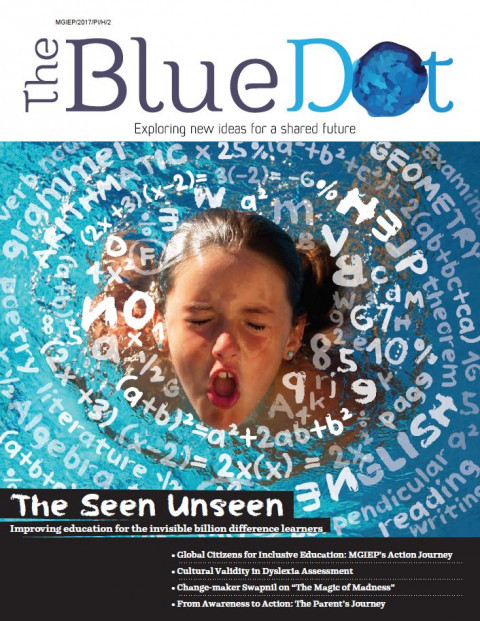 The Seen Unseen: Improving Education for the Invisible Billion Difference Learners (The Blue Dot Issue 5, 2017) Année de publication: 2017 Auteur institutionnel: Mahatma Gandhi Institute of Education for Peace and Sustainable Development (MGIEP) MGIEP believes that addressing the needs of children with difference learning offers a unique opportunity to build the competency of understanding, respect and appreciation between the children and the rest of their peers in school.It provides the Institute favorable conditions to put in practice how inclusive education is a necessary condition for building peaceful and sustainable societies. Many of the Information Technology pedagogical tools developed by the Institute lend themselves to children with difference learning.Transforming the education system in such a manner will allow mainstream schools to provide a learning platform that breaks down barriers across learning types and provide the equitable access to education that is a fundamental Sustainable Development Goal.We are, in this issue of The Blue Dot, privileged to read from some of the world’s best experts on the subject describing the challenges at hand and suggesting ways and means of addressing the lacuna present in curricula and policy. As always, we dedicate a special section to reflecting the voices of young people in our discussion. I am especially honoured and delighted to present a foreword from a young entrepreneur who has not allowed his neurobiological dyslexic condition to prevent him from pursuing his dreams to help others.
 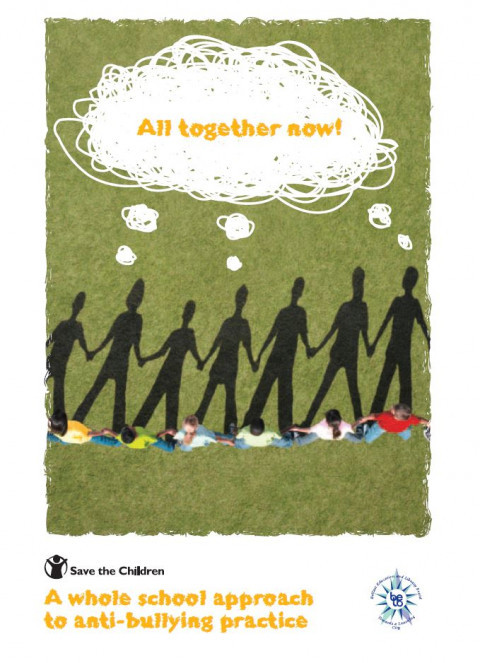 All Together Now!: A Whole School Approach to Anti-bullying Practice Année de publication: 2010 Auteur institutionnel: Save the Children All Together Now! provides learning and examples of good practice for teachers and school management teams, in order to encourage a culture in which bullying is less likely to occur. In particular, this report recognises the benefits of two strategies to instil an anti-bullying culture within any school. First, it describes a whole school approach to tackling bullying and promoting positive behaviour, with children and young people participating in their school’s decision-making processes. Positive changes in school anti-bullying policy, together with the ongoing development of better professional practice and peer support, are more likely if everyone connected to the school is informed and offered the opportunity to play a part. Second, All Together Now! demonstrates how creating an effective anti-bullying ethos is dependent upon creating a ‘telling environment’. To achieve this, pupils, staff, and parents and carers need to be consulted and involved.
  Addressing Anti-semitism through Education: Guidelines for Policymakers Année de publication: 2018 Auteur institutionnel: OSCE. Office for Democratic Institutions and Human Rights (ODIHR) A new UNESCO and OSCE co-publication takes up the challenge of educating learners to resist contemporary anti-Semitism at a time when the issue is becoming ever more crucial around the world. It suggests concrete ways to address anti-Semitism, counter prejudice and promote tolerance through education, by designing programmes based on a human rights framework, global citizenship education, inclusiveness and gender equality.It also provides policymakers with tools and guidance to ensure that education systems build the resilience of young people to anti-Semitic ideas and ideologies, violent extremism and all forms of intolerance and discrimination, through critical thinking and respect for others.