
Ressources
Explorez une large gamme de ressources sur le GCED afin d’approfondir votre compréhension et de renforcer vos activités de recherche, de plaidoyer, d’enseignement et d’apprentissage.
1,472 résultats trouvés
 Transforming Lives through Education Année de publication: 2018 Auteur: Anne Müller | Cristina Stanca-Mustea Auteur institutionnel: UNESCO 1945-2018: This book invites the reader on a fascinating photographic journey that highlights UNESCO’s work in promoting education across the world for more than seven decades. Above all, it testifies to the power of education to transform lives, build self-confidence, contribute to economic and social progress, and promote intercultural understanding.Through this book, the reader will discover the history of UNESCO’s work in education from its foundation to its current role as global leader for the coordination of Goal 4 of the United Nations 2030 Agenda for Sustainable Development, dedicated to education.The publication highlights the important milestones, normative advances, innovations and outstanding projects in our history, which bear witness to our humanistic vision of education. Drawing on a rich archive of photographs, some of them little known, this book illustrates the scale and diversity of UNESCO’s education programme across the globe. Transformer la vie grâce à l'éducation Année de publication: 2018 Auteur: Anne Müller | Cristina Stanca-Mustea Auteur institutionnel: Organisation des Nations Unies pour l'éducation, la science et la culture (UNESCO) 1945-2018 : cet ouvrage vous invite à un passionnant voyage photographique qui témoigne de l’action de l’UNESCO pour promouvoir l’éducation à travers le monde depuis maintenant plus de sept décennies. Il témoigne avant tout du pouvoir de l’éducation pour transformer les vies, développer la confiance en soi, contribuer au progrès économique et social, favoriser la compréhension interculturelle.En parcourant cet ouvrage, le lecteur découvrira l’histoire de l’action de l’UNESCO en matière d’éducation, depuis ses débuts jusqu’à son rôle actuel de chef de file, au niveau mondial, pour la coordination de l’Objectif de développement durable 4 dédié à l’éducation, dans le cadre de l’Agenda 2030 défini par les Nations Unies.Ce livre reflète les jalons que nous avons posés, les avancées normatives et les innovations que nous avons réalisées, les projets phares que nous avons conduits et rend compte de notre vision humaniste de l’éducation. S’appuyant sur de riches archives photographiques, don't certaines sont peu connues, ce livre illustre l’ampleur et la variété du programme d’éducation de l’UNESCO à travers le monde.
 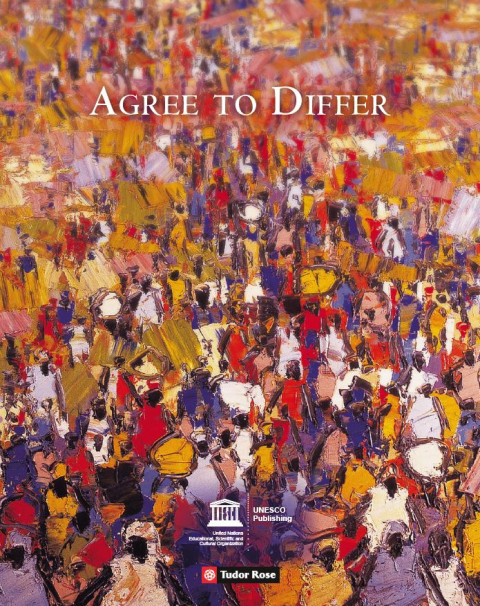 Agree to Differ Année de publication: 2015 Auteur institutionnel: UNESCO Dialogue on the basis of respect, tolerance, human rights and dignity has never been so important. This is the spirit of the International Decade for the Rapprochement of Cultures (2013-2022). The International Decade originates in the United Nations General Assembly Resolution 67/104 adopted in December 2012, co-sponsored by Kazakhstan and designating UNESCO as lead agency. This drew on a Resolution of the UNESCO General Conference and the experience of the 2010 International Year for the Rapprochement of Cultures which UNESCO led forward with activities across the world.The objective of the International Decade is to promote mutual understanding and respect for diversity, rights and equal dignity between peoples, through intercultural dialogue and concrete initiatives. This is essential for all societies today, undergoing deep transformation. The surge of conflict, acts of violence, extremism and intolerance pose a threat to peace, undermining the unity of humanity and calling on us all to redouble our efforts to advance a culture of peace, through dialogue, the safeguarding of cultural heritage, and the promotion of global citizenship education.The International Decade for the Rapprochement of Cultures embodies a commitment to explore new articulations between cultural diversity and universal values. The rapprochement of cultures calls for a commitment to the principles of human dignity and solidarity as the corner stones of living together within and between societies, making the most of all sources of diversity.This publication bears testimony to the urgency of addressing contemporary challenges through intercultural and interreligious dialogue in order to deepen understanding and cooperation for peace. Through concrete examples, including experiences at the community level from across the world, the publication showcases why cultural diversity, intercultural dialogue and responsive democratic governance are vital for the enhancement of mutual understanding, the growth of tolerance, and the building of bridges of mutual respect and dignity.
  The King Abdullah bin Abdulaziz International Programme for a Culture of Peace and Dialogue: Key Achievements of Phase I Année de publication: 2016 Auteur institutionnel: UNESCO The King Abdullah bin Abdulaziz International Programme for a Culture of Peace and Dialogue arose from the institutional framework of UNESCO’s Programme for a Culture of peace and non-violence. More than a concept, the Culture of Peace is a commitment to make peace a tangible reality for all. It denotes “a set of values, attitudes, traditions and modes of behaviour and ways of life based on respect for life, ending of violence and […] adherence to the principles of freedom, justice, democracy, tolerance, solidarity, cooperation, pluralism, cultural diversity, dialogue and understanding at all levels of society and among nations” (Article 1, Declaration and Programme of Action of a Culture of Peace, UNESCO, 1999). UNESCO continue its work to nurture a Culture of Peace, with development considerations, by joining forces with committed stakeholders in education, the sciences, culture, and communication and information.
 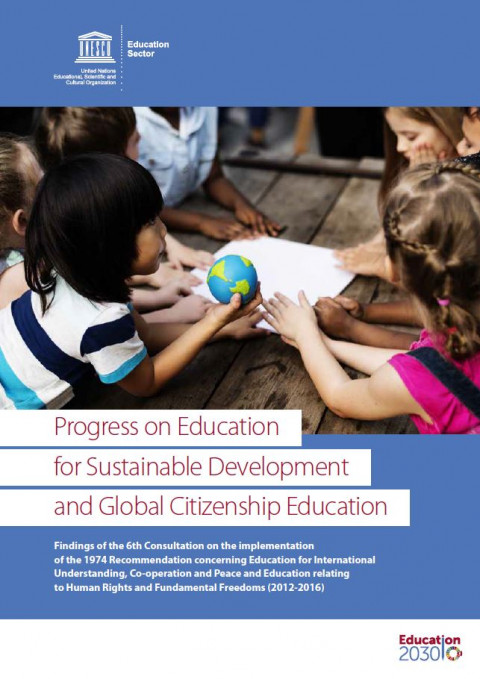 Progress on Education for Sustainable Development and Global Citizenship Education: Findings of the 6th Consultation on the Implementation of the 1974 Recommendation Année de publication: 2018 Auteur institutionnel: UNESCO Findings of the 6th Consultation on the implementation of the 1974 Recommendation concerning Education for International Understanding, Co-operation and Peace and Education relating to Human Rights and Fundamental Freedoms (2012-2016) Progress on Education for Sustainable Development and Global Citizenship Education “The Recommendation concerning Education for International Understanding, Co-operation and Peace and Education relating to Human Rights and Fundamental Freedoms” was adopted by UNESCO’s General Conference at its 18th session in 1974. Every four years, Member States report to UNESCO on measures taken to implement the Recommendation in pre-primary, primary, secondary and post-secondary/tertiary education. This document summarizes and analyses the main findings of the 6th Consultation on the implementation of the 1974 Recommendation, covering the period of 2012 to 2016. The findings of the 6th Consultation provide important insight into how Member States are implementing the 1974 Recommendation as well as how they are progressing towards Target 4.7 of Sustainable Development Goal 4 on Education. Target 4.7 concerns Education for Sustainable Development and Global Citizenship Education, which are closely related to the 1974 Recommendation. Supporting Member States in implementing Target 4.7 is a UNESCO priority and essential to progress across the 2030 Agenda for Sustainable Development. Avances en la educación para el desarrollo sostenible y la educación para la ciudadanía mundial: resultados de la sexta consulta sobre la aplicación de la Recomendación sobre la Educación para la Comprensión Année de publication: 2018 Auteur institutionnel: Organización de las Naciones Unidas para la Educación, la Ciencia y la Cultura (UNESCO) Hallazgos de la 6ta consulta sobre la implementación de la Recomendación de 1974 sobre Educación para la Comprensión, la Cooperación y la Paz Internacionales y la Educación relativa a los Derechos Humanos y a las Libertades Fundamentales (2012-2016). Progresos en Educación para Desarrollo Sostenible y Educación para la Ciudadanía Mundial “La Recomendación concerniente a la Educación para Comprensión, Cooperación y Paz internacional y Educación relativa a los Derechos Humanos y a las Libertades Fundamentales” fue adoptada en la Conferencia General de la UNESCO en su 18ava sesión de 1974. Cada cuatro años, los Estados Miembros reportan a la UNESCO sobre las medidas llevadas a cabo para implementar la Recomendación en los niveles preescolares, primario, secundario y post-secundario/terciario de educación. Este documento resume y analiza los hallazgos principales de la 6ta Consulta sobre la implementación de la Recomendación de 1974, cubriendo el período de 2012 a 2016. Los hallazgos de la 6ta Consulta proporcionan información importante sobre cómo los Estados Miembros están implementando la Recomendación de 1974, y de cómo están progresando hacia la Meta 4.7 del Objetivo de Desarrollo Sostenible 4 en Educación. La Meta 4.7 concierne a la Educación para el Desarrollo Sostenible y la Educación para la Ciudadanía Mundial, que están muy ligadas a la Recomendación de 1974. El apoyo a los Estados Miembros en la implementación de la Meta 4.7 es una prioridad para la UNESCO dado que es esencial para progresar hacia los objetivos de la Agenda 2030 para Desarrollo Sostenible. (Avances en la educación para el desarrollo sostenible y la educación para la ciudadanía mundial: resultados de la sexta consulta sobre la aplicación de la Recomendación sobre la Educación para la Comprensión, la Cooperación y la Paz Internacionales y la Educación relativa a los Derechos Humanos y las Libertades Fundamentales, de 1974 (2012-2016)) 지속가능발전교육과 세계시민교육의 진전: 1974년 「국제이해, 협력, 평화를 위한 교육과 인권, 기본 자유에 관한 교육 권고」의 이행(2012-2016년)에 관한 제6차 설문조사 결과 Année de publication: 2018 Auteur institutionnel: 유네스코 「국제이해, 협력, 평화를 위한 교육과 인권, 기본 자유에 관한 교육 권고」(Recommendation concerning Education for International Understanding, Cooperation and Peace and Education relating to Human Rights and Fundamental Freedoms, 이하 1974년 권고안)는 1974년 제18차 유네스코 총회에서 채택되었다. 유네스코 회원국들은 매 4년마다 유아, 초등, 중등, 중등 이후/고등 분야 교육 내 1974년 권고안 이행 조치에 대해 유네스코에 보고한다. 이 보고서는 2012년부터 2016년까지의 1974년 권고안 이행 현황에 대한 제6차 설문조사1) (이하 제6차 설문조사) 결과를 요약·분석하고 있다. 제 6차 설문조사 결과는 회원국들이 지속가능발전목표(Sustainable Development Goal, SDGs) 내 교육 관련 목표(SDG 4) 중 세부목표 4.7을 달성하는 데 어떠한 진전이 있었는지, 그리고 1974년 권고안을 어떻게 이행하고 있는지 판단하기 위해 필요한 통찰력 있는 시각을 제공한다. 세부목표 4.7은 1974년 권고안과 밀접한 연관이 있는 지속가능발전교육(Education for Sustainable Development, ESD) 및 세계시민교육(Global Citizenship Education, GCED)과 관련이 있다(참고1). 세부목표 4.7의 이행을 위한 회원국들의 지원은 유네스코의 우선 순위이자, 지속가능발전을 위한 교육 2030 의제 전반에 걸쳐 진척을 이루는 데 필수적이다.
  Global Citizenship Education: Taking It Local Année de publication: 2018 Auteur institutionnel: UNESCO UNESCO is leading global efforts on Global Citizenship Education (GCED), which is at the core of Target 4.7 of Sustainable Development Goal 4 on Education. To address the perception that the concept of GCED is concerned mainly with global matters and maybe dissociated from local needs and realities, UNESCO has identified local/national/traditional precepts and concepts that are similar to the UNESCO understanding of global citizenship.As culturally relevant expressions of GCED and to contribute to building peace through the implementation of GCED, the concepts identified here can serve as entry-points to teach and learn about GCED in more locally relevant ways. Education à la citoyenneté mondiale: pour une approche locale Année de publication: 2018 Auteur institutionnel: Organisation des Nations Unies pour l'éducation, la science et la culture (UNESCO) L’UNESCO mène les efforts mondiaux portant sur l’éducation à la citoyenneté mondiale, qui est au coeur de la cible 4.7 de l’Objectif 4 de développement durable sur l’éducation. Afin de clarifier la perception selon laquelle le concept de l’éducation à la citoyenneté mondiale concerne principalement des questions mondiales et qu’il est peut-être dissocié des réalités et des besoins locaux, l’UNESCO a identifié des préceptes et des concepts locaux/nationaux/traditionnels qui sont comparables à la compréhension qu’a l’UNESCO de la citoyenneté mondiale. En tant qu’expressions culturellement pertinentes de l’éducation à la citoyenneté mondiale, et dans le but de contribuer à l’édification de la paix grâce à la mise en oeuvre de l’éducation à la citoyenneté mondiale, les concepts identifiés dans ce document peuvent servir de points d’entrée pour enseigner l’éducation à la citoyenneté mondiale et pour l’apprendre, de manière plus pertinente au niveau local.
  [Video] Global Citizenship Education: Taking it Local! Année de publication: 2018 Auteur institutionnel: UNESCO | APCEIU Societies across the world have long lived according to principles that emphasize solidarity, dialogue and respect for diversity. It is from this rich well of practices that UNESCO’s Global Citizenship Education (GCED) programme draws inspiration -- to instill in learners the skills, values, attitudes and behaviors to ‘live together’ and help shape more peaceful, sustainable societies and world. GCED is not a new concept, but an aspiration long-held across the world.