
Ressources
Explorez une large gamme de ressources sur le GCED afin d’approfondir votre compréhension et de renforcer vos activités de recherche, de plaidoyer, d’enseignement et d’apprentissage.
1,472 résultats trouvés
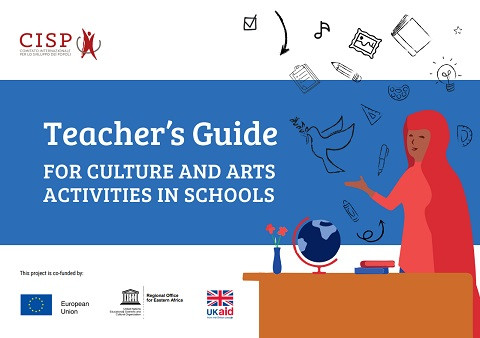 Teacher’s Guide for Culture and Arts Activities in Schools Année de publication: 2019 Auteur: Beatrice Polato | Xavier Verhoest Auteur institutionnel: Comitato Internazionale per lo Sviluppo dei Popoli (CISP) | European Union (EU) | UNESCO | UK aid This guide was designed as a curriculum to be used by teachers and mentors who facilitate modules and sessions aiming at involving school children in the study of cultural heritage, peace, inclusion and gender equity through artistic expressions. It has been tested and used by teachers in 24 schools in Somalia between 2018 and 2019, involving a total of 48 teachers and about 700 children. It contains text in Somali for activities.
 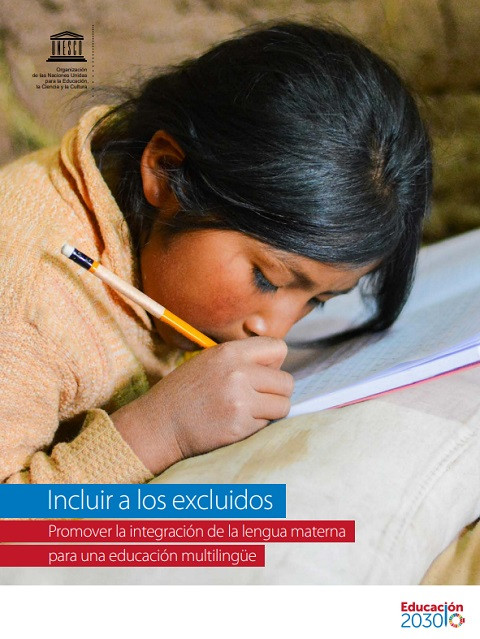 Including the Excluded: Promoting the Integration of the Mother Tongue for a Multilingual Education Année de publication: 2020 Auteur institutionnel: UNESCO This publication presents the advantages of including the mother tongue and promoting multilingual education, as well as guidelines for achieving it. Incluir a los excluidos: Promover la integración de la lengua materna para una educación multilingüe Année de publication: 2020 Auteur institutionnel: Organización de las Naciones Unidas para la Educación, la Ciencia y la Cultura (UNESCO) Esta publicación presenta las ventajas de incluir la lengua materna y promover una educación multilingue, así como orientaciones para lograrlo.
  UNESCO's work on education for peace and non-violence: building peace through education Année de publication: 2008 Auteur institutionnel: UNESCO The promotion of peace through education is at the heart of UNESCO’s mission. As stated in its constitution of 1945, UNESCO advances international peace and the common welfare of humanity through educational, scientific and cultural relations between peoples of the world. Though the world has changed over the past sixty years and continues to change at an ever increasing rate, UNESCO’s mission - a commitment to promoting universal values of peace and nonviolence, human rights and social justice, intercultural dialogue and mutual understanding – persists with growing urgency. UNESCO’s approach to educating for peace is multidimensional, in that it links education with a range of activities that address the root causes of violence, from human security to sustainable development. The goal of UNESCO’s education programmes and partnerships is the development of comprehensive systems of education that embrace the values of human rights, intercultural understanding and tolerance. Education for peace and non-violence promotes the knowledge, skills, attitudes and behaviours that reflect and inspire these values. As the lead agency within the UN system for the International Decade for a Culture of Peace and Non-Violence for the Children of the World, 2001- 2010, UNESCO is responsible for coordinating and directly implementing activities that promote the objectives of the Decade through education, the sciences, culture, communication and information. The culture of peace is defined as a set of values, attitudes, modes of behaviour and ways of life that reject violence and aim to prevent conflicts by tackling their root causes through dialogue and negotiation between individuals, groups and nations. UNESCO promotes the culture of peace through an intersectoral platform. This platform involves all five sectors of UNESCO: education, natural sciences, social and human sciences, culture, and communication and information. It seeks to mainstream intercultural dialogue in policies and actions with the aim of promoting mutual understanding, tolerance and respect, all of which are considered to be creative forces for a sustainable future. The intersectoral platform will also develop tools based on good practices in intercultural dialogue. UNESCO's work on education for peace and non-violence: building peace through education Année de publication: 2008 Auteur institutionnel: UNESCO La promotion de la paix par l'éducation est au cœur de la mission de l'UNESCO. Comme indiqué dans sa constitution de 1945, l'UNESCO fait avancer la paix internationale et le bien-être commun de l'humanité à travers les relations éducatives, scientifiques et culturelles entre les peuples du monde. Bien que le monde a changé au cours des soixante dernières années et continue de changer à un rythme de plus en plus élevé, la mission de l'UNESCO - un engagement à la promotion des valeurs universelles de paix et de non-violence, les droits de l’homme et la justice sociale, le dialogue interculturel et la compréhension mutuelle - persiste avec une urgence croissante . L'approche de l'UNESCO à l'éducation pour la paix est multidimensionnelle, en ce qu'il lie l'éducation avec une gamme d'activités qui abordent les causes profondes de la violence, de la sécurité humaine au développement durable. L'objectif des programmes et des partenariats de l'éducation de l'UNESCO est le développement de systèmes complets d'éducation qui embrassent les valeurs des droits de l'homme, de la compréhension interculturelle et la tolérance. L'éducation pour la paix et la non-violence favorise les connaissances, les compétences, les attitudes et les comportements qui reflètent et inspirent ces valeurs. En tant qu'organisme responsable au sein du système de l’ONU pour la Décennie internationale pour une culture de la paix et de la non-violence pour les enfants du monde, 2001- 2010, l'UNESCO est chargée de coordonner et mettre en œuvre directement des activités qui favorisent les objectifs de la Décennie par l'éducation , les sciences, la culture, la communication et de l'information. La culture de la paix est définie comme un ensemble de valeurs, attitudes, modes de comportement et des modes de vie qui rejettent la violence et visant à prévenir les conflits à leurs causes profondes par le dialogue et la négociation entre les individus, les groupes et les nations. L'UNESCO promeut la culture de la paix à travers une plate-forme intersectorielle. Cette plate-forme comprend les cinq secteurs de l'UNESCO: l'éducation, les sciences naturelles, les sciences sociales et humaines, la culture et la communication et de l'information. Il cherche à intégrer le dialogue interculturel dans les politiques et les actions dans le but de promouvoir la compréhension mutuelle, la tolérance et le respect, qui sont tous considérés comme des forces créatives pour un avenir durable. La plate-forme intersectorielle développera également des outils basés sur les bonnes pratiques dans le dialogue interculturel.
  Prix UNESCO de l'éducation pour la paix, 2008 Année de publication: 2009 Auteur institutionnel: UNESCO The UNESCO Prize for Peace Education 2008 was awarded to the Institute for Justice and Reconciliation (South Africa) by Mr Koïchiro Matsuura, Director-General of UNESCO, on the recommendation of the International Jury of the Prize. The prize-giving ceremony, organized as part of the celebrations of the International Day of Peace (21 September), the International Decade for a Culture of Peace and Non-Violence for the Children of the World (2001- 2010) and the 60th anniversary of the Universal Declaration of Human Rights, was held at UNESCO Headquarters on 18 September 2008 in the presence of Mr Mohammed Arkoun, President of the International Jury, and H.E. Mr Javier Pérez de Cuéllar, member of the International Jury, former Prize laureates, Permanent Delegates of Member States and representatives of governmental and non-governmental organizations. The award ceremony was preceded by the screening of an excerpt from the documentary Truth, Justice, Memory: South Africa’s Truth and Reconciliation Process and by a video message from Archbishop Emeritus Desmond Tutu, winner of the 1984 Nobel Peace Prize for his role as a unifying leader in the campaign to resolve the problem of apartheid in South Africa, and former Chairperson of South Africa’s Truth and Reconciliation Commission
  UNESCO prize for peace education, 2008 Année de publication: 2009 Auteur institutionnel: UNESCO The UNESCO Prize for Peace Education 2008 was awarded to the Institute for Justice and Reconciliation (South Africa) by Mr Koïchiro Matsuura, Director-General of UNESCO, on the recommendation of the International Jury of the Prize. The prize-giving ceremony, organized as part of the celebrations of the International Day of Peace (21 September), the International Decade for a Culture of Peace and Non-Violence for the Children of the World (2001- 2010) and the 60th anniversary of the Universal Declaration of Human Rights, was held at UNESCO Headquarters on 18 September 2008 in the presence of Mr Mohammed Arkoun, President of the International Jury, and H.E. Mr Javier Pérez de Cuéllar, member of the International Jury, former Prize laureates, Permanent Delegates of Member States and representatives of governmental and non-governmental organizations. The award ceremony was preceded by the screening of an excerpt from the documentary Truth, Justice, Memory: South Africa’s Truth and Reconciliation Process and by a video message from Archbishop Emeritus Desmond Tutu, winner of the 1984 Nobel Peace Prize for his role as a unifying leader in the campaign to resolve the problem of apartheid in South Africa, and former Chairperson of South Africa’s Truth and Reconciliation Commission
  인권과 민주주의, 평화를 위한 교육 활동 선언과 통합 프레임워크 Année de publication: 1995 Auteur institutionnel: 유네스코 본 문서는 1995년 11월 파리, 제 28회 유네스코 총회에서 승인된, 교육에 관한 제 44차 국제회의선언 문서이다. (1994년 10월, 제네바) Documento final de la consulta técnica sobre educación para la ciudadanía mundial: Educación para la ciudadanía mundial: una perspectiva emergente Année de publication: 2013 Auteur institutionnel: UNESCO This document draws on inputs to, and common perspectives emerging from, a Technical Consultation on Global Citizenship Education organized by UNESCO and the Republic of Korea (i.e., the Ministries of Foreign Affairs and of Education, and the Asia-Pacific Centre of Education for International Understanding) in Seoul on 9-10 September 2013 . Informing this draft document are: a) responses from the expert participants to a questionnaire circulated by UNESCO in advance of the consultation; b) presentations from experts during the consultation; c) discussions during the consultation; and d) reference material contributing to, and prepared for, the consultation. The final draft of this document was prepared by UNESCO’s Division of Education for Peace and Sustainable Development at Headquarters in Paris, with the assistance of a drafting team.
  Fighting racism and discrimination: identifying and sharing good practices in the International Coalition of Cities Année de publication: 2012 Auteur institutionnel: UNESCO Since the establishment of the International Coalition, UNESCO has headed the regional scientific committees. In this role, UNESCO receives reports from cities in fulfilment of formal or informal requirements of their membership. These reports showcase the efforts of cities showcase the efforts of cities in addressing the Ten Point Plan of commitments for their respective region. UNESCO undertakes its efforts based on the information provided by the city in its report. First, it provides feedback to the cities on their efforts. The report identifies promising practices and highlights areas where additional work can be undertaken. Second, the reports from cities provide information that can be used for a variety of purposes including the publication of this report of good practices in anti-discrimination. The contents of this report reflect the information shared by Member Cities and as current Member Cities become increasingly active and new ones join the Coalition, the collection of good practices will undoubtedly expand.The purpose of this good practices report is two-fold. First, it draws together a collection of good practices in anti-discrimination of Member Cities so that they can inspire and inform the policies and practices of other cities. Second, the report uses major themes related to the different roles and domains of cities to inform and indeed, encourage critical reflection on anti-discrimination work in these areas. Several key objectives underlie the report:• Reflect on the different roles and capacities of cities and provide a framework to understand and assess their policies and practices;• Present, in one publication, examples of a wide variety of good practices; Provide a useful resource on anti-discrimination for stakeholders including city staff and representatives, community organisations, researchers, as well as interested individuals and groups; • Contribute to the successful networking of cities underway through the coalition;• Highlight the fact that even if there are challenges to engaging in anti-discrimination work, and that city representatives may feel limited, there are multiple actions that they can undertake.