
Ressources
Explorez une large gamme de ressources sur le GCED afin d’approfondir votre compréhension et de renforcer vos activités de recherche, de plaidoyer, d’enseignement et d’apprentissage.
1,402 résultats trouvés
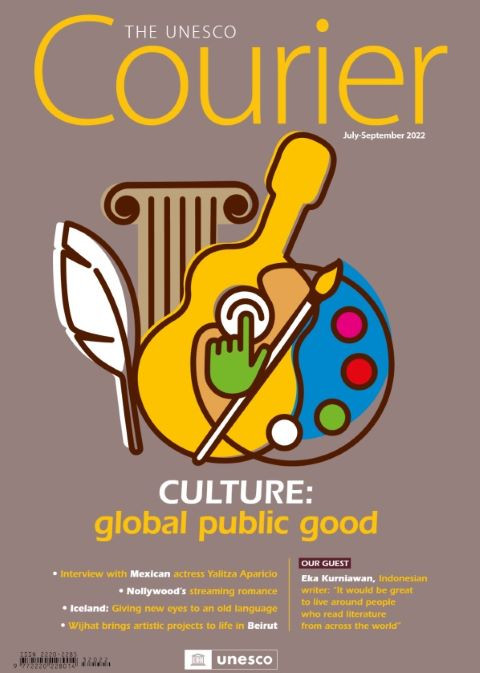 La Cultura: Un bien público mundial (The UNESCO Courier no. 3; July-September 2022) Année de publication: 2022 Auteur institutionnel: UNESCO Culture is what defines us in space and time – our past and present roots, our prospects. Culture is an inexhaustible and renewable resource, which adapts to changing contexts and which speaks to humans first and foremost through their capacity to imagine, create and innovate. Culture is our most powerful global public good. In the words of Javier Pérez de Cuéllar, former Secretary-General of the United Nations, culture has a role “as a desirable end in itself, as giving meaning to our existence”. Today, more than ever, we need to find meaning, we need universality, we need culture in all its diversity. La Culture: Un bien public mondial (The UNESCO Courier no. 3; July-September 2022) Année de publication: 2022 Auteur institutionnel: Organisation des Nations Unies pour l'éducation, la science et la culture (UNESCO) Culture is what defines us in space and time – our past and present roots, our prospects. Culture is an inexhaustible and renewable resource, which adapts to changing contexts and which speaks to humans first and foremost through their capacity to imagine, create and innovate. Culture is our most powerful global public good. In the words of Javier Pérez de Cuéllar, former Secretary-General of the United Nations, culture has a role “as a desirable end in itself, as giving meaning to our existence”. Today, more than ever, we need to find meaning, we need universality, we need culture in all its diversity.
 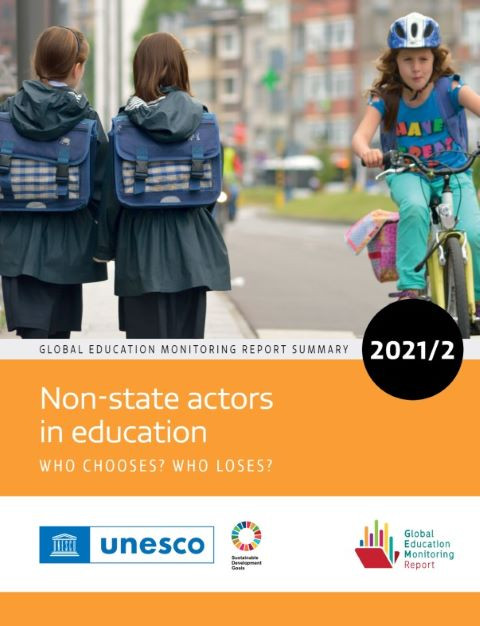 [Summary] Global Education Monitoring Report 2021/2: Non-state Actors in Education: Who Chooses? Who Loses? Année de publication: 2022 Auteur institutionnel: UNESCO Non-state actors’ role extends beyond provision of schooling to interventions at various education levels and influence spheres. Alongside its review of progress towards SDG 4, including emerging evidence on the COVID-19 pandemic’s impact, the 2021/2 Global Education Monitoring Report urges governments to see all institutions, students and teachers as part of a single system. Standards, information, incentives and accountability should help governments protect, respect and fulfill the right to education of all, without turning their eyes away from privilege or exploitation. Publicly funded education does not have to be publicly provided but disparity in education processes, student outcomes and teacher working conditions must be addressed. Efficiency and innovation, rather than being commercial secrets, should be diffused and practiced by all. To that end, transparency and integrity in the public education policy process need to be maintained to block vested interests. The report’s rallying call – Who chooses? Who loses? – invites policymakers to question relationships with non-state actors in terms of fundamental choices: between equity and freedom of choice; between encouraging initiative and setting standards; between groups of varying means and needs; between immediate commitments under SDG 4 and those to be progressively realized (e.g. post-secondary education); and between education and other social sectors.
 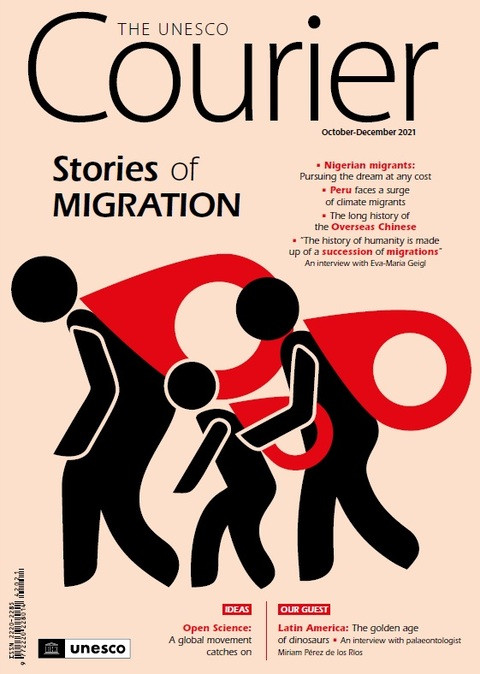 Stories of MIGRATION (The UNESCO Courier no. 4; October-December 2021) Année de publication: 2021 Auteur institutionnel: UNESCO Through nine stories about migration, this feature story explores the prevalent phenomenon of migration in the context of globalization, and examines the problems and issues related to migration. 移民的故事 (The UNESCO Courier no. 4; October-December 2021) Année de publication: 2021 Auteur institutionnel: 联合国教科文组织 (UNESCO) 本专题报道通过9个关于移民的故事,探讨全球化背景下普遍的移民现象,并探讨与移民有关的困境及问题。
 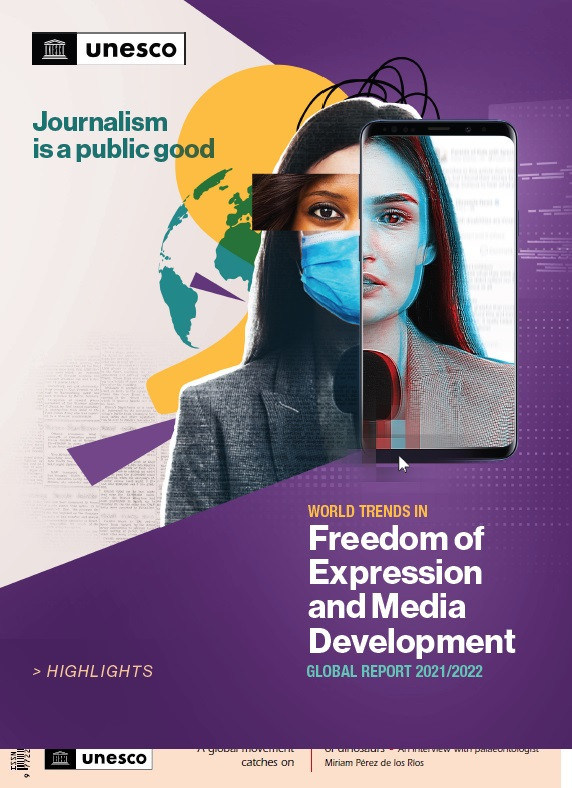 Journalism is a Public Good: World Trends in Freedom of Expression and Media Development: Global Report 2021/2022; Highlights Année de publication: 2021 Auteur institutionnel: UNESCO This document is a report on world trends in freedom of expression and media development published by UNESCO in 2021/22 and focuses on the many challenges facing access to information since 2016, in terms of analysis of trends in media freedom, pluralism, independence and safety of journalists. 新闻是一种公共产品: 世界趋势、言论自由和媒体发展; 全球报告 2021/2022 Année de publication: 2021 Auteur institutionnel: 联合国教科文组织 (UNESCO) 本文件是2021/22年联合国教科文组织所发布的关于言论自由和媒体发展的世界趋势报告,主要从媒体自由、多元化、独立性和记者安全等趋势分析,探讨2016年以来信息获取所面临的众多挑战。
  Revised Recommendation Concerning Education for International Understanding, Co-operation and Peace and Education Relating to Human Rights and Fundamental Freedoms ('1974 Recommendation') Année de publication: 2022 Auteur institutionnel: UNESCO The revision of the 1974 Recommendation provides the international community with the opportunity to strengthen the instrument so that it can support the design and implementation of effective educational policies and programmes, which can put the world on a pathway to lasting peace and sustainable development for all, in line with the requirements of the 2030 Agenda and the body of international legal norms adopted since 1974. Recommandation révisée sur l’éducation pour la compréhension, la coopération et la paix internationales et l’éducation relative aux droits de l’homme et aux libertés fondamentales (« Recommandation de 1974 ») Année de publication: 2022 Auteur institutionnel: UNESCO La révision de la Recommandation de 1974 offre à la communauté internationale l'occasion de renforcer l'instrument afin qu'il puisse soutenir la conception et la mise en œuvre de politiques et de programmes éducatifs efficaces, susceptibles de mettre le monde sur la voie d'une paix durable et du développement durable pour tous, conformément aux exigences de l'Agenda 2030 et à l'ensemble des normes juridiques internationales adoptées depuis 1974.
 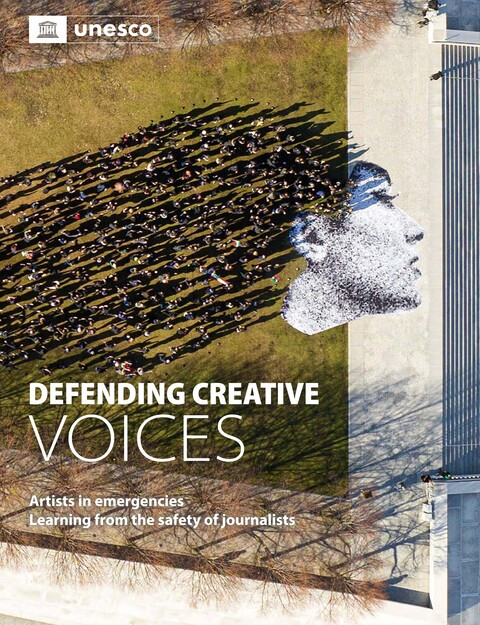 Defending Creative Voices: Artists in Emergencies, Learning from the Safety of Journalists Année de publication: 2023 Auteur: Rosario Soraide Auteur institutionnel: UNESCO Artists and cultural professionals often come across significant challenges to their freedom of expression, including violence and harassment – online and offline – legal persecution, detention, imprisonment and, in the worst of cases, murder. Emergency situations can result in additional risks for them, as many become increasingly targeted in connection to the visibility of their work and see their livelihoods impacted upon by income loss and unemployment in the cultural sector. While the attacks and threats that artists and cultural professionals face during emergencies are similar to those affecting journalists, they do not receive the same level of attention nor access to protection mechanisms and opportunities for assistance. Over the past decades, a strong framework has emerged to advance journalists’ safety at international, regional and national levels, including through legal and regulatory instruments, protection mechanisms, support networks and consistent collective mobilization for their rights. Despite growing awareness of the vulnerability of artists and cultural professionals in emergency contexts and increased efforts to safeguard their rights and ensure their safety, progress in this regard remains comparatively much more incipient. With the support of UNESCO’s Culture and Communication and Information Sector, and based on a comparative analysis, this study therefore aims to strengthen the protection of artists and cultural professionals during emergencies by drawing lessons from the experience, challenges, and achievements in the field of journalists’ safety. It presents actionable recommendations and identifies areas in which synergies between key stakeholders promoting, respectively, artistic and media freedom could serve to reinforce the protection of both at-risk artists and journalists.