
Ressources
Explorez une large gamme de ressources sur le GCED afin d’approfondir votre compréhension et de renforcer vos activités de recherche, de plaidoyer, d’enseignement et d’apprentissage.
1,450 résultats trouvés
 Guidelines for Teachers: How to Spot and Fight Disinformation Année de publication: 2021 Auteur institutionnel: European Commission This toolkit is designed to introduce young people to the phenomenon of disinformation – conveying an understanding of the threats it poses, explaining how pupils can find out more and protect themselves from it, and providing an opportunity to look in more depth at particular examples. The toolkit is open and free to use for any educational establishment. Although it can be adjusted and tailored for any age group, the main target group is teenagers from 15 to 18 years old.
 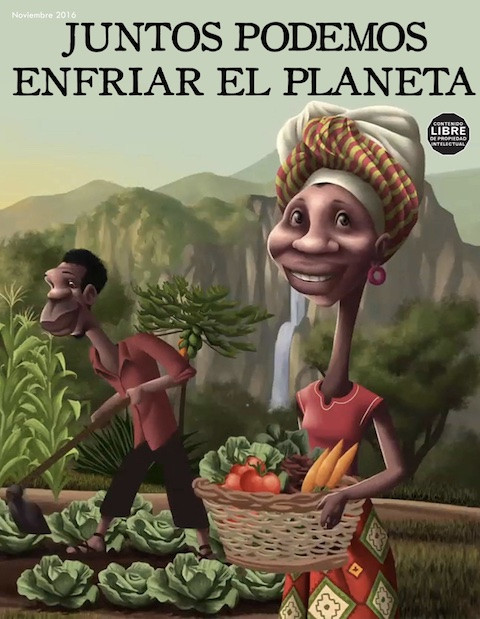 Together We Can Cool the Planet Année de publication: 2016 Auteur institutionnel: GRAIN | La Via Campesina It is a story based on the video "together we can cool the planet" that talks about global warming, its causes and consequences. It reports how industrial food production affects this phenomenon. It recounts each step of industrial food production, the use of fertile lands, the burning of trees that produces carbon dioxide, the use of machinery, the use of fertilizers and pesticides, the production of animal excrement that produces methane gas, as well as the transport that must be used so that this production reaches where it must be sold. They then propose a series of solutions consisting of 5 steps.
  Chouette, pas chouette: Livret pédagogique; Activités d’éducation aux médias et à l'information sur le thème de l’égalité filles-garçons Année de publication: 2021 Auteur institutionnel: Centre pour l’éducation aux médias et à l’information (CLEMI) Chouette, pas chouette ! une série de 16 programmes courts animés pour sensibiliser les 4-6 ans aux stéréotypes sexistes avec intelligence et humour a été réalisée avec l’appui de l’expertise pédagogique du CLEMI. C’est aussi un univers peuplé de personnages attachants, décliné en un livret pédagogique pour permettre aux professeurs des écoles de développer leurs actions en éducation aux médias et à l'information sur le thème de l’égalité filles/garçons, de la maternelle à la 6e.
  Estrategia de educación para la ciudadanía global en el ámbito no formal en la ciudad de València (2019-2022) Année de publication: 2018 Auteur: Alejandra Boni | Sergio Belda | Carola Calabuig | María Alejandra Millán | Alba Talón Auteur institutionnel: INGENIO | Ayuntamiento de Valencia Este documento nos va a permitir incorporar los contenidos de la Educación para la Ciudadanía Global, en las acciones que se impulsan desde cada uno de los espacios educativos no formales dependientes del Ajuntament de València.
 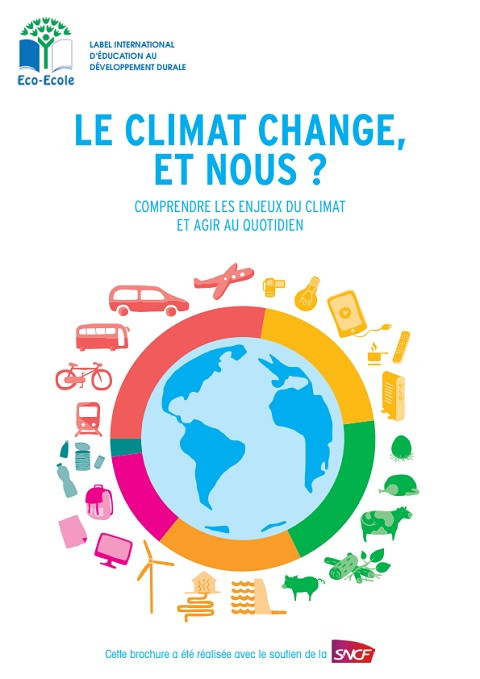 Le climat change, et nous?: Comprendre les enjeux du climat et agir au quotidien Année de publication: 2015 Auteur institutionnel: Eco-Ecole Réalisé avec le soutien de nos partenaires, cette brochure explique en quelques pages la façon dont nous modifions le climat et propose des solutions pour agir. Elle s’adresse à tout citoyen, jeune ou adulte, qui s’interroge sur le climat et se demande ce qu’il peut faire à son échelle à l’école, à la maison, dans son travail ou dans sa ville. Juntos podemos enfriar el planeta Année de publication: 2016 Auteur institutionnel: GRAIN | La Via Campesina Es una historia basada en el video " juntos podemos enfriar el planeta" que habla sobre el calentamiento global, sus causas y consencuencias, Reporta el cómo la producción industrial de alimentos afecta este fenomeno. Relata cada paso de producción industrial de alimentos, el uso de tierras fértiles, la quema de árboles que produce dióxido de carbono,el uso de maquinarias, uso de fertilizantes y agrotóxicos,la producción de excremento de animales que produce gas metano, así como el transporte que debe ser usado para que esta producción llegue a donde debe ser vendida. Posteriormente proponen una serie soluciones que constan de 5 pasos.
 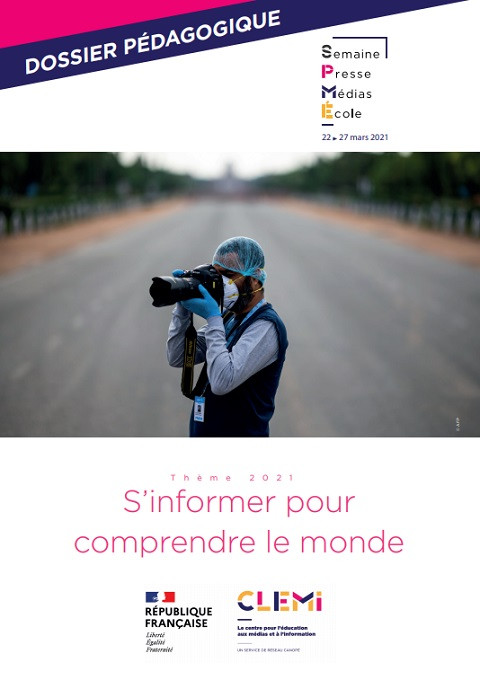 Dossier pédagogique 2021: S’informer pour comprendre le monde Année de publication: 2020 Auteur institutionnel: Centre pour l’éducation aux médias et à l’information (CLEMI) | Réseau Canopé Le dossier pédagogique 2021 a pour thème : «S'informer pour comprendre le monde». Pour comprendre le monde qui les entoure, les élèves doivent plus que jamais apprendre à s’informer en exerçant leur esprit critique. Ce nouveau thème de la SPME permet ainsi de revenir aux fondamentaux de l’éducation aux médias et à l’information.
 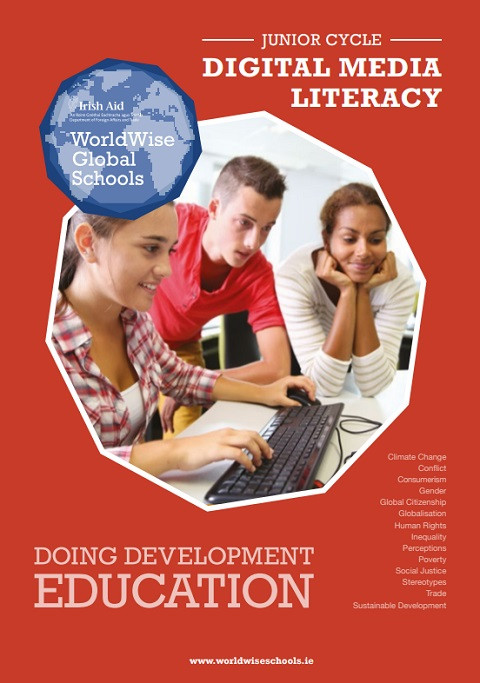 Doing Development Education: Digital Media Literacy; Junior Cycle Année de publication: 2017 Auteur institutionnel: WorldWise Global Schools (WWGS) | Irish Aid In Ireland, Development Education themes, such as ethics, respect, rights and responsibilities, consumerism, citizenship, democracy and the role of the media form part of the learning in the junior cycle Digital Media Literacy Short Course.This resource aims to support Digital Media teachers to teach through a global justice lens, a lens with great educational benefits, which meets the requirements as laid out in the junior cycle Digital Media Literacy specification, and in the (2015) Framework for Junior Cycle.
  IEA 국제시민 교육연구의 초기 결과 Année de publication: 2010 Auteur: Wolfram Schulz | John Ainley | Julian Fraillon | David Kerr | Bruno Losito Auteur institutionnel: International Association for the Evaluation of Educational Achievement (IEA) 국제시민교육연구(ICCS)는 시민으로서 자신의 역할을 수행하기 위해서 국가가 그들의 젊은이들을 준비시키는 방법에 대한 연구를 하였다. 여기에서는 학생들의 태도와 인식, 그리고 시민의식 및 시민권과 관련된 그들의 활동과 더불어 학생들의 시민의식과 시민권에 대한 이해와 지식에 대한 조사를 하였다. 또한, 시민교육의 결과와 관련된 국가 간의 차이를 조사하고, 그러한 차이가 학생의 특성, 학교 및 지역사회의 상황, 국가의 특성 사이에서 어떻게 다른가도 탐구하였다. 국제시민교육연구(ICCS)는 다음과 관련된 여섯 가지 연구 문제를 고려한다. 1. 시민 지식의 변화 2. 1999년 이래 교과 지식의 변화 3. 공적이고 정치적인 생활에 참여하는 것에 대한 학생의 관심도 및 실제적 이행 4. 시민 사회를 위협하는 것에 대한 인식 5. 시민교육과 관련된 교실과 학교, 교육 시스템의 특징 6. 시민교육의 결과와 관련된 학생의 배경 국제시민교육연구(ICCS)는 38개국 5,300개 이상의 학교에서 8학년(혹은 동급)의 14만면 이상의 학생들로부터 데이터를 수집하였다. 그리고 이 학생 데이터는 국립 연구 센터와 학교장이 수집한 상황별 데이터와 해당 학교 내 62,000명 이상의 교사들에 의해 증강되었다. 시민교육의 제공에 관한 다른 접근 방법은 국제시민교육연구(ICCS) 국가에서 분명히 드러났다. 이 접근 방식은 특정 주제를 가진 다른 과목과 연관된 콘텐츠를 통합하고, 상호 교육 과정을 테마로 하는 내용이 포함되어 있다. ICSS 38개국 중 21개 국가에서 그들의 교과 과정에 시민교육과 관련된 특정 주제를 포함시켰다. 시민교육은 사회, 지역 커뮤니티의 응집력, 다양성, 환경, 커뮤니케이션, 글로벌 사회와같은 새로운 주제 뿐만 아니라, 인권과 같은 정치적 개념의 이해와 지식을 포함한 폭넓은 범위의 주제도 아우르고 있다.
  Resultados iniciales del estudio Internacional de educación cívica y ciudadana de la IEA Année de publication: 2010 Auteur: Wolfram Schulz | John Ainley | Julian Fraillon | David Kerr | Bruno Losito Auteur institutionnel: International Association for the Evaluation of Educational Achievement (IEA) The International Civic and Citizenship Education Study (ICCS) studied the ways in which countries prepare their young people to undertake their roles as citizens. It investigated student knowledge and understanding of civics and citizenship as well as student attitudes, perceptions, and activities related to civics and citizenship. It also examined differences among countries in relation to these outcomes of civic and citizenship education, and it explored how differences among countries relate to student characteristics, school and community contexts, and national characteristics. ICCS considered six research questions concerned with the following:1. Variations in civic knowledge;2. Changes in content knowledge since 1999;3. Student interest in engaging in public and political life and their disposition to do so;4. Perceptions of threats to civil society;5. Features of education systems, schools, and classrooms related to civic and citizenship education; and6. Aspects of student background related to the outcomes of civic and citizenship education.ICCS gathered data from more than 140,000 Grade 8 (or equivalent) students in over 5,300 schools from 38 countries. These student data were augmented by data from more than 62,000 teachers in those schools and by contextual data collected from school principals and the study’s national research centers. Different approaches to provision of civic and citizenship education were evident in the ICCS countries. These approaches included having a specific subject, integrating relevant content into other subjects, and including content as a cross-curricular theme. Twenty-one of the 38 countries in ICCS included a specific subject concerned with civic and citizenship education in their curriculum. Civic and citizenship education covered a wide range of topics, including knowledge and understanding of political institutions and concepts, such as human rights, as well as newer topics covering social and community cohesion, diversity, the environment, communications, and global society.