
Ressources
Explorez une large gamme de ressources sur le GCED afin d’approfondir votre compréhension et de renforcer vos activités de recherche, de plaidoyer, d’enseignement et d’apprentissage.
2,668 résultats trouvés
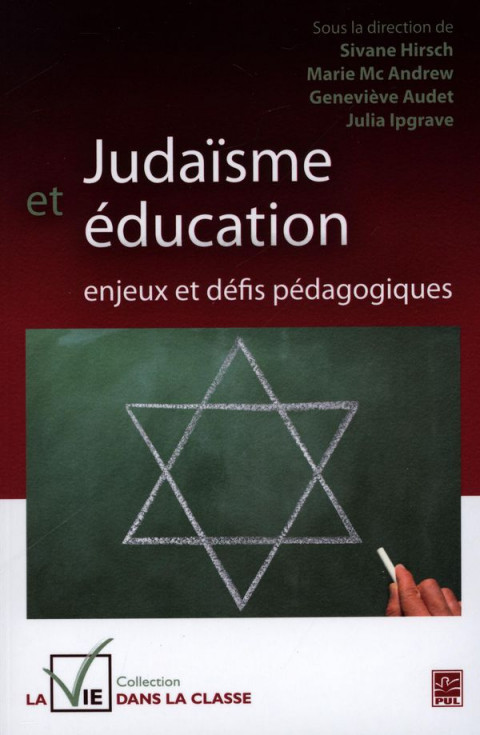 Judaïsme et éducation : enjeux et défis pédagogiques The question of relations between ethnic groups defined by different markers, including religion, is more than ever necessary in our plural societies. This original work focuses on the role of education in the dynamics of relations between the Jewish community and fellow citizens of all origins in Quebec, Canada and in other countries. Indeed, while the Jewish communities are often well established in their host societies, they often remain little known to the population and especially of the majority groups. The authors address three issues that may challenge the stakeholder community and school, but also the general public interested in "living together" and its challenges : Education on Jewish communities in public schools; Education on the Holocaust and innovative practices in this regard; Moving Jewish schools and their impact. (By the publisher - Translation)
  The Holocaust Explained The Holocaust Explained website, prepared by the London Jewish Cultural Centre, aims to help students with their school work, both in school and at home. It is designed to support the school curriculum. The site has images (pictures, maps, videos, diagrams) to help explain concepts and events. There is text to describe the historical events and 'reflective learning activities' to enhance students' understanding of the issues and concepts. Dallas Holocaust Museum Center for Education and Tolerance The Dallas Holocaust Museum Center for Education contains resources for teaching about the Holocaust : questions/answers, a timeline, key definitions, etc. Fortunoff Video Archive for Holocaust Testimonies of the Yale University Library In the 1970s the Holocaust Survivors Film Project began videotaping Holocaust survivors and witnesses in New Haven. Since then, the Fortunoff Archive has worked to record, collect and preserve Holocaust witness testimonies, and to make its collection available to researchers, educators and the general public. The Fortunoff Archive currently holds more than 4,400 testimonies, which are comprised of over 10,000 recorded hours of videotape. The Fortunoff Archive and its affiliates recorded the testimonies of willing individuals with first-hand experience of the Nazi persecutions, including those in hiding, survivors, bystanders, resistants and liberators. Testimonies are recorded in whatever language the witness prefers, and range in length from one-half hour to over 40 hours. Fortunoff Archive vidéo pour l'Holocauste Témoignages de la bibliothèque de l'Université Yale Dans les années 1970, le projet de film survivants de l'Holocauste a commencé l'enregistrement vidéo des survivants et des témoins de l'Holocauste à New Haven. Depuis lors, les Archives Fortunoff a travaillé pour enregistrer, recueillir et conserver les témoignages de la Shoah, et de rendre sa collection aCECssible aux chercheurs, les éducateurs et le grand public. Les Archives Fortunoff détient actuellement plus de 4.400 témoignages, qui sont composées de plus de 10.000 heures enregistrées de la bande vidéo. Les Archives Fortunoff et ses filiales ont enregistré les témoignages de personnes qui veulent une expérience de première main des persécutions nazies, y compris ceux dans la clandestinité, les survivants, les spectateurs, les résistants et libérateurs. Les témoignages sont enregistrés dans la langue du témoin préfère, et la gamme de longueur d'une demi-heure à plus de 40 heures. Jewish Partisan Educational Fund The mission of Jewish Partisan Educational Fund is to develop and distribute effective educational materials about the Jewish partisans and their life lessons, bringing the celebration of heroic resistance against tyranny into educational and cultural organizations. Designed for 6th-12th grades. most materials can be completed in 45-60 minutes. Lesson Plans and activities are interactive, thought-provoking lessons and experiential programs; included are step-by-step procedures, teacher guides and illustrations. Fonds d'éducation Partisan juif La mission du Fonds pour l'éducation Partisan juive est de développer et de distribuer des documents éducatifs efficaces sur les partisans juifs et leurs leçons de vie, ce qui porte la célébration de résistance héroïque contre la tyrannie dans les organisations éducatives et culturelles. Conçu pour les élèves de 6e-12e. la plupart des matériaux peuvent être complétés en 45-60 minutes. Plans de cours et activités sont, des leçons à réflexion interactifs et programmes expérientiels; inclus sont étape par étape des procédures, des guides de l'enseignant et des illustrations. Du bist anders? – Eine Online-Ausstellung über Jugendliche in der Zeit des Nationalsozialismus This website takes an online inventory of young Jewish, roma or righteous children/teenagers who were persecuted during World War two. / Ce site prend un inventaire en ligne des jeunes, roma ou justes enfants / adolescents juifs qui ont été persécutés pendant la Seconde Guerre mondiale. Centre commémoratif de l'Holocauste à Montréal The Montreal Memorial Centre informs and sensitizes every type of audience on the Holocaust, antisemitism, racism, hatred and indifference. Through its website, teachers have access to practical guides and activities for primary and secondary pupils. Centre commémoratif de l'Holocauste à Montréal Le Centre commémoratif de Montréal informe et sensibilise chaque type de public sur l'Holocauste, l'antisémitisme, le racisme, la haine et l'indifférence. Grâce à son site Web, les enseignants ont accès à des guides pratiques et des activités pour les élèves du primaire et du secondaire.