
Ressources
Explorez une large gamme de ressources sur le GCED afin d’approfondir votre compréhension et de renforcer vos activités de recherche, de plaidoyer, d’enseignement et d’apprentissage.
1,407 résultats trouvés
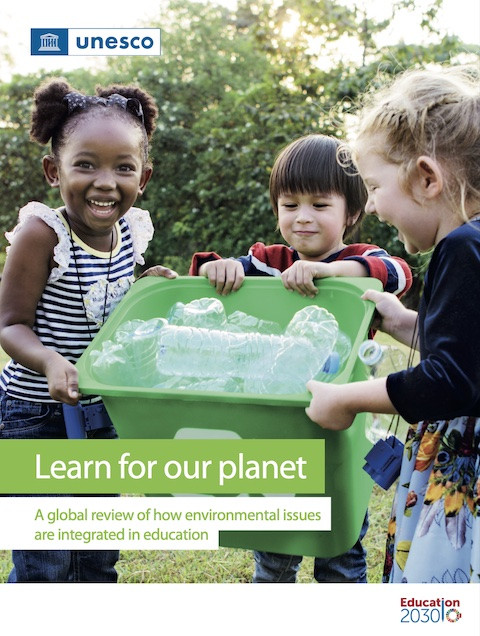 Learn for Our Planet: A Global Review of How Environmental Issues Are Integrated in Education Année de publication: 2021 Auteur institutionnel: UNESCO 2020 was the equal hottest year on record. One million species are at risk of extinction. We use more resources than the planet can generate each year - if we continue to live the way we do today, we will need three earths by 2050. The way we currently live is not sustainable. Urgent change is needed, but lasting change is impossible without education.This publication presents the extent to which environmental issues are integrated in primary and secondary education policies and curricula across 46 UNESCO Member States. Over half of education policies and curricula studied made no mention of climate change. Only 19 per cent made reference to biodiversity. Countries have made progress: 83 per cent of education policies and curricula studied addressed the environment at least once, and 69 per cent mentioned sustainability - but it is clear that more needs to be done to prepare learners with the knowledge, skills, values and attitudes to act for our planet. Governments, education policy-makers, academics, and education and environmental stakeholders need to further commit to Education for Sustainable Development.
  Second collection of good practices: education for sustainable development Année de publication: 2009 Auteur institutionnel: UNESCO Associated Schools Project Network (ASPnet) This second collection of ASPnet good practices for quality education takes stock of some of the contributions being made by UNESCO Associated Schools in support of the United Nations Decade of Education for Sustainable Development (DESD).
  Comparative study of textbooks: working document in the framework of the Euro-Arab Dialogue; summary report Année de publication: 2015 Auteur: Jacqueline Costa-Lascoux | Janine d'Artois Pursuant to the Charter of the United Nations and the Constitution of UNESCO, calling for peace between peoples and respect for cultural diversity, several National Commissions for UNESCO have taken the initiative to create the conditions for a Euro-Arab dialogue in the field of education. The French and Moroccan National Commissions, in particular, have decided to launch studies to highlight stereotypes, misunderstandings and subliminal bias about Arab countries in European textbooks and about European countries in textbooks in the Arab world. First, these studies were conducted by researchers focusing on their own countries' textbooks in order to analyse how the history of the countries on "the other side of the Mediterranean" was represented. Second, a common methodology was developed to allow comoparative approaches favourable to Euro-Arab dialogue. This was to address any mutual bias or misrepresentations that may exist between the two regions and to work togehter to find ways of preventing and combating them. The originality of the approach was to conduct a critical analysis of textbooks published in each country and then underetake a comparative study to be used as the basis for common recommendations. Participants in this project initiated by the National Commissions defined three main objectives: 1. To strengthen dialogue, laying the foundations for learning to live together, based on mutual respect. 2. To help National Commissions for UNESCO, experts, institutions and non-governmental organizations (NGOs) to find ways to work together in areas of research of common interest. 3. To contribute to UNESCO's efforts to develop a stretegy relating to textbooks, to improve the quality of education for peace, human rights, mutual understanding and intercultural dialogue. Etude comparative de manuels scolaires: document de travail dans le cadre du dialogue Euro-Arabe, rapport de synthèse Année de publication: 2015 Auteur: Jacqueline Costa-Lascoux | Janine d'Artois Pursuant to the Charter of the United Nations and the Constitution of UNESCO, calling for peace between peoples and respect for cultural diversity, several National Commissions for UNESCO have taken the initiative to create the conditions for a Euro-Arab dialogue in the field of education. The French and Moroccan National Commissions, in particular, have decided to launch studies to highlight stereotypes, misunderstandings and subliminal bias about Arab countries in European textbooks and about European countries in textbooks in the Arab world. First, these studies were conducted by researchers focusing on their own countries' textbooks in order to analyse how the history of the countries on "the other side of the Mediterranean" was represented. Second, a common methodology was developed to allow comoparative approaches favourable to Euro-Arab dialogue. This was to address any mutual bias or misrepresentations that may exist between the two regions and to work togehter to find ways of preventing and combating them. The originality of the approach was to conduct a critical analysis of textbooks published in each country and then underetake a comparative study to be used as the basis for common recommendations. Participants in this project initiated by the National Commissions defined three main objectives: 1. To strengthen dialogue, laying the foundations for learning to live together, based on mutual respect. 2. To help National Commissions for UNESCO, experts, institutions and non-governmental organizations (NGOs) to find ways to work together in areas of research of common interest. 3. To contribute to UNESCO's efforts to develop a stretegy relating to textbooks, to improve the quality of education for peace, human rights, mutual understanding and intercultural dialogue. دراسة مقارنة للكتب املدرسية وثيقة عمل في إطار الحوار األوروبي - العربي Année de publication: 2015 Auteur: Jacqueline Costa-Lascoux | Janine d'Artois Pursuant to the Charter of the United Nations and the Constitution of UNESCO, calling for peace between peoples and respect for cultural diversity, several National Commissions for UNESCO have taken the initiative to create the conditions for a Euro-Arab dialogue in the field of education. The French and Moroccan National Commissions, in particular, have decided to launch studies to highlight stereotypes, misunderstandings and subliminal bias about Arab countries in European textbooks and about European countries in textbooks in the Arab world. First, these studies were conducted by researchers focusing on their own countries' textbooks in order to analyse how the history of the countries on "the other side of the Mediterranean" was represented. Second, a common methodology was developed to allow comoparative approaches favourable to Euro-Arab dialogue. This was to address any mutual bias or misrepresentations that may exist between the two regions and to work togehter to find ways of preventing and combating them. The originality of the approach was to conduct a critical analysis of textbooks published in each country and then underetake a comparative study to be used as the basis for common recommendations. Participants in this project initiated by the National Commissions defined three main objectives: 1. To strengthen dialogue, laying the foundations for learning to live together, based on mutual respect. 2. To help National Commissions for UNESCO, experts, institutions and non-governmental organizations (NGOs) to find ways to work together in areas of research of common interest. 3. To contribute to UNESCO's efforts to develop a stretegy relating to textbooks, to improve the quality of education for peace, human rights, mutual understanding and intercultural dialogue.
 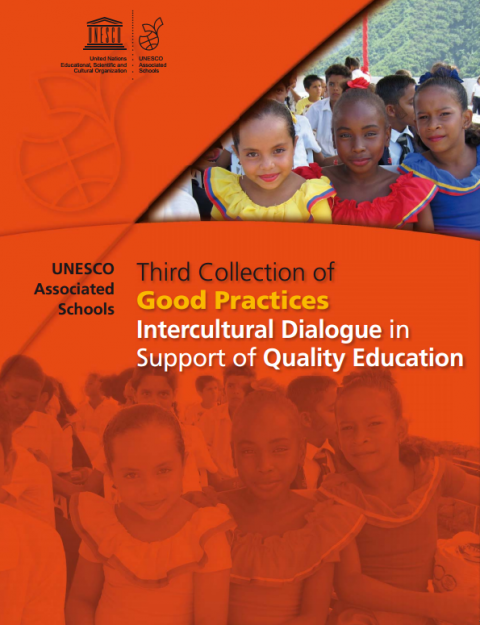 Third collection of good practices: intercultural dialogue in support of quality education Année de publication: 2013 Auteur institutionnel: UNESCO Associated Schools Project Network (ASPnet) The UNESCO Associated Schools Project Network (ASPnet) conducts pilot projects aimed at reinforcing the humanistic and ethical principles of UNESCO in school curricula and throughout the learning process, often within the framework of UN and UNESCO International Day, Years and Decades, Promoting intercultural dialogue is thus an ASPnet priority. The initiatives presented in this Third Collection of ASPnet Good Practices were carried out by ASPnet schools and their partner institutions in the context of the International Year for the Rapprochement of Cultures (2010). The selected projects illustrate both multicultural education and intercultural education in action. Troisième recueil de bonnes pratiques: le dialogue interculturel à l'appui de l'éducation de qualité Année de publication: 2013 Auteur institutionnel: UNESCO Associated Schools Project Network (ASPnet) Les écoles associées de l'UNESCO (réSEAU) mènent des projets pilotes visant à renforcer les principes humanistes et éthiques de l'UNESCO dans les programmes scolaires et tout au long du processus d'apprentissage, souvent dans le cadre de l'ONU et de la Journée internationale de l'UNESCO, années et décennies, la promotion du dialogue interculturel est donc une priorité Reseau. Les initiatives présentées dans ce troisième Collection de Reseau bonnes pratiques ont été réalisées par les écoles Reseau et leurs institutions partenaires dans le cadre de l'Année internationale du rapprochement des cultures (2010). Les projets sélectionnés illustrent à la fois l'éducation multiculturelle et l'éducation interculturelle dans l'action. المجموعة الثانية من الممارسات الجيدة في مجال التعليم من أجل التنمية المستدامة Année de publication: 2009 Auteur institutionnel: UNESCO Associated Schools Project Network (ASPnet) This second collection of ASPnet good practices for quality education takes stock of some of the contributions being made by UNESCO Associated Schools in support of the United Nations Decade of Education for Sustainable Development (DESD). Segundo compendio de prácticas ejemplares en materia de educación para el desarrollo sostenible Année de publication: 2009 Auteur institutionnel: UNESCO Associated Schools Project Network (ASPnet) This second collection of ASPnet good practices for quality education takes stock of some of the contributions being made by UNESCO Associated Schools in support of the United Nations Decade of Education for Sustainable Development (DESD). Second recueil de bonnes pratiques: l'éducation pour le développement durable Année de publication: 2009 Auteur institutionnel: UNESCO Associated Schools Project Network (ASPnet) This second collection of ASPnet good practices for quality education takes stock of some of the contributions being made by UNESCO Associated Schools in support of the United Nations Decade of Education for Sustainable Development (DESD).