
Ressources
Explorez une large gamme de ressources sur le GCED afin d’approfondir votre compréhension et de renforcer vos activités de recherche, de plaidoyer, d’enseignement et d’apprentissage.
3,229 résultats trouvés
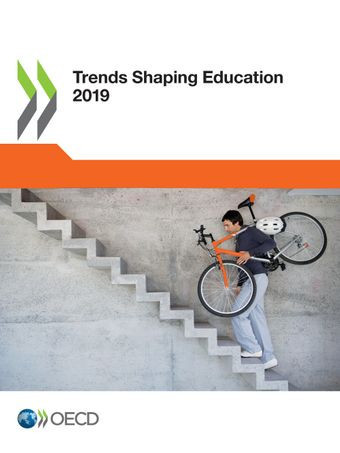 Trends Shaping Education 2019 Année de publication: 2019 Auteur institutionnel: Organisation for Economic Co-operation and Development (OECD) This book, published every two to three years, is designed to give policy makers, researchers, educational leaders, administrators and teachers a robust, non-specialist source to inform strategic thinking and stimulate reflection on the challenges facing education, whether in schools, universities or programmes for older adults. Trends Shaping Education 2019 is designed to support long-term strategic thinking in education. It provides an overview of key economic, social, demographic and technological trends and raises pertinent questions about their impact on education. This book fills an important need: decision makers and practitioners in education often have only anecdotal or local information on the megatrends that play out in their context; too often they do not have solid facts in front of them, especially about trends.` Les grandes mutations qui transforment l'éducation 2019 Année de publication: 2019 Auteur institutionnel: Organisation for Economic Co-operation and Development (OECD) Vous êtes-vous déjà demandé si l’éducation avait un rôle à jouer dans la préparation de nos sociétés à l’ère de l’intelligence artificielle ? Ou quel peut être l’impact du réchauffement climatique sur nos établissements scolaires, nos familles et collectivités ? La publication Les grandes mutations qui transforment l’éducation 2019 donne un aperçu des principales tendances économiques, politiques, sociales et technologiques qui affectent l’éducation. Si les mesures sont robustes, les questions soulevées dans ce recueil sont suggestives et ont pour objet d’informer la pensée stratégique et de stimuler une réflexion sur les défis de l’éducation – et montrer si et comment l’éducation peut influencer ces tendances. L’ouvrage couvre une riche variété de sujets liés à la mondialisation, la démocratie, la sécurité, le vieillissement et les cultures modernes. Le contenu pour l’édition 2019 a été révisé et étendu avec une large sélection d’indicateurs. En plus des différentes tendances et de leur interaction avec l’éducation, la publication inclut également une nouvelle section dédiée à la réflexion sur le futur, inspirée par des méthodologies de la prospective stratégique. Cet ouvrage a pour objet de fournir aux décideurs politiques, aux chercheurs, aux chefs d’établissements, aux administrateurs scolaires et aux enseignants, une source non spécialisée de tendances qui affectent l’éducation comparables à l’échelle internationale, dans les écoles, les universités ou encore dans les programmes de formation pour adultes. Cet ouvrage s’adresse également aux élèves/ étudiants et à la société dans son ensemble, notamment aux parents.
  The role of the education system in preventing manifestations of religious extremism in Central Asia Année de publication: 2013 Auteur: A. Abdirayymova | R. Zharkynbaeva The article discusses the role of the education system in preventing the manifestation of religious extremism through the prism of social, economic and cultural development. Роль системы образования в предотвращении проявлений религиозного экстремизма в Центральной Азии Année de publication: 2013 Auteur: A. Abdirayymova | R. Zharkynbaeva В статье рассматривается роль системы образования предоствращения проявления религиозного экстремизма через призму социального, экономического и культурного развития.
 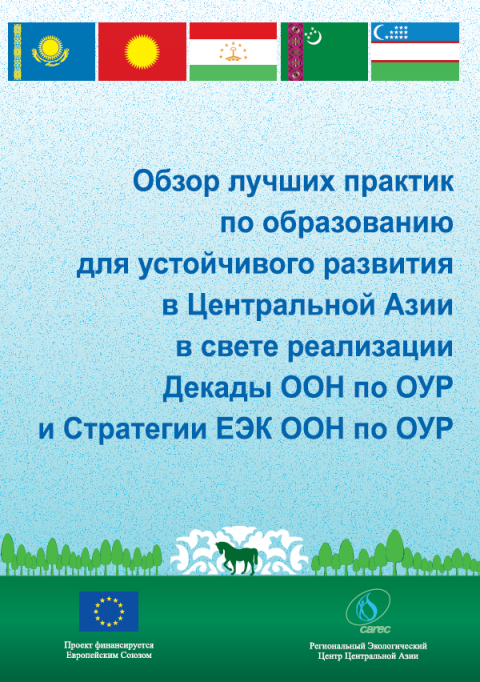 Review of best practices in education for sustainable Development in Central Asia in the light of the implementation of the UN Decade of ESD and the UNECE Strategy on ESD Année de publication: 2009 Auteur institutionnel: Regional Environmental Centre for Central Asia (CAREC) “A review of the best practices in education for sustainable development in Central Asia in the light of the implementation of the UN Decade on ESD and the UNECE Strategy on ESD” was prepared by CAREC in 2008-2009 in the framework of the “Subregional Education for Sustainable Development Network” project, in collaboration with experts from Central Asian countries. Обзор лучших практик по образованию для устойчивого развития в Центральной Азии в свете реализации Декады ООН по ОУР и Стратегии ЕЭК ООН по ОУР Année de publication: 2009 Auteur institutionnel: Regional Environmental Centre for Central Asia (CAREC) «Обзор лучших практик по образованию для устойчивого развития в Центральной Азии в свете реализации Декады ООН по ОУР и Стратегии ЕЭК ООН по ОУР» подготовлен РЭЦЦА в 2008-2009 гг. в рамках проекта «Субрегиональная сеть по образованию для устойчивого развития», в сотрудничестве с экспертами стран Центральной Азии
  Connections Between Environmental Justice, Popular Ecologism and Eco-citizenship Année de publication: 2006 Auteur: Nayla Naoufal Auteur institutionnel: Université du Québec à Montréal (UQAM) | Éditions en environnement VertigO Citizen movements connected to socio-ecological issues are increasing around the world : In the global North and South, people and communities are struggling against mining projects, against mega-projects, for the development of responsible and urban agriculture, against the inequities engendered by climate change, etc. This article examines historic and contemporary citizen movements linked to socio-ecological issues and underscores the evolution in their claims : Initially, environmental justice was exclusively reactive and focused on local cases of disproportional exposure to environmental problems ; today, it is also proactive, increasingly transnational and, in some cases, holistic. I also address the current of popular environmentalism and its links with environmental justice. Then, I probe environmental justice theoretical discourses and identify a framework that is relevant in light of contemporary struggles. Last, I present the concept of ecocitizenship, as well as a typology pertaining to this term, based on an exhaustive review of the scientific literature and on the study of ecocitizenships developed by young community gardeners. It appears that the ecocitizenship that is both critical and participative is of particular interest for environmental justice. Connexions entre la justice environnementale, l’écologisme populaire et l’écocitoyenneté Année de publication: 2006 Auteur: Nayla Naoufal Auteur institutionnel: Université du Québec à Montréal (UQAM) | Éditions en environnement VertigO Les mouvements citoyens liés à des problématiques socio-écologiques prennent de plus en plus d’ampleur à travers le monde : dans les « Nords » et dans les « Suds », des personnes et des communautés luttent contre des projets miniers, contre la construction de mégaprojets, pour le développement d’une agriculture urbaine et responsable, contre les inégalités générées par les changements climatiques, etc. Qu’ils soient historiques ou contemporains, cet article examine ces mouvements en s’attardant à l’évolution de leurs revendications. De réactive et basée sur des cas locaux d’exposition disproportionnelle aux problèmes environnementaux, la justice environnementale est devenue également proactive, de plus en plus transnationale et, dans certains cas, holistique. Je me penche également sur le courant de l’écologisme populaire et sur ses liens avec la justice environnementale. J’explore ensuite les fondements théoriques de la justice environnementale, ce qui permet d’identifier un cadre pertinent en la matière au regard des mobilisations contemporaine. J’analyse enfin le concept d’écocitoyenneté, présentant une typologie en la matière, en me basant sur une recension exhaustive de la littérature scientifique et sur l’étude des écocitoyennetés construites par des apprentis jardiniers en contexte communautaire. Il apparaît que la forme d’écocitoyenneté à la fois participative et critique contribue particulièrement à la justice environnementale.
  Rethinking Water in Central Asia: The Costs of Inaction and Benefits of Water Cooperation Année de publication: 2017 Auteur: Benjamin Pohl | Annika Kramer | William Hull | Sabine Blumstein | Iskandar Abdullaev | Jusipbek Kazbekov | Tais Reznikova | Ekaterina Strikeleva | Eduard Interwies | Stefan Görlitz Auteur institutionnel: adelphi | Central Asia Regional Economic Cooperation (CAREC) A joint study conducted by CAREC and adelphi within the framework of the Switzerland’s Blue Peace Central Asia Initiative is published. The publication demonstrates the cost of inaction and benefits of cooperation in the field of water management between the countries of the region.entral Asia is witnessing intense competition over water resources and their use for irrigation and hydropower generation. Despite general political commitment to cooperation, water policies in Central Asia are largely driven by uncoordinated and partly contradicting national strategies. This limited water cooperation, however, entails significant costs and major risks for the future development of the region.“Rethinking Water in Central Asia” analyses these “costs of inaction” – defined here as the difference between the current, limited cooperation and the benefits that would result from full cooperation. Even if only parts of these costs are taken into account, they amount to more than US$ 4.5 billion per year for the whole region and are significant for each of the five countries studied. Due to deteriorating infrastructure, environmental degradation and demographic and economic pressures, these costs will increase if water management remains as it currently is.By raising awareness of these costs of inaction, and by setting out a variety of pathways towards eliminating them in the future, the present report seeks to encourage and support Central Asian policy-makers in strengthening regional water cooperation and improved water governance. The costs of inaction mirror the potential benefits of water cooperation, and their scale hence demonstrates the scale of the benefits and opportunities that better water management and closer cooperation can deliver for Central Asia. Переосмысление водного вопроса в Центральной Азии: Цена бездействия и преимущества водного сотрудничества Année de publication: 2017 Auteur: Benjamin Pohl | Annika Kramer | William Hull | Sabine Blumstein | Iskandar Abdullaev | Jusipbek Kazbekov | Tais Reznikova | Ekaterina Strikeleva | Eduard Interwies | Stefan Görlitz Auteur institutionnel: adelphi | Central Asia Regional Economic Cooperation (CAREC) Исследование «Переосмысление водной проблематики в центральноазиатском контексте: ущерб от бездействия и преимущества водного сотрудничества», проведенное РЭЦЦА совместно с немецким консультационным бюро «adelphi» при поддержке Швейцарского агентства по развитию и сотрудничеству.В работе представлен всесторонний анализ так называемой «цены бездействия» – разницы между преимуществами текущего ограниченного сотрудничества в сфере управления водными ресурсами и вероятными преимуществами полноценного всестороннего сотрудничества. С учетом лишь некоторых соответствующих затрат, общий ущерб из-за недостаточного уровня взаимодействия может составить более $4,5 млрд для стран региона. Таким образом, данный отчет ставит своей целью повысить осведомленность о высокой цене бездействия и представить рекомендации для лиц, принимающих решения по расширению регионального сотрудничества по водным вопросам и улучшению системы управления водными ресурсами.Авторы настоящего отчета надеются, что представленный анализ потерь вследствие бездействия и ряда возможных путей их предотвращения послужит полезным источником информации для лиц, принимающих решения в сфере водного сотрудничества в регионе Центральной Азии, а также будет содействовать совершенствованию системы управления водными ресурсами. Потери от бездействия коррелируют с потенциальными выгодами от сотрудничества, масштаб которых отражает объем преимуществ и возможностей в результате повышения качества управления водными ресурсами и более тесного сотрудничества в данной области.