
Ressources
Explorez une large gamme de ressources sur le GCED afin d’approfondir votre compréhension et de renforcer vos activités de recherche, de plaidoyer, d’enseignement et d’apprentissage.
1,443 résultats trouvés
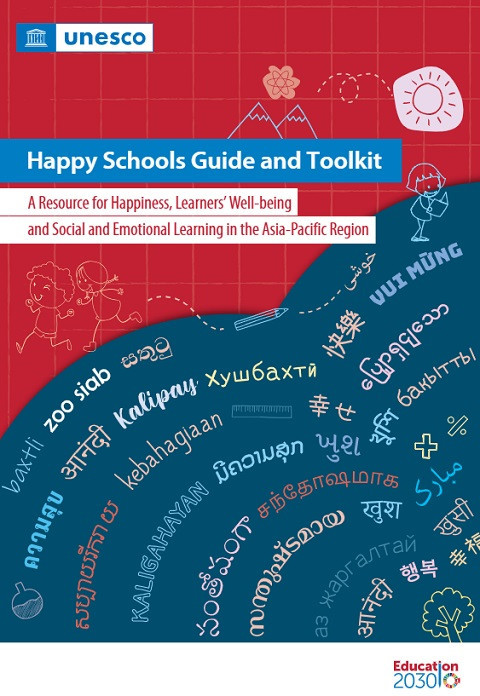 Happy Schools Guide and Toolkit: A Resource for Happiness, Learners’ Well-Being and Social and Emotional Learning Année de publication: 2021 Auteur institutionnel: UNESCO | UNESCO Bangkok The Happy Schools Guide and Toolkit is designed to support teachers and school leaders in primary and secondary schools across the Asia-Pacific region, in thinking about how they can create their own Happy School. It has therefore drawn from aspects of the Happy Schools Framework, which can be most readily addressed at the school level. While the Happy Schools Guide is targeted towards school leaders and teachers at the school level of administration and pedagogy development, the Happy Schools Toolkit is conceived for teachers at the classroom level.
 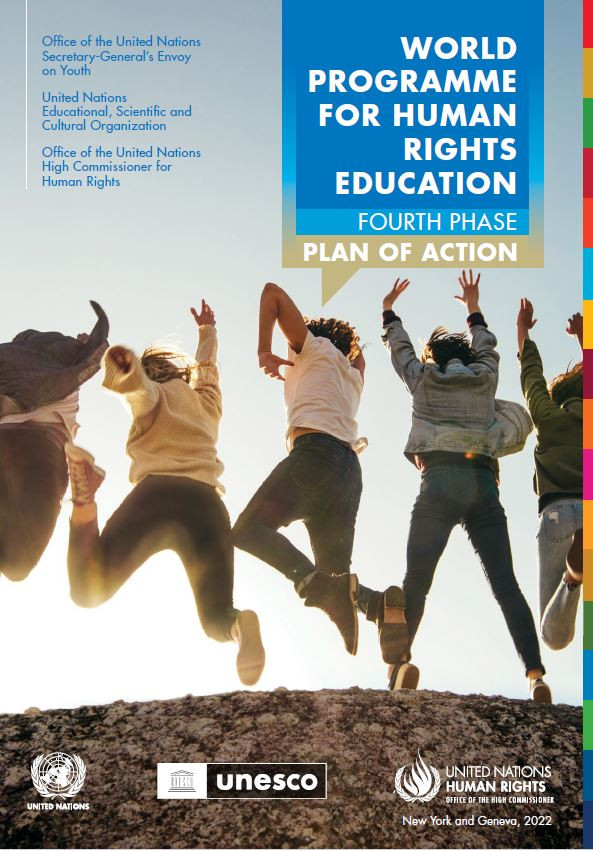 World Programme for Human Rights Education, Fourth Phase: Plan of Action Année de publication: 2022 Auteur institutionnel: Organización de las Naciones Unidas para la Educación, la Ciencia y la Cultura (UNESCO) | UN. Office of the Secretary-General’s Envoy on Youth | UN. Office of the United Nations High Commissioner for Human Rights (UN. OHCHR) Human rights education for youth, in both formal and non-formal settings, promotes a shared sense of humanity and fosters a common understanding that all human beings are equally deserving of dignity, respect and justice. It empowers youth to fulfil their role as active citizens, to take action and uphold their human rights and those of others, and to participate meaningfully in public affairs and democratic decision-making processes.In recognition of this, the United Nations Member States launched the fourth phase (2020–2024) of the World Programme for Human Rights Education to advance human rights education programming for youth at the national level. This focus also contributes to the achievement of the 2030 Agenda for Sustainable Development, particularly Goal 4 on Education and target 4.7, which touches upon the aims of education.
 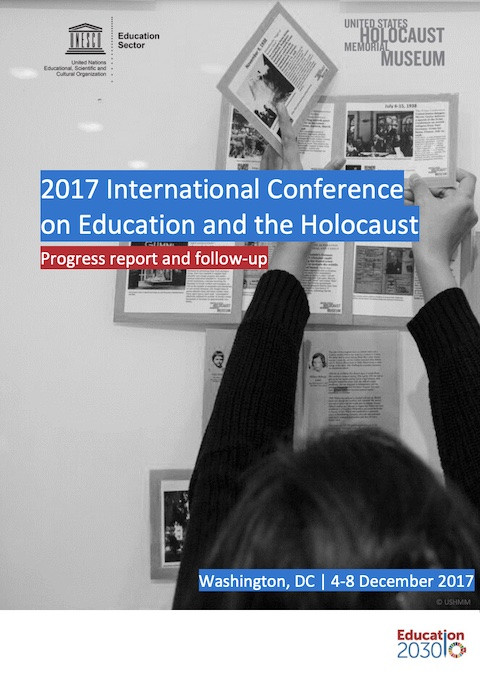 2017 International Conference on Education and the Holocaust: Progress Report and Follow-up Année de publication: 2018 Auteur institutionnel: UNESCO | United States Holocaust Memorial Museum (USHMM) From December 4-8 2017, UNESCO and the United States Holocaust Memorial Museum (USHMM) jointly organized the second International Conference on Education and the Holocaust (ICEH) in Washington, DC. The conference brought together 26 participants from 10 countries with the goal of strengthening their capacities to advance education about the Holocaust and genocide in their respective countries. Of great importance was the relevance of this education within the teams’ national contexts. The conference ultimately led to the development of 10 country-specific initiatives. The 2017 ICEH cohort comprises representatives of institutions from Argentina, Colombia, India, Indonesia, Kenya, Mexico, Namibia, South Africa, Tunisia and Ukraine.
 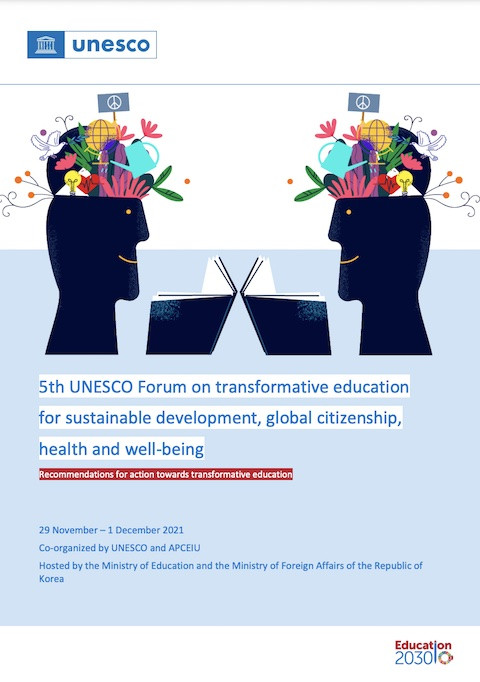 5th UNESCO Forum on Transformative Education for Sustainable Development, Global Citizenship, Health and Well-Being: Recommendations for Action Towards Transformative Education Année de publication: 2022 Auteur institutionnel: UNESCO In light of contemporary and emerging challenges such as climate change, violent and hateful ideologies, conflicts and risks of global pandemics, education must teach young people the knowledge, skills, values and attitudes to live cooperatively, be flexible, think critically, respect diversity, care for the environment, and be actively involved in finding solutions, both locally and globally. Transformative education – as enshrined in Target 4.7 of Sustainable Development Goal 4 – is critical in supporting individuals to develop these competencies. Transformative education involves teaching and learning that motivates and empowers learners to make informed decisions and actions at the individual, community and global levels. With a focus on sustainability, global citizenship, health and well-being for all, transformative education implies ensuring that curriculum, pedagogy, learning materials, schools and learning environments are meaningful for the social, political, economic, cultural and environmental contexts. To better understand concrete progress in transformative education, UNESCO and the Asia Pacific Centre of Education for International Understanding (APCEIU) co-organized the 5th UNESCO Forum on Transformative Education for Sustainable Development, Global Citizenship, Health and Well-being (29 November – 1 December 2021).The conference enabled a productive dialogue among a diverse range of actors from the fields of education for sustainable development (ESD), global citizenship education (GCED), education for health and wellbeing under the broader “banner” of transformative education. 5ème Forum de l’UNESCO sur l’éducation transformatrice pour le développement durable, la citoyenneté mondiale, la santé et le bien-être: Recommandations pour l’action en vue d’une éducation transformatrice Année de publication: 2022 Auteur institutionnel: UNESCO À la lumière des défis contemporains et émergents tels que le changement climatique, les idéologies violentes et haineuses, les conflits et les risques de pandémies mondiales, l'éducation doit enseigner aux jeunes les connaissances, les compétences, les valeurs et les attitudes nécessaires pour vivre en coopération, être flexibles, penser de manière critique, respecter la diversité, prendre soin de l'environnement et participer activement à la recherche de solutions, tant au niveau local que mondial.L'éducation transformatrice - telle qu'énoncée dans la cible 4.7 de l'objectif de développement durable 4 - est essentielle pour aider les individus à développer ces compétences. L'éducation transformatrice implique un enseignement et un apprentissage qui motivent et habilitent les apprenants à prendre des décisions et des actions éclairées aux niveaux individuel, communautaire et mondial. En mettant l'accent sur la durabilité, la citoyenneté mondiale, la santé et le bien-être pour tous, l'éducation transformatrice implique de veiller à ce que les programmes, la pédagogie, le matériel d'apprentissage, les écoles et les environnements d'apprentissage soient significatifs pour les contextes social, politique, économique, culturel et environnemental.Pour mieux comprendre les progrès concrets de l'éducation transformatrice, l'UNESCO et le Centre Asie-Pacifique d'éducation pour la compréhension internationale (APCEIU) ont co-organisé le 5e Forum de l'UNESCO sur l'éducation transformatrice pour le développement durable, la citoyenneté mondiale, la santé et le bien-être (29 novembre - 1er décembre 2021).La conférence a permis un dialogue productif entre un large éventail d'acteurs des domaines de l'éducation au développement durable (EDD), de l'éducation à la citoyenneté mondiale (ECM), de l'éducation pour la santé et le bien-être sous la « bannière » plus large de l'éducation transformatrice.
 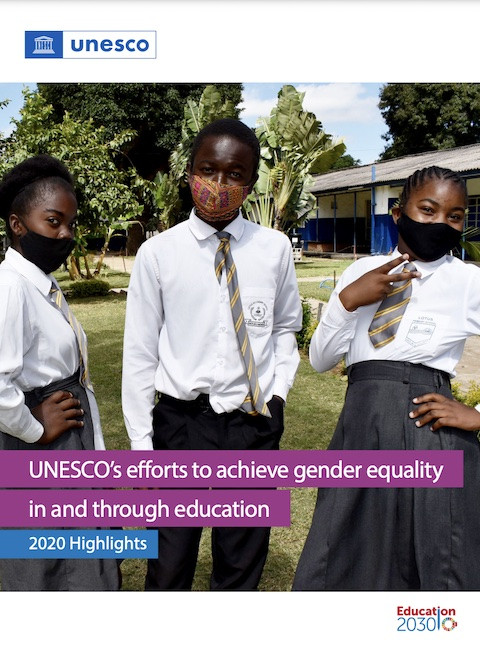 UNESCO’s Efforts to Achieve Gender Equality in and Through Education: 2020 Highlights Année de publication: 2022 Auteur institutionnel: UNESCO This report presents highlights of UNESCO’s work in 2020 to advance gender equality in and through education.UNESCO's work in this area is guided by the UNESCO strategy for gender equality in and through education 2019–2025, and supported by Her Education, Our Future, which was launched in parallel with the strategy, to leverage political and financial commitments, cooperation and joint action for girls’ and women’s education.
  UNESCO in Action for Gender Equality: 2020-2021 Année de publication: 2022 Auteur institutionnel: 유네스코 UNESCO’s global priority gender equality took on new meaning over the past biennium. The years 2020 and 2021 have been marked by dramatic social, political, environmental, and economic changes across countries resulting from an unprecedented pandemic: COVID-19. The COVID-19 pandemic magnified deep rooted structural gender inequalities across societies and forced the world to question the degree to which advances towards achieving gender equality had been made since the first UN World Conference on Women held in Beijing. This publication shows how a collective work by all structures of UNESCO has mobilized an extraordinary effort to go beyond a necessary adaptation to a multi-faceted crisis and counter backlashes and strengthen the resilience of women and girls and the systems which protect and empower them around the world through education, sciences, culture, communication, and information.
  Transforming Education Summit 2022: Futures of Education Briefing Notes Année de publication: 2022 Auteur institutionnel: UNESCO National consultations that aim at developing a shared vision, commitment, and alignment of action across constituencies are one of the key TES workstreams. The Reimagining our futures together report is proposed as a framework for examining how education systems need to change to better serve learners and societies into the future.A series of briefing notes have been prepared in alignment with the summit's five action tracks:o Inclusive, equitable, safe and healthy schoolso Learning and skills for life, work and sustainable developmento Teachers, teaching and the teaching professiono Digital learning and transformationo Financing of education Cumbre 2022 sobre la Transformación de la Educación: Notas sinópticas sobre los Futuros de la Educación Année de publication: 2022 Auteur institutionnel: UNESCO Las consultas nacionales que apuntan a desarrollar una visión compartida, un compromiso y una alineación de la acción entre los grupos constituyen uno de los flujos de trabajo clave de TES. El informe Reimaginando juntos nuestro futuro se propone como un marco para examinar cómo deben cambiar los sistemas educativos para servir mejor a los estudiantes y las sociedades en el futuro. Se ha preparado una serie de notas informativas en consonancia con las cinco vías de acción de la cumbre: o Escuelas inclusivas, equitativas, seguras y saludableso Aprendizaje y habilidades para la vida, el trabajo y el desarrollo sostenibleo Docentes, docencia y profesión docenteo Aprendizaje y transformación digitalo Financiamiento de la educación Sommet 2022 sur la Transformation de l’Education: Notes de synthèse sur Les futurs de l’éducation Année de publication: 2022 Auteur institutionnel: Organisation des Nations Unies pour l'éducation, la science et la culture (UNESCO) Les consultations nationales qui visent à développer une vision, un engagement et un alignement des actions partagés entre les groupes constitutifs sont l'un des principaux axes de travail de la TES. Le rapport Reimagining our futures together est proposé comme un cadre pour examiner comment les systèmes éducatifs doivent changer pour mieux servir les apprenants et les sociétés à l'avenir. Une série de notes d'information a été préparée conformément aux cinq pistes d'action du sommet : o Des écoles inclusives, équitables, sûres et saineso Apprentissage et compétences pour la vie, le travail et le développement durableo Enseignants, enseignement et profession enseignanteo Apprentissage et transformation numériqueso Financement de l'éducation