
Ressources
Explorez une large gamme de ressources sur le GCED afin d’approfondir votre compréhension et de renforcer vos activités de recherche, de plaidoyer, d’enseignement et d’apprentissage.
1,407 résultats trouvés
 Case Study on Finnish TVET: A Resilient Model of Training During COVID-19 Année de publication: 2021 Auteur institutionnel: UNESCO | Omnia Education Partnerships This case study examines how technical and vocational education and training (TVET) was organized during the state of emergency caused by the COVID-19 pandemic in Finland. The disruption accentuated the importance of flexibility within the education system to make it resilient. Finnish TVET, created as a hybrid solution combining school-based, work-based and online-based learning environments, remained responsive and functional throughout the difficult time in spring 2020.To urgently improve the resilience of education, this case study emphasizes the necessity to improve system-level flexibilities across all levels and all types of TVET, including alternative modes of delivery and hybrid learning opportunities, as the one size fits all approach increases rigidity and redundancy of education and training. Flexible measures are key to improve resilience, also beyond the COVID-19 pandemic.
  Global Media and Information Literacy Assessment Framework: Country Readiness and Competencies Année de publication: 2013 Auteur institutionnel: UNESCO The MIL Assessment Framework can foster lifelong learning initiatives by building on the relationship between information, media, digital, and ICT literacies, along with societal transformations, education, workforce, policy and decision making processes, economic growth and democracy. The overall goal of the publication is to guide UNESCO’s Member States throughout the assessment of country readiness and competencies regarding the media and information literacy of citizens, in particular teachers in service and in training. The document is particularly aimed at the following stakeholders: policy makers and decision makers; national officers responsible for statistical data collection and analysis; educational policy makers and planners working in formal and informal education settings; teacher training institutions and teachers. It is also of relevance to the professional information and communication community, and has wide applicability for civil society at large.
  UNESCO MIL CLICKS Social Media Innovation Année de publication: 2016 Auteur institutionnel: UNESCO MIL CLICKS is a way for people to acquire media and information literacy (MIL) competencies in their normal day-to-day use of the Internet and social media and to engage peer education in an atmosphere of browsing, playing, connecting, sharing, and socializing.The acronym MIL CLICKS stands for Media and Information Literacy: Critical-thinking, Creativity, Literacy, Intercultural, Citizenship, Knowledge & Sustainability.The objectives of this social media strategy are to use social media to:1) Expose people to become more media and information literate and to2) Raise awareness about the importance of media and information literacy.
  UNESCO MIL CLICKS: Innover avec les médias sociaux Année de publication: 2016 Auteur institutionnel: Organisation des Nations Unies pour l'éducation, la science et la culture (UNESCO) MIL CLICKS permet non seulement aux gens d'acquérir des compétences en matière d'éducation aux médias et à l'information (MIL en anglais) dans leur utilisation quotidienne d'Internet et des médias sociaux mais également d'engager l'éducation par les pairs dans une atmosphère de navigation, de jeu, de connexion, de partage et de socialisation.
 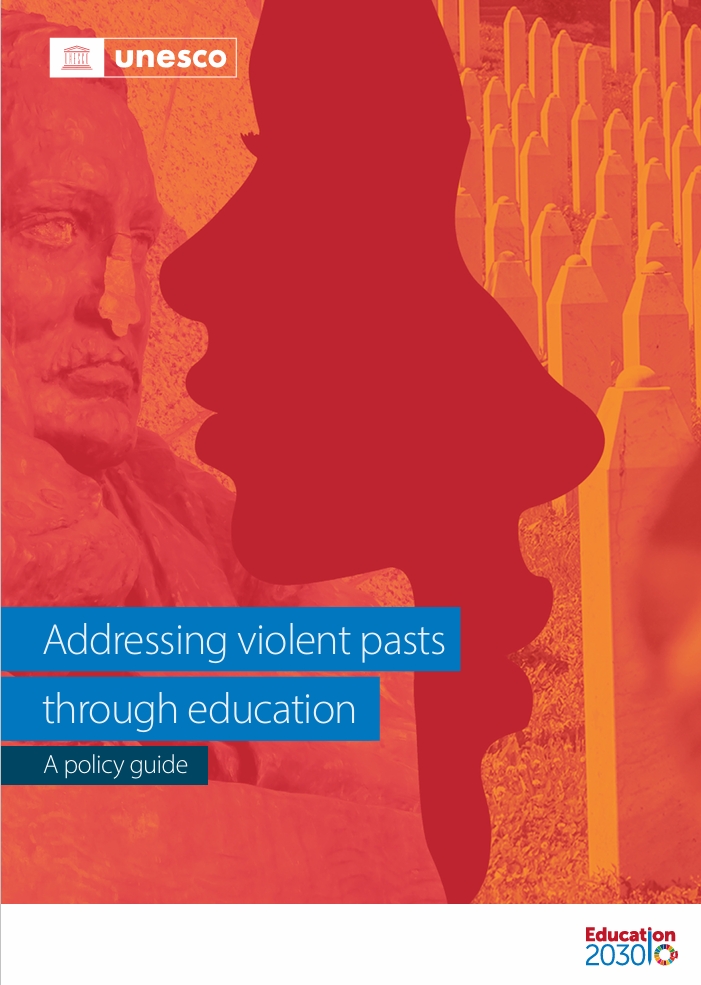 Addressing Violent Pasts Through Education: A Policy Guide Année de publication: 2025 Auteur institutionnel: UNESCO Teaching about violent pasts and their legacies is a powerful way to foster sustainable peace.Education can build a nuanced understanding of complex histories, raise awareness of the roots and legacies of violence, nationally and internationally, and sensitize learners for their own agency as actors of change for reconciliation and conflict prevention.Educating about violent pasts is a challenging yet critical endeavour for policy-makers globally. It entails tailored approaches and an important support for educators to address traumatic pasts sensitively and to navigate related emotions and narratives successfully.Building on UNESCO’s programme on Global Citizenship Education, this guide offers education policy-makers a set of strategies, principles, and education practices to effectively integrate education about violent pasts into local education systems. It suggests a comprehensive approach that spans formal and informal education and aligns with the 2023 Recommendation on Education for Peace, Human Rights and Sustainable Development, opening new perspectives on history education, dialogue, and conflict transformation.
 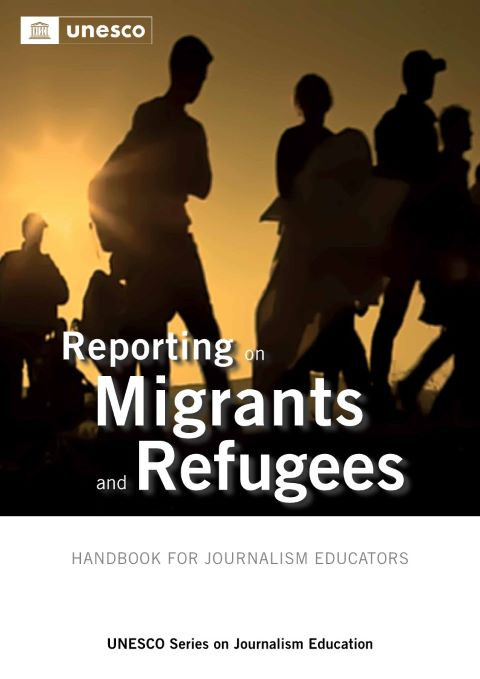 Reportagens sobre migrantes e refugiados: manual para educadores de jornalismo Année de publication: 2023 Auteur institutionnel: Organización de las Naciones Unidas para la Educación, la Ciencia y la Cultura (UNESCO) en periodismo en todo el mundo Este manual permite a las y los educadores de periodismo de todo el mundo abordar uno de los desafíos del siglo XXI: asuntos de migración y refugiados. En un conjunto de trece módulos, docentes de periodismo reciben un plan de estudios integral. Cubre todos los aspectos necesarios para capacitar en el análisis, la investigación, la presentación, el marketing y la ética de cubrir la migración. El manual es único, ya que comprende resultados de los estudios de comunicación, así como las ciencias políticas y sociales. Ha sido desarrollado por un grupo internacional e intercultural de investigadores de medios, educadores de medios y profesionales mediáticos.Las y los profesores de Periodismo podrán poner en marcha un nuevo plan de estudios. Estudiantes de periodismo aprenderán que la migración y el desplazamiento forzado tratan sobre seres humanos y, por lo tanto, requieren conocimiento y conciencia de los hechos precisos, fuentes confiables, informes éticos y buenas prácticas. Periodistas experimentados se beneficiarán de usar el manual como herramienta de autoaprendizaje, y las organizaciones dedicadas al desarrollo pueden adaptar el plan de estudios a sus planes de formación.El proyecto pretende lograr una cobertura más completa de los asuntos de migrantes y refugiados/as en sus países de origen, tránsito y destino, y un debate público más equilibrado e informado entre países y culturas.
 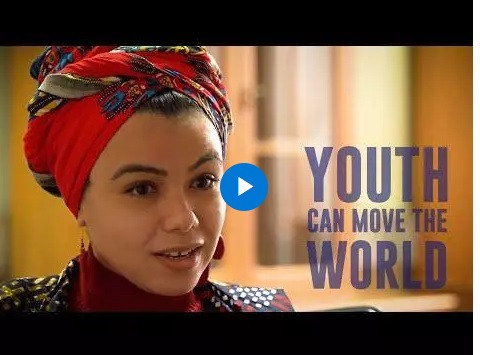 Youth Can Move the World Année de publication: 2021 Auteur institutionnel: UNESCO The COVID-19 pandemic brought unprecedented educational disruption with 1.2 billion children and youth impacted by school closures. Yet, despite these challenges, there is hope. This documentary focuses on the power and agency of youth. It is developed under the framework of the long-term partnership between UNESCO's Global Citizenship and Peace Education and UNODC that bridges the justice and education sectors to guide young people towards building strong, just and democratic societies. Youth’s voices are in the forefront with sentiments echoed by world leaders, policy makers, justice actors and educators to deliver a compelling message on the power of youth to move the world.
  Reimagining Our Futures Together: A New Social Contract for Education Année de publication: 2021 Auteur institutionnel: International Commission on the Futures of Education | UNESCO Our humanity and planet Earth are under threat. The pandemic has only served to prove our fragility and our interconnectedness. Now urgent action, taken together, is needed to change course and reimagine our futures. This report by the International Commission on the Futures of Education acknowledges the power of education to bring about profound change. We face a dual challenge of making good on the unfulfilled promise to ensure the right to quality education for every child, youth and adult and fully realizing the transformational potential of education as a route for sustainable collective futures. To do this, we need a new social contract for education that can repair injustices while transforming the future.This new social contract must be grounded in human rights and based on principles of non-discrimination, social justice, respect for life, human dignity and cultural diversity. It must encompass an ethic of care, reciprocity, and solidarity. It must strengthen education as a public endeavour and a common good.This report, two years in the making and informed by a global consultation process engaging around one million people, invites governments, institutions, organizations and citizens around the world to forge a new social contract for education that will help us build peaceful, just, and sustainable futures for all.The visions, principles, and proposals presented here are merely a starting point. Translating and contextualizing them is a collective effort. Many bright spots already exist. This report attempts to capture and build on them. It is neither a manual nor a blueprint but the opening up of a vital conversation.
  أصداء، التنوع الثقافي: طريق نحو تحقيق التنمية؛ الذكرى السنوية العاشرة لإعتماد الإعلان العالمي لليونسكو بشأن التنوع الثقافي Année de publication: 2011 Auteur institutionnel: منظمة الأمم المتحدة للتربية والعلم والثقافة (UNESCO) This founding text was the first to acknowledge cultural diversity as “the common heritage of humanity”. It is with great pride that UNESCO is commemorating the 10th anniversary of the Declaration. Commemorate – from the Latin cum memorare – means quite literally “to remember together” or “to remember with”. This collection is compiled the voices of all those who have contributed to the heightening of human awareness by throwing into relief the inestimable value of cultural diversity. These excerpts from books, articles and statements by global intellectual and political leaders, artists and Nobel Prize-winners all call for the safeguarding of cultural diversity, which is inseparable from respect for human dignity. Their voices resound in bearing witness to the strength of cultural diversity and to its capacity to enlighten the minds of women and men. We are duty-bound to ensure that it is central to public policies and a resource for development and dialogue among nations. The United Nations was born of the determination of men and women “to save succeeding generations from the scourge of war...”. In accordance with that principle, UNESCO was established on a key idea, expressed at the very beginning of its Constitution: “... since wars begin in the minds of men, it is in the minds of men that the defences of peace must be constructed”. In the world today, globalized, connected and interdependent as never before, this mission is more vital than ever. The rapprochement of peoples and cultures requires a commensurately global awareness. Cultural diversity has always been at the heart of international relations. It is also, increasingly, a feature of the contemporary mixed and plural societies in which we live. In view of this reality, we must formulate appropriate public policies and rethink the mechanisms of social cohesion and civic participation. How can we build common ground on the basis of such diversity? How can we construct genuine moral and intellectual solidarity of humanity? Any new vision of humanism must be grounded itself in the dynamism and diversity of cultural heritage. It is a source of inspiration and knowledge to be shared and a means of broadening our horizons. The goal of the UNESCO Universal Declaration on Cultural Diversity is to provide keys and benchmarks for capitalizing on this wealth. There can be no sustainable governance if cultural diversity is not acknowledged. There can be no economic and social development if specific features of every culture are belittled and ignored. Review of UNESCO culture sector's work on intercultural dialogue with a specific focus on: the general and regional histories, the slave route and cultural routes projects, plan Arabia, alliance of civilizations 'International vademecum' projects Année de publication: 2011 Auteur: Julie Carpenter Auteur institutionnel: UNESCO This review was commissioned from Education for Change Ltd by Internal Oversight Services (IOS) in UNESCO during June 2011 and completed in September 2011. The purpose of the review was to generate findings and recommendations regarding the relevance and effectiveness of the following priority initiatives on intercultural dialogue: • The General and Regional Histories (and related activities) • The Slave and Cultural Route projects (and related activities) • Plan Arabia • The Alliance of Civilizations (AoC) projects funded by the Government of Spain. The majority of activities in these flagship initiatives have been HQ-led and implemented with limited or no input from the field. Intersectoral work, essential to the effective implementation of the flagship initiatives and associated activities, was constrained by structural and budgeting factors common to most cross-sectoral work in UNESCO. Dissemination of the outputs of all the projects, with the possible exception of The Slave Route Project, has been a major and continuing challenge. The conception, writing, editing and direction of the Histories over more than 50 years have been the responsibility of an individual ISC for each History collection, supported by the UNESCO Secretariat in CLT. This highly participatory but complex process has caused delays and frustrations. However, the relevance of the Histories’ approach to history has not diminished over time. The interdisciplinary Histories have also been subject to the typical constraints within UNESCO of working across sectors. The use and re-use of the content in the Histories has recently been constrained by complex issues relating to co-publication and copyright covering volumes and illustrations and authors rights. The urgency of resolving these issues has arisen because of pressure from Member States to make the content of the Histories freely available online to enable access by institutions and individuals unable to afford the high costs of the published, printed volumes. The expensive printed formats selected for the Histories were predicated on the flawed assumption that university, college and public libraries exist in all countries that could afford to purchase relevant volumes and thus make available the content to researchers and the public. Overall effectiveness of these publications to date is impossible to measure, in terms of levels of takeup and use in universities or research for example, because over the years very limited data have been consistently or systematically collected, and little research or analysis has been done to determine the influence of the content of the Histories on written or broadcast material on history, on conference presentations etc. 2 Despite these constraints, the successful end in 2009 of this massive effort of developing, writing and publishing the history collections can and should be regarded as a significant achievement in itself, in which UNESCO has been effective in overcoming many problems and set-backs to achieve the completion of a project that only UNESCO itself, unique among all the international and UN bodies, could have achieved.