
Ressources
Explorez une large gamme de ressources sur le GCED afin d’approfondir votre compréhension et de renforcer vos activités de recherche, de plaidoyer, d’enseignement et d’apprentissage.
3,229 résultats trouvés
 2019 꿈다락 토요문화학교: 드림 아트랩 4.0; Bunker 465-16 결과자료집 Année de publication: 2020 Auteur institutionnel: 한국문화예술교육진흥원 이 문서는 2019 꿈다락 토요문화학교 드림 아트랩 4.0 프로그램 관련, 토탈미술관에서 진행한 Bunker465-16 프로그램 결과자료집이다.융복합 프로그램에 있어서 기술을 소비하는 관점이 아닌, 왜 그러한 기술을 사용해야 하는지에 대한 이해를 바탕으로 교육 과정을 설계하였다. 전체적인 프로그램에 예술적인 맥락을 끌여들여 미래친구, 식물친구, 소리친구를 설정, 각각의 주제와 매체(AR마커, AI, 식물키트제작, 악기제작 등)를 연결시켰고, 각 과정별 다양한 아티스트와의 협업을 만들어냈다.본 자료집에는 프로그램 개발과정에서부터 실제 운영 내용(커리큘럼 등) 이후 보완 필요사항 등에 대한 관찰일지가 자세히 기록되어 있다.
  Global Citizenship and Youth Participation in Europe Année de publication: 2016 Auteur: Douglas Bourn Auteur institutionnel: Oxfam | Oxfam Italia | UCL Institute of Education | CARDET | Pah Global Citizenship has been recognized as an important component of education by UNESCO through the Sustainable Development Goals launched in 2015 and the recent Global Education Congress in Croatia.While there has been considerable activity across Europe in encouraging youth engagement in democratic institutions, this report suggests that insufficient attention has been given to the linkages young people make between their outlook on the world, their personal and social identity and the ways they use tools such as social networking to engage in societies.The report also suggests to teachers that they need to address and respond to the interests of young people in issues such as refugees and migration, climate change and global terrorism by equipping them with the knowledge and skills to effectively engage in these debates.
  Youth Participation for Active Global Citizenship: Future Youth School Forums Project Report Année de publication: 2018 Auteur: Anna Jarkiewicz | Joanna Leek Auteur institutionnel: Oxfam GB | University of S odz (Poland) The Future Youth School Forums (FYS-Forums) project took place in Cyprus, Italy, Poland, Lithuania and the UK from 2015 to 2018 and was funded by EU Erasmus+. Its aim was to show how creating a group of engaged young global participants requires the engagement of teachers in activities to promote global citizenship – and to provide teachers and young people with the tools to promote effective and inclusive youth leadership across formal and informal education through global citizenship forums.This report on the project looks at the role of teachers and partnerships with students in raising critical awareness of global citizenship.
  From Academic Organization to National Think Tank: A Historical Study on Center for Civic Education (Tsinghua Journal of Education; Vol.38, No. 5) Année de publication: 2017 Auteur: Su Yongrui | Fu Anzhou | Hu Qiumei Auteur institutionnel: Tsinghua University Center for Civic Education is the most influential Think Tank in the field of civic education in America. Since 1960s, while American civic education experienced dilemma and reform, Center for Civic Education, at the same time, has transformed from the Civic Education Committee of University of California at Los Angeles to a national Think Tank. This plays an important role in promoting policy-making of American civic education, curriculum standardization of school citizenship education, sustained development of nationwide education programs, implementation of international development strategies, and spreading of American democratic values. With the historical background of American civic education and American modern Think Tank, this paper summarizes the stages of development of the Center. This paper holds that the decisive factors of the Center’s transformation include the following points: building a bridge between “knowledge” and “power” through continuing and effective responses to the theme of civic education at ideological and strategic level, affecting decision makers by forming a Policy Advocacy Coalition with those who have common political beliefs, realizing such functions of Think Tank as setting and guiding policy agenda of civic education, providing effective products of civic education, promoting the international development of American civic education. This research contribute to promoting understanding of operating process and strategies of the Center, giving effective advice to Chinese Think Tank in cooperation with American Think Tank,enhancing Chinese Think Tank’s the sense and ability of dialogue,so as to strengthen their voices. 从学术团体到国家智库: 美国公民教育中心的历史考察 (清华大学教育研究; Vol. 38, No. 5) Année de publication: 2017 Auteur: Su Yongrui | Fu Anzhou | Hu Qiumei Auteur institutionnel: Tsinghua University 美国公民教育中心,是美国公民教育领域最具影响力的智库。在 20 世纪 60 年代以来美国公民教育从困境到变革的历史背景下,该中心完成了从学术团体到国家智库的转型,在促进美国公民教育政策制定、实施公民教育国际拓展策略、传播美国民主价值理念等方面发挥了重要作用。本文以美国公民教育变迁和美国现代智库发展为历史背景,系统梳理了该中心的发展转型历程。本文认为,该中心转型发展的决定因素有 三: 其一,对美国公民教育的时代主题在思想和策略层面作出持续有效响应,并搭建“知识”与“权力”的桥梁; 其二,结成有共同政治信念的“政策倡导联盟”影响决策者; 其三,实现“设置并引导公民教育政策议程、提供公民教育产品、推动美国公民教育向世界拓展”等智库功能。研究该中心的影响力产生机制、传播策略、智库功能,有助于加深对其运作过程和策略的认识,在中美智库合作及教育领域交流方面提高主动性和策略性,提升 对话意识和对话能力,增强话语权。
 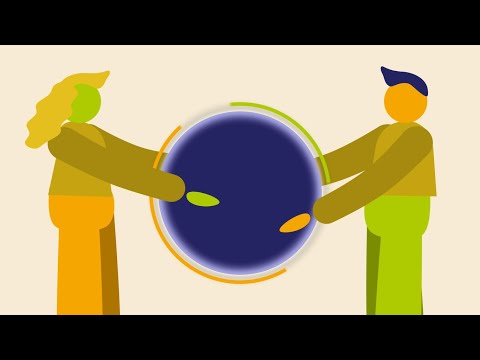 Climate Crisis: The Need for Global Citizenship Education Année de publication: 2020 Auteur institutionnel: Bridge 47 This video talks about the climate crisis which is also a human rights crisis, a political crisis, and an economic crisis. And it calls for the fundamental transformation of how we live our lives. To face these global challenges, it emphasizes that we need education that enables us to think critically, connect our actions with their impacts, and act as empowered active global citizens to face.
  Peace Education: Making the Case Année de publication: 2019 Auteur: Darijn Dilia Zwart Auteur institutionnel: Quaker Council for European Affairs (QCEA) This publicaiton shows how peace education has responded to difficult political contexts over the decades and demonstrates that peace education is relevant to conflict prevention and peacebuilding today. The report makes the case for a multi-layered approach to peace education which requires a cohesive, coordinated strategy for peace education as a peacebuilding and conflict prevention tool across relevant EU internal and external policies and programmes.
 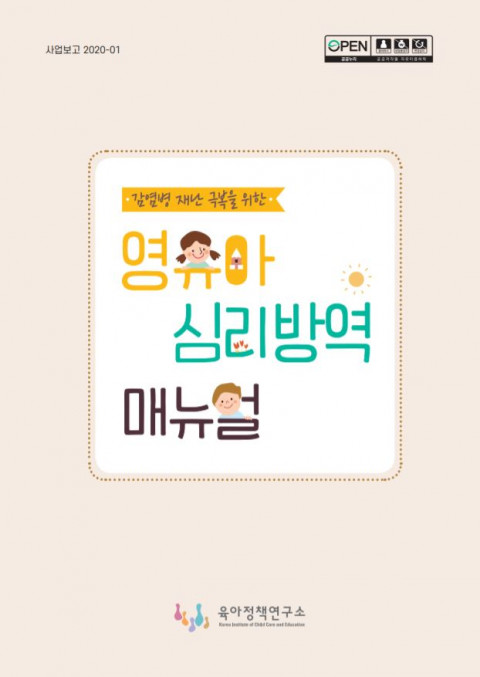 감염병 재난 극복을 위한 영유아 심리방역 매뉴얼 Année de publication: 2020 Auteur: 조숙인 | 송하나 | 김연수 | 김주련 | 김문정 Auteur institutionnel: 육아정책연구소 2020년도 수시과제 '재난 극복을 위한 영유아 정신건강 지원 매뉴얼 개발(조숙인, 송하나, 김연수, 김주련, 김문정)'의 일환으로 개발한 자료집이다. [목차]01. 감염병 재난이란?02. 감염병 재난은 왜 스트레스일까요?03. 감염병 재난 스트레스 반응 알아보기04. 영유아 부모와 교사를 위한 감염병 재난 기본 대응 방법05. 영유아 발달 특성에 따른 감염병 재난 스트레스 반응 이해하기06. 영유아에게 감염병 재난 설명하기07. 재난 후 영유아가족 적응 돕기08. 사례를 통해 배우는 영유아 감염병 재난 스트레스 대응 방법09. 기타 재난 스트레스 대응 방법10. 영유아와 함께 하는 마음 도닥이기 활동
 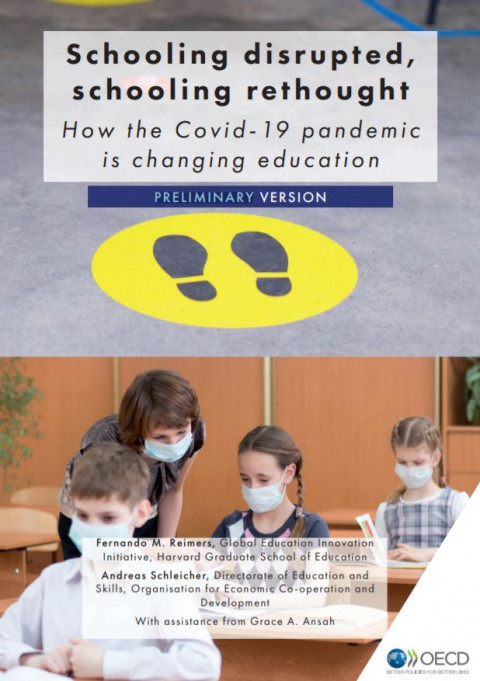 Schooling Disrupted, Schooling Rethought: How the Covid-19 Pandemic is Changing Education Année de publication: 2020 Auteur: Fernando Reimers | Andreas Schleicher Auteur institutionnel: Organisation for Economic Co-operation and Development (OECD) This report looks at how the Covid-19 pandemic is changing education and is based on a survey conducted between 25 April and 7 May 2020 that received responses from government officials, education administrators, teachers, and school administrators in 59 countries.
  رسم بياني للتقدم املحرز يف تحقيق أهداف التنمية املستدامة لعام 2020 Année de publication: 2020 Auteur institutionnel: United Nations (UN) قدم الرسم البياين للتقدم احملرز يف حتقيق أهداف التنمية املستدامة لعام 2020 حملة عما حتقق من تقدم على املستويني العاملي واإلقليمي حبلول هناية عام 2019 .وهو يغطي غايات خمتارة يف إطار األهداف الـ 17 خلطة التنمية املستدامة لعام 2030 .وقد ً إىل إجياد حلول عاجلة من قبل احلكومات الوطنية واحمللية ومنظمات اجملتمع املدين والقطاع اخلاص لتحقيق أهداف التنمية املستدامة حبلول عام 2030 .ويبني الرسم البياين مدى ما أطلق األمني العام لألمم املتحدة، ببداية عام 2020 ،عقد العمل، داعيا ُ ٍ ظهر أن معدل التقدم يف معظم األهداف كان غري كاف، وأن هناك حاجة إىل تسريع كبري. ً. كما ي ً عاجال ُربز اجملاالت اليت تتطلب اهتماما بلغناه من تقدم يف حتقيق التزاماتنا، وي