
Ressources
Explorez une large gamme de ressources sur le GCED afin d’approfondir votre compréhension et de renforcer vos activités de recherche, de plaidoyer, d’enseignement et d’apprentissage.
3,453 résultats trouvés
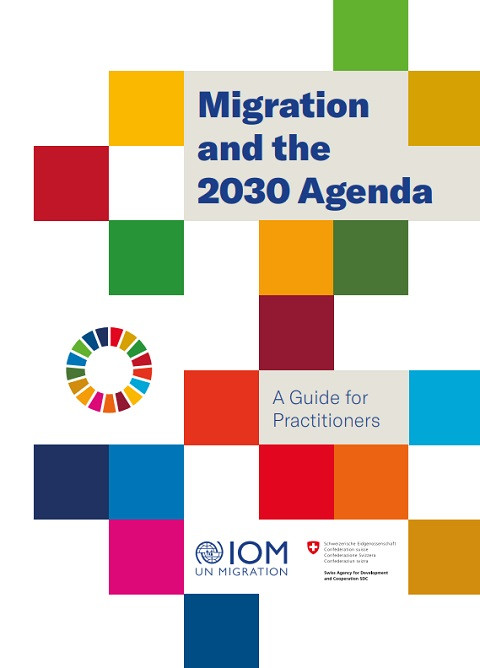 移民与《2030 年可持续发展议程》 Année de publication: 2018 Auteur: Elisa Mosler Vidal Auteur institutionnel: International Organization for Migration (IOM) 本指南旨在为参与可持续发展目标实施过程的国家和地方政府行为体提供指导,对象包括专门从事移民工作的人员以及有兴趣将移民事物纳入工作活动中的其他部门人员。这也适用于希望将可持续发展目标纳入其移民领域工作的政府行为体。本指南的重点是帮助决策者实施可持续发展目标中与移民相关的部分。政策制定者可以使用该指南,通过设计和实施与可持续发展目标相关的与移民有关的干预措施,将移民纳入地方或国家发展计划。这些干预措施可以采取立法、政策制定、方案、项目或其他活动的形式,并可能涉及核心移民问题,或在其他部门的活动里将移民问题纳入其中。例如,决策者可以使用本指南来设计直接针对人口贩运的干预措施以及有助于保护人口贩运受害者的卫生部门的干预措施。对于在移民主流化方面有经验的行为体,本指南提供了一种基于2030年议程的新方法。对于那些没有移民主流化相关经验的人,它介绍了如何在可持续发展目标的背景下将移民和发展联系在一起,以及如何针对这些联系采取行动。它附有两个辅助工具,用以说明移民与可持续发展目标之间的联系:(i)一本全方位阐述移民与每个可持续发展目标之间关系的手册,以及(ii)一张概括这些关系的导图。
  Education Disrupted Education Reimagined: Responses from Education’s Frontline During the COVID-19 Pandemic and Beyond Année de publication: 2020 Auteur institutionnel: WISE | Salzburg Global Seminar | Diplomatic Courier The special edition E-Book you are reading about today was produced in real time, as WISE, in partnership with Salzburg Global Seminar, convened key stakeholders and education leaders from over 98 countries in a three-part series of global conferences aimed at bringing the global education community together. The result is a contemporary historical record of how schools, NGOs, governments, and international organizations responded to school closures during the crisis and how they are attempting to use this crisis as a springboard to reimagine—and even transform—education in their communities and countries.The E-Book offers an opportunity to a global audience to make sense of what happened but it also offers a breeding ground of ideas from some of the world’s top education thinkers. It is the editors’ sincere hope that through this publication we provide the education community with a reference point from the crisis from which future research, policy, and innovation can grow.
 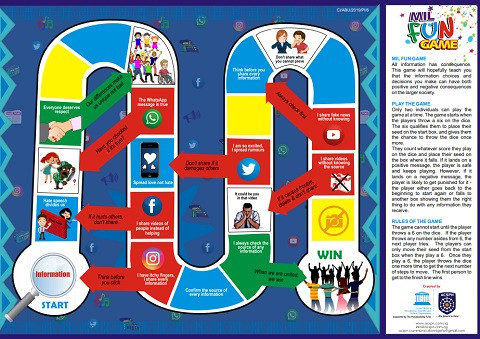 Media and Information Literacy: Fun Game Année de publication: 2019 Auteur institutionnel: UNESCO Dakar | Association of Communication Scholars & Professionals of Nigeria (ACSPN) This game will teach you that the information choices and decisions you make can have both positive and negative consequences on the larger society.
 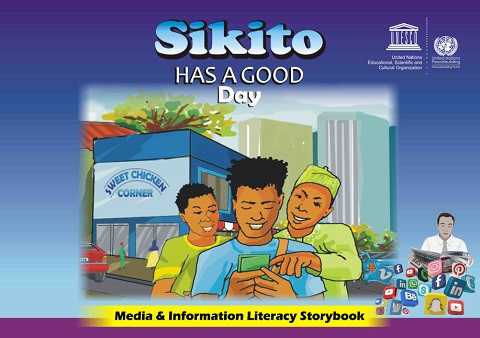 Sikito Has a Good Day: Media & Information Literacy Storybook Année de publication: 2019 Auteur institutionnel: UNESCO Dakar | Association of Communication Scholars & Professionals of Nigeria (ACSPN) Today's world is shaped by the quality of information produced, accessed and consumed at individual and social levels. This determines the quality of our decisions and actions. Increasingly, current digital realities and their social media manifestations, have enabled more opportunities for expression. Increased access to the internet is promoting freedom, with consequences for peace and conflict. Students will learn responsible online communication and media information &l literacy from the story.
 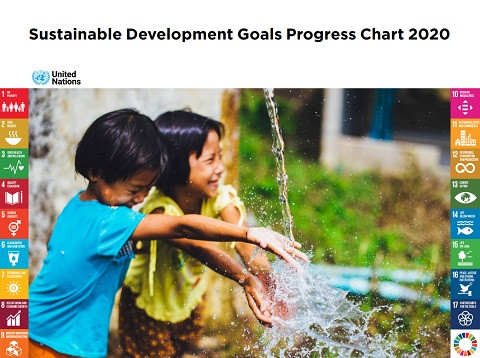 График хода достижения целей в области устойчивого развития к 2020 году Année de publication: 2020 Auteur institutionnel: United Nations (UN) График хода достижения целей в области устойчивого развития к 2020 году отражает прогресс, достигнутый на конец 2019 года на глобальном и региональном уровнях в решении отдельных конкретных задач в рамках 17 целей Повестки дня в области устойчивого развития на период до 2030 года. В начале 2020 года Генеральный секретарь Организации Объединенных Наций объявил о Десятилетии действий, призвав национальные и местные органы власти, организации гражданского общества и частный сектор ускорить реализацию мер, направленных на достижение целей в области устойчивого развития к 2030 году. График хода достижения целей демонстрирует, как далеко мы продвинулись в выполнении наших обязательств и какие направления требуют неотложного внимания. Он также показывает, что для достижения большинства целей нынешних темпов прогресса недостаточно и требуется существенное ускорение. 2020年可持续发展目标进度表 Année de publication: 2020 Auteur institutionnel: United Nations (UN) 《2020年可持续发展目标进度表》展现了到2019年底全球和地区进展的概况。它涵盖《2030年可持续发展议程》17个目标下选定的具体目标。2020年初,联合国秘书长启动了“行动十年”,呼 吁国家和地方政府、民间社会组织和私营部门采取加速的方案,以在2030年实现可持续发展目标。进度表显示了我们在兑现承诺方面已取得的进展以及哪些领域还亟待关注。它还显示出,对于 大多数目标而言,进展速度不够,需要大幅加快。 Migration and the 2030 Agenda: A Guide for Practitioners Année de publication: 2018 Auteur: Elisa Mosler Vidal Auteur institutionnel: International Organization for Migration (IOM) This guide is designed to serve government actors, both national and local, involved in any process of Sustainable Development Goal implementation, including those working specifically in migration, and those working in other sectors who are interested in integrating migration. It is also for government actors working in the migration field who wish to integrate the SDGs into their work.The focus of this guide is to help policymakers implement the migration aspects of the SDGs. Policymakers can use this guide to integrate migration into local or national development planning, by designing and implementing interventions that relate to migration in the context of the SDGs. These interventions may take the form of legislation, policies, programmes, projects or other activities, and may relate to core migration topics or integrate migration into activities in another sector. For example, policymakers may use this guide to design interventions that directly address human trafficking, as well as interventions in the health sector that help protect victims of trafficking.For actors with experience in migration mainstreaming, this guide offers a new approach that is based on the 2030 Agenda. For those with no experience in migration mainstreaming, it offers an introduction on how migration and development are linked in the context of the SDGs, and how to take action around these connections. La migración en la Agenda 2030: Guía para profesionales Année de publication: 2018 Auteur: Elisa Mosler Vidal Auteur institutionnel: International Organization for Migration (IOM) La presente guía va dirigida a los actores gubernamentales, tanto nacionales como locales, participantes en cualquier proceso de implementación de los ODS, incluidos aquellos que trabajan específicamente en la migración y aquellos que lo hacen en otros sectores interesados en integrar la migración. Asimismo, va dirigida a los actores gubernamentales que trabajan en el campo de la migración y que deseen integrar los ODS en su trabajo. El objetivo de esta guía es ayudar a los legisladores a implementar los aspectos de migración de los ODS. Los formuladores de políticas pueden utilizar esta guía para integrar la migración en la planificación del desarrollo local o nacional, diseñando e implementando intervenciones relacionadas con la migración en el contexto de los ODS. Estas intervenciones pueden tomar la forma de legislación, políticas, programas, proyectos u otras actividades, y pueden relacionarse con temas centrales de migración o integrar la migración en actividades en otro sector. Por ejemplo, los formuladores de políticas pueden usar esta guía para diseñar intervenciones que aborden directamente la trata de personas, así como intervenciones en el sector de la salud que ayuden a proteger a las víctimas de la trata. Para los actores con experiencia en la integración transversal de la migración de la migración, esta guía ofrece un nuevo enfoque basado en la Agenda 2030. Para quienes no tienen experiencia en dicha integración transversal de la migración, ofrece una introducción sobre cómo se vinculan la migración y el desarrollo en el contexto de los ODS, y cómo actuar en torno a estas conexiones.
  Indigenous Peoples Glossary Année de publication: 2018 Auteur institutionnel: International Fund for Agricultural Development (IFAD) The purpose of this glossary is to ensure consistency and accuracy of terminology in English, French and Spanish, and standardize the terminology used in relation to indigenous peoples in official documentation and publications, and in all aspects of meeting preparations. It is intended for use by IFAD staff, indigenous peoples' organizations and other interested parties. Terms and definitions are accompanied by details of the source document and its date of publication.
  第 2178(2014)号决议 2014 年 9月 24 日安全理事会第 7272 次 Année de publication: 2014 Auteur institutionnel: United Nations Security Council This resolution expanded the counter-terrorism framework by imposing obligations on member states to respond to the threat of foreign terrorist fighters. Through the resolution, the Council condemned violent extremism and decided that Member States shall, consistent with international law, prevent the "recruiting, organizing, transporting or equipping of individuals who travel to a State other than their States of residence or nationality for the purpose of the preperation, planning of, of participation in terrorist acts." Expressing concern over the establishment of international terrorist networks, the Council underscored the "particular and urgent need" to prevent the travel and support for foreign terrorist fighters associated with the Islamic State and the Levant (ISIL), Al-Nusra Front (ANL) and other affiliates or splinter groups of Al-Qaida. In that context, the Council, through the resolution, decided that all States shall ensure that their legal systems provide for the prosecution, as serious criminal offences, of travel for terrorism or related training, as well as the financing or facilitation of such activities. Member States, it also decided, shall prevent entry or transit through their territories of any individual about whom that state had credible information of their terrorist-related intentions, without prejudice to transit necessary for the furtherance of judicial processes. It called on States to require airlines to provide passenger lists for that purpose. Outlining further measures for international cooperation to counter international terrorism and prevent the growth of violent extremism, it expressed readiness to designate additional individuals for sanctions listings, and directed the United Nations counter-terrorism subsidiary bodies to devote special focus to foreign terrorist fighters, assessing the threat they posed and reporting on principal gaps in Member States' abilities to suppress their travel.