
Ressources
Explorez une large gamme de ressources sur le GCED afin d’approfondir votre compréhension et de renforcer vos activités de recherche, de plaidoyer, d’enseignement et d’apprentissage.
3,453 résultats trouvés
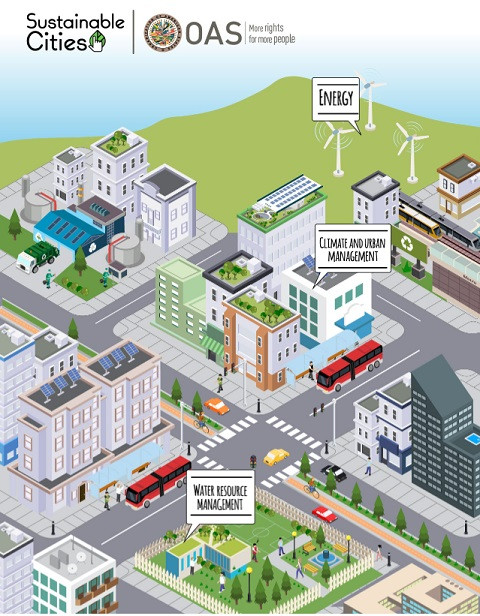 Ciudades sostenibles Année de publication: 2017 Auteur institutionnel: Organization of American States (OAS) Portal con contenido multimedia en el que se hace un acercamiento a seis componentes fundamentales de una urbe sostenible, planteados desde el programa Ciudades Sostenibles de la OEA: - Fuentes de energía alternativa - Transporte urbano sostenible - Resiliencia a desastres naturales - Gestión de residuos - Gestión del recurso hídrico - Clima y gestión urbana.
  세계시민교육과 국제 바칼로레아의 지리교육과정 (국토지리학회지; Vol. 53, No. 4) Année de publication: 2019 Auteur: 김부성 Auteur institutionnel: 국토지리학회 본 연구는 ‘세계시민교육(국제이해교육)’의 관점에서 ‘국제 바칼로레아’의 지리교육과정을 검토해본다. 세계시민교육은 세계화의 도전에 대한 커리큘럼 대응책으로 국제적· 상호 문화적· 세계적인 감수성, 지식, 의사소통 및 이해를 촉구한다. 즉 세계시민교육은 미래의 세계시민을 육성하는 것이다. 1968년에 설립된 국제 바칼로레아(현재 IB, 예전엔 IBO)는 비영리 교육재단으로 세계시민교육(국제이해교육)을 위한 4종류의 프로그램을 제공한다. 국제 바칼로레아재단의 공인을 받은 학교만이 이 프로그램을 운영할 수 있으며 세계 150여 개국에 공인 받은 5,000 여 개의 IB 학교가 있고, 일종의 대학입학자격증인 국제 바칼로레아 디플로마는 세계 많은 대학에서 인정해주고 있다. 국제 바칼로레아는 높은 수준의 교육수준과 학생들의 성취도 뿐 만 아니라 문화 간 이해와 존중을 강조하는 것으로 유명하다. 국제 바칼로레아 디플로마 과정에서 ‘개인과 사회’ 라는 그룹 중의 하나로 선택하는 지리 교과과정은 주제(계통지리)별로, 인간에 초점을 맞추어 조직되어 있고 다루는 범위는 전 세계를 망라한다. 그 핵심에는 인구, 환경, 자원 과 발전이라는 상호 연관된 주제들이 있다. 국제 바칼로레아 지리과정의 주요목적은 학생들에게 세계적인 시각을 갖추게 하고 세계의 상호의존성 에 대해 인식하며 당면한 세계 문제를 분석함에 있어 지리의 유용성을 평가할 수 있는 능력을 개발하는 것이다. Global Citizenship Education and Geography Curricula in International Baccalaureate (Geographical Journal of Korea; Vol. 53, No. 4) Année de publication: 2019 Auteur: Boosung Kim Auteur institutionnel: Korean Association of Professional Geographers This study aims to examine the geography curricula in International Baccalaureate(IB) from the viewpoint of ‘Global Citizenship Education(GCE)’. GCE purports to address the challenges of globalization through curricular that promote international, intercultural, and global sensitivity, knowledge, communication, and understanding. In short, GCE is concerned with educating the global citizens of tomorrow. Founded in 1968, IB(formerly IBO) is a non-profit educational foundation offering four highly respected programmes of International Education. The IB has a presence in over 150 countries throughout the world. IB World Schools must be authorized, by the IB organization, to offer any of the programmes and universities worldwide recognize the strength of IB Diploma Programme. The IB has a hard-earned reputation not only for high standards of teaching and student achievement, but also for intercultural understanding and respect it promotes. As part of the curriculum group ‘Individuals and Societies’, geography is thematic (systematic) in organization, human in focus, global in coverage. At its core are the interrelated themes of population, environment, resources and development. The aims of geography course in IB are to enable students to develop a global perspective and a sense of world interdependence and to appreciate the relevance of geography in analysing contemporary world issues.
  The Relationship Between the Culture of Care and Global Citizenship Année de publication: 2020 Auteur: Bernardo Toro | José Laguna | Zenovia Gamarra | Jackson Almonte Auteur institutionnel: Grupo SM This video explores the relationship between the culture of care and education for global citizenship with references to Catholic education.
  UNESCO-UNEVOC Study on the Trends Shaping the Future of TVET Teaching (Trends Mapping Studies) Année de publication: 2020 Auteur: Gita Subrahmanyam Auteur institutionnel: UNESCO International Centre for Technical and Vocational Education and Training (UNEVOC) This report presents the results of the trends mapping study on the future of technical and vocational education and training (TVET) teaching, conducted by UNESCO-UNEVOC. The study aimed to engage the international TVET community to: (i) improve the understanding of the implications of global disruptions; (ii) gather knowledge, insights, experiences; and (iii) highlight promising practices in preparing TVET teaching staff to deliver the skills needed in the 21st century and beyond. Coordinated by UNESCO-UNEVOC, trends mapping studies aim to further the international community's understandings on contemporary key issues concerning TVET. The studies review existing literature and policies, and engage TVET stakeholders from around the world through surveys and virtual conferences.
  Personalized Learning within Teacher Education: A Framework and Guidelines Année de publication: 2020 Auteur institutionnel: UNESCO International Bureau of Education (IBE) This paper explores the theoretical and practice elements that together inform the concept of personalised learning. These insights are then used to develop a Framework for Personalized Learning within Teacher Education. In addition, the final chapter outlines pedagogical strategies to support the development of personalised learning that were tested during the project within the participating universities.The Framework and Guidelines are intended for use by to teacher educators and their students, as well as by teachers and students in schools, to support the on‐going shift towards a personalised learning and collaborative paradigm which forefronts learner agency and autonomy and encourages learners of all ages to assume increased responsibility for their own learning and achievements.
  The Colourful World of Tomatoes: A Teaching Resource for Primary Schools Année de publication: 2016 Auteur institutionnel: Südwind | Cumbria Development Education Centre(CDEC) This resource allows children from 6 to 10 years to get to know the tomato from different perspectives. All exercises are based on the principle of global learning and are varied, interactive and experience-oriented.Thus it is possible for the children not only to look at this diverse topic from different perspectives, but also to immerse themselves in the tomato world. Activity’ objectives:• The students expand their knowledge about tomatoes and vegetables growing in times of globalisation.• Students learn about unknown types of tomatoes.• They recognise why different varieties are important.
  The Sustainable Development Goals: A Guide for Teachers Année de publication: 2019 Auteur institutionnel: Oxfam GB This guide supports teachers and educators working with young people to deepen their understanding of education about and for the SDGs and to see how global citizenship education (GCE) approaches and methodologies can underpin good practice. The guide also explores the benefits and challenges of using the SDG framework with learners in schools.
  The Future of Education and Skills: Education 2030 Année de publication: 2018 Auteur institutionnel: Organisation for Economic Co-operation and Development (OECD) The aim of OECD’s Education 2030: The Future of Education and Skills project is to support countries to find answers to two far-reaching questions: “What knowledge, skills, attitudes and values will today’s students need to shape and thrive their world in 2030?” and “How can instructional systems develop these knowledge, skills, attitudes and values effectively?” This OECD Education 2030 position paper considers the challenges that young people will face; suggests the importance of the concept of learner agency; proposes an overarching learning framework with transformative competencies; reviews the nature of the knowledge, skills, attitudes and values that young people will need; and ends with possible curriculum design principles. It encapsulates the key messages of the project so far. Le Futur de l’éducation et des compétences: Projet Éducation 2030 Année de publication: 2018 Auteur institutionnel: Organisation for Economic Co-operation and Development (OECD) Le projet Le Futur de l’éducation et des compétences : Éducation 2030 a pour objectif d’aider les pays à trouver des réponses à deux questions d’une portée considérable : « De quelles connaissances, compétences, attitudes et valeurs les élèves d’aujourd’hui auront-ils besoin pour réussir leur vie et bâtir le monde de demain ? » et « Comment les systèmes éducatifs peuvent-ils transmettre ces connaissances, compétences, attitudes et valeurs de manière efficace ? » Cette note d’information sur le projet Éducation 2030 de l’OCDE étudie les défis auxquels les jeunes générations vont être confrontées, met en lumière l’idée de capacité d’agir des apprenants, propose un cadre d’apprentissage global reposant sur des compétences transformatives, revient sur la nature des connaissances, des compétences, des attitudes et des valeurs dont les jeunes auront besoin à l’avenir et se conclut par de possibles principes de conception des programmes scolaires. Les principaux messages tirés du projet jusqu’à présent sont également présentés.