
Ressources
Explorez une large gamme de ressources sur le GCED afin d’approfondir votre compréhension et de renforcer vos activités de recherche, de plaidoyer, d’enseignement et d’apprentissage.
1,726 résultats trouvés
 مرحلة ما بعد عام 2015: التعليم الذي نصبو إليه Année de publication: 2014 Auteur institutionnel: UNESCO | United Nations Children's Fund (UNICEF) The post-2015 education agenda should be aspirational, transformative and holistic, and an integral part of the broader post-2015 development agenda. It should be of universal relevance and mobilize all stakeholders in all countries. Education must be a stand-alone goal in the broader post-2015 development agenda and should be framed by a comprehensive overarching goal, with measurable global targets and related indicators. In addition, education must be integrated into other development goals. The future education agenda should be rights-based and reflect a perspective based on equity and inclusion, with particular attention to gender equality and to overcoming all forms of discrimination in and through education, ensuring that no-one is left behind. It must support free and compulsory basic education. It should expand the vision of access for all to reflect relevant learning outcomes through the provision of quality education at all levels, from early childhood to higher education, in safe and healthy environments. It should take a holistic and lifelong learning approach, and provide multiple pathways of learning using innovative methods and information and communication technologies. It should reinforce approaches such as global citizenship education and education for sustainable development, which foster attitudes and behaviours that promote peace, conflict resolution and mutual understanding, tolerance, critical thinking, and respect for cultural diversity and for the environment. Más allá de 2015: la educación que queremos Année de publication: 2014 Auteur institutionnel: UNESCO | United Nations Children's Fund (UNICEF) The post-2015 education agenda should be aspirational, transformative and holistic, and an integral part of the broader post-2015 development agenda. It should be of universal relevance and mobilize all stakeholders in all countries. Education must be a stand-alone goal in the broader post-2015 development agenda and should be framed by a comprehensive overarching goal, with measurable global targets and related indicators. In addition, education must be integrated into other development goals. The future education agenda should be rights-based and reflect a perspective based on equity and inclusion, with particular attention to gender equality and to overcoming all forms of discrimination in and through education, ensuring that no-one is left behind. It must support free and compulsory basic education. It should expand the vision of access for all to reflect relevant learning outcomes through the provision of quality education at all levels, from early childhood to higher education, in safe and healthy environments. It should take a holistic and lifelong learning approach, and provide multiple pathways of learning using innovative methods and information and communication technologies. It should reinforce approaches such as global citizenship education and education for sustainable development, which foster attitudes and behaviours that promote peace, conflict resolution and mutual understanding, tolerance, critical thinking, and respect for cultural diversity and for the environment. L'Après-2015: l'éducation que nous voulons Année de publication: 2014 Auteur institutionnel: UNESCO | United Nations Children's Fund (UNICEF) The post-2015 education agenda should be aspirational, transformative and holistic, and an integral part of the broader post-2015 development agenda. It should be of universal relevance and mobilize all stakeholders in all countries. Education must be a stand-alone goal in the broader post-2015 development agenda and should be framed by a comprehensive overarching goal, with measurable global targets and related indicators. In addition, education must be integrated into other development goals. The future education agenda should be rights-based and reflect a perspective based on equity and inclusion, with particular attention to gender equality and to overcoming all forms of discrimination in and through education, ensuring that no-one is left behind. It must support free and compulsory basic education. It should expand the vision of access for all to reflect relevant learning outcomes through the provision of quality education at all levels, from early childhood to higher education, in safe and healthy environments. It should take a holistic and lifelong learning approach, and provide multiple pathways of learning using innovative methods and information and communication technologies. It should reinforce approaches such as global citizenship education and education for sustainable development, which foster attitudes and behaviours that promote peace, conflict resolution and mutual understanding, tolerance, critical thinking, and respect for cultural diversity and for the environment. Ответные меры системы образования на буллинг, вызванный гомофобией Année de publication: 2014 Auteur institutionnel: UNESCO This publication is part of a Good Policy and Practice series that addresses key themes of UNESCO’s work with the education sector including HIV and AIDS and safe, healthy educational environments for all learners. This volume, on the theme of homophobic bullying in educational institutions, builds on UNESCO’s work on gender, discrimination and violence in schools.
 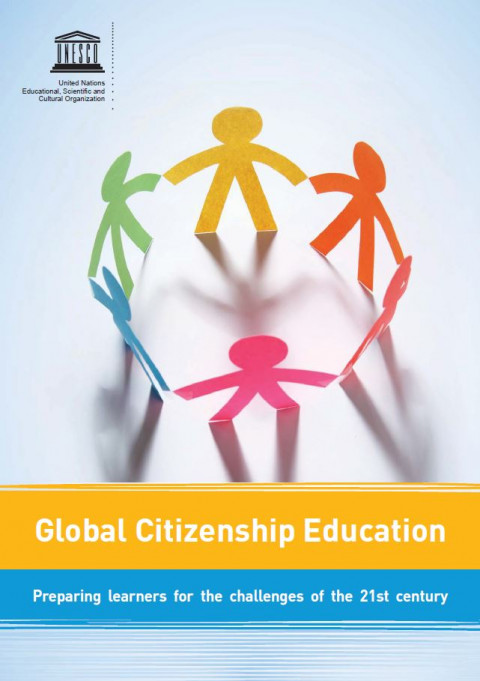 글로벌시민교육: 21세기 새로운 인재 기르기 Année de publication: 2014 Auteur institutionnel: 유네스코 이 보고서는 글로벌시민교육을 주제로 열렸던 두 차례의 국제회의 - 글로벌시민교육 전문가회의(2013년 9월 9-10일, 대한민국 서울)와 제1차 유네스코 글로벌시민교육 포럼(2013년 12월 2-4일, 태국 방콕) - 결과를 토대로 교육정책 입안자, 교육 실천가, 시민사회단체 및 청소년 리더들을 위해 만들어졌다. 글로벌시민교육을 처음 접하거나 이미 실천하고 있는 모든 독자들에게 유용한 지침서가 될 것이다. Déclaration Finale de la Réunion Mondiale sur l’EPT 2014 Accord de Mascate Année de publication: 2014 Auteur institutionnel: Organisation des Nations Unies pour l'éducation, la science et la culture (UNESCO) This statement is agreed by Ministers, heads of delegations, leading officials of multilateral and bilateral organizations, and senior representatives of civil society and private sector organizations at the Global Education for All (EFA) Meeting in Muscat, Oman on May 12-14, 2014. Recalling the GEM 2012 Final Statement, the conference took note of the 2013/14 EFA Global Monitoring Report, the regional EFA reports, the Resolution of the 37th session of UNESCO's General Conference on Education Beyond 2015, the Decision of the Executive Board of UNESCO at its 194th session and the Joint Proposal of the EFA Steering Committee on Education Post-2015. Réponses du secteur de l'éducation au harcèlement homophobe Année de publication: 2013 Auteur institutionnel: UNESCO This publication is part of a Good Policy and Practice series that addresses key themes of UNESCO’s work with the education sector including HIV and AIDS and safe, healthy educational environments for all learners. This volume, on the theme of homophobic bullying in educational institutions, builds on UNESCO’s work on gender, discrimination and violence in schools.
 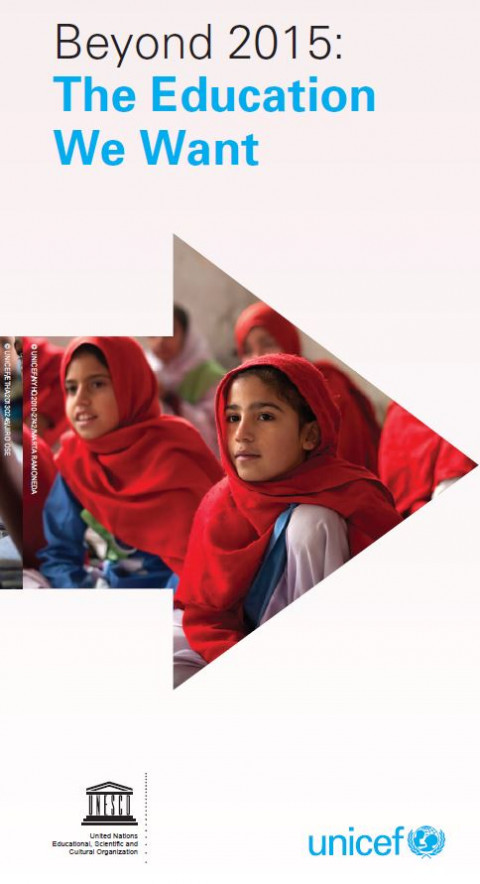 Beyond 2015: the education we want Année de publication: 2014 Auteur institutionnel: UNESCO | United Nations Children's Fund (UNICEF) The post-2015 education agenda should be aspirational, transformative and holistic, and an integral part of the broader post-2015 development agenda. It should be of universal relevance and mobilize all stakeholders in all countries. Education must be a stand-alone goal in the broader post-2015 development agenda and should be framed by a comprehensive overarching goal, with measurable global targets and related indicators. In addition, education must be integrated into other development goals. The future education agenda should be rights-based and reflect a perspective based on equity and inclusion, with particular attention to gender equality and to overcoming all forms of discrimination in and through education, ensuring that no-one is left behind. It must support free and compulsory basic education.It should expand the vision of access for all to reflect relevant learning outcomes through the provision of quality education at all levels, from early childhood to higher education, in safe and healthy environments. It should take a holistic and lifelong learning approach, and provide multiple pathways of learning using innovative methods and information and communication technologies. It should reinforce approaches such as global citizenship education and education for sustainable development, which foster attitudes and behaviours that promote peace, conflict resolution and mutual understanding, tolerance, critical thinking, and respect for cultural diversity and for the environment. 第十次全民教育(EFA)高级工作组会议: 宗滴恩宣言 Année de publication: 2011 Auteur institutionnel: UNESCO This statement is the outcome of 10th meeting of the High-level Group on Education for All. The meeting was held from 22 to 24 March 2011 in Jomtien, Thailand to urge to progress towards the EFA goals. لاجتماع العاشر للفريق الرفيع المستوى المعني بالتعليم للجميع Année de publication: 2011 Auteur institutionnel: UNESCO This statement is the outcome of 10th meeting of the High-level Group on Education for All. The meeting was held from 22 to 24 March 2011 in Jomtien, Thailand to urge to progress towards the EFA goals.