
Ressources
Explorez une large gamme de ressources sur le GCED afin d’approfondir votre compréhension et de renforcer vos activités de recherche, de plaidoyer, d’enseignement et d’apprentissage.
2,199 résultats trouvés
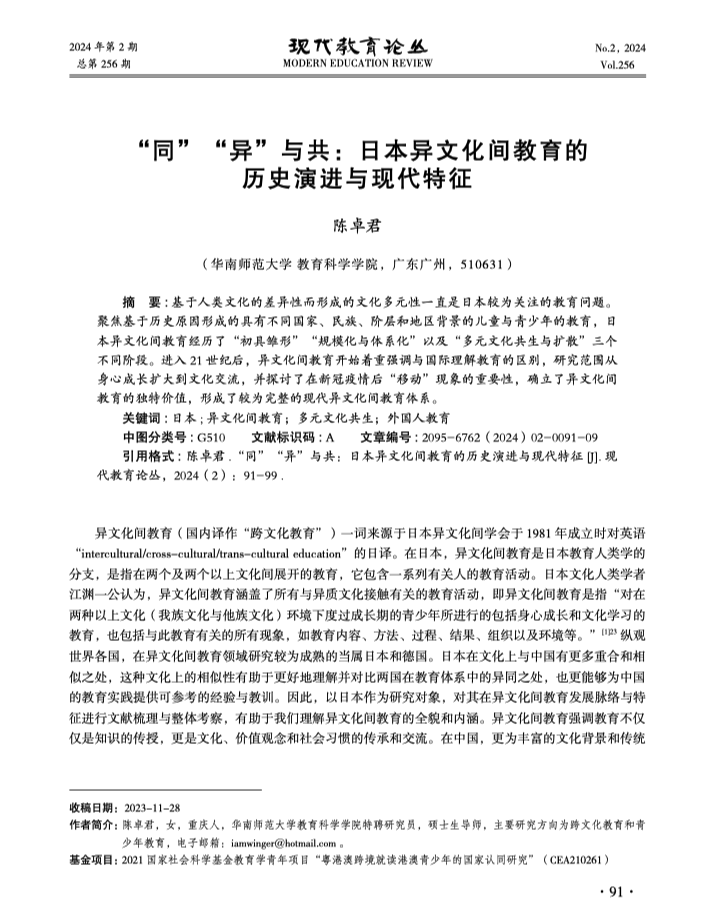 “同”“异”与共:日本异文化间教育的历史演进与现代特征 (现代教育论丛 第256期) Année de publication: 2024 Auteur: 陈卓君 基于人类文化的差异性而形成的文化多元性一直是日本较为关注的教育问题。 聚焦基于历史原因形成的具有不同国家、民族、阶层和地区背景的儿童与青少年的教育,日 本异文化间教育经历了“初具雏形”“规模化与体系化”以及“多元文化共生与扩散”三个 不同阶段。进入 21 世纪后,异文化间教育开始着重强调与国际理解教育的区别,研究范围从 身心成长扩大到文化交流,并探讨了在新冠疫情后“移动”现象的重要性,确立了异文化间 教育的独特价值,形成了较为完整的现代异文化间教育体系。
 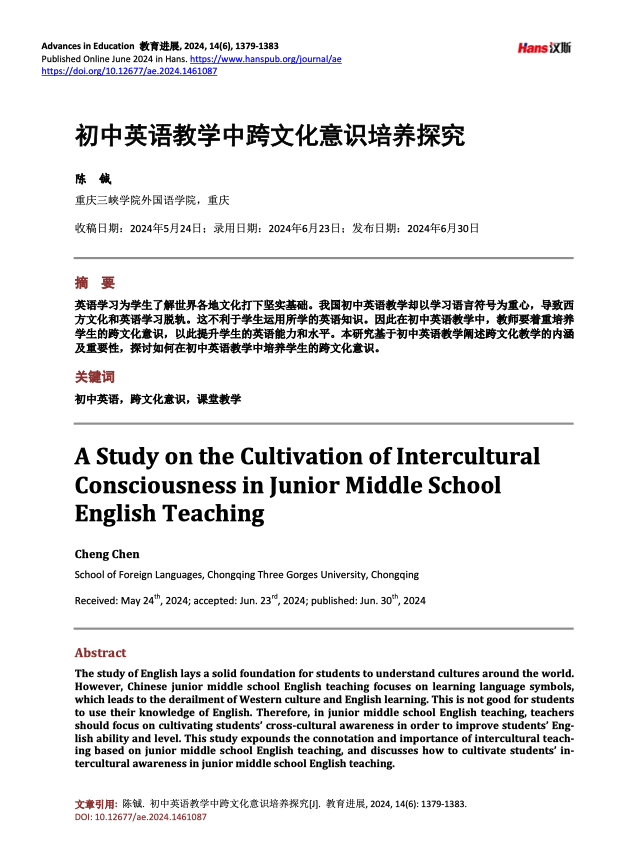 初中英语教学中跨文化意识培养探究 (教育进展 第14卷 第6期) Année de publication: 2024 Auteur: 陈铖 英语学习为学生了解世界各地文化打下坚实基础。我国初中英语教学却以学习语言符号为重心,导致西方文化和英语学习脱轨。这不利于学生运用所学的英语知识。因此在初中英语教学中,教师要着重培养学生的跨文化意识,以此提升学生的英语能力和水平。本研究基于初中英语教学阐述跨文化教学的内涵及重要性,探讨如何在初中英语教学中培养学生的跨文化意识。
  指向文化意识培养的高中英语5E阅读教学模式研究 (教育进展 第14卷 第6期) Année de publication: 2024 Auteur: 陈乐乐 针对高中英语阅读课中文化意识培养“浅层化与碎片化”的教学现状,本文通过对人教版高中英语必修教材(2019) Reading and Thinking板块的文化内容分析,以必修三第1单元Festivals and Celebrations的阅读语篇“Why Do We Celebrate Festivals?”为例,设计了多层次的阅读教学活动,探讨如何利用基于学习活动观的高中英语5E阅读教学模式充分挖掘语篇包含的文化内容,从而培养学生的文化意识。
 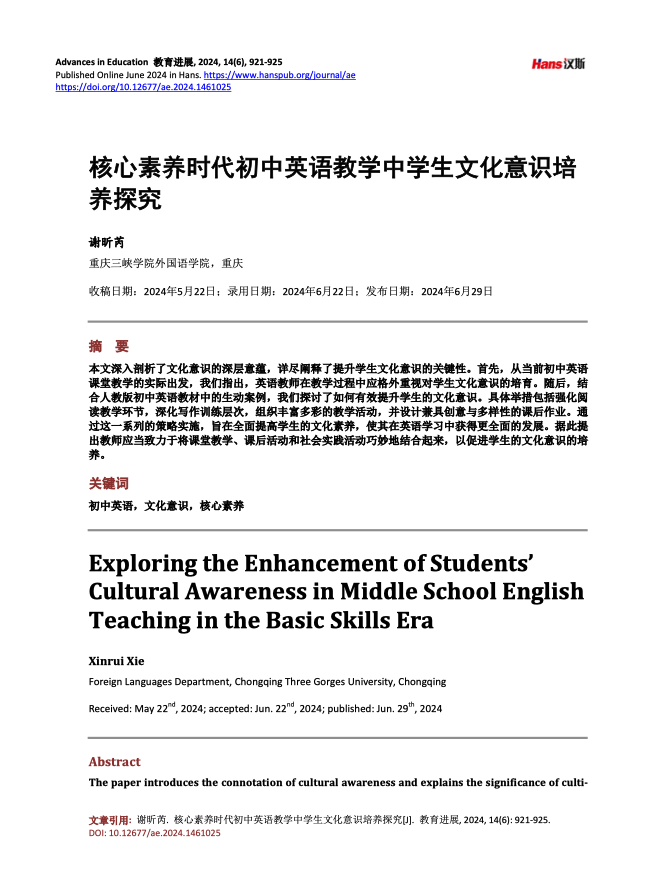 核心素养时代初中英语教学中学生文化意识培养探究 (教育进展 第14卷 第6期) Année de publication: 2024 Auteur: 谢昕芮 本文深入剖析了文化意识的深层意蕴,详尽阐释了提升学生文化意识的关键性。首先,从当前初中英语课堂教学的实际出发,我们指出,英语教师在教学过程中应格外重视对学生文化意识的培育。随后,结合人教版初中英语教材中的生动案例,我们探讨了如何有效提升学生的文化意识。具体举措包括强化阅读教学环节,深化写作训练层次,组织丰富多彩的教学活动,并设计兼具创意与多样性的课后作业。通过这一系列的策略实施,旨在全面提高学生的文化素养,使其在英语学习中获得更全面的发展。据此提出教师应当致力于将课堂教学、课后活动和社会实践活动巧妙地结合起来,以促进学生的文化意识的培养。
 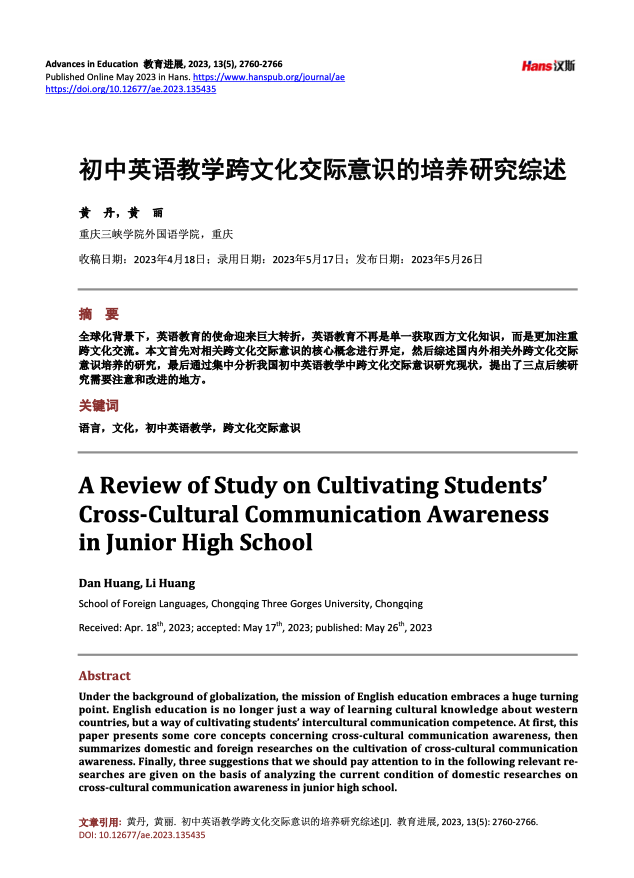 初中英语教学跨文化交际意识的培养研究综述 (教育进展 第13卷 第5期) Année de publication: 2023 Auteur: 黄丹 | 黄丽 全球化背景下,英语教育的使命迎来巨大转折,英语教育不再是单一获取西方文化知识,而是更加注重跨文化交流。本文首先对相关跨文化交际意识的核心概念进行界定,然后综述国内外相关外跨文化交际意识培养的研究,最后通过集中分析我国初中英语教学中跨文化交际意识研究现状,提出了三点后续研究需要注意和改进的地方。
 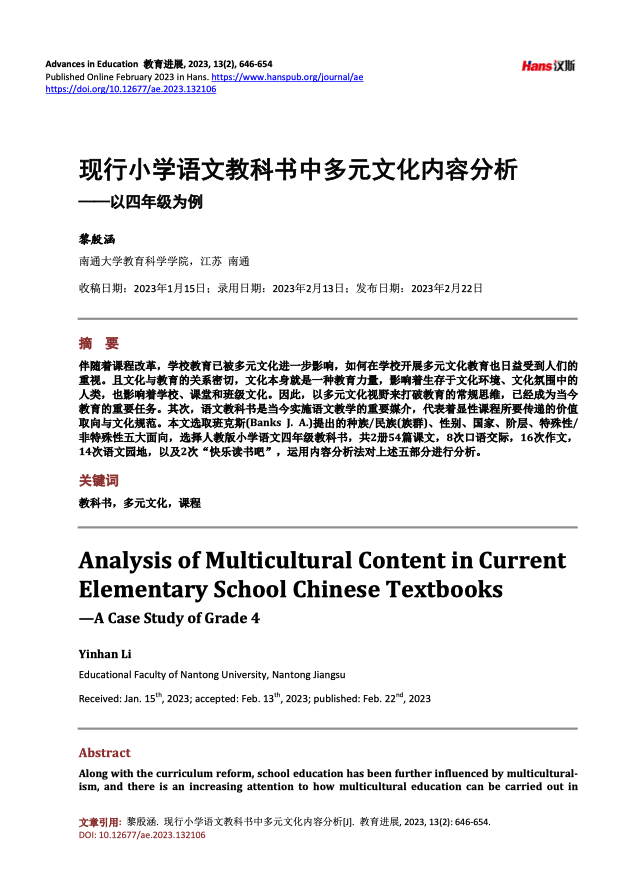 现行小学语文教科书中多元文化内容分析 : 以四年级为例 (教育进展 第13卷 第2期) Année de publication: 2023 Auteur: 黎殷涵 伴随着课程改革,学校教育已被多元文化进一步影响,如何在学校开展多元文化教育也日益受到人们的重视。且文化与教育的关系密切,文化本身就是一种教育力量,影响着生存于文化环境、文化氛围中的人类,也影响着学校、课堂和班级文化。因此,以多元文化视野来打破教育的常规思维,已经成为当今教育的重要任务。其次,语文教科书是当今实施语文教学的重要媒介,代表着显性课程所要传递的价值取向与文化规范。本文选取班克斯(Banks J. A.)提出的种族/民族(族群)、性别、国家、阶层、特殊性/非特殊性五大面向,选择人教版小学语文四年级教科书,共2册54篇课文,8次口语交际,16次作文,14次语文园地,以及2次“快乐读书吧”,运用内容分析法对上述五部分进行分析。
  Multicultural Education between Theoretical Modeling and Problematic Practices: A Comparative Study between Egypt, France, and Japan Année de publication: 2006 Auteur: Ahmed Aidrous | Mohammed Awad Auteur institutionnel: Zagazig University This paper focuses on studying multiculturalism as a concept, theories, frameworks and associated applied models. The study reviews the experience of France, Japan and Egypt, and makes comparisons between them. The study ends with a proposed vision for multicultural education in light of the experiences presented.
  The Role of UNESCO in the Search for Peace Année de publication: 2019 Auteur: Inuk Kang | Sunghae Kim | Jihon KIM | Jieun Seong | Seongsang YOO | Dongjoon Jo | Dongju Choi | Kyungkoo Han Auteur institutionnel: Korean National Commission for UNESCO UNESCO's international intellectual cooperation for peace has achieved substantive tangible results in education and culture. Though some problems have been politicized and have produced limitations along the way, UNESCO has played a leading role in education and culture while setting the direction of international cooperation and activities in this regard.UNESCO has regretfully not played an active role in fostering broader, more diverse, and more extensive new research and practices related to peace, even with the international Cold War realities. While UNESCO was an international organization created explicitly for peace, it has neither led to momentous peace-related academic discourse nor does it lead to theoretical development in this regard. The concept of a "Culture of Peace," for example, was first mentioned in the Ivory Coast (Cote d'Ivoire) in 1989. However, it was not until 1997 that UNESCO started its "Toward a Culture of Peace Program" and the U.N. General Assembly declaring 2000 as the "Year of Peace."UNESCO's situation provides an opportunity for South Korea to play a more active role. South Korea needs to break with its history of taking a passive stance focused on short-term national interests and its preoccupation with "situational tracking" responses aimed at fostering national prestige when such opportunities present themselves. Instead, while prioritizing a "global community" founded on world peace and the well-being of humanity-as long-term shared benefits to all nations-and by sharing the financial burdens involved, the country can increase its international status and become a moral leader raising a "global citizenship power."
 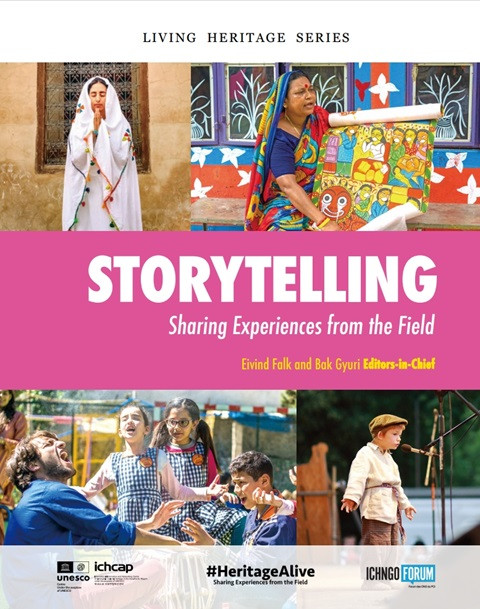 Storytelling: Sharing Experiences from the Field (Living Heritage Series VII, 2023) Année de publication: 2023 Auteur institutionnel: International Information and Networking Centre for Intangible Cultural Heritage in the Asia-Pacific Region (ICHCAP) The International Information and Networking Centre for Intangible Cultural Heritage in the Asia-Pacific Region under the auspices of UNESCO (UNESCO ICHCAP) has published the 2023 edition of the Living Heritage series, titled “Story Telling,” which conveys stories from the field as NGOs and experts implement storytelling-related projects. “Story Telling” is the seventh publication in the Living Heritage series, and offers insight into achievements in terms of safeguarding extant heritage through storytelling activities in 12 cases.
  Education for intercultural understanding Année de publication: 2010 Auteur: Joy de Leo Auteur institutionnel: UNESCO Bangkok The theme of intercultural understanding and respect for cultural diversity falls within the social dimension of peace, equality and human rights, underpinned by the cultural context, within and through which learning occurs, and which forms the basis for inter-linkages between the various sustainability dimensions (i.e., socio-political, environmental and economic). Within the International Implementation Scheme, the value of respect is seen as central to all aspects of sustainable development: respect for self, for others and for all life on earth.