
Ressources
Explorez une large gamme de ressources sur le GCED afin d’approfondir votre compréhension et de renforcer vos activités de recherche, de plaidoyer, d’enseignement et d’apprentissage.
1,443 résultats trouvés
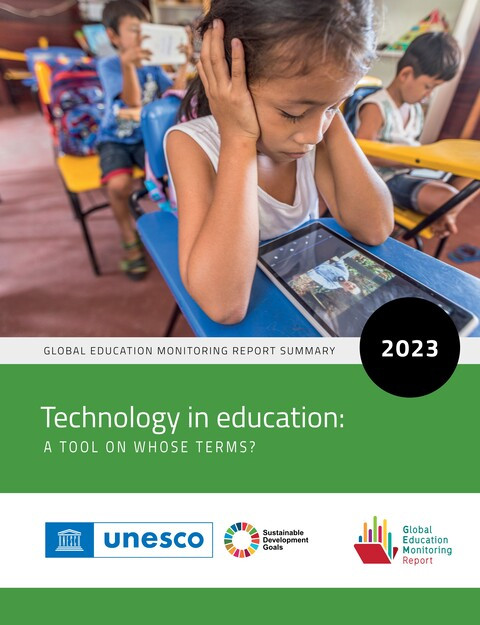 [резюме] ВСЕМИРНЫЙ ДОКЛАД ПО МОНИТОРИНГУ ОБРАЗОВАНИЯ РЕЗЮМЕ 2023: Технологии в образовании; НА ЧЬИХ УСЛОВИЯХ? Année de publication: 2023 Auteur institutionnel: UNESCO | Global Education Monitoring Report Team Вопрос о роли технологий в образовании уже давно вызывает бурные дискуссии. Способствуют ли они распространению знаний или же ставят под угрозу доступ к ним, позволяя избранному кругу лиц контролировать информацию? Открывают ли они безграничные возможности или же безвозвратно ведут нас к зависимому от технологий будущему? Уравнивают ли они возможности или же усугубляют неравенство? Следует ли использовать их при воспитании детей младшего возраста или же существуют риски для нормального развития детей? Закрытие школ в связи с пандемией COVID-19 и развитие генеративного искусственного интеллекта придали новый импульс обсуждению этих вопросов. Однако учитывая, что разработчики технологий зачастую идут на шаг впереди ответственных за принятие решений лиц, исследования в области образовательных технологий сопряжены с определенными трудностями. Надежных, объективных данных крайне мало. Задается ли общество правильными вопросами об образовании, прежде чем прибегнуть к помощи технологий? Информационно-коммуникационные технологии способны содействовать обеспечению справедливости и инклюзивности с точки зрения охвата находящихся в неблагоприятном положении учащихся и более широкого распространения знаний в удобных и доступных форматах. В определенных условиях и в рамках некоторых видов обучения они могут повышать качество преподавания и изучения базовых навыков. Так или иначе, цифровые компетенции становятся неотъемлемой частью набора базовых навыков. Цифровые технологии также могут способствовать управлению и повышению эффективности, помогая обрабатывать большие объемы данных об образовании. В то же время технологии могут приводить к изоляции, не соответствовать потребностям и быть обременительными, а иногда даже вредными. Правительства должны создавать надлежащие условия для обеспечения справедливого доступа к образованию для всех, регулировать использование технологий, с тем чтобы защитить учащихся от их негативного воздействия, и заниматься подготовкой учителей. В данном докладе рекомендуется внедрять технологии в образование на основании данных, подтверждающих их целесообразность, соответствие принципам справедливости, применимость и устойчивость. Иными словами, они должны использоваться с учетом интересов учащихся и в качестве дополнения к образованию, основанному на человеческом взаимодействии. Их следует рассматривать как инструмент, использование которого должно осуществляться на этих условиях. Во Всемирном докладе по мониторингу образования 2023 года приводится анализ того, что еще предстоит сделать для достижения к 2030 году целей в области образования, в то время, когда мир находится на полпути к установленному сроку. Образование играет не последнюю роль в технологическом прогрессе, однако оно также имеет решающее значение для достижения других целей в области развития. [摘要] 《全球教育监测报告》摘要 2023: 技术运用于教育; 谁来做主? Année de publication: 2023 Auteur institutionnel: UNESCO | Global Education Monitoring Report Team 技术在教育中的角色长期以来一直引发激烈的争论。它是民主化知识的推动者,还是通过允许少数人控制信息而威胁民主?它提供无限机会,还是导致依赖技术的未来无法回头?它能够实现平等竞争,还是加剧不平等?应该在教授幼儿时使用,还是存在对其发展的风险?这场辩论受到了COVID-19疫情导致的学校关闭以及生成人工智能的出现的影响。 但由于开发者往往领先于决策者一步,教育技术的研究变得复杂。坚实、公正的证据相当稀缺。在将技术视为解决方案之前,社会是否正在就教育问题提出正确的问题?在追求技术的好处时是否意识到其中的风险? 信息和通信技术有潜力支持平等和包容,以实现与弱势学习者的接触和以引人入胜且经济实惠的方式传播更多知识。在某些情况下,对于某些类型的学习,它可以提高教学质量和学习基本技能。无疑,数字技能已成为基本技能包的一部分。数字技术还可以支持管理并提高效率,帮助处理更大量的教育数据。 然而,技术也可能造成排斥,并且可能是无关紧要且繁重的,甚至是有害的。政府需要确保创造适当的条件,为所有人提供公平的教育机会,对技术使用进行监管,以保护学习者免受其负面影响,并为教师做好准备。 本报告建议,在基于证据表明其适当、公平、可扩展和可持续的情况下引入技术到教育中。换句话说,其使用应符合学习者的最佳利益,并应与教师的面对面互动相辅相成。应将其视为一种工具,以这些条件来使用。 到2023年全球教育监测报告截止期限的中途,评估了实现2030年教育目标仍需走多远。教育是实现其他发展目标的关键,尤其是技术进步的目标。
 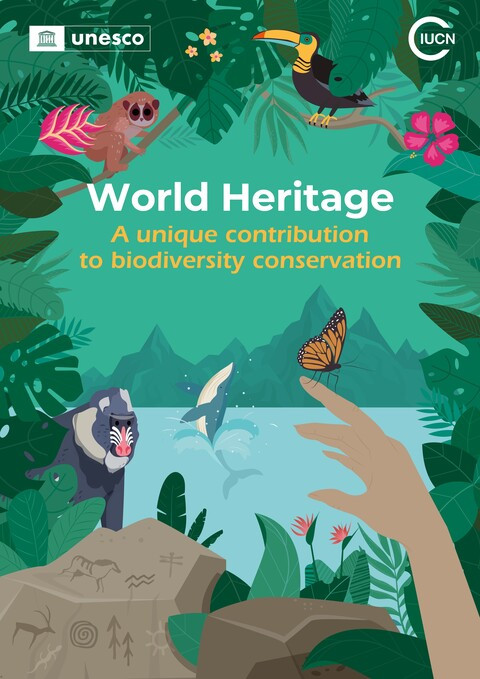 World Heritage: A Unique Contribution to Biodiversity Conservation Année de publication: 2023 Auteur institutionnel: UNESCO | International Union for Conservation of Nature (IUCN) The UNESCO World Heritage Convention is unique among international agreements as it deals with both natural and cultural heritage. By conferring one of the highest levels of protection recognized by 195 countries, it ensures a truly global commitment to safeguarding exceptional places. UNESCO natural World Heritage sites are critical for the conservation of ecosystem integrity and biodiversity. While they make up less than 1% of the Earth’s surface, they harbor more than 1/5 of mapped global species richness. This includes over 75,000 species of plants, and over 30,000 species of mammals, birds, fishes, reptiles and amphibians. Cultural World Heritage sites in particular can be an important ally in biodiversity conservation since around 20% of them are located in Key Biodiversity Areas (KBAs). UNESCO World Heritage sites also represent a safe haven for some of the most threatened species on Earth. They are estimated to protect over 20,000 globally threatened species, and are home to some of the last individuals of many iconic species. Today, up to 1/3 of remaining elephants, tigers and pandas can be found in these sites, as well as at least 1 in 10 great apes, giraffes, lions and rhinos. However, even these highly protected sites are today threatened by global climate change and human pressures, including agricultural expansion, infrastructure development, poaching, overexploitation of resources and the proliferation of invasive species. Every 1°C increase in temperature could double the number of species exposed to dangerous climate conditions. Ensuring effective and sustained protection of UNESCO World Heritage sites and surrounding landscapes is crucial for maximizing their value as a solution to tackle the current biodiversity and climate crisis. One way of achieving this is by supporting countries to integrate World Heritage into their National Biodiversity Strategies and Action Plans (NBSAPs), as they are key to implementing the Kunming-Montreal Global Biodiversity Framework (GBF). Patrimonio mundial: Una contribución única a la conservación de la biodiversidad Année de publication: 2023 Auteur institutionnel: UNESCO | International Union for Conservation of Nature (IUCN) La Convention du patrimoine mondial de l’UNESCO est un instrument unique parmi les accords internationaux, car elle traite à la fois du patrimoine naturel et culturel. En conférant l’un des plus hauts niveaux de protection reconnu par 195 pays, elle garantit un engagement véritablement mondial en faveur de la sauvegarde de lieux exceptionnels. Les sites naturels du patrimoine mondial de l’UNESCO sont essentiels à la conservation de l’intégrité des écosystèmes et de la biodiversité. Alors qu’ils représentent moins de 1 % de la surface terrestre, ils abritent plus d’un cinquième de la richesse mondiale des espèces cartographiées, soit plus de 75 000 espèces de plantes et plus de 30 000 espèces de mammifères, d’oiseaux, de poissons, de reptiles et d’amphibiens. Les sites culturels du patrimoine mondial, en particulier, peuvent être des alliés importants pour la conservation de la biodiversité, car près de 20 % d’entre eux sont situés dans des zones clés pour la biodiversité (ZCB). Les sites du patrimoine mondial de l’UNESCO représentent également un refuge pour certaines espèces parmi les plus menacées de la planète. On estime qu’ils protègent plus de 20 000 espèces menacées à l’échelle mondiale et qu’ils abritent certains des derniers individus de nombreuses espèces emblématiques. Aujourd’hui, jusqu’à un tiers des éléphants, tigres et pandas restants se trouvent dans ces sites, ainsi qu’au moins un grand singe, une girafe, un lion et un rhinocéros sur dix. Cependant, même ces sites hautement protégés sont aujourd’hui menacés par le dérèglement climatique mondial et les pressions humaines, notamment l’expansion de l’agriculture, le développement des infrastructures, le braconnage, la surexploitation des ressources et la prolifération d’espèces envahissantes. Chaque augmentation de température de 1°C pourrait doubler le nombre d’espèces exposées à des conditions climatiques dangereuses. Il est essentiel d’assurer une protection effcace et durable des sites du patrimoine mondial de l’UNESCO et des paysages environnants pour maximiser leur valeur en tant que solution à la crise actuelle de la biodiversité et du climat. L’un des moyens d’y parvenir est d’aider les pays à intégrer le patrimoine mondial dans leurs stratégies et plans d’action nationaux pour la biodiversité (SPANB), car ils sont essentiels à la mise en œuvre du Cadre mondial pour la biodiversité (CMB) de Kunming-Montréal. Patrimoine mondial: Une contribution unique à la conservation de la biodiversité Année de publication: 2023 Auteur institutionnel: Organisation des Nations Unies pour l'éducation, la science et la culture (UNESCO) | International Union for Conservation of Nature (IUCN) La Convention du patrimoine mondial de l’UNESCO est un instrument unique parmi les accords internationaux, car elle traite à la fois du patrimoine naturel et culturel. En conférant l’un des plus hauts niveaux de protection reconnu par 195 pays, elle garantit un engagement véritablement mondial en faveur de la sauvegarde de lieux exceptionnels. Les sites naturels du patrimoine mondial de l’UNESCO sont essentiels à la conservation de l’intégrité des écosystèmes et de la biodiversité. Alors qu’ils représentent moins de 1 % de la surface terrestre, ils abritent plus d’un cinquième de la richesse mondiale des espèces cartographiées, soit plus de 75 000 espèces de plantes et plus de 30 000 espèces de mammifères, d’oiseaux, de poissons, de reptiles et d’amphibiens. Les sites culturels du patrimoine mondial, en particulier, peuvent être des alliés importants pour la conservation de la biodiversité, car près de 20 % d’entre eux sont situés dans des zones clés pour la biodiversité (ZCB). Les sites du patrimoine mondial de l’UNESCO représentent également un refuge pour certaines espèces parmi les plus menacées de la planète. On estime qu’ils protègent plus de 20 000 espèces menacées à l’échelle mondiale et qu’ils abritent certains des derniers individus de nombreuses espèces emblématiques. Aujourd’hui, jusqu’à un tiers des éléphants, tigres et pandas restants se trouvent dans ces sites, ainsi qu’au moins un grand singe, une girafe, un lion et un rhinocéros sur dix. Cependant, même ces sites hautement protégés sont aujourd’hui menacés par le dérèglement climatique mondial et les pressions humaines, notamment l’expansion de l’agriculture, le développement des infrastructures, le braconnage, la surexploitation des ressources et la prolifération d’espèces envahissantes. Chaque augmentation de température de 1°C pourrait doubler le nombre d’espèces exposées à des conditions climatiques dangereuses. Il est essentiel d’assurer une protection effcace et durable des sites du patrimoine mondial de l’UNESCO et des paysages environnants pour maximiser leur valeur en tant que solution à la crise actuelle de la biodiversité et du climat. L’un des moyens d’y parvenir est d’aider les pays à intégrer le patrimoine mondial dans leurs stratégies et plans d’action nationaux pour la biodiversité (SPANB), car ils sont essentiels à la mise en œuvre du Cadre mondial pour la biodiversité (CMB) de Kunming-Montréal.
 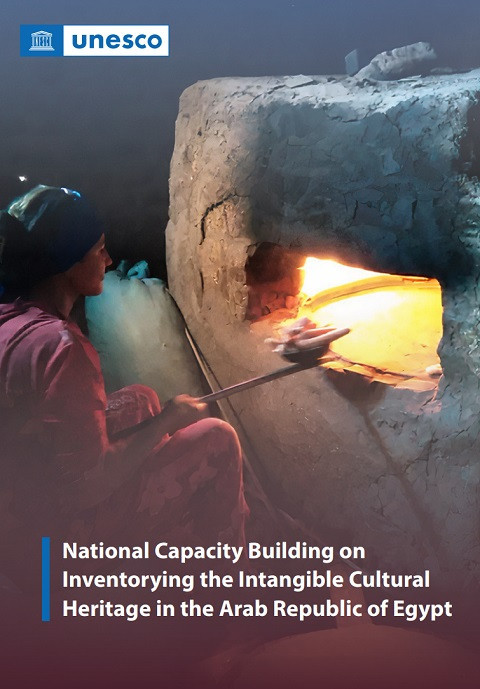 National Capacity Building on Inventorying the Intangible Cultural Heritage in the Arab Republic of Egypt Année de publication: 2024 Auteur: Ahmed Bahi El Din | Haitham Younes Auteur institutionnel: UNESCO | UNESCO Cairo Communities in Egypt are inventorying their living heritage Egypt is famed for its rich civilization and long history. Egyptian identity is presented not only through archaeological sites and Ancient Egyptian civilization, but also through Egypt’s diverse living heritage. More than simply showing who they are today, this living heritage tells the story of how the Egyptians arrived at this point over the generations.To celebrate this identity and strengthen national capacities to safeguard it, UNESCO, alongside the Egyptian government and civil society, implemented the project Strengthening National Capacities for Safeguarding Intangible Cultural Heritage in Egypt for Sustainable Development, which ran from June 2018 to June 2021.The project focused on community-based inventorying of living heritage. This involved training workshops and a pilot community-based inventorying exercise, which took place in six different locations throughout Egypt (Cairo, Fayoum, Gharbeya, Aswan, Assuit, and Marsa Matrouh). Thanks to the project, participating community practitioners and heritage bearers are now equipped to inventory their own living heritage. • This pilot was Egypt’s first step to establishing a national inventory of Intangible Cultural Heritage (ICH) under the Ministry of Culture, in collaboration with community practitioners. • This publication provides recommendations on how to further enhance national capabilities for ICH safeguarding and how to advance community engagement in the inventorying processes in Egypt.
  UNESCO Guidance for the World Heritage ‘No-Go’ Commitment: Global Standards for Corporate Sustainability Année de publication: 2022 Auteur institutionnel: UNESCO UNESCO World Heritage properties are cultural, natural and mixed sites of outstanding universal value (OUV) that exemplify some of humanity’s most exceptional heritage and treasures on our planet. They cover over a thousand properties in all regions of the world and it is the duty of the international community as a whole to cooperate on their protection. UNESCO World Heritage sites provide major benefits to our society and help safeguard ecosystem services and cultural resources vital for human well-being. Yet the threats to UNESCO World Heritage sites have been rising steadily for decades, including those arising from harmful industrial and infrastructure projects, extractive activities such as mining, oil and gas and large hydropower projects, among others. In view of these significant threats, several leading companies and financial institutions have committed to protect World Heritage by respecting them as ‘no-go’ areas. UNESCO World Heritage sites are protected under international law as humanity’s legacy to future generations and, as such, merit particular attention in corporate policies and business conduct. However, there is wide variation in the nature and strength of sustainability policies and due diligence processes. This guidance was developed to assist companies to develop comprehensive strategies for World Heritage as part of their efforts to measure and manage environmental, social and governance risks. Orientations de l’UNESCO relatives à l’engagement de respecter les sites du patrimoine mondial en tant que zones d’exclusion : recommandations mondiales pour le développement durable des entreprises Année de publication: 2022 Auteur institutionnel: Organisation des Nations Unies pour l'éducation, la science et la culture (UNESCO) Les biens du patrimoine mondial de l’UNESCO sont des sites culturels, naturels et mixtes d’une valeur universelle exceptionnelle (VUE) qui sont représentatifs du patrimoine et des trésors les plus exceptionnels de l’humanité sur notre planète. Ils recouvrent plus d’un millier de biens dans toutes les régions du monde et il incombe à la communauté internationale toute entière de coopérer pour en assurer la protection. Les sites du patrimoine mondial de l’UNESCO apportent de nombreux bénéfices à notre société et aident à préserver les services écosystémiques et les ressources culturelles indispensables au bien-être humain. Pourtant, les menaces qui pèsent sur les sites du patrimoine mondial de l’UNESCO n’ont cessé d’augmenter depuis des décennies, notamment celles qui découlent de projets industriels et d’infrastructures néfastes, d’activités extractives telles que l’exploitation minière, pétrolière et gazière, et de grands projets hydroélectriques, entre autres. Au vu de ces menaces importantes, plusieurs grandes entreprises et institutions financières se sont engagées à protéger le patrimoine mondial en respectant le principe de zones d’exclusion (« no-go areas »). Les sites du patrimoine mondial de l’UNESCO sont protégés par le droit international en tant que legs de l’humanité aux générations futures et, à ce titre, ils méritent qu’une attention particulière leur soit octroyée par les entreprises dans leurs politiques et leur conduite. Cependant, la nature et le poids des politiques de durabilité et des procédures de diligence raisonnable varient considérablement. Les présentes orientations ont été conçues pour aider les entreprises à élaborer des stratégies globales relatives au patrimoine mondial dans le cadre de leurs efforts pour mesurer et gérer les risques environnementaux, sociaux et de gouvernance. 教科文组织 世界遗产 “禁入”承诺指南: 企业可持续性全球标准 Année de publication: 2022 Auteur institutionnel: UNESCO 教科文组织世界遗产地是具有突出普遍价值的文化、自然和混合遗产地,体现出人类在地球上最杰出的一些遗产和珍宝。它们涵盖世界各个地区的一千多处遗产,整个国际社会都有责任合作保护这些遗产。世界遗产地给我们的社会带来了巨大惠益,有助于保护对人类福祉至关重要的生态系统服务和文化资源。 然而,几十年来,世界遗产面临的威胁逐渐增加,包括有害的工业和基础设施项目、采矿和油气开采等采掘活动以及大型水电项目等造成的威胁。鉴于这些重大威胁,一些龙头企业和金融机构已承诺保护世界遗产,将其作为“禁入”区域加以尊重。 世界遗产地作为人类留给后代的遗产,受到国际法律保护,因此在企业政策和商业行为中值得特别关注。然而,在可持续性政策和尽职调查程序的性质和力度方面存在着很大差异。制定本指南,旨在协助企业制定全面的世界遗产战略,作为衡量和管理环境、社会和治理风险工作的一部分。
 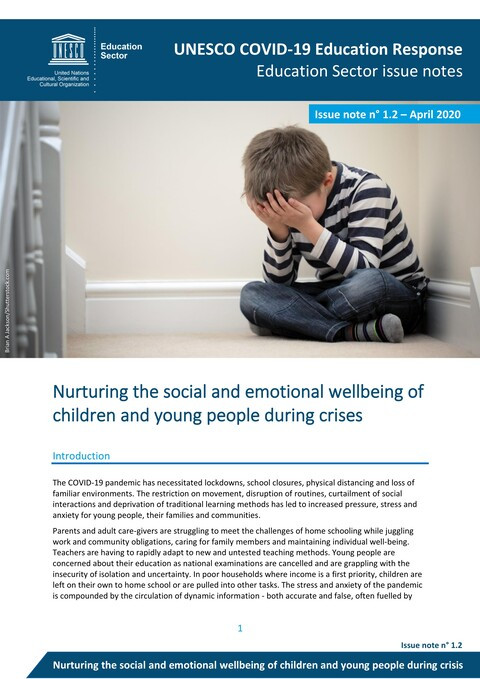 Nurturing the Social and Emotional Wellbeing of Children and Young People During Crises (UNESCO COVID-19 Education Response: Education Sector issue notes; No.1.2, 2020) Année de publication: 2020 Auteur institutionnel: UNESCO The COVID-19 pandemic has necessitated lockdowns, school closures, physical distancing and loss of familiar environments. The restriction on movement, disruption of routines, curtailment of social interactions and deprivation of traditional learning methods has led to increased pressure, stress and anxiety for young people, their families and communities. Parents and adult care-givers are struggling to meet the challenges of home schooling while juggling work and community obligations, caring for family members and maintaining individual well-being. Teachers are having to rapidly adapt to new and untested teaching methods. Young people are concerned about their education as national examinations are cancelled and are grappling with the insecurity of isolation and uncertainty. In poor households where income is a first priority, children are left on their own to home school or are pulled into other tasks. The stress and anxiety of the pandemic is compounded by the circulation of dynamic information - both accurate and false, often fuelled by sensationalist media reporting. This not only increases insecurity but also acts as fertile ground for the spread of intolerance, racism, xenophobia and hate crimes. To address and counter the social anxiety, emotional upheaval and fearful insecurity unleashed by COVID-19, it is urgent and necessary that families and communities build vital coping skills and emotional resilience. Social and emotional skills are well established, evidence-based practices, that can be adapted to help equip children, young people, parents and teachers with the knowledge, skills, attitudes and behaviours they need to stay healthy and positive, navigate emotions, practice mindful engagement, exhibit pro-social behaviour and cope with daily challenges.