
Ressources
Explorez une large gamme de ressources sur le GCED afin d’approfondir votre compréhension et de renforcer vos activités de recherche, de plaidoyer, d’enseignement et d’apprentissage.
2,199 résultats trouvés
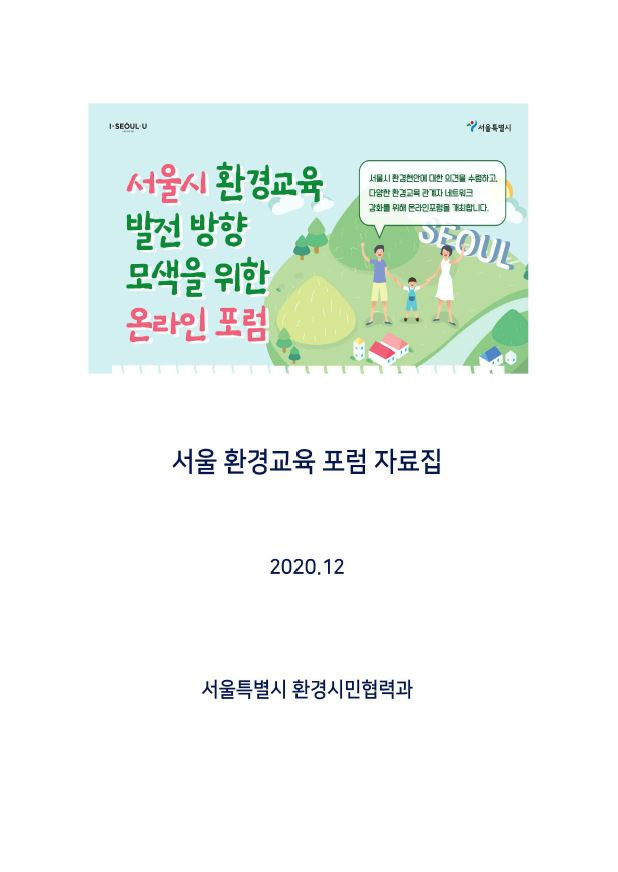 서울시 환경교육 발전 방향 모색을 위한 온라인 포럼: 서울 환경교육 포럼 자료집 Année de publication: 2020 Auteur: 장미정 | 권보경 | 박수진 | 안창연 | 이혜진 | 지혜성 | 최지선 Auteur institutionnel: 서울시 환경시민협력과 | 모두를위한환경교육연구소 이 자료집은 <서울시 환경교육 발전 방향 모색을 위한 온라인 포럼>의 일환으로 제작되었습니다. 포럼 동영상은 유튜브(www.youtube.com)에서 ‘서울시 환경교육 발전 방향 모색을 위한 온라인 포럼’을 검색하면 보실 수 있습니다. [자료출처: (사)환경교육센터]
  다문화수용성이 청소년의 난민 태도에 미치는 영향 (시민교육연구; Vol. 56, No. 2) Année de publication: 2024 Auteur: 홍승표 Auteur institutionnel: 한국사회과교육학회 본 연구의 목적은 다문화수용성이 청소년의 난민에 대한 태도에 미치는 차별적 영향력을 규명하고 교육적 시사점을 도출하는 것이다. 이를 위해 여성가족부가 수행한 ‘2021년 국민 다문화수용성 조사’의 청소년 자료를 활용하여 다중회귀분석을 실시하였다. 분석 결과는 다음과 같다. 첫째, 다문화수용성의 하위요인 가운데 다양성 차원에서 문화 개방성은 정적인 효과를 나타낸 반면, 고정관념 및 차별은 부적인 효과를 확인할 수 있었다. 둘째, 관계성 차원에서는 일방적 동화기대 요인이 청소년의 난민에 대한 태도에 부적인 효과를 나타냈다. 셋째, 보편성 차원에서 세계시민 행동의지는 정적인 효과를 나타냈지만 이중적 평가는 부적인 효과를 확인하였다. 본 연구는 이러한 연구 결과를 토대로 청소년의 난민 태도 개선을 위한 교육적 시사점을 도출하였다. 첫째, 이주민과 구별되는 난민의 특성에 대한 교육의 필요성을 제안하였다. 둘째, 수업에서 난민 문제를 다룰 때는 난민의 다양한 상황과 목소리를 학생들이 심층적으로 이해하고 공감할 수 있는 환경 조성이 필요하다. 셋째, 시민교육과 사회과교육에서는 난민 문제와 관련한 윤리적, 사회적 쟁점을 토론하고 이를 통해 학생들이 비판적 사고와 사회적 공감 능력을 육성할 수 있도록 지도해야 한다. 이는 시민교육과 사회과에서 적극적으로 수행할 수 있을 것이다.
  문화다양성협약 국내 이행을 위한 논의: 유튜브에서 AI까지, 21세기 한국에서의 문화다양성 Année de publication: 2020 Auteur: 김재인 | 염신규 | 이광석 | 이동연 | 이상욱 | 홍성수 | 황승흠 Auteur institutionnel: 대한민국 문화체육관광부 | 한국문화예술위원회 | 유네스코한국위원회 「문화다양성협약 국내 이행을 위한 논의 - 유튜브에서 AI까지, 21세기 한국에서의 문화다양성」는 모두 세 차례에 걸쳐 진행된 전문가회의에서 각 분야 전문가들이 발표하고 토론한 내용을 담은 종합보고서입니다. 올해는 문화다양성협약의 이행과 관련된 이슈들 중 특히 디지털플랫폼의 급부상, 인공지능 기술의 급격한 발달에 초점을 두어 논의하는 한편, 우리들의 일상을 송두리째 바꿔놓은 코로나19가 낳은 불안과 공포, 이로 인한 적대감이 초래한 소외와 고립, 혐오와 갈등의 문제를 짚어보았습니다. 전문가회의에서 나온 전문가들의 진단과 논의가 앞으로 한국사회에서 문화다양성협약 이행 관련 의제를 주도하는 데 있어서 필요한 비전과 전략 수립에도 기여하기를 기대합니다.
 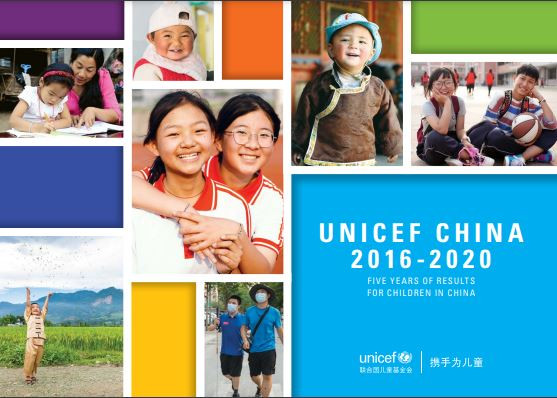 UNICEF CHINA 2016 - 2020: FIVE YEARS OF RESULTS FOR CHILDREN IN CHINA Année de publication: 2021 Auteur institutionnel: United Nations Children's Fund (UNICEF) This report introduces the work of UNICEF in China during 2016-2020, including children protection, education and social policies. 携手共进 造福儿童:联合国儿童基金会在华工作成果 (2016-2020年) Année de publication: 2021 Auteur institutionnel: United Nations Children's Fund (UNICEF) 该报告介绍了联合国儿童基金会2016-2020期间在中国所进行的工作,包含儿童保护、教育、社会政策等方面内容。
  教育公平视域下特殊儿童随班就读的质量检视与提升路径 (教育进展 第14卷 第8期) Année de publication: 2024 Auteur: 常攀攀 Auteur institutionnel: 汉斯出版社 随班就读作为我国特殊儿童的主要教育形式,实现了特殊儿童与普通儿童入学机会的公平。在当前教育 需求从“有学上”转向“上好学”的背景下,“公平而有质量”应成为特殊儿童随班就读的价值考量。 鉴于特殊儿童随班就读的低阶公平和质量的不尽人意,应超越入学机会的形式公平,强调特殊儿童与普 通儿童教育过程和结果的实质公平。可通过建构特殊儿童随班就读质量正确认知的观念革新、确保特殊 儿童随班就读实质公平的过程关照、提供特殊儿童随班就读资源保障的差异补偿等路径来确保和提升特 殊儿童的随班就读质量。
 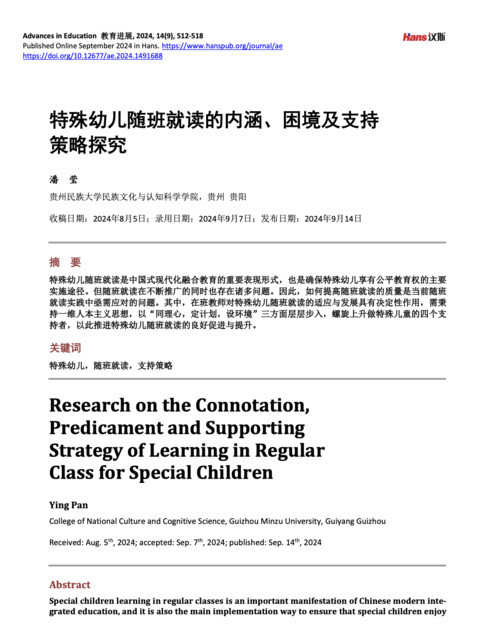 特殊幼儿随班就读的内涵、困境及支持策略探究 (教育进展 第14卷 第9期) Année de publication: 2024 Auteur: 潘莹 Auteur institutionnel: 汉斯出版社 特殊幼儿随班就读是中国式现代化融合教育的重要表现形式,也是确保特殊幼儿享有公平教育权的主要 实施途径。但随班就读在不断推广的同时也存在诸多问题。因此,如何提高随班就读的质量是当前随班 就读实践中亟需应对的问题。其中,在班教师对特殊幼儿随班就读的适应与发展具有决定性作用,需秉 持一维人本主义思想,以“同理心,定计划,设环境”三方面层层步入,螺旋上升做特殊儿童的四个支 持者,以此推进特殊幼儿随班就读的良好促进与提升。
 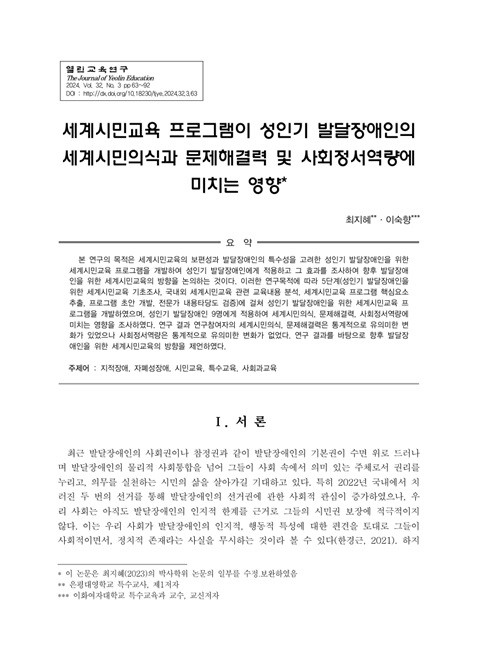 세계시민교육 프로그램이 성인기 발달장애인의 세계시민의식과 문제해결력 및 사회정서역량에 미치는 영향 (열린교육연구; Vol. 32, No. 3) Année de publication: 2024 Auteur: 최지혜 | 이숙향 Auteur institutionnel: 한국열린교육학회 본 연구의 목적은 세계시민교육의 보편성과 발달장애인의 특수성을 고려한 성인기 발달장애인을 위한 세계시민교육 프로그램을 개발하여 성인기 발달장애인에게 적용하고 그 효과를 조사하여 향후 발달장애인을 위한 세계시민교육의 방향을 논의하는 것이다. 이러한 연구목적에 따라 5단계(성인기 발달장애인을 위한 세계시민교육 기초조사, 국내외 세계시민교육 관련 교육내용 분석, 세계시민교육 프로그램 핵심요소 추출, 프로그램 초안 개발, 전문가 내용타당도 검증)에 걸쳐 성인기 발달장애인을 위한 세계시민교육 프로그램을 개발하였으며, 성인기 발달장애인 9명에게 적용하여 세계시민의식, 문제해결력, 사회정서역량에 미치는 영향을 조사하였다. 연구 결과 연구참여자의 세계시민의식, 문제해결력은 통계적으로 유의미한 변화가 있었으나 사회정서역량은 통계적으로 유의미한 변화가 없었다. 연구 결과를 바탕으로 향후 발달장애인을 위한 세계시민교육의 방향을 제언하였다.
 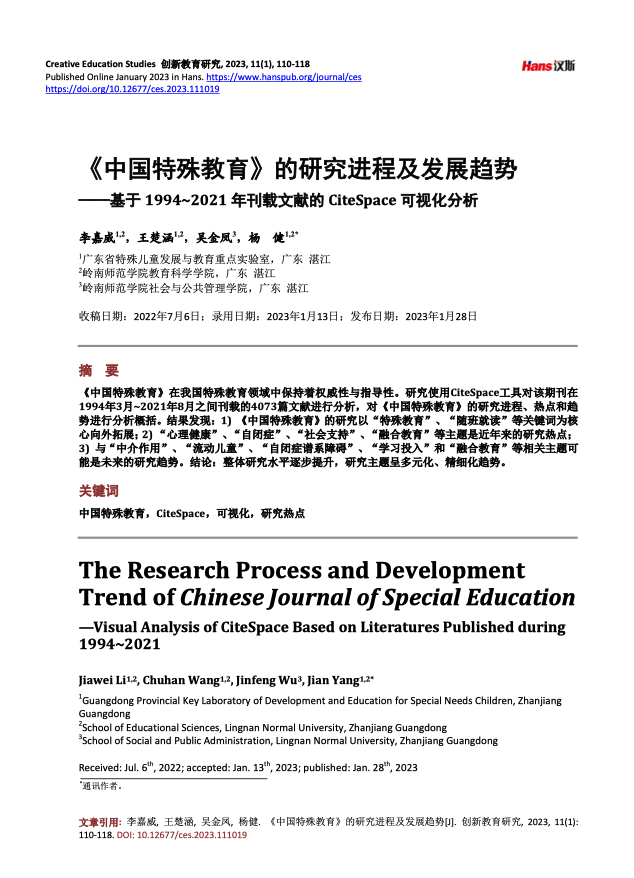 《中国特殊教育》的研究进程及发展趋势 : 基于1994~2021年刊载文献的CiteSpace可视化分析 (创新教育研究 第11卷 第1期) Année de publication: 2023 Auteur: 李嘉威 | 王楚涵 | 杨健 《中国特殊教育》在我国特殊教育领域中保持着权威性与指导性。研究使用CiteSpace工具对该期刊在1994年3月~2021年8月之间刊载的4073篇文献进行分析,对《中国特殊教育》的研究进程、热点和趋势进行分析概括。结果发现:1) 《中国特殊教育》的研究以“特殊教育”、“随班就读”等关键词为核心向外拓展;2) “心理健康”、“自闭症”、“社会支持”、“融合教育”等主题是近年来的研究热点;3) 与“中介作用”、“流动儿童”、“自闭症谱系障碍”、“学习投入”和“融合教育”等相关主题可能是未来的研究趋势。结论:整体研究水平逐步提升,研究主题呈多元化、精细化趋势。
 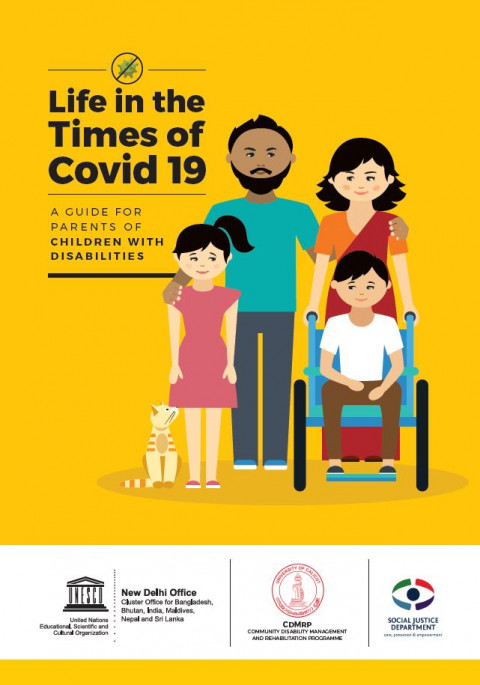 Life in the Times of Covid 19: A Guide for Parents of Children with Disabilities Année de publication: 2020 Auteur institutionnel: UNESCO New Delhi The 2019–20 coronavirus pandemic has affected educational systems worldwide, leading to the widespread closure of schools and universities. The radical changes and ensuing stress brought about by COVID-19 and the lockdown may also result in different sorts of difficulties among these children.Hence, parents and caregivers of such children must know how to manage and guide their children during this pandemic.This guideline explains the different aspects that a parent/ caregiver must take into account while taking care of children with special needs. This guideline also addresses the need to maintain the mental health of the parent/ caregiver of children with special needs. The eleven sections in this guideline explain the duties and responsibilities that parents/ caregiver must follow.