
Ressources
Explorez une large gamme de ressources sur le GCED afin d’approfondir votre compréhension et de renforcer vos activités de recherche, de plaidoyer, d’enseignement et d’apprentissage.
3,229 résultats trouvés
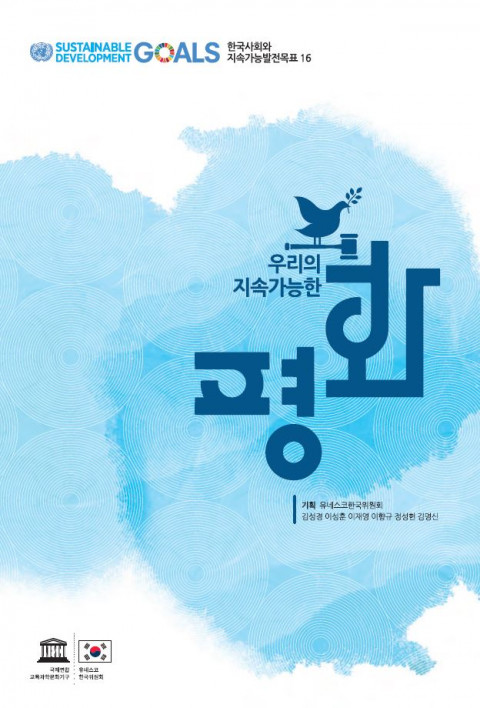 한국사회와 지속가능발전목표 16: 우리의 지속가능한 평화 Année de publication: 2019 Auteur: 김성경 | 이성훈 | 이재영 | 이향규 | 정성헌 | 김명신 Auteur institutionnel: 유네스코한국위원회 유네스코한국위원회는 좀더 많은 사람들이 SDGs를 쉽게 이해하도록 돕기 위해 ‘한국사회와 지속기능발전목표’ 라는 이름 아래 SDGs 해설서를 발간하고 있습니다.16번 해설서인 『한국사회와 지속가능발전목표 16: 우리의 지속가능한 평화』 는 남북 분단 상황 속에서 점차 다문화사회로 변화해가는 오늘날 우리의 일상이 어떻게 하면 더욱 포용적으로 발전할 수 있을지에 대한 이야기로 독자 여러분의 이해를 돕기 위해 각 분야의 전문가들을 인터뷰한 내용으로 구성돼 있습니다.
  Education for Develpment (EdD) in a Diverse World: Comparative Study of Education for Global Citizenship (EdGC) in Paraguay and Spain Année de publication: 2017 Auteur: Ángela Alcaide Capilla | María Jesús Martínez Usarralde Auteur institutionnel: University of Valencia According to the summary of the author: "This article aims to collect a comparative analysis regarding Global Citizenship Education in two different contexts: Spain and Paraguay. The objective is to discover the main characteristics of this education, in meaning and practice, focusing on the diversity of views and constraints of reality, which enrich existing theory speeches, opening this field of knowledge to the experience of its application. In fact, this is the objective and the conclusion. The research justifies the value of this information in the field of study, based on interviews with experts from which relevant information that eludes the rhetorical speeches can be extracted." La Educación para el Desarrollo (EpD) en un mundo diverso: estudio comparativo de la Educación para la Ciudadanía Global (EpCG) en Paraguay y España Année de publication: 2017 Auteur: Ángela Alcaide Capilla | María Jesús Martínez Usarralde Auteur institutionnel: University of Valencia Según el resumen de los autores: "El presente artículo pretende acometer un análisis comparado en relación a la Educación para a la Ciudadanía Global en dos contextos diferentes: España y Paraguay. Se pretende con ello reconocer los rasgos principales de esta educación, en significado y práctica, bajo la premisa de destacar la diversidad de visiones y condicionantes de la realidad, que conceden a los discursos ya existentes en la teoría una gran riqueza, abriendo su campo de conocimiento a la experiencia que de su aplicación se extrae. En sí, este es objetivo y conclusión. Con la investigación se justifica el valor que esta información tiene para el campo de estudio, a partir de entrevistas a personas expertas de las que se extrae información relevante que escapa a la retórica."
 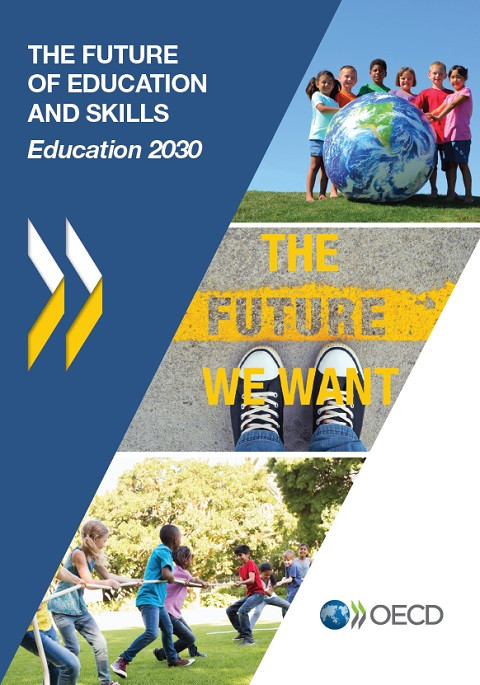 The Future of Education and Skills: Education 2030 Année de publication: 2018 Auteur institutionnel: Organisation for Economic Co-operation and Development (OECD) The aim of OECD’s Education 2030: The Future of Education and Skills project is to support countries to find answers to two far-reaching questions: “What knowledge, skills, attitudes and values will today’s students need to shape and thrive their world in 2030?” and “How can instructional systems develop these knowledge, skills, attitudes and values effectively?” This OECD Education 2030 position paper considers the challenges that young people will face; suggests the importance of the concept of learner agency; proposes an overarching learning framework with transformative competencies; reviews the nature of the knowledge, skills, attitudes and values that young people will need; and ends with possible curriculum design principles. It encapsulates the key messages of the project so far. Le Futur de l’éducation et des compétences: Projet Éducation 2030 Année de publication: 2018 Auteur institutionnel: Organisation for Economic Co-operation and Development (OECD) Le projet Le Futur de l’éducation et des compétences : Éducation 2030 a pour objectif d’aider les pays à trouver des réponses à deux questions d’une portée considérable : « De quelles connaissances, compétences, attitudes et valeurs les élèves d’aujourd’hui auront-ils besoin pour réussir leur vie et bâtir le monde de demain ? » et « Comment les systèmes éducatifs peuvent-ils transmettre ces connaissances, compétences, attitudes et valeurs de manière efficace ? » Cette note d’information sur le projet Éducation 2030 de l’OCDE étudie les défis auxquels les jeunes générations vont être confrontées, met en lumière l’idée de capacité d’agir des apprenants, propose un cadre d’apprentissage global reposant sur des compétences transformatives, revient sur la nature des connaissances, des compétences, des attitudes et des valeurs dont les jeunes auront besoin à l’avenir et se conclut par de possibles principes de conception des programmes scolaires. Les principaux messages tirés du projet jusqu’à présent sont également présentés. OECD学习框架 2030: 经济合作与发展组织 (OECD) Année de publication: 2018 Auteur institutionnel: Organisation for Economic Co-operation and Development (OECD) "教育公平" "高质量的教育" "核心素养" "减负'等已成为流行热词,在新时代背景下实践者对 究竟要"教什么"需要再思考。经济合作与发展组织(简称经合组织 OECD) 2015 年启动了"教育2030: 未来 的教育与技能"项目,项目中启动了"面向 2030 的学习指南"讨论,旨在开发一种新的学习框架,描述需要用什 么样的能力来塑造未来的一代。学习框架包括知识、技能、态度和价值观,个人和社会的福祉 变革性能力,通 过反思、预期和行动的过程,调动知识 技能、态度和价值观,以便发展与世界接触所需的相互关联的能力.此 外, "教育与技能2030项目"专家组也提出了设计教育体系与课程改革的指导原则,包括概念、内容和主题设计 以及流程设计.
  Preparing teachers to educate for 21st century global citizenship:envisioning and enacting Année de publication: 2014 Auteur: Linyuan Guo Auteur institutionnel: Centennial College The changing educational landscape in the global context and the increasing interconnectedness and interdependence of the world have placed unprecedented demands on teacher education programs in preparing teachers to educate for 21st century global citizenship in K-12 schools. To chart the course of preparing global educators for an interconnected world, the Faculty of Education at the University of Prince Edward Island (UPEI) and UNICEF Canada have collaboratively developed an undergraduate course, entitled Educating for Global Citizenship. It focuses on preparing educators to teach for 21st century global citizenship and has been integrated into UPEI’s teacher preparation program as a compulsory course. This paper is based on a three-year study examining teacher candidates' experiences in learning to educate for global citizenship, the changes of their perceptions on global citizenship education, and the challenges and achievements they experienced in educational practices. Findings from this study indicate the unique opportunities and challenges teachers face in learning to educate for global citizenship and suggest the necessity of integrating global citizenship education in teacher education programs through a holistic approach.
  Green Marketing in the Conformation of a Planetary Citizenship in the Educational Field Latinamerican Année de publication: 2019 Auteur: Julio Juvenal Aldana Zavala | Félix Colina Ysea The article reviews and analyzes the contribution of green marketing in the formation of a planetary citizenship in the latin american educational systems. A documental and biblographic review methodology was used to gather and structure the information. The content of the documents was analyzed trying to discover the implicit competences for global citizenshipo present in the information. One of the main conclusions is that green marketing offers education the possibility of building competences that favour global thinking in students; thing that should be encouraged from a latin american green education perspective for the global context. Marketing verde en la conformación de una ciudadanía planetaria en el ámbito educativo latinoamericano Année de publication: 2019 Auteur: Julio Juvenal Aldana Zavala | Félix Colina Ysea El artículo de revisión tuvo por objetivo analizar el aporte del marketing verde en la conformación de una ciudadanía planetaria en el ámbito educativo latinoamericano. Se empleó una metodología de tipo documental con un diseño bibliográfico que permitió estructurar la información recopilada, se aplicó un análisis de contenido con la finalidad de descubrir las competencias implícitas en la información analizada. Entre las principales conclusiones se tiene que el marketing verde ofrece a la educación, la posibilidad de edificar competencias en el estudiante en pro de configurar un pensamiento global, el cual debe ser fomentado desde una educación verde planetaria latinoamericana para el contexto global.
  Epistemology from the South: A Decolonized Vision of the Objectives for Sustainable Development Année de publication: 2016 Auteur: Javier Collado Ruano Auteur institutionnel: Universidade de Sao Paulo The research object of this article is to identify the different epistemological and methodological perspectives that have emerged from the global South. It also addresses the irruption of globalization and cross-border processes of climate change from the called “epistemology of the South” perspective. As a result, it claims the need for cross-cultural bridges between people from all over the world to overcome the paradigmatic crossroads at which we find ourselves as a world-system, with the aim to achieve the Sustainable Development Goals set by the United Nations for the year 2030.