
Ressources
Explorez une large gamme de ressources sur le GCED afin d’approfondir votre compréhension et de renforcer vos activités de recherche, de plaidoyer, d’enseignement et d’apprentissage.
2,781 résultats trouvés
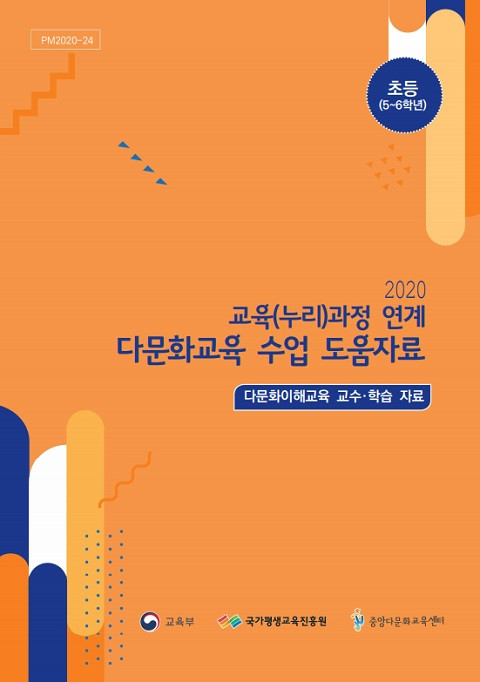 2020 교육(누리)과정 연계 다문화교육 수업 도움자료: 다문화이해교육 교수·학습 자료; 초등(5~6학년) Année de publication: 2020 Auteur: 설규주 Auteur institutionnel: 국가평생교육진흥원 본 자료는 초등 고학년 단계에서 교과와 연계하여 다문화감수성 함양에 도움을 주고자 개발되었다. 다문화교육 연구학교의 연차별 연구과제 수행의 결과로 마련된 수업모델을 토대로 개발되었으며, 제11회 다문화교육 우수사례 공모전 교육자료 부문 수상작 일부도 수록하였다.
 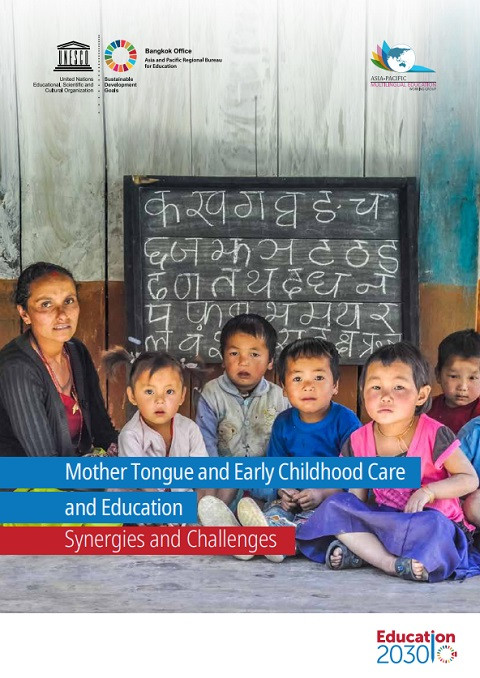 Mother Tongue and Early Childhood Care and Education: Synergies and Challenges Année de publication: 2020 Auteur: Sheldon F. Shaeffer Auteur institutionnel: UNESCO Bangkok Evidence tells us that learning first in one’s MT leads to better outcomes in the future – for individuals, cultures, and nations. But MT is used rarely in ECCE programmes and the early grades of primary school so that many children are forced to learn in a language they poorly understand, and in an environment which neglects and even represses their cultural identity and the language which “carries” it. Evidence also tells us that good quality ECCE programmes enhance the well-being of young children. But many governments spend few resources on ECCE and put very little effort into creating a developmentally and linguistically appropriate curriculum and pedagogy for young pre-school children. The challenge is that while the most disadvantaged children benefit the most from ECCE programmes, these children participate in them the least. Thus, for both cultural and educational reasons, and as a child’s right, ECCE and initial literacy should be provided in a child’s MT, and actions can be taken at both macro- and micro-levels to ensure that this is achieved. In other words, the long and often difficult process of revitalising, maintaining, and further developing endangered languages of indigenous peoples must begin first in families and communities – but then must continue into ECCE programmes and into the wider education system. Without this, indigenous, minority languages and cultures will never thrive – and many will not survive.
 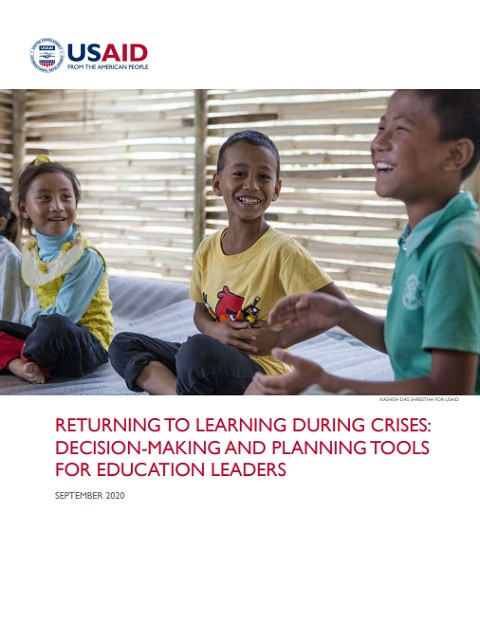 Returning to Learning During Crises: Decision-Making and Planning Tools for Education Leaders Année de publication: 2020 Auteur institutionnel: United States Agency for International Development (USAID) This toolkit is for USAID Mission staff and their partner national and local education officials, implementing partners, and administrators and educators of education institutions. It helps education planners plan and make key decisions on the return to learning during and after education disruptions caused by crises, such as COVID-19, in a way that is equitable, inclusive, and builds the resilience of education systems. To provide timely support to the field, this toolkit includes a first set of tools and identifies several tools that are forthcoming. The toolkit is expected to be updated with the full set of tools in late 2020.
 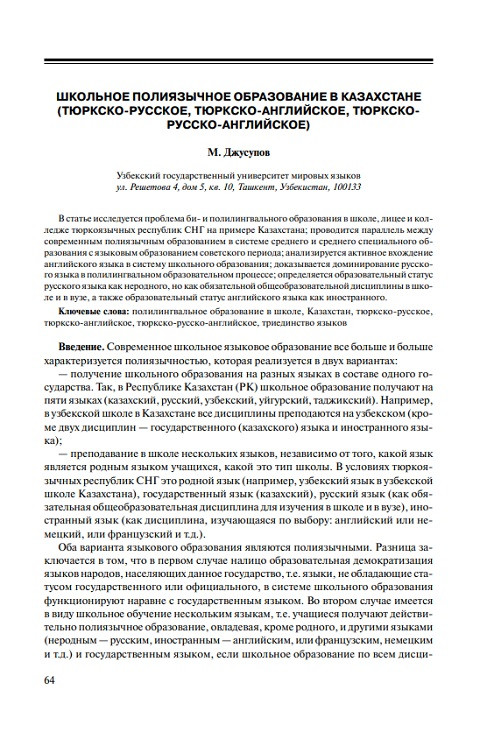 School Polylingual Education in Kazakhstan (Turkic-Russian, Turkic-English, Turkis-Russian-English) Année de publication: 2015 Auteur: Dzhusupov M. This article deals with a problem of bilingual and polylingual education at school, lyceum and college of Turkic Republic of CIS on the illustration of Kazakhstan; it is drawn an analogy (parallel) between modern polylingual education of — Soviet period; active ingress of English language in a system of school polylingual education has been analyzed; the domination of Russian language in polylingual educational process has been proved, it is determined an educational status of Russian language not as adoptive, but as obligatory general subject at school and in the institute of higher education and educational status of English language as foreign, i.e. as an alternative (optional) subject. Школьное полиязычное образование в Казахстане (тюркско-русское, тюркско-английское, тюркско-русско-английское) Année de publication: 2015 Auteur: Dzhusupov M. В статье исследуется проблема би- и полилингвального образования в школе, лицее и колледже тюркоязычных республик СНГ на примере Казахстана; проводится параллель между современным полиязычным образованием в системе среднего и среднего специального образования с языковым образованием советского периода; анализируется активное вхождение английского языка в систему школьного образования; доказывается доминирование русского языка в полилингвальном образовательном процессе; определяется образовательный статус русского языка как неродного, но как обязательной общеобразовательной дисциплины в школе и в вузе, а также образовательный статус английского языка как иностранного.
  Analytical Report on the Rights of People With Disabilities in Central Asia and Azerbaijan Année de publication: 2017 Auteur: Lyazzat Kaltayeva | Nurzhamal Prenova Auteur institutionnel: Civil Society Development Association (ARGO) | United States Agency for International Development (USAID) This analytical report is the culmination of a research study conducted in four countries of Central Asia (Kazakhstan, Kyrgyzstan, Tajikistan, and Turkmenistan) and Azerbaijan in spring 2017. The primary focus of the study was disability rights, which have a direct impact on the quality of life experienced by people with disabilities, and analysis of potential strategies and opportunities for civil society organizations to improve disability rights in target countries.Through the study, the research team followed the latest legislative and policy changes relevant to disability rights, and identified and documented best practices, lessons learned, and key challenges related to the promotion and protection of disability rights in the region. Аналитический доклад в сфере прав людей с инвалидностью стран Центральной Азии и Азербайджана Année de publication: 2017 Auteur: Lyazzat Kaltayeva | Nurzhamal Prenova Auteur institutionnel: Civil Society Development Association (ARGO) | United States Agency for International Development (USAID) Данный аналитический доклад выпущен по результатам экспертного исследования, проведенного в странах ЦА и Азербайджан весной 2017 года. В фокусе исследования - права людей с инвалидностью, которые напрямую влияют на качество жизни людей с инвалидностью и анализ подходов, потенциал и возможности организации гражданского общества для улучшения положения с правами людей с инвалидностью в выбранных странах.Исследование позволило отследить последние изменения в области политики и законодательства по правам людей с инвалидностью, выявить и зафиксировать лучшие практики, уроки и вызовы, связанные с продвижением прав людей с инвалидностью в регионе.
  الهوية والغريية وقضايا التداخل الثقايف : مسار تحول براداميي يف حقل األنرثوبولوجيا Année de publication: 2020 Auteur: Muhammad Yakin يناقش فصل الكتاب فضايا التعدد والتنوع والاختلاف. ويتعرض لمقاربات في التفرد والهوية والتعايش. تروم مساءلة مفهومي الهوية والغيرية وعلاقة أحدهما بالآخر، في هذا المقال، الوقوف عند مظاهر انتقال برادايمي همّ حقول العلوم الاجتماعية عموماً، وحقل الأنثروبولوجيا تحديداً، وذلك في اتجاه ترسيخ أسس نهج «أنثروبولوجيا متعددة المواقع». Identity, Altruism and Cross-Cultural Issues Année de publication: 2020 Auteur: Muhammad Yakin This book chapter discusses issues of diversity, diversity and difference. It is exposed to approaches to individuality, identity and coexistence. In this article, the questioning of the concepts of identity and altruism and the relationship of one to the other seeks to address the manifestations of the transmission of paradigm in the fields of social sciences in general, and the field of anthropology in particular, in the direction of consolidating the foundations of the "multi-site anthropology" approach.
  Elaboración de planes nacionales de acción contra la discriminación racial: Guía práctica Année de publication: 2014 Auteur institutionnel: United Nations (UN) Esta publicación es una guía práctica para la elaboración de planes nacionales de acción contra la discriminación racial. Los planes nacionales de acción son la base para el desarrollo de una política pública integral contra la discriminación racial y por lo tanto pueden ayudar a los Estados a dar cumplimiento a sus obligaciones internacionales de derechos humanos relacionadas con la eliminación de la discriminación racial.