
Ressources
Explorez une large gamme de ressources sur le GCED afin d’approfondir votre compréhension et de renforcer vos activités de recherche, de plaidoyer, d’enseignement et d’apprentissage.
2,193 résultats trouvés
 Smart Education Strategies for Teaching and Learning: Critical Analytical Framework and Case Studies Année de publication: 2022 Auteur: Shafika Isaacs | Sanjaya Mishra Auteur institutionnel: UNESCO Institute for Information Technologies in Education (IITE) | Beijing Normal University This electronic publication about smart education strategies for building the resilience of education and training systems in the postpandemic environment provides a framework to develop appropriate policy and strategy in existing and emerging forms of schooling, higher education, technical and vocational education, and training (TVET), adult education and lifelong learning, including formal, nonformal and informal educational environments. The publication reviews the status of smart education policies in 10 countries. It includes 15 case studies within the six policy themes: infrastructure, curriculum and pedagogy, digital education resources and platforms, skills and competencies, governance, management and administration, and partnership.
  Sub-regional Policy Review on Teachers, Teaching and the Teaching Profession to Accelerate Achieving SDG4 in Southeast Asian Countries Année de publication: 2022 Auteur: Azlina Abdul Aziz | Kamisah Osman | Khairul Farhah Khairuddin | Meeyoung Choi Auteur institutionnel: UNESCO Jakarta The objectives of this report are to analyse existing national policies related to Teachers, Teaching and the Teaching Profession and examine their implementation in the five UNESCO cluster countries, namely Brunei, Indonesia, Malaysia, the Philippines and Timor-Leste. Eight themes have emerged from the systematic review of literature and they are i) Teacher Standard Competence, ii) Teacher professional Development, iii) Teacher Support, iv) Teaching Quality, v) Formative and Summative Assessment Framework on Teaching, vi) Showcasing and Rewarding Best Teaching Practices, vii) Teacher Professionalism and finally viii) Teacher Career Development.
  Languages in adult literacy: policies and practices during the 15 years of EFA (2000-2015) Année de publication: 2015 Auteur: Clinton Robinson Linguistic diversity characterises many countries with large literacy needs. Meeting these needs will require a multilingual approach based on learning initial literacy in the learner’s mother tongue, with other languages used subsequently. This paper identifies five major challenges in implementing multilingual programmes, and traces the international policy developments over the 15 years of the EFA period. Four case studies – Mexico, Morocco, Papua New Guinea and Senegal – illustrate a range of policies, showing differing approaches and levels of commitment in providing literacy acquisition based on the mother tongue. The paper concludes with six policy orientations to guide action as part of the post- 2015 agenda.
  Переосмысление школьного обучения ДЛЯ XXI ВЕКА Состояние образования ради мира, устойчивого развития и глобальной гражданственности в Азии Année de publication: 2017 Auteur institutionnel: Mahatma Gandhi Institute of Education for Peace and Sustainable Development (MGIEP) В публикации «Переосмысление школьного образования в XXI веке: состояние образования в интересах мира, устойчивого развития и в духе глобальной гражданственности в Азии» Института ЮНЕСКО Махатмы Ганди по образованию в интересах мира и устойчивого развития (МГИЭП) обсуждается о необходимости изменения фундаментальных целей школьного образования, включая идеалы образования в интересах устойчивого развития, в духе глобальной гражданственности и мира и (ЦУР 4.7). Кроме того, в исследовании рассматривается разработка сравнительных показателей – так называемые «бенчмарки», позволяющие оценить будущий прогресс в этой области.В этом отчете приняли участие более 60 исследователей из 22 стран Азии и он также основан на анализе ключевой образовательной политики и образовательных стандартов этих стран. Отчет также включает обширный обзор литературы по школьному образованию в Азии. В шестой главе публикации можно найти анализ текущего состояния и вопросов, стоящих по внедрению образования в интересах мира, устойчивого развития и в духе глобальной гражданственности в различных субрегионах Азии, включая Центральной Азии. Во-первых, глава раскрывает реформы в школьном образовании в постсоветской Центральной Азии, которые проводились в целях удовлетворения потребности в быстром создании собственной государственности в странах региона, которые не были готовы к независимости при распаде СССР. Во-вторых, в главе подчеркивается трансформация понимания советского восприятия образования как «общего блага» и его вытеснение, по крайней мере, на уровне политического дискурса, с неустанным акцентом на образование как инструмента развития «человеческих ресурсов» с учетом спроса рынка на компетенции.Глобальное сообщество обязалось достичь целей устойчивого развития (ЦУР), включая ЦУР4 по образованию, к 2030 году. Задача ЦУР4.7 направлена на предоставление учащимся знаний и компетенций, необходимых им для реализации всех целей устойчивого развития. Основное внимание уделяется когнитивным, социально-эмоциональным и поведенческим результатам обучения, которые помогают учащимся решать конкретные задачи, рассматриваемые ЦУР. Поскольку государства-члены Организации Объединенных Наций работают над достижением ЦУР, им предлагается переосмыслить образование для внесения вклада в ЦУР. В то время как ЦУР4.7 обеспечивает необходимую структуру в этом отношении.
  Reconsidering EU Education Assistance to Central Asia (EUCAM Policy Brief No. 37, June 2019) Année de publication: 2019 Auteur: Sebastien Peyrouse Auteur institutionnel: Europe-Central Asia Monitoring (EUCAM) This paper is based on broader research on education in Central Asia that includes interviews with local stakeholders (teachers, parents and students) in Kazakhstan, Kyrgyzstan and Uzbekistan. Some views were taken from Sebastien Peyrouse, ‘How to Strengthen Western Engagement in Central Asia: Spotlight on EU Education Assistance in Uzbekistan’, PONARS Policy Memo, no. 524, April 2018,http://www.ponarseurasia.org/memo/strengthen-western-engagement-central-asia-spotlight-eu-education-assistance-uzbekistan. Новый взгляд на содействие ЕС образовательному сектору в Центральной Азии (Брифинг EUCAM No. 37, сентябрь 2019) Année de publication: 2019 Auteur: Sebastien Peyrouse Auteur institutionnel: Europe-Central Asia Monitoring (EUCAM) Этот брифинг основан на более углубленном исследовании системы образования в Центральной Азии, которое включает интервью в регионе (с учителями, родителями и учащимися) в Казахстане, Кыргызстане и Узбекистане.Ряд выводов позаимствованы из работы Себастьяна Пейруза ‘How to Strengthen Western Engagement in Central Asia: Spotlight on EU Education Assistance in Uzbekistan’, PONARS Policy Memo, no. 524, апрель 2018,http://www.ponarseurasia.org/memo/strengthen-western-engagement-central-asia-spotlight-eu-education-assistance-uzbekistan.
 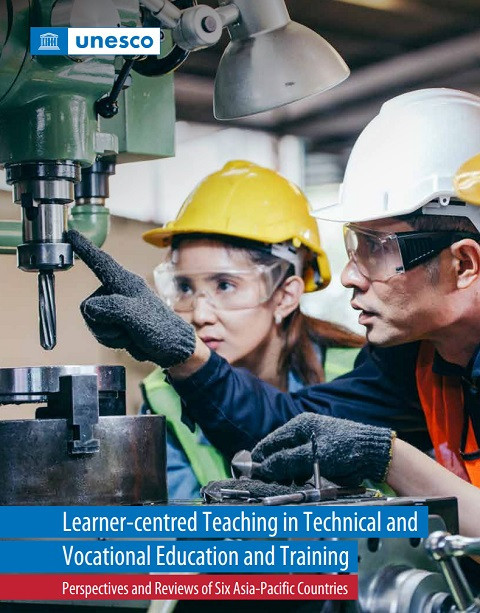 Learner-Centred Teaching in Technical and Vocational Education and Training: Perspectives and Reviews of Six Asia-Pacific Countries Année de publication: 2023 Auteur institutionnel: UNESCO Bangkok Learner-centred Teaching in Technical and Vocational Education and Training: Perspectives and Reviews of Six Asia-Pacific Countries A learner-centred approach to teaching in Technical and Vocational Education and Training (TVET) is based on learner engagement, autonomy and outcome-based activities to support professional development. This report analyses the status of learner-centred TVET teaching in six selected countries across Asia and the Pacific, including China, Republic of Korea, Samoa, Sri Lanka, Thailand, and Uzbekistan. The countries were selected because of their geographic diversity, access to national experts, and potential around learner-centred TVET.The first part of the study is a review of the theoretical background on the learner-centred approach and TVET teaching with an international scope. A total of 25 indicators were used to assess three components of TVET teaching in the region. The analysis includes 17 examples corresponding to the selected indicators. The findings showcase lessons learned and recommendations for countries to self-assess their TVET teaching strategies. These examples will help to inform future projects and capacity building in each sub-region of Asia-Pacific.As a result, seven proposals are identified and discussed to promote the development of learner-centred TVET teaching in the region. These proposals include: 1) supporting national reform of the pedagogy based on the results of pilot projects; 2) increasing two-way communication between students and teachers; 3) producing learning materials adapted to learner-centred methods; 4) using technology in the learning process; 5) implementing competency-based learning to support the learner-centred pedagogy; 6) integrating transversal and core skills; and 7) developing teachers’ capacities by employing a learner-centred approach. These proposals (on reform, teaching method, use of materials, etc.) also address gender dimensions throughout the planning, implementation and review process. Conclusions from the study provide lessons learned as well as proposals for further research and implementation of learner-centred TVET teaching in Asia-Pacific.
  Statement of International Development NGOs of Korea on the Global Fight against COVID-19 Année de publication: 2020 Auteur institutionnel: Korea NGO Council for Overseas Development Cooperation (KCOC) The recent outbreak of COVID-19 has become a global crisis. Since the WHO declared it as a pandemic on March 11, we’ve seen an exponential growth of the numbers of confirmed cases and deaths across the world. No one can predict a peak or duration of the crisis at this point.As the U.S. and European countries with relatively effective healthcare infrastructure are also struggling with the pandemic, the magnitude of damages on developing countries would be unimaginable. It would be extremely difficult for vulnerable states to tackle the crisis by themselves. Now is the time that we forge international solidarity and find solutions together. 국제사회의 코로나19 퇴치를 위한 한국 국제개발협력 시민사회단체들의 호소문 Année de publication: 2020 Auteur institutionnel: Korea NGO Council for Overseas Development Cooperation (KCOC) 코로나19가 전 지구적 위기로 다가왔습니다. 지난 3월 11일 세계보건기구(WHO)가 팬데믹을 선언한 이래, 전 세계 확진자 및 사망자의 수가 기하급수적으로 증가하고 있고, 그 정점이 어디인지, 언제까지 이 사태가 계속될지 누구도 예측하지 못하는 상황입니다.보건 의료 인프라가 잘 갖춰진 미국과 유럽에서조차 팬데믹의 영향이 심각한 상황임을 감안할 때, 향후 개발도상국(이하 개도국)이 받게 될 피해의 정도를 가늠하기 어렵습니다. 취약한 나라일수록 스스로의 노력만으로 현 위기 상황을 타개하기란 매우 어렵기에 우리는 지금부터 국제적으로 연대하고 공동으로 해결방안을 모색해야 합니다. 또한 개도국의 감염예방 및 치료를 돕는 것이 곧 우리의 안전을 지키는 일이며, 필수적이고도 선제적인 예방책이 될 것이라는 점을 기억해야 합니다.
 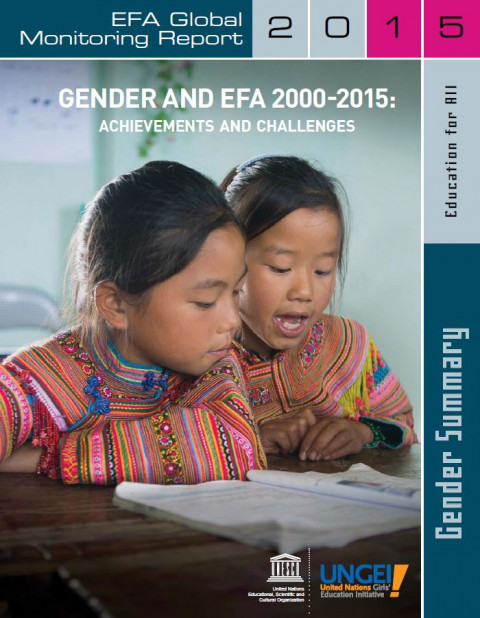 [Summary] Gender and EFA 2000-2015: Achievements and Challenges; EFA Global Monitoring Report 2015; Gender Summary Année de publication: 2015 Auteur institutionnel: Global Education Monitoring Report Team This report describes an array of country efforts, some quite effective, to achieve and go beyond gender parity in education. Many of these policies and programmes focus on the immediate school environment in which girls learn. Others focus on the informal and formal laws, social norms and practices that deny girls their right of access to, and completion of, a full cycle of quality basic education. The analyses and key messages in Gender and EFA 2000–2015: Achievements and Challenges deserve careful scrutiny as the world embarks on a universal, integrated and even more ambitious sustainable development agenda in the years to come.