
Ressources
Explorez une large gamme de ressources sur le GCED afin d’approfondir votre compréhension et de renforcer vos activités de recherche, de plaidoyer, d’enseignement et d’apprentissage.
1,471 résultats trouvés
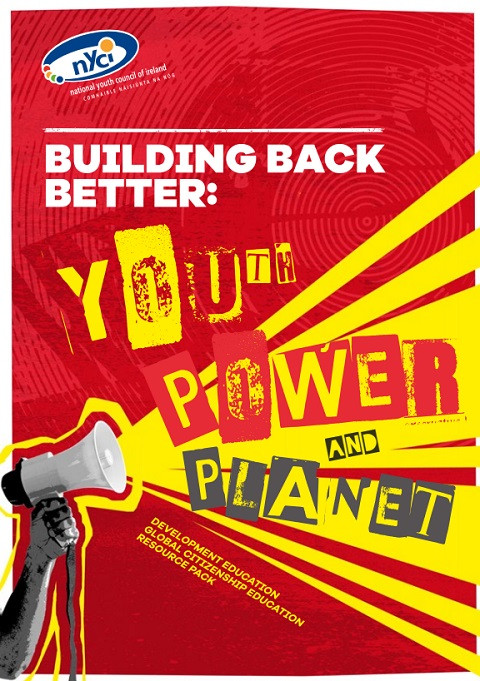 Building Back Better: Youth, Power and Planet Année de publication: 2020 Auteur: Valerie Duffy | Leo Gilmartin | Eva Janssens | Dermot O’Brien Auteur institutionnel: National Youth Council of Ireland (NYCI) Building Back Better: Youth, Power and Planet is about power. The understanding of power in youth work is vitally important for the development of young people as they navigate through their lives and society.The aim of this resource is to support young people and youth workers in understanding power, seeing power, claiming power, and activating power. It includes a wealth of background information on concepts around power and terminology, as well as a guide on ‘How to Use this Resource’, activities, stimulus sheets. This toolkit explores the issue of power and helps you make links to the Sustainable Development Goals.It is designed for global educators, youth workers, development education practitioners, trainers, climate activists, changemakers of all shapes and sizes but in particular those working with the current generation of young people.Building Back Better contains 4 main sections:Section 1. Defining PowerSection 2. Seeing PowerSection 3. Claiming PowerSection 4. Activating PowerIt also contains:an introduction to power in theory and in practice 10 activities with interactive exercisesaction power templates for planningstriking visuals, case studies on human development for adapting This was resource was created by the NYCI Youth 2030 programme.
  Including Education in the Pact for the Future: An SDG 4 Youth & Student Network Contribution Année de publication: 2024 Auteur: Laeek Siddiqui | Juliette Gudknecht | Daniela Moreno Farfán | Azkha Mikdhar Auteur institutionnel: SDG 4 Youth & Student Network | UNESCO Inclusion is the promise towards a fair and equitable education for all. It is critical to ensuring that every youth and student succeeds. Highlighted by UNESCO in the 2020 Global Education Monitoring Report, striving towards inclusive education is non-negotiable, as education is a human right. With the current challenges of our world highlighted in the 2030 Agenda, specifically in the areas of poverty, armed conflict and digital transformation, inclusion must be an essential imperative in all policies. The Summit of the Future (SOTF) convenes on the 22 to 23 of September at the United Nations Headquarters in New York, United States. One of its outcomes, if inter-governmentally agreed-upon, would be the Pact for the Future. The Pact is action-oriented, including a chapeau followed by 5 chapters: 1) sustainable development and financing for development; 2) international peace and security; 3) science, technology and innovation and digital cooperation; 4) youth and future generations; and 5) transforming global governance. Along with the Pact are two annexures: the Global Digital Compact and the Declaration on Future Generations. This document introduces the advocacy of the SDG 4 Youth & Student Network – a network hosted by the United Nations Educational, Scientific and Cultural Organization (UNESCO) as the Global Education Cooperation Mechanisms Inter-Agency Secretariat – for inclusive and equitable education at the SOTF, to uphold peace, sustainable development, youth and future generations. It is essential to #IncludeEducation in the Pact and the outcomes of the SOTF for our #InclusiveFuture, to ensure that no one is left behind. It brings attention to how education is essential to global cooperation and empowering future generations, calling upon you to join us in supporting inclusive education systems, with the Global Education Meeting convened by UNESCO side by side with the G20 meeting on 31 October and 1 November 2024 in Fortaleza, Brazil.
 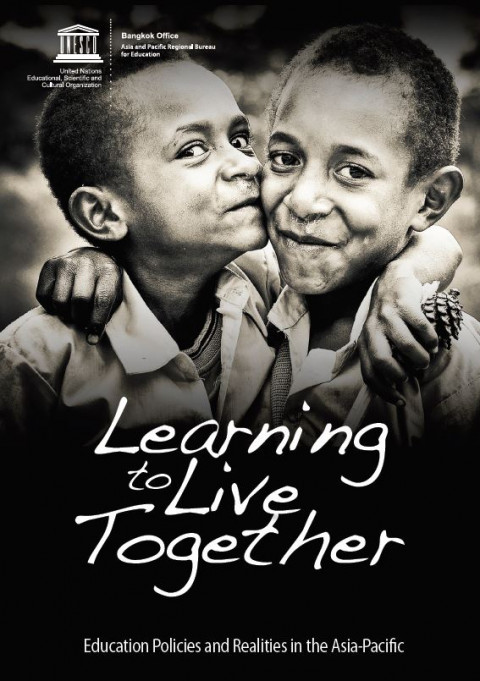 Learning to live together Année de publication: 2014 Auteur institutionnel: UNESCO Bangkok The importance of LTLT has increased in recent years. Indeed, relevant competencies appear to be gaining focus in international frameworks and educational initiatives across countries. This is all the more necessary as Voogt and Roblin (2012) argue, given the demands of our increasingly knowledge-based society in which “ideas and knowledge function as commodities” (p. 299 –300) and to which effective social and emotional skills are critical. It is perhaps all the more critical given the multivariate global challenges in the 21st Century and the need for unified global commitment to effectively combat these challenges. In this context, the significance of LTLT is reflected in both the rise of and growing interest in Global Citizenship Education (GCE), Education for Sustainable Development (ESD), Education for International Understanding (EIU) as well as peace and human rights education. The UN Secretary-General’s Global Education First Initiative, which lists ‘Fostering Global Citizenship’ as one of its three global priorities, also implicitly recognizes the significance of LTLT as a precursor to the building of a more peaceful society, one in which discrimination is intolerable and common challenges such as climate change and abject poverty are tackled together.Yet despite the significance of LTLT in the 21st Century, and despite numerous international initiatives to foster LTLT competencies, there is a large gap of evidence identifying how this supposition is translated into effective policy and curricula, and eventually into the reality of schools, teachers and learners. This report is a response to this gap, and attempts to understand how ten selected countries in the Asia-Pacific region – Afghanistan, Australia, Indonesia, Malaysia, Myanmar, Nepal, The Philippines, Republic of Korea, Sri Lanka and Thailand – have reflected and integrated LTLT into their education policies and initiatives. This variety of countries aims to reflect their diverse experiences in terms of reflecting LTLT through their education systems. By exploring a number of areas, namely policy, curricula, teachers and assessment, this study aims to identify what has so far been achieved in education systems of the Asia-Pacific region in the area of LTLT.This report is therefore targeted predominantly at education policy makers, researchers, academics as well as education practitioners of the Asia-Pacific region. Given its connection to Global Citizenship Education and other relevant international initiatives around sustainability and peace education, this report is also relevant to UNESCO’s partner organizations and the broader educational development community.This report will first present the research framework for the study, before exploring the social and economic contexts in the ten selected countries and wider regional factors in the Asia-Pacific in relation to global challenges in Chapter Two. Chapter Three will then examine national policy frameworks, including the vision of those policies in defining LTLT in education. Chapter Four focuses on the national curriculum in selected countries and the extent to which they incorporate learning objectives, subjects, and extra-curricular activities reflecting the concept of LTLT and related skills and competencies. In Chapter Five, teaching practices are examined, including the role of teachers and teacher education, as well as teaching methods and application of media and information literacy (MIL) in the classroom. Chapter Six then looks at assessment, and how far countries have attempted to develop assessment frameworks that measure the skills and competencies related to LTLT. Finally, Chapter Seven provides reflections and conclusions based on the main findings of the study, while also identifying trends across policy domains, shortcomings and some policy considerations.
  Education for developing a global Omani citizen: current practices and challenges Année de publication: 2014 Auteur: Saif Al-Maamari Auteur institutionnel: Redfame Publishing Oman is a developing country which reformed its educational system in 1998 in order to meet the challenges of the 21st century, especially economic challenges. Strength of national identity and developing a sense of global citizenship were among the priorities of the new educational reform. This paper is based on a review of current practices regarding global citizenship education in educational system. The purpose of this theoretical study was to explore the current provision of the aspects of global citizenship education in Omani schools. Specifically, the study attempts to identify the current practices that are implemented by Omani schools to help Omani students to develop a sense of effective global citizenship. The study indicates that Omani education is not nationally centered as it aims to develop students who have global awareness. The study shows employing different approaches to develop a sense of global citizenship, namely, a separate school subject; integrated theme in social studies education, participation in some international initiatives in global citizenship education, and celebrating the international days and decades. L'éducation pour le Développement d'ONU Citoyen Omanais Mondiale: Pratiques et Défis Actuels Année de publication: 2014 Auteur: Saif Al-Maamari Auteur institutionnel: Redfame Publishing Oman est un pays en développement qui a réformé son système éducatif en 1998 dans le but de relever les défis du 21e siècle, en particulier les défis économiques. Force de l'identité nationale et de développer un sentiment de citoyenneté mondiale étaient parmi les priorités de la nouvelle réforme de l'éducation. Cet article est basé sur un examen des pratiques actuelles concernant L'éducation à la citoyenneté Mondiale (ECM) dans le système éducatif. Le but de cette étude théorique était d'explorer la disposition actuelle des aspects de L'éducation à la citoyenneté Mondiale (ECM) dans les écoles omanaises. Plus précisément, l'étude tente d'identifier les pratiques actuelles qui sont mises en œuvre par les écoles omanaises pour aider les étudiants omanais à développer un sentiment de citoyenneté mondiale efficace. L'étude indique que l'éducation omanaise est pas centrée à l'échelle nationale car elle vise à développer chez les élèves qui ont la conscience globale. L'étude montre en utilisant différentes approches pour développer le sens de la citoyenneté mondiale, à savoir, un sujet d'écoles séparées; thème intégré dans l'enseignement des études sociales, la participation à des initiatives internationales en matière d'éducation à la citoyenneté mondiale, et célébrant les jours et les décennies internationales. Global education in Austria Auteur institutionnel: North-South Centre of the Council of Europe This National Report on Global Education in Austria is part of the European Global Education Peer Review Process, which was initiated in 2002 with the purpose of increasing and improving global education in Council of Europe member states. This report is the culmination of a peer review process led by an international peer review team. Through research and interviews with key stakeholders, information was gathered and critical perspectives developed about the current state of, and the future prospects for, global education in Austria. This year–long process, facilitated by the North-South Centre of the Council of Europe, was developed in partnership with the Austrian Strategy Group for Global Education as the national counterpart in the process. It involved the Ministry of Foreign Affairs, the Ministry of Education, the Austrian Development Agency (ADA), KommEnt, and the NGO and academic communities.This Peer Review report recognises the relatively strong tradition of global education in Austria. Austrian support for GE is reflected in the range of committed organisations involved in GE, and the many initiatives and projects in the formal and non-formal education sectors, and in civil society. Chapter 1 below provides an introduction to the report and the process generally. Chapter 2 outlines the context of global education in Austria. Chapter 3 examines global education in the formal education sector. Chapter 4 focuses on the important and varied work taking place in non-formal education, civil society organisations and other sectors in this field. Chapter 5 provides, in summary fashion, an outline of the key observations and recommendations of the Peer Review. Global citizenship curriculum in higher education: evolving policy and practice and a future research agenda; proceedings of a symposium held on 9-10 December 2013 in Hong Kong Année de publication: 2013 Auteur institutionnel: Bath Spa University | General Education Centre (Hong Kong) | Polytechnic University This symposium was an outgrowth of a UK Economic and Social Research Council (ESRC) funded International Networking Project. A collaboration between academics in the United Kingdom/Europe, North America, and Asia, this project responds to the fact that there is an increasing interest in understanding how universities can educate students to become more engaged and globally-minded citizens. The premise is that higher education should contribute to the public good by training more global citizens with cultural awareness, a strong sense of civic responsibility and skills to participate in a knowledge-based global economy. The following report documents the symposium proceedings, summarises the presentations and provides key insights drawn from presentations. Comments made by individuals are paraphrased and/or synthesized. Programme de Citoyenneté Mondiale dans l'enseignement supérieur: la politique et la pratique en évolution et un futur programme de recherche; actes d'un colloque tenu les 9-10 Décembre 2013 à Hong Kong Année de publication: 2013 Auteur institutionnel: Bath Spa University | General Education Centre (Hong Kong) | Polytechnic University Ce symposium était une excroissance du Conseil de la recherche économique et sociale du Royaume-Uni (en. ESRC) financé Projet international de réseautage. Une collaboration entre les universitaires au Royaume-Uni / Europe, Amérique du Nord, et en Asie, ce projet répond au fait qu'il ya un intérêt croissant pour comprendre comment les universités peuvent éduquer les élèves à devenir des citoyens plus engagés et ouverts sur le monde. La prémisse est que l'enseignement supérieur doit contribuer au bien public par la formation des citoyens plus globales avec la conscience culturelle, un fort sentiment de responsabilité et les compétences civiques de participer à une économie mondiale fondée sur le savoir. Le rapport suivant documente les actes du colloque, résume les présentations et fournit des informations clés tirées des présentations. Commentaires formulés par les individus sont paraphrasés et / ou synthétisés.
  Communication Strategy and Addressing the Phenomenon of Child Abduction in Algeria Année de publication: 2023 Auteur: Saeed Abdul Razzaq The study aimed to identify the role of the communication strategy in treating one of the communication strategy of the General Directorate of National Security in the process of protecting children, and the role of various communication tools and activities in treating and reducing the phenomenon of abduction of children in Algeria . We found that the communication strategy of the Directorate General of National Security plays an important role in the process of reducing the risk of child abduction in Algeria through the preventive communication strategy aimed at protecting children from abduction. الاستراتيجية الاتصالية ومعالجة ظاهرة اختطاف الأطفال في الجزائر Année de publication: 2023 Auteur: Saeed Abdul Razzaq هدفت الدراسة إلى معرفة دور الاستراتيجية الاتصالية في معالجة احدى الظواهر الاجتماعية المتمثلة في ظاهرة اختطاف الأطفال في الجزائر، من خلال عرض الاستراتيجية الاتصالية الخاصة بالمديرية العامة للأمن الوطني في عملية حماية الأطفال، ودور الوسائل والأنشطة الاتصالية المختلفة في معالجة والحد من ظاهرة اختطاف الأطفال في الجزائر. وقد وتوصلنا من خلال دراستنا أن للاستراتيجية الاتصالية للمديرية العامة للأمن الوطني دور مهم في عملية الحد من خطورة ظاهرة اختطاف الأطفال في الجزائر عبر الاستراتيجية الاتصالية الوقائية التي تهدف لحماية الأطفال من الاختطاف.