
Ressources
Explorez une large gamme de ressources sur le GCED afin d’approfondir votre compréhension et de renforcer vos activités de recherche, de plaidoyer, d’enseignement et d’apprentissage.
3,401 résultats trouvés
 Fostering national and global citizenship: an example from South Africa (Social Studies and the Young Learner, vol 21, no. 1, september/october 2008) Année de publication: 2008 Auteur: Omiunota Nelly Ukpokodu Auteur institutionnel: National Council for the Social Studies Multicultural and global scholars urge that we prepare the young for national and global democratic citizenship given the increasing interdependence and challenging realities for today. Young people desire to be a part of the solution to global problems, but they must be educated about what those problems are and how solutions can be arrived at. As has been seen in the U.S. presidential campaign, young people care about their communities, country, and planet, and they are volunteering and voting at record rates. We must take responsibility to plant the seeds of critical citizenship if we are to foster a more sustainable, peaceful, just, and prosperous world. Educator Sheldon Berman sums it up by writing: It is important for teachers to tell young people about the success stories of others, students who have reclaimed forests, cleaned up rivers, improved their school environment, helped the homeless. They need to hear about the Mother Teresas and the Martin Luther Kings, of course, but also about the people who live down the street who are doing what they can to improve the neighbourhood and about the many organizations that make a difference in our communities. We must put students in touch with these people and organizations so that they can see how deeply people care about their world and how worthwhile it is to participate in creating change.
  Action on Global Citizenship: Teacher Toolkit Année de publication: 2017 Auteur: Gráinne Ryan | Deirdre Walsh Auteur institutionnel: Global Action Plan (GAP) Ireland | Irish Aid This toolkit aims to support educators to empower their students in becoming active global citizens in their schools and communities, with a range of activities and resources which align to the Irish Curriculum, whilst using active learning methodologies in an engaging and fun way.
  A How-to Guide to Global Citizenship Education: Teacher Handbook Année de publication: 2019 Auteur institutionnel: WorldWise Global Schools (WWGS) | Irish Aid This guide is for post-primary schools that are working to embed Global Citizenship Education (GCE) into their school community, and are part of the WorldWise Global Schools (WWGS) Programme. It aims to support schools to integrate Global Citizenship Education and create global citizens in their schools. Whether you are just starting to explore, or you are experienced in Global Citizenship Education, this handbook will help to guide your GCE practice and offer some suggestions as to how you can approach your GCE work and engage with the WWGS programme.
  Report on the Social Monitoring of the Legislation and Law Enforcement Practices of the Local Police Service in the Area of Preventing Domestic Violence in the Republic of Kazakhstan Année de publication: 2017 Auteur: S.V. Korneytchuk | N.S. Gladyr Auteur institutionnel: OSCE. Programme Office in Astana This monitoring focuses on evaluating and forecasting the legislation by means of identifying contradictions in the legislation, obsolete, corruption-generating and ineffectively implemented statutes, as well as the drafting of proposals on improving the legislation and mechanisms of its implementation by units of the local police service. This edition was published with the financial support of the OSCE Programme Office in Nur-Sultan as part of the project entitled “Social Monitoring of the Legislation and Law Enforcement Practices of the Local Police Service in the Area of Preventing Domestic Violence in the Republic of Kazakhstan”.
  Контроль или партнерство? Année de publication: 2020 Auteur: Dilmurod Yusupov | Oybek Isakov Чрезмерная зарегулированность негосударственного некоммерческого сектора, сохранение множества бюрократических барьеров и преобладание функций контроля над развитием равноправного социального партнерства препятствуют развитию гражданского общества в Узбекистане, считают авторы статьи.
 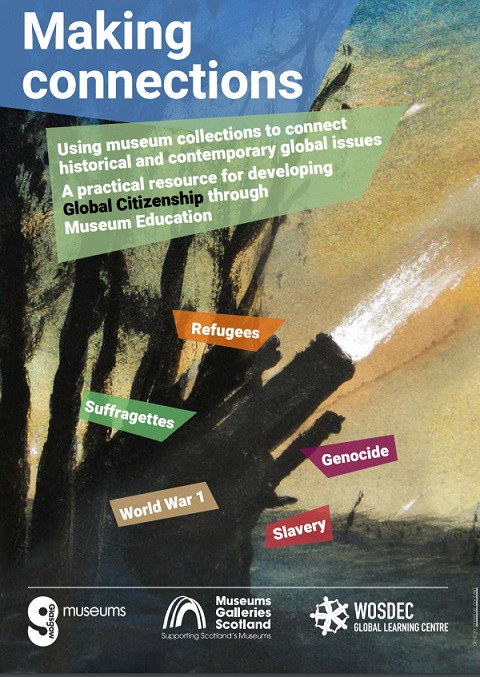 Making Connections: Using Museum Collections to Connect Historical and Contemporary Global Issues; A Practical Resource for Developing Global Citizenship through Museum Education Année de publication: 2019 Auteur institutionnel: Glasgow Museums | Museums Galleries Scotland | West of Scotland Development Education Centre (WOSDEC) Looking at Refugees, Genocide, World War I, Suffragettes and Slavery, this is a practical resource to support educators to connect historical and contemporary global issues and develop the skills, values and attitudes of Global Citizenship through museum collections. The tasks and activities contained within this resource are aimed at providing ideas for museum educators and can work either in a gallery or classroom setting. Many of the techniques and approaches are transferrable to a range of different themes and collections. Control or Partnership? Année de publication: 2020 Auteur: Dilmurod Yusupov | Oybek Isakov Excessive regulation of the non-governmental non-profit sector, the preservation of many bureaucratic barriers and the predominance of the functions of control over the development of equal social partnership hinder the development of civil society in Uzbekistan, the authors of the article say. What parents want: the role of schools in teaching about the wider world Année de publication: 2011 Auteur institutionnel: Think Global | Development Education Association This report presents the findings from a YouGov survey of parents’ attitudes towards their children’s education. The results show that parents of schoolage children think it is vital that schools teach about the wider world. At Think Global we know that many schools and teachers already prioritise such teaching, recognising how important it is to prepare their pupils to live in a globalised world and the positive contribution this can make to pupil attainment and behaviour. This report details the high level of support for schools that decide to prioritise this work; we hope it will provide schools and teachers with the information they need to expand this area of their teaching. Ce que les parents veulent: le rôle des écoles dans l'enseignement sur le monde plus large Année de publication: 2011 Auteur institutionnel: Think Global | Development Education Association Ce rapport présente les résultats d'un sondage YouGov des attitudes des parents envers l'éducation de leurs enfants. Les résultats montrent que les parents d'enfants pensent âge scolaire, il est essentiel que les écoles enseignent sur le reste du monde. A Think Global, nous savons que beaucoup d'écoles et les enseignants accordent déjà la priorité de cet enseignement, en reconnaissant combien il est important de préparer leurs élèves à vivre dans un monde globalisé et la contribution positive cela peut faire à élève le niveau et le comportement. Ce rapport détaille le niveau élevé de soutien pour les écoles qui décident de la priorité à ce travail; nous espérons qu'elle fournira aux écoles et aux enseignants les informations dont ils ont besoin pour développer ce domaine de leur enseignement.
 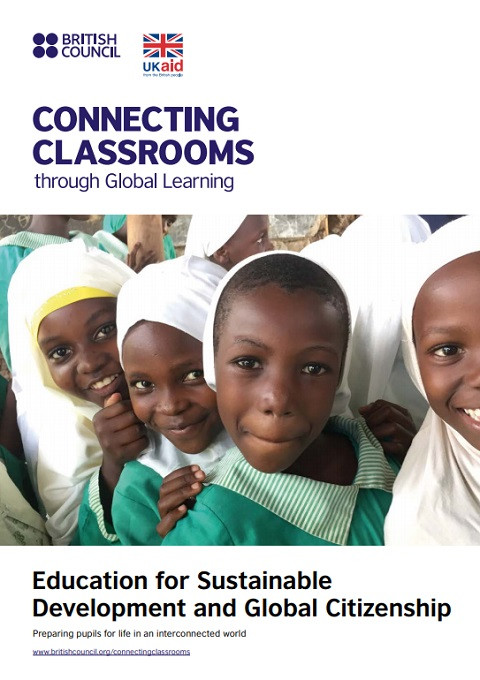 Connecting Classrooms through Global Learning: Education for Sustainable Development and Global Citizenship; Preparing Pupils for Life in an Interconnected World Année de publication: 2020 Auteur institutionnel: British Council | UK aid This resource contributes to the development of pupils’ core skills, enabling them to think critically, to consider how to resolve problems, to take informed and reflective action and to develop personal leadership skills. During the course, pupils will analyse global issues, and will plan, implement and evaluate action. This course can be linked to a variety of curriculum areas, including English, Social Studies, Geography, Modern Foreign Languages, Maths, History and Art and Design. It can be used with or without an overseas partner school.