
Ressources
Explorez une large gamme de ressources sur le GCED afin d’approfondir votre compréhension et de renforcer vos activités de recherche, de plaidoyer, d’enseignement et d’apprentissage.
1,725 résultats trouvés
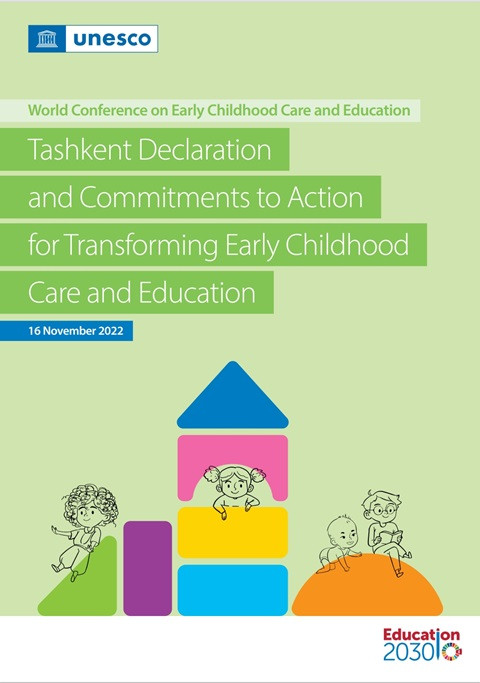 Всемирная конференция по воспитанию и образованию детей младшего возраста. Ташкентская декларация и обязательства по принятию мер в интересах преобразования воспитания и образования детей младшего возраста. 16 ноября 2022 года Année de publication: 2022 Auteur institutionnel: Организация Объединенных Наций по вопросам образования, науки и культуры (UNESCO) С 14 по 16 ноября 2022 года в Ташкенте, Узбекистан, прошла вторая Всемирная конференция по воспитанию и образованию детей младшего возраста. Более 2600 участников конференции из 147 государств-членов, включая министров, партнеров по развитию, практиков, ученых, представителей гражданского общества и частных организаций, собрались вместе, чтобы подтвердить право каждого маленького ребенка на качественное развитие, уход и образование в раннем детстве. В Ташкентской декларации и обязательствах к действиям по преобразованию воспитания и образования детей младшего возраста (ВОДМ) изложены руководящие принципы и стратегии срочного преобразования ВОДМ для ускорения достижения задачи 2 ЦУР 4, а также конкретные действия для государств-членов, международного сообщества, неправительственных организаций и ЮНЕСКО, подлежащие регулярному мониторингу, обзору и оценке. 世界幼儿保育和教育大会: 塔什干宣言及变革幼儿保育和教育行动承诺 2022年11月16日 Année de publication: 2022 Auteur institutionnel: 联合国教科文组织 (UNESCO) 2022年11月14日至16日,第二届世界幼儿保育和教育大会在乌兹别克斯坦塔 什干举行。来自147个成员国的2600多名与会者,包括部长、发展伙伴、从 业人员、科学家、民间社会和私营组织,汇聚一堂,重申每个幼儿都拥有获 得高质量的幼儿发展、保育和教育的权利。《塔什干宣言和变革幼儿保育和教育行动承诺》提出了为加速实现可持续发 展目标4.2而紧急变革幼儿保育和教育的指导原则和战略,以及会员国、国 际社会、非政府组织和教科文组织应定期监测、审查和评价的具体行动。
  UNESCO Futures of Education Report Explained by Members of the International Commission Année de publication: 2022 Auteur institutionnel: UNESCO Initiated by UNESCO, the International Commission on the Futures of Education has prepared a new report on how education can best shape the future of humanity and the planet. In this video, members of the Commission and its chair explain the main recommendations and defining features of their report, Reimagining our futures together: A new social contract for education. The report is part of UNESCO’s Futures of Education initiative which aims to rethink education and shape the future. The initiative is catalyzing a global debate on how knowledge, education and learning need to be reimagined in a world of increasing complexity, uncertainty, and precarity.
  Green School Quality Standard: Greening Every Learning Environment Année de publication: 2024 Auteur institutionnel: UNESCO Climate change threatens our planet and future. Schools and other learning institutions are central places for accelerating climate action among learners and local communities. By empowering teachers and students to understand climate change in their own context contribute to making societies more sustainable and climate resilient. This publication provides for the first time ever a quality standard for greening schools and other learning environments. It outlines four core areas for integrating sustainability principles and climate action: 1) school governance, 2) facilities and operation, 3) teaching and learning, and 4) community engagement. Through the Greening Education Partnership, this standard establishes a common language for all stakeholders to jointly reach the global target of greening at least 50% of schools in all countries by 2030. Policy-makers and ministries in charge of education accreditation schemes, as well as educators, learners and communities are encouraged to use the green school quality standard and join the climate-ready school movement to ensure that every learner is equipped to address climate challenges.
 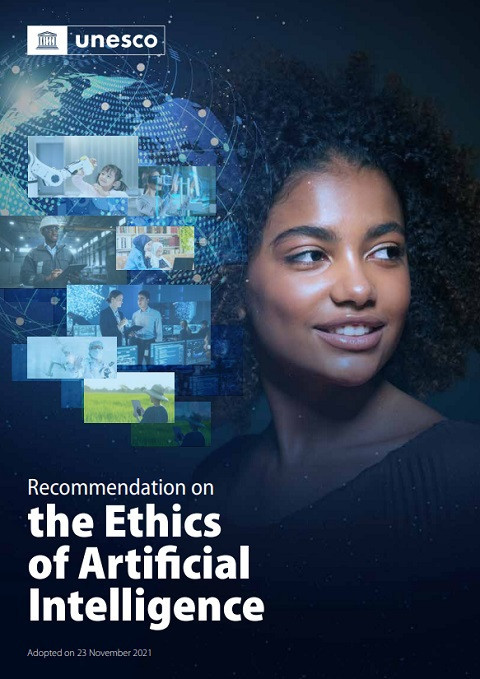 Recommendation on the Ethics of Artificial Intelligence Année de publication: 2022 Auteur institutionnel: UNESCO This Recommendation addresses ethical issues related to the domain of Artificial Intelligence to the extent that they are within UNESCO’s mandate. The protection of human rights and dignity is the cornerstone of this Recommendation. It is based on the advancement of fundamental principles such as transparency and fairness, and remembers the importance of human oversight of AI systems. However, what makes the Recommendation exceptionally applicable are its extensive Policy Action Areas, which allow policymakers to translate the core values and principles into action with respect to data governance, environment and ecosystems, gender, education and research, and health and social wellbeing, among many other spheres.
  Recomendación sobre la ética de la inteligencia artificial Année de publication: 2022 Auteur institutionnel: UNESCO La presente Recomendación trata de las cuestiones éticas relacionadas con el ámbito de la inteligencia artificial en la medida en que competen al mandato de la UNESCO. Aborda la ética de la IA como una reflexión normativa sistemática, basada en un marco integral, global, multicultural y evolutivo de valores, principios y acciones interdependientes, que puede guiar a las sociedades a la hora de afrontar de manera responsable los efectos conocidos y desconocidos de las tecnologías de la IA en los seres humanos, las sociedades y el medio ambiente y los ecosistemas, y les ofrece una base para aceptar o rechazar las tecnologías de la IA. Considera la ética como una base dinámica para la evaluación y la orientación normativas de las tecnologías de la IA, tomando como referencia la dignidad humana, el bienestar y la prevención de daños y apoyándose en la ética de la ciencia y la tecnología.
  Recommandation sur l’éthique de l’intelligence artificielle Année de publication: 2022 Auteur institutionnel: UNESCO La présente Recommandation traite des questions éthiques soulevées dans le domaine de l’intelligence artificielle, dans la mesure où celles-ci relèvent du mandat de l’UNESCO. Elle aborde l’éthique de l’IA en tant que réflexion normative systématique, basée sur un cadre global, détaillé, multiculturel et évolutif de valeurs, de principes et d’actions interdépendants de nature à orienter les sociétés pour qu’elles apportent des réponses responsables aux conséquences connues et inconnues des impacts des technologies de l’IA sur les êtres humains, les sociétés, l’environnement et les écosystèmes, et leur offre une base pour accepter ou rejeter les technologies de l’IA. Elle considère l’éthique comme une base dynamique pour l’évaluation et l’orientation normatives des technologies de l’IA, en faisant de la dignité humaine, du bien-être et de la prévention des dommages des repères et en s’appuyant sur l’éthique des sciences et des technologies.
  人工智能伦理问题建议书 Année de publication: 2022 Auteur institutionnel: UNESCO 本建议书述及与人工智能领域有关且属于教科文组织职责范围之内的伦理问题。建议书以能指导社会负责任地应对人工智能技术对人类、社会、环境和生态系统产生的已知和未知影响并相互依存的价值观、原则和行动构成的不断发展的整体、全面和多元文化框架为基础,将人工智能伦理作为一种系统性规范考量,并为社会接受或拒绝人工智能技术提供依据。建议书将伦理视为对人工智能技术进行规范性评估和指导的动态基础,以人的尊严、福祉和防止损害为导向,并立足于科技伦理。
  Mapping Cultural Policies in Small Island Developing States: Amplifying SIDS Voices in the Global Policy Dialogue on Culture and Sustainable Development Année de publication: 2025 Auteur institutionnel: UNESCO Mapping Cultural Policies in Small Island Developing StatesSpanning three sub-regions – the Atlantic, Indian Ocean and South China Sea (AIS), the Caribbean, and the Pacific – the Small Island Developing States (SIDS) represent 39 UNESCO Member States and 9 Associate Members. Countries and regional organizations have increasingly demonstrated their commitment in the context of fast-evolving policy landscape and cultural ecosystems, encompassing the different dimensions of culture through its diversity and a wide spectrum of concerned stakeholders. Today, a SIDS-specific, culture-led development vision is on the rise.Culture has a multifaceted impact on sustainable development pathways of the SIDS, from climate action, biodiversity protection and food security to economic diversification, social inclusion, gender equality or urban sustainability. The voices and aspirations of SIDS must be heard in the global policy dialogue, in acknowledgement of their priorities, opportunities and insights. International cooperation efforts by UNESCO and other organizations are also essential in identifying areas for future policy investment and adaptation at the national and regional levels.Following the UNESCO World Conference on Cultural Policies and Sustainable Development – MONDIACULT 2022, SIDS are championing culture for sustainable development towards the adoption of a new Programme of Action, the Antigua and Barbuda Agenda for SIDS 2024-2034.
 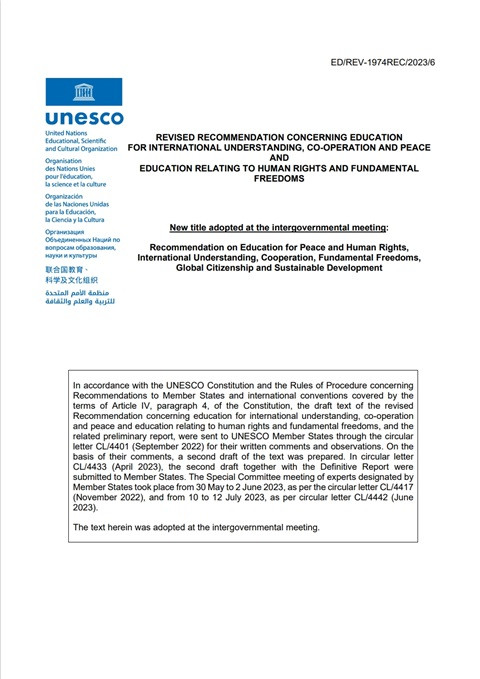 Recommendation on Education for Peace and Human Rights, International Understanding, Cooperation, Fundamental Freedoms, Global Citizenship and Sustainable Development Année de publication: 2023 Auteur institutionnel: UNESCO Building more peaceful, just, and sustainable societies starts with education. It influences all aspects of our daily lives and our overall prospects while being impacted by our health and environment. In the global landscape of worsening climate change, democratic backsliding, persistent inequalities, rising discrimination, hate speech, violence and conflict, it can be a tool to address and prevent these problems in the future. And it can also be a long-term investment with increasing returns if shaped and deployed effectively. The new UNESCO Recommendation on Education for Peace and Human Rights, International Understanding, Cooperation, Fundamental Freedoms, Global Citizenship and Sustainable Development, which is commonly referred to as the Recommendation on Education for Peace, Human Rights and Sustainable Development is a landmark guidance document that defines what needs to evolve in and through education to accomplish these goals.