
Ressources
Explorez une large gamme de ressources sur le GCED afin d’approfondir votre compréhension et de renforcer vos activités de recherche, de plaidoyer, d’enseignement et d’apprentissage.
3,777 résultats trouvés
 PREVENT: creating “radicals” to strengthen anti-Muslim narratives Année de publication: 2015 Auteur: Asim Qureshi Auteur institutionnel: Critical Studies on Terrorism The use of de-radicalization narratives in schools, universities and hospitals has led to the criminalization of large sections of the various Muslim communities in the UK. Based on different experiences we hope to present a view of how an aggressive anti-Muslim narrative that is based on assumptions subverts the political expression/identity of individuals by turning them into potential threats. By understanding the everyday interactions with PREVENT, a picture can be formed of the way that a false presentation of narratives can lead to a person becoming an “extremist” or “terrorist”, while the truth may lie in a completely alternative place. PREVENT: creating “radicals” to strengthen anti-Muslim narratives Année de publication: 2015 Auteur: Asim Qureshi Auteur institutionnel: Critical Studies on Terrorism L'utilisation des récits de déradicalisation dans les écoles, les universités et les hôpitaux a conduit à la criminalisation d’une fraction importante des différentes communautés musulmanes au Royaume-Uni. En se basant sur des expériences différentes, nous espérons montrer comment un récit agressif antimusulman qui se fonde sur des hypothèses bouleverse les opinions /l’identité des individus et les transforment en des menaces potentielles. Chercher à comprendre comment se font les interactions quotidiennes avec PREVENT permet de saisir comment une présentation erronée des récits de vie peut conduire à présenter une personne comme un « extrémiste » ou un « terroriste », alors que la réalité est tout à fait différente.
 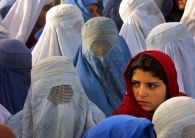 Women’s Education: Promoting Development, Countering Radicalism Année de publication: 2014 Auteur: Hedieh Mirahmadi Auteur institutionnel: World Organization for Resource Development and Education (WORDE) Increasing access to quality secular education can create better jobs for women and reduce some of the economic drivers of radicalization. Educated women can in turn play a pivotal role in inoculating their children and communities against the radical narratives used to recruit followers. Women’s Education: Promoting Development, Countering Radicalism Année de publication: 2014 Auteur: Hedieh Mirahmadi Auteur institutionnel: World Organization for Resource Development and Education (WORDE) Améliorer l'accès à une éducation laïque de qualité peut contribuer à la création de meilleurs emplois pour les femmes et réduire certains facteurs économiques de la radicalisation. Les femmes éduquées peuvent à leur tour jouer un rôle essentiel en protégeant leurs enfants et les communautés contre les récits radicaux utilisés pour recruter des adeptes.
  It's about us!: reflections on education for active citizenship within the European Union Année de publication: 2013 Auteur: Milana Marcella, Tarozzi Massimiliano The article is structured in three main parts. Grounded in the scientific literature, the authors unpack the notion of citizenship as key educational concept based on multiple and diverse identities. Then, they outline the major steps undertaken at EU level to formalise and expand citizenship rights and to endorse citizenship education across the Union’s nationals, by showing that citizenship education is promoted more as a strategy for legitimising the Union rather than a participatory practice aimed at fostering democratic processes within Europe. Finally, they discuss the implications of these policy advancements from a social justice perspective, by advancing a critique of their political assumptions and, to some extent, the pedagogical approach they suggest.
  Global Citizenship Education in Canada and the U.S.: From Nation-Centric Multiculturalism to Youth Engagement Année de publication: 2020 Auteur: Sarah Ranco | Alexis Gilmer | Colleen Loomis Auteur institutionnel: Cham Springer This chapter examines the historical and current uses of global citizenship education (GCE) in Canada and the U.S. in public schools from primary through secondary levels, with attention to Canada as well as similarities and differences within and across the two countries. The authors assess how social and political contexts have influenced the definition and operationalization of multiculturalism, civic studies, and global studies in curricula, noting that the neo-liberal perspective has focused on making people an economic powerhouse rather than socially concerned global citizens. In their examination of educational approaches that relate to GCE, the authors present decolonizing pedagogies, the multiculturalism approach in Canada, as well as culturally responsive and anti-racist pedagogies. To illustrate these issues, the authors offer an example in the Canadian context and raise the need to prevent GCE from becoming yet another tool for hegemony by the Global North on the Global South, as dominant groups have long defined citizenship. They conclude by proposing that to realize GCE in these two countries, teacher/practitioner and local, national, and international actors must engage youth, and in doing so, power imbalances that prohibit becoming global citizens will be addressed.
 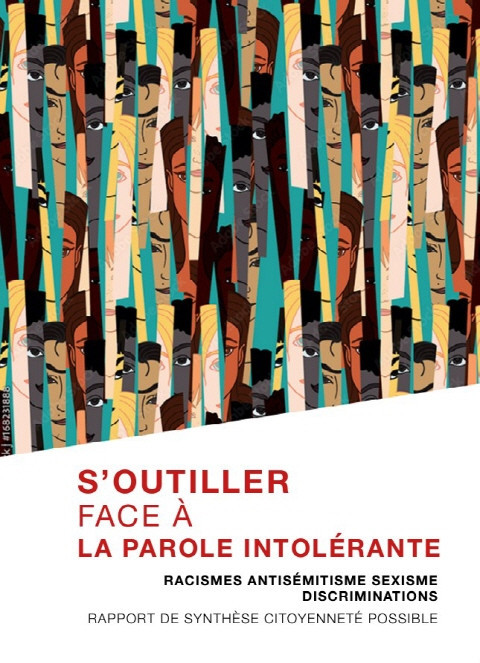 Equipping To Deal With Intolerant Speech: Racism, Antisemitism, Sexism, Discriminations Année de publication: 2023 Auteur institutionnel: Citoyenneté Possible In this report, NGO Citoyenneté Possible shares 18 years' experience in the field of anti-discrimination and dialogue. It provides both hands-on experience, with testimonials and tools, and in-depth reflection, analysis and sharing of experiences, practices and visions. It's possible to dare to engage in constructive dialogue on divisive issues, provided you have the intention to do so, and above all, the skills to do so. This report offers very concrete and detailed recommendations for professionals working with young people (teachers, educators, associations, etc.). S'outiller face à la parole intolérante: Racisme, antisémitisme, sexisme, discriminations Année de publication: 2023 Auteur institutionnel: Citoyenneté Possible L’association Citoyenneté Possible partage dans ce rapport 18 ans d’expérience de terrain dans la lutte contre les discriminations et pour le dialogue. Il livre à la fois une expérience de terrain, avec des témoignages, des outils, et une réflexion de fond, des analyses et points de partage d’expériences, de pratiques et de vision. Ne pas laisser passer, oser dialoguer sur des sujets clivants de manière constructive est possible, certes à condition d’en avoir l’intention, mais surtout d’en avoir acquis les compétences. Ce rapport propose des recommandations très concrètes et détaillées, pour les professionnels travaillant auprès d’un public jeune (enseignants, éducateurs, associations…)
  A Theory of Justice (Arabic Edition) Année de publication: 2011 Auteur: John Rawls Auteur institutionnel: Syria. Ministry of Culture This is a book translated by Laila Al Taweel for the American author John Rawls, in which he reviewed justice by examining the institutions and laws that govern it. John asserts that justice is a major component of this universe and cannot be ignored in any way, or even surpassed even in the interests of society's well-being. This translated book is a reference in the Arab world for understanding justice. نظرية في العدالة Année de publication: 2011 Auteur: John Rawls Auteur institutionnel: Syria. Ministry of Culture هذا كتاب مترجم للامريكي جون رولز، والذي استعرض فيه العدالة من خلال تطرقه للمؤسسات والقوانين التي تحكمها. يؤكد جون أن العدالة مكون رئيسي من هذا الكون ولا يمكن تجاهلها بأي حال، أو تجاوزها حتى لصالح رفاهية المجتمع. يمثل هذا الكتاب المترجم مرجعا في الوطن العربي لفهم العدالة.