
Ressources
Explorez une large gamme de ressources sur le GCED afin d’approfondir votre compréhension et de renforcer vos activités de recherche, de plaidoyer, d’enseignement et d’apprentissage.
1,726 résultats trouvés
 État des lieux de l’éducation à la citoyenneté et à la solidarité internationale en France Année de publication: 2019 Auteur: Virginie Escudié Auteur institutionnel: Educasol | Agence Française de Développement (AFD) Cette publication, réalisée dans le cadre de l’Observatoire de l’ECSI(Éducation à la Citoyenneté et à la Solidarité Internationale) lancé par Educasol en janvier 2018, est structurée autour de deux grands chapitres. Un premier consacré aux enjeux, défis et cadre institutionnel de l’ECSI ; un second chapitre met le focus sur des démarches d’ECSI concernant la mobilisation citoyenne, le milieu scolaire et le travail de cartographie des données.
  Éducation, formation professionnelle et emploi: Boîte à outils genre Année de publication: 2015 Auteur: Laetitia Antonowicz Auteur institutionnel: Agence Française de Développement (AFD) Le genre est à la fois un concept et un outil d’analyse. En tant que concept, il désigne ensemble deux entités : le féminin et le masculin ou encore les hommes et les femmes. Les inégalités de genre se manifestent dans tous les aspects de l’éducation, des infrastructures aux programmes, des politiques de vie scolaire aux outils didactiques, de la pédagogie au corps enseignant. Souvent les inégalités sont au détriment des filles, parfois au détriment des garçons. Les inégalités sont complexes: les filles peuvent avoir une espérance de vie scolaire supérieure aux garçons tout en ayant moins de chance que ces derniers d’accéder à l’éducation en premier lieu. Les garçons peuvent être plus nombreux à accéder au secondaire, mais également plus nombreux à ne pas terminer leur cycle d’étude ou à ne pas obtenir le niveau minimum dans certaines matières. Les inégalités se retrouvent dans l’accès, le maintien et l’achèvement. Elles se retrouvent également dans l’accès à l’emploi. Elles varient en fonction des cycles d’éducation, de l’âge des apprenants et des pays.
 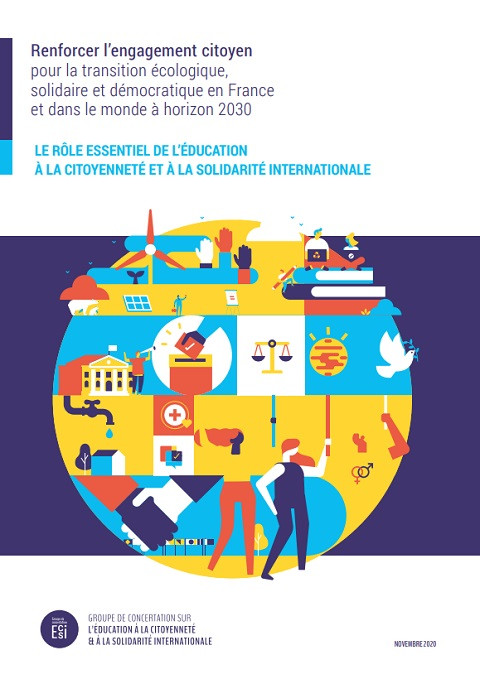 Renforcer l’engagement citoyen pour la transition écologique, solidaire et démocratique en France et dans le monde à horizon 2030 : Le rôle essentiel de l’éducation à la citoyenneté et à la solidarité internationale Année de publication: 2021 Auteur institutionnel: Groupe de concertation sur l’Éducation à la citoyenneté et à la solidarité internationale (ECSI) | Agence Française de Développement (AFD) Le groupe de concertation sur l’Éducation à la citoyenneté et à la solidarité internationale (ECSI) est un espace de dialogue et de partage d’expériences créé en 2017. Il réunit des représentants d’associations, de quatre ministères, de l’Agence française de développement, de collectivités territoriales et de réseaux régionaux multi-acteurs. Ces institutions et organisations représentent une grande diversité d’approches, d’actions et de publics, et se retrouvent dans une mission commune : favoriser la contribution individuelle et collective à la construction d’une société juste, solidaire et durable par l’éducation et l’ECSI.Les membres de ce groupe ont produit un argumentaire commun, finalisé en novembre 2020, détaillant les raisons pour lesquelles l’ECSI doit constituer une priorité des politiques publiques et une composante essentielle des actions des organisations.
  Seoul Declaration on Media and Information Literacy for Everyone and by Everyone: A Defence Against Disinfodemics Année de publication: 2020 Auteur institutionnel: UNESCO On the 10th anniversary of Global Media and Information Literacy Week, stakeholders from all over the world gave a resounding affirmation as to the urgency to strengthen people’s media and information literacy competencies. The number of celebratory events increased from one hundred events in 2019 to over three hundred events in 2020.The outcomes of the deliberations in the Feature Conference and Youth Agenda Forum have been immortalized in the Seoul Declaration on Media and Information Literacy for Everyone and by Everyone: A Defence against Disinfodemics. This Seoul Declaration benefited from a consultation with close to one thousand registered participants.Through the Seoul Declaration, partners and participants called for media and information literacy for all. They:Emphasized that “media and information literacy (MIL) is a core competency for addressing the disinfodemic, and that MIL also contributes to access to information, freedom of expression, protection of privacy, prevention of violent extremism, promotion of digital security and combating hate speech and inequality”.Recognized “UNESCO’s effort to promote a Global MIL Cities Framework to stimulate creative learning about MIL in city spaces and the involvement of non-traditional actors in promoting MIL”.Called on duty bearers at the national to city levels to “commit to advancing ‘Media and Information Literacy for Everyone and by Everyone’ through policy and resource allocation across all relevant areas, including education, health, elections, child protection, climate, gender equality, governance and regulation, to mention some examples”.Urged technological intermediaries to “play an accountable role, through institutionalized multi-stakeholder systems, as part of the social endeavor to tackle disinformation and to build communities that are media and information literate”.Requested UNESCO, in cooperation with other UN Agencies, to “maintain a focus on inclusion of disadvantaged groups in MIL engagements, and to continue to foster gender equality in relation to MIL.” 모두를 위한, 모두에 의한 미디어·정보 리터러시에 관한 서울 선언문: 디스인포데믹에 대한 저항 Année de publication: 2020 Auteur institutionnel: 유네스코 2020년 글로벌 미디어·정보리터러시(MIL) 주간 대표회의 및 청년포럼의 결과문서로 채택된 서울선언문이다. 본 선언문에서는 MIL의 중요성을 강조하고, 각각의 이해관계자가 MIL 역량 증진을 위해 실천할 수 있는 구체적인 행동을 담고 있다.
 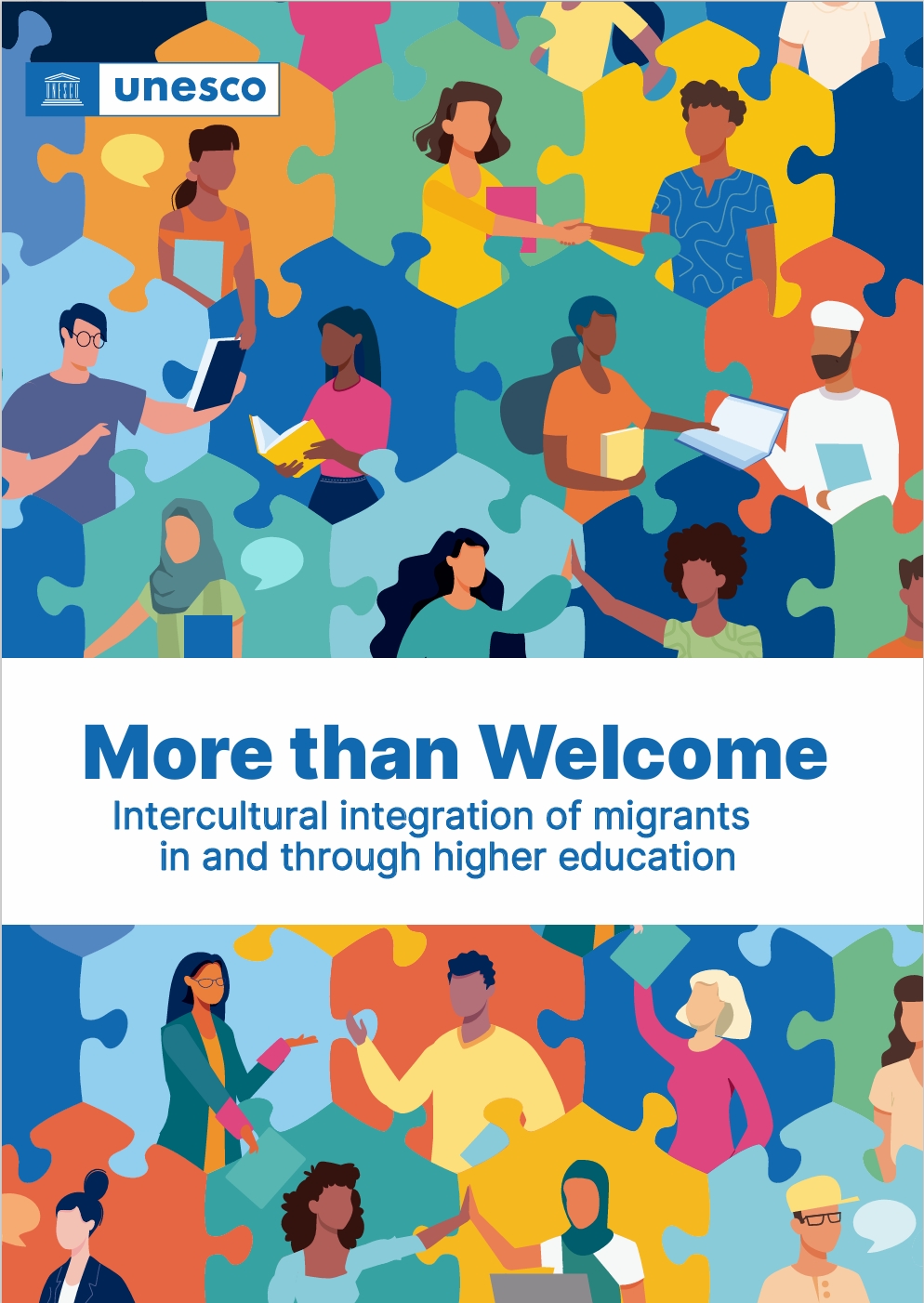 More than Welcome: Intercultural Integration of Migrants in and Through Higher Education Année de publication: 2026 Auteur: Darla K. Deardorff | Raffaela Iuliano Auteur institutionnel: UNESCO As global displacement reaches unprecedented levels—with 123.2 million people uprooted by conflict, environmental disasters, and economic instability (UNHCR, 2025)—there is an urgent need to rethink approach integration. Migration should be embraced as an opportunity for human and cultural development, social cohesion, and economic growth. To realise this, societies must transition from outdated integration models to a new paradigm of intercultural integration—a multidirectional process engaging all community members.More than Welcome offers a framework for intercultural integration, founded on five principles with intercultural competence at its core. It highlights the unique role of Higher Education Institutions (HEIs) in fostering mutual respect, understanding, and collaboration. By actively addressing xenophobia and cultural discrimination, HEIs can become catalytic spaces to help migrants reach their full potential in diverse societies.Through research and practical examples, the publication provides actionable strategies for policy-makers to create a higher education sector that not only educates but also cultivates active, intercultural citizens. By embracing this framework, we can build more inclusive societies and unlock the full potential of migration for the benefit of all.