
Ressources
Explorez une large gamme de ressources sur le GCED afin d’approfondir votre compréhension et de renforcer vos activités de recherche, de plaidoyer, d’enseignement et d’apprentissage.
2,162 résultats trouvés
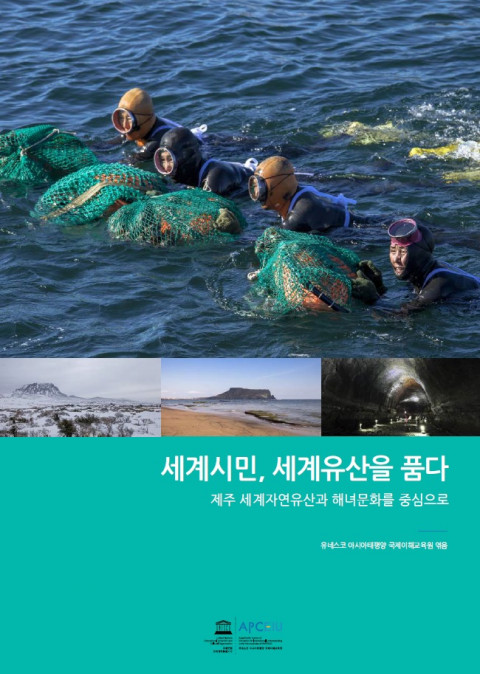 세계시민, 세계유산을 품다 - 제주 세계자연유산과 해녀문화를 중심으로 Année de publication: 2018 Auteur institutionnel: 유네스코 아시아태평양 국제이해교육원 유네스코 아시아태평양 국제이해교육원은 세계유산을 활용한 세계시민교육 교재개발 사업으로 “세계시민, 세계유산을 품다”를 출간하였다. 이 책은 세계유산을 단순한 관광의 대상으로 소개하는 것이 아니라, 현장체험, 토론, 조사 등의 다양한 활동을 통해 세계유산이 가진 가치와 의미를 깨달아 세계시민으로 성장하도록 하는 내용으로 구성했다. 세계유산을 통해 국제이해, 평화, 인권, 문화다양성, 지속가능한 발전 등의 보편적 가치를 배우고 내재화하도록 돕는 교재이다.한국의 세계유산을 활용한 이번 세계시민교육 자료는 제주를 중심으로 구성하였다. 제주도는 현재 유네스코 세계자연유산과 인류무형문화유산을 가지고 있다. 이 책은 세계자연유산 ‘제주 화산섬과 용암동굴’과 인류무형문화유산 ‘제주 해녀문화’의 가치를 세계시민교육으로 연계하여 교육함으로써 세계시민의식 함양의 길잡이가 되고자 한다. 특히 유형유산과 무형유산을 통합적으로 연계하여 소개하는 시도를 하였다.이 책의 세계시민교육은 제주세계자연유산과 더불어 제주 해녀문화의 공동체 의식에 주목하고 이를 소개했다. 또한 이 책은 학교 현장의 교사가 세계유산 교육과 세계시민교육을 동시에 하고자 할 때 학습자료로서 도움이 될 것이다. 또한 학생이 세계유산을 통하여 지속가능성을 이해하고, 이를 통하여 세계시민으로 성장하는데 기여할 것이다.
 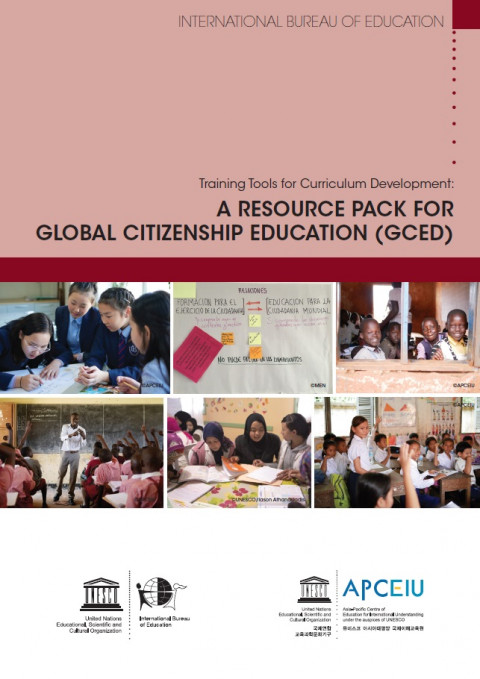 Training Tools for Curriculum Development: A Resource Pack for Global Citizenship Education (GCED) Année de publication: 2018 Auteur institutionnel: UNESCO International Bureau of Education (IBE) | APCEIU The overarching objective of ‘A Resource Pack for Global Citizenship Education (GCED)’ is to share a broader understanding of GCED theory and practice, in order to support its effective development and implementation at the policy, school and classroom levels. The Resource Pack provides comprehensive guidance for national policymakers, curriculum specialists and developers, teacher educators, teachers, school leaders and district level administrators.The key topics covered are:Module 1: IntroductionModule 2: National PoliciesModule 3: CurriculumModule 4: Teaching, Learning and AssessmentModule 5: Teaching and Learning ResourcesModule 6: Whole School ApproachModule 7: Teacher Education and Professional Development
 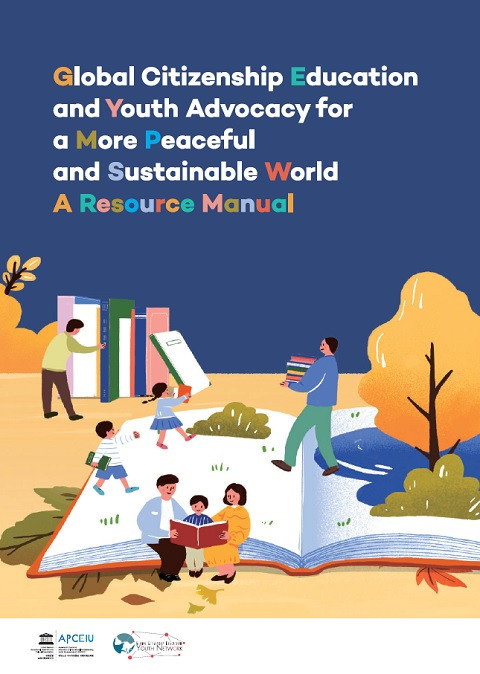 Global Citizenship Education and Youth Advocacy for a More Peaceful and Sustainable World: A Resource Manual Année de publication: 2020 Auteur: Dylan Wray | Lisa Van Wyk | Rigoberto D. Banta Jr. | Roy Hellenberg | Anna Susarenco | Diego Manrique | Guranda Bursulaia | Noora Elkenawi | Shawgi Ahmed | Tshering Zangmo | Valeriia Moroz Auteur institutionnel: APCEIU Since 2016 the Global Citizenship Education (GCED) Youth Network and UNESCO Asia-Pacific Centre of Education for International Understanding(APCEIU) have been working together to support young people to take action to make their communities and the world a better place.This manual, which is the outcome of a joint initiative by the GCED Youth Network and APCEIU, is intended to provide a useful resource for those who teach GCED, for youth organisations that are engaged in advocacy on themes that relate to global citizenship, and those who are supporting youth advocacy.The manual is organized in three main sections: Section 1 focuses on GCED and the teaching of history as a strategy for building a peaceful world.Section 2 provides step by step practical guidelines and ideas for youth advocacy organisations to help them plan advocacy initiatives.Section 3 includes background information and practical ideas for youth advocacy on a series of themes that are relevant to GCED, including empowerment of vulnerable communities, media literacy and peace building. It also considers the role of GCED, and young people, in global crises, using the example of the COVID-19 pandemic, and provides suggestions to help youth advocacy and other organisations to prepare for and respond to such crises
 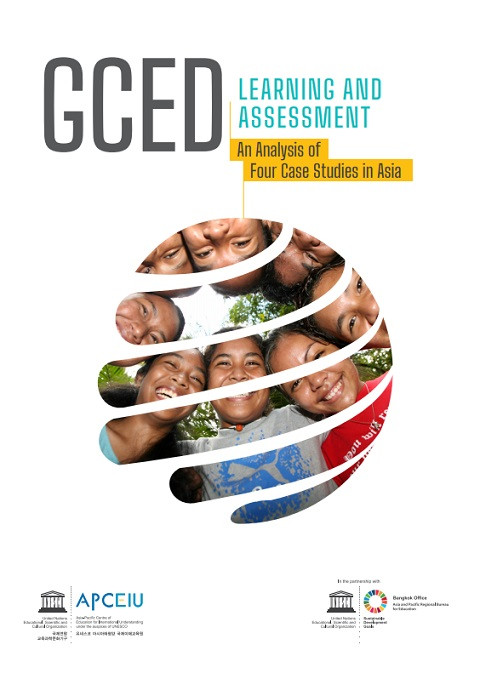 GCED Learning and Assessment: An Analysis of Four Case Studies in Asia Année de publication: 2020 Auteur institutionnel: APCEIU | UNESCO Bangkok “GCED Learning and Assessment: An Analysis of Four Case Studies in Asia” is a result report of research jointly led by UNESCO Asia-Pacific Regional Bureau for Education, the Asia-Pacific Centre of Education for International Understanding (APCEIU) and the Asia-Pacific Regional GCED Network. The report encompasses four case studies of GCED Learning in the region and its assessment. Four leading researchers in the field of GCED, Satya Bushan from the National Council of Educational Research and Training (NCERT), India; Sayaka Matsukura of Ageo Oishi Junior High School, Japan; Dawon Kim from Gwangju National University of Education, Republic of Korea; and Le Anh Vinh from the Vietnam National Institute of Educational Science (VNIES), Viet Nam, contributed to this research. Through presenting and sharing the cases of India, Japan, Republic of Korea and Viet Nam, the publication is expected to shed light on the assessment on how GCED is implemented in the region and further inspire and encourage the GCED practitioners on the ground to take another step forward to reflect GCED in their respective educational systems. <List of Contents>ForewordAcknowledgementsAcronymsExecutive summaryChapter 1: IntroductionChapter 2: Schoollevel approaches at integrating GCEDChapter 3: Assessment of GCED learning Chapter 4: Reflections on GCED learning assessment Chapter 5: Conclusions and recommendations References
 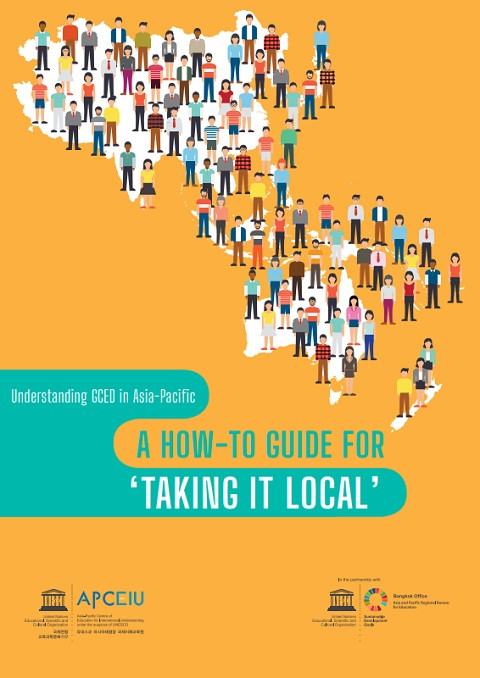 Understanding GCED in Asia-Pacific: A How-to Guide for ‘Taking It Local’ Année de publication: 2020 Auteur institutionnel: APCEIU | UNESCO Bangkok The Asia-Pacific Centre of Education for International Understanding (APCEIU), in partnership with UNESCO Bangkok, has published “Understanding GCED in Asia-Pacific: A How-To Guide for ‘Taking It Local’”, a guidebook for GCED-themed workshop organizations in the region. The publication is developed by UNESCO Asia-Pacific Regional Bureau for Education under the framework of the Asia-Pacific Regional GCED Network that is coordinated by UNESCO Bangkok and APCEIU. Taking stock of the key data from the 2019 publication titled “GCED: Taking it Local in Asia-Pacific”, the guidebook presents full-detailed guidelines on preparing and conducting a ‘Taking it Local’ workshop on GCED with particular focuses on the three core notions of GCED – respect for diversity, solidarity and a shared sense of humanity. The purpose of the publication is to promote GCED in local contexts and support active GCED practitioners on the ground to design and carry out GCED workshops that are translated and designed fully within the local context of the Asia-Pacific region. <Contents>Chapter 1: Introduction1.1 What is GCED?1.2 Purpose of the Guidebook1.3 Pedagogical ApproachChapter 2: Preparing a ‘Taking it Local’ Workshop on GCED2.1 Workshop Objectives2.2 Target Audiences2.3 Workshop Preparation2.4 Tips for a Successful Workshop2.5 Sample Agenda for the WorkshopChapter 3: Conducting a ‘Taking it Local’ Workshop on GCED3.1 Welcome, Overview, and Agreements3.2 Introduction Exercise: Story Circles3.3 GCED in AsiaPacific Exercise3.4 Optional Activities for the Workshop 3.5 Application Exercise 3.6 Closing 3.7 Final Reflection and Workshop Evaluation 3.8 Sharing Reflections 3.9 FollowUp of the WorkshopReferences
  Global Citizenship Concepts in the Curricula of Four Countries Année de publication: 2017 Auteur: Natalie Browes Auteur institutionnel: UNESCO International Bureau of Education (IBE) | APCEIU This report details the presence of Global Citizenship Education (GCED) concepts in the education systems of four countries: Cambodia, Colombia, Mongolia and Uganda. It highlights the main findings of eight reports: four expert reports, which predominately analyse curriculum content, and four situational analysis reports, which take a broader view and detail some of the country-specific challenges and opportunities with regard to GCED. Findings reveal the presence of GCED concepts across the curricula of the four countries. In addition to cognitive content related to GCED, competency-based content is also found present within the curricula of these countries. However, the majority of this content can only be indirectly linked to GCED, and it is better interpreted as part of the more traditional civics or citizenship education approach. As such, it generally lacks a global perspective and does not engage with all key themes of GCED. Furthermore, this content is often concentrated at the lower and upper secondary levels, instead of being equally distributed across all grade levels. This is particularly true in the case of behaviour-based competencies. Findings also reveal challenges beyond the curriculum. These include lack of teacher training and lack of support to implement GCED, which are concerns expressed by stakeholders in all four countries. A lack of GCED content in textbooks and lack of supplementary materials were also found to be issues. The report concludes with recommendations regarding the effective implementation of GCED within curricula. Among others, the report suggests the transversal integration of GCED - across the curriculum at all grade levels, while at the same time, actors from all levels of the education system, ranging from central government to teachers, should be engaged to ensure the use of complementary learning materials, pedagogies and assessment techniques.
  생각하고 공감하고 행동하는 세계시민 모여라: 학생용 워크북 Année de publication: 2017 Auteur institutionnel: 유네스코 아시아태평양 국제이해교육원 유네스코 아시아태평양 국제이해교육원이 출간한 “생각하고 공감하고 행동하는 세계시민 모여라”는 학생용 워크북과 교사용 지도서로 구성되어있다. 이 도서는 워크북의 특성에 걸맞게 흥미롭고 다양한 활동으로 구성되어 생각, 공감, 행동의 단계를 강화시키는 데 중점을 두고 있다. 워크북 활동을 통해 학습자는 즐기며 자연스럽게 세계시민으로서의 역량을 기를 수 있다. 이 워크북의 주된 학습 대상은 초등학교 고학년부터 중학생이지만 특정 학년의 교과과정에 초점을 두어 제작된 워크북이 아니므로 교사의 재량 및 학생의 학습 수준에 따라 급별에 상관없이 수업보조자료로 활용될 수 있다. 비영리적 목적에 한하여 아래 첨부된 PDF버전을 다운로드하여 활용이 가능하다. <목차>01_나도 세계시민일까? - 유네스코 아태교육원02_내 안에 내가 여러 명이 있다고? - 박서연 (국제앰네스티 한국지부)03_다른 것이 틀린 것은 아니구나! - 박서연 (국제앰네스티 한국지부)04_아하! 평화와 공존의 비밀 - 문아영 (피스모모)05_샴푸를 쓸수록 숲이 사라진다고? - 공윤희 (세계시민교육 보니따)06_윤리적 소비로 나도 세계시민! - 김원섭, 김성훈 (아름다운가게)
  생각하고 공감하고 행동하는 세계시민 모여라: 교사용 지도서 Année de publication: 2017 Auteur institutionnel: 유네스코 아시아태평양 국제이해교육원 유네스코 아시아태평양 국제이해교육원이 출간한 “생각하고 공감하고 행동하는 세계시민 모여라”는 학생용 워크북과 교사용 지도서로 구성되어있다. 이 도서는 워크북의 특성에 걸맞게 흥미롭고 다양한 활동으로 구성되어 생각, 공감, 행동의 단계를 강화시키는 데 중점을 두고 있다. 워크북 활동을 통해 학습자는 즐기며 자연스럽게 세계시민으로서의 역량을 기를 수 있다. 이 워크북의 주된 학습 대상은 초등학교 고학년부터 중학생이지만 특정 학년의 교과과정에 초점을 두어 제작된 워크북이 아니므로 교사의 재량 및 학생의 학습 수준에 따라 급별에 상관없이 수업보조 자료로 활용될 수 있다. 비영리적 목적에 한하여 아래 첨부된 PDF버전을 다운로드하여 활용이 가능하다. <목차>발간사워크북 활용법01_나도 세계시민일까? - 유네스코 아태교육원02_내 안에 내가 여러 명이 있다고? - 박서연 (국제앰네스티 한국지부)03_다른 것이 틀린 것은 아니구나! - 박서연 (국제앰네스티 한국지부)04_아하! 평화와 공존의 비밀 - 문아영 (피스모모)05_샴푸를 쓸수록 숲이 사라진다고? - 공윤희 (세계시민교육 보니따)06_윤리적 소비로 나도 세계시민! - 김원섭, 김성훈 (아름다운가게) Herramientas para Desarrollo Curricular: Recursos para la Educación para la Ciudadanía Mundial (ECM) Année de publication: 2018 Auteur institutionnel: UNESCO International Bureau of Education (IBE) | El Centro Asia Pacífico de Educación para el Entendimiento Internacional (APCEIU) El objetivo principal de “Recursos para la Educación para la Ciudadanía Mundial (ECM)” es el compartir una comprensión más profunda y amplia de la teoría y práctica de la ECM para poder propiciar su desarrollo efectivo e implementación a nivel de las políticas, escuelas y aulas. Los Recursos propician una guía comprensiva para los diseñadores de políticas nacionales, los especialistas y expertos en desarrollos de planes de estudios, formadores de maestros, educadores, líderes escolares y administradores a nivel de los distritos. Los principales temas abordados son:Módulo 1: IntroducciónMódulo 2: Políticas NacionalesMódulo 3: Diseño curricular Módulo 4: Enseñanza, aprendizaje y evaluaciónMódulo 5: Recursos para Enseñanza y AprendizajeMódulo 6: Enfoque Escolar IntegralMódulo 7: Formación de Maestros y Desarrollo Profesional
  Kit de Herramientas de incidencia Juvenil sobre ECM Année de publication: 2019 Auteur institutionnel: Centro de Asia y el Pacífico de Educación para el Entendimiento Internacional (APCEIU) APCEIU ha publicado el Kit de Herramientas de incidencia Juvenil sobre Educación para la Ciudadanía Mundial (ECM) para proveer a líderes jóvenes con una guía de incidencia sobre ECM. Enfocado en jóvenes activistas que actualmente participan en programas de ECM alrededor del mundo, el kit ofrece una mirada de la ECM e incidencia, así como consejos y herramientas para implementar de forma efectiva una campaña de incidencia en los niveles local y global. Por otro lado, a través de compartir casos de incidencia juvenil en diversos entornos, este kit también brinda ejemplos de la vida real presentados por jóvenes que se interesan en la incidencia sobre ECM.ÍndiceCapítulo 1 - Qué es la Educación por la Ciudadanía Mundial (ECM)?Capítulo 2 - Qué es la incidencia por la ECM?Capítulo 3 - La juventud como un agente activo por la ECMCapítulo 4 - Compartiendo casos de incidencia juvenilCapítulo 5 - Iniciativas juveniles de ECM