
Ressources
Explorez une large gamme de ressources sur le GCED afin d’approfondir votre compréhension et de renforcer vos activités de recherche, de plaidoyer, d’enseignement et d’apprentissage.
3,790 résultats trouvés
 세계시민교육역량에 대한 예비유아교사와 유아교사의 인식에 관한 연구 (Global Creative Leader: Education & Learning; Vol. 9, No. 4) Année de publication: 2019 Auteur: 이효정 | 김갑순 Auteur institutionnel: 숭실대학교 영재교육연구소 본 연구는 세계시민교육역량에 대한 예비유아교사와 유아교사의 인식에 관한 연구로 예비유아교사와 유아교사의 세계시민교육역량 강화를 위한 교사교육의 방향을 제시하는데 그 목적이 있다. 이를 위해 연구대상은 서울과 인천에서 4년제 유아교육과 4학년에 재학 중인 예비유아교사 200명과 24개의 유아교육기관에 재직 중인 유아교사 200명을 선정하였다. 연구기간은 2018년 9월 11일부터 일주일이며, 연구자가 직접 설문지를 배부 및 회수하는 설문조사를 실시하였다. 연구결과 첫째, 예비유아교사와 유아교사 모두 유아세계시민교육역량에 비해 세계시민역량을 다소 높게 인식하고 있었다. 보다 구체적으로 예비유아교사는 세계시민교육역량의 하위요인인 세계시민역량과 유아세계시민교육역량 모두에서 유아교사 보다 높게 인식하는 것으로 나타났다. 둘째, 세계시민교육을 경험한 예비유아교사는 세계시민역량과 유아세계시민교육역량 모두에서 그렇지 않은 예비유아교사 보다 높게 인식하는 것으로 나타났다. 반면, 세계시민교육을 경험한 유아교사는 세계시민역량과 유아세계시민교육역량 모두에서 인식의 차이가 나타나지 않았다. 본 연구는 세계시민교육에 대한 예비유아교사와 유아교사의 인식을 밝혀냄으로서 실제로 유아교사 양성과정의 교사교육과정과 유아교육현장에서 이루어지는 교사재교육 과정을 어떻게 구안해야 하는지에 대한 정보를 제공할 것으로 기대한다.
  从教书匠到燃灯者: 教师公民教育自觉的蒙昧与唤醒 (当代教育论坛; No. 296) Année de publication: 2020 Auteur: Hu Chaoxia | Tang Songlin Auteur institutionnel: Hunan Academy of Educational Science 从课程角度来看,目前我国学校公民教育存在两个不充分:公民学科教 育以公民认知代替完整的公民教育,路径开发不充分;其他各类课程协同的公民教育同 向聚焦不足,路径拓展不充分。从教师角度思考其原因,是“教书匠”的职业定位蒙昧了其 现代教育背景下职能的自觉,拘囿了其教育视域的拓展。教师要以公民教育自觉,为社会 和谐与公民幸福而教,拓展公民教育的场域,结成学习共同体,向自然、向社会、向生活开 发,搭建全景、多层交错衔接式育公民的大世界;拓展学科教学视域,在学科课程资源中 发掘或显或隐的公民教育课程资源,构建全员、全课程育公民的大格局。
  Treaties on Teachers for Global Citizenship Education (Korean Journal of Teacher Education; Vol. 31, No. special) Année de publication: 2015 Auteur: Kioh Jeong Auteur institutionnel: Korea National University of Education This article examines the nature of Global Citizenship Education (GCE) and the qualification of the teacher for the GCE. GCE means post-modern education beyond modern public education. In the latter, teachers used to have been affiliated with nation-building mission, professional service to learners, and sometimes teacher unionism. These affiliations are typically of modern nationalism and industrialism. Teachers for GCE stand on different ground for their professional practice: global civil right to teach, global civil right to learn, and finally peoples’ fundamental right for development. Their sight extends beyond national territory up to global world and cyber space. They overcome modernity to practice transformative pedagogy accommodating multi-cultural dimensions. The image can be summarized as a model global citizen who serves highly for the benefit of mankind, which characterizes Korean educational ideal as provided by the foundation law of education Korea. 세계시민교육을 위한 교사론 (교원교육; Vol. 31, 특별호) Année de publication: 2015 Auteur: Kioh Jeong Auteur institutionnel: Korea National University of Education 세계시민교육은 국경과 국가와 결부된 근대적 성격의 교육을 넘어선 포스트모던 교육을 지 향한다. 이 논문은 이러한 세계시민교육을 담당하고 발전시켜갈 교사들의 성격이나 교사관에 대한 논의를 전개한다. 세계시민교육을 담당할 교사들의 성격은 성직자관 전문직관 노동자관으 로 요약되는 기존 교직관의 틀을 벗어난다. 세계시민교사로 요약된 이러한 교사상은 세계시민권으로서 가르칠 권리와 세계시민권으로서의 학습권에 기초한 교육을 보편적 인권으로서 개발 에의 권리에 입각한 모든 인류의 발전과 성장을 지향하는 교사를 필요로 한다. 이러한 교사는 세속적인 교육을 견지하며, 영토를 넘어 전 지구생태계와 사이버세계에 시야를 넓히고, 근대성을 벗어나 포스트모던 패러다임에 입각한 변혁적 교수법과 다문화교육을 지향한다. 이러한 교사상을 선도적 세계시민으로서의 교사라고 요약할 수 있다. 선도적 세계시민으로서의 교사상은 우리 한국교육이 지향해온 교육이념인 홍익인간의 인간상과 일치한다. 홍익인간의 이념은 한국 교육이 세계시민교육논의에 적극 참여하는 배경의 하나를 이루고 있다. Perception on Global Citizenship Education Competence between Pre-service Teachers and In-service Teachers in Kindergarten (Global Creative Leader: Education & Learning; Vol. 9, No. 4) Année de publication: 2019 Auteur: Hyojeong Lee | Kabsoon Kim Auteur institutionnel: Soongsil University. Research Institute for Gifted & Talented Education The purpose of this study was to establish the direction of teacher education based on global citizenship education competence studying the perception of pre-service teachers and in-service teachers on global citizenship education competence. The 2018 survey was conducted for a week beginning September 11. The respondents who were 200 pre-service teachers and 200 in-service teachers were selected from Seoul and Incheon. The researcher distributed and collected the questionnaire directly. The results of the study were as follows. First, pre-service teachers showed higher cognition than in-service teacher in both global citizenship competence and early childhood global citizenship competence. Second, among pre-service teachers, ones who had experienced global citizenship education showed higher cognition level in both categories than others. On the other hand, in-service teachers who had experienced global citizenship education did not show any difference of cognition in both global citizenship competence and early childhood global citizenship competence. This study was expected to reveal the perceptions of pre-service teachers and when training teachers, the data provided more specific details for early childhood educator curriculums about global citizenship education.
 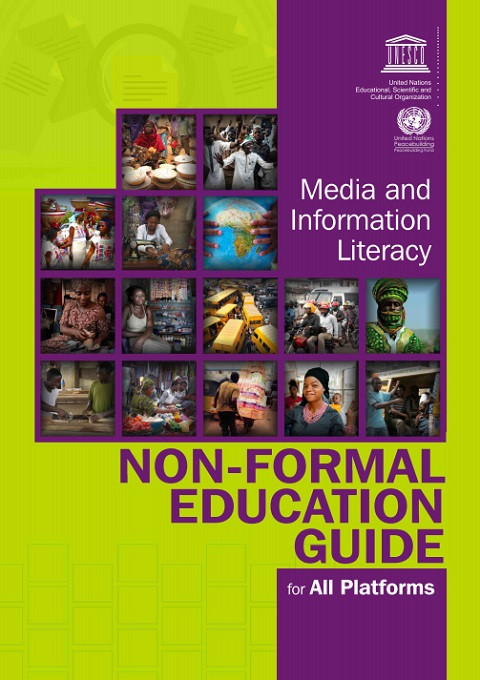 Media and Information Literacy: Non-Formal Education Guide for All Platforms Année de publication: 2019 Auteur: Nosa Owens-Ibie | Ifedolapo Ademosu | Abiodun Oyeleye Auteur institutionnel: UNESCO Dakar The aim of this book is to provide a basic understanding of the idea of media and information literacy (MIL). This book is meant to teach people how to access, understand and evaluate information, the different types of governance systems that exist and how it affects them as citizens. It is also meant to ensure that users know how to use and share information responsibly.
 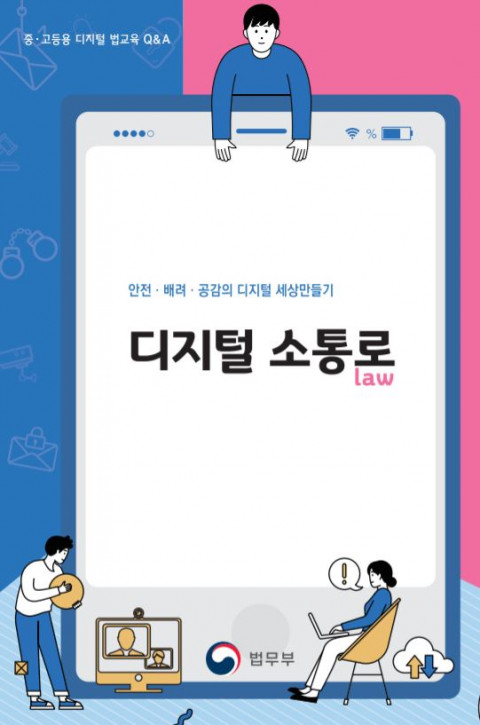 디지털 소통로(law): 안전·배려·공감의 디지털 세상 만들기; 중·고등용 Année de publication: 2020 Auteur: 정소연 | 김영준 | 김동하 | 최용철 | 김정호 | 송한준 | 김기환 | 이동준 | 장선영 | 허천영 | 허재벽 | 황규상 Auteur institutionnel: 대한민국 법무부 보호정책과 이 교재는 청소년들이 실제 궁금해 하고, 피해가 자주 발생하는 디지털 성범죄, 사이버 폭력, 인터넷 금융범죄, 디지털 저작권 등 4개 분야와 디지털 에티켓을 각각의 사례로 구성하였고, 사례에 해당하는 법조문과 판례를 통해 디지털 범죄에 대한 경각심을 일깨울 뿐 아니라, 피해자들을 위한 구제 방법과 관계기관의 지원 대책 등을 종합적으로 안내하고 있다. 디지털 공간에서 발생하는 각종 범죄의 재발 방지와 피해 예방을 위해 발간된 청소년용 디지털 법교육 교재이다.
 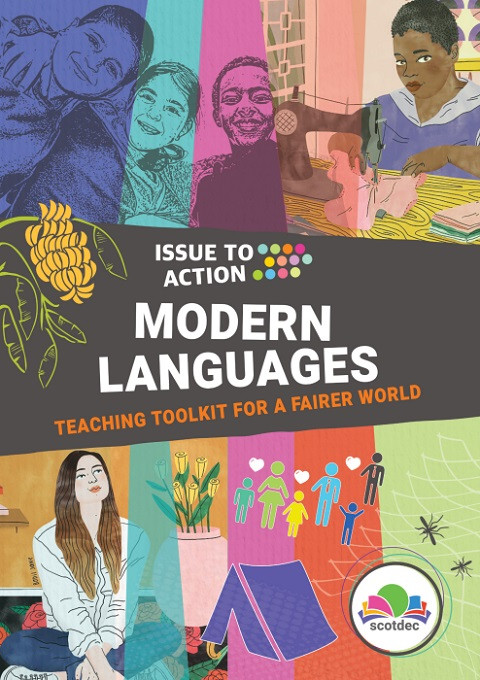 Issue to Action: Modern Languages; Teaching Toolkit for a Fairer World Année de publication: 2020 Auteur: Megan Clark | Irina Gancheva | Laura Morris | Peigi Morrison Auteur institutionnel: Scotdec | European Union (EU) Global Citizenship Education is essential in enabling young people to access and participate in shaping modern society. All teachers and subjects have a role to play in educating young people to enable them to participate as fully as possible in building a fair and just world for all. A Global Citizenship approach to Modern Languages enable young people to gain insights into other ways of thinking and other views of the world. With a focus on diversity and equality, the many and varied Spanish and French speaking cultures in Africa and South America, can provide a rich learning context. The materials in this resource have been written by Modern Languages teachers and tested in Scottish classrooms. They provide an opportunity to learn common vocabulary in new contexts and consider global issues such as migration and gender equality from different perspectives.
  Accelerating Education for the SDGs in Universities: A Guide for Universities, Colleges, and Tertiary and Higher Education Institutions Année de publication: 2020 Auteur institutionnel: Sustainable Development Solutions Network (SDSN) The aim of this guide is to help accelerate the institutional process of mainstreaming ESDGs in universities, by helping stakeholders within and outside universities understand why they should pursue this goal, and how. It aims to expand, update and refine the information provided in the previous guide based on new resources, tools, thinking, and learnings from universities working to implement ESDGs, to consider what ESDGs mean for universities. The guide touches on the pedagogical aspects of ESDGs, in terms of how they affect institutional approaches to ESDGs, but does not attempt to provide a comprehensive review of them. The Guide outlines the case for mainstreaming education for the SDGs at universities, what this does and could look like in practice, and the processes and activities universities can take to support implementation. It also provides practical guidance, resources, and case studies to inspire universities to take action and deepen their practice.
  Education for Social Change: The Global Learning Programme in the North of Ireland (Policy and Practice: A Development Education Review; Vol. 23, Autumn) Année de publication: 2016 Auteur: Stephen McCloskey Auteur institutionnel: Centre for Global Education (CGE) The Global Learning Programme (GLP) is a four-year initiative funded by the UK government that aims ‘to support schools to teach about global poverty and international development, with a particular focus on upper primary and early secondary school’ (DfID, 2013). The overarching outcome for the project in Northern Ireland is ‘increased and improved delivery of development education in 50% of grant aided primary, secondary and special schools’. It seeks ‘to embed development education and global citizenship as regular practice across curriculum subjects and through whole school initiatives’. The GLP in the north of Ireland is managed by the Centre for Global Education and this article outlines the programme of support provided to schools including Continuing Professional Development (CPD), twilight training, senior leadership seminars and a designated website. The article will also describe the mixed methods approach used to evaluate the impact of the GLP on schools and, in particular, its effectiveness in implementing global learning in the classroom. The article will summarise research findings to date and what they reveal about how teachers have perceived the value of the support provided. The article will conclude by considering the positive impact of the GLP on the wider global education non-governmental sector in Northern Ireland.