
Ressources
Explorez une large gamme de ressources sur le GCED afin d’approfondir votre compréhension et de renforcer vos activités de recherche, de plaidoyer, d’enseignement et d’apprentissage.
2,772 résultats trouvés
 UNESCO Framework for Culture and Arts Education: Implementation Guidance Année de publication: 2025 Auteur institutionnel: UNESCO Culture and the arts are integral to inclusive, equitable and quality education. They nurture creativity, critical thinking, and respect for cultural diversity, empowering learners to engage meaningfully with the world and to build more just, sustainable and peaceful societies. Yet, countries have not systematically incorporated culture and arts education across all levels of education. This Implementation guidance for the UNESCO Framework for Culture and Arts Education is a collective invitation to reimagine education by placing culture and the arts at its heart and advancing a transformative vision of education for all.Through a holistic approach, the Guidance supports the integration of culture and the arts across formal, non-formal and informal education, throughout life. It offers practical orientations to help Member States fulfil the commitment enshrined in the UNESCO Framework for Culture and Arts Education, adopted by Ministers of Culture and Education in 2024. With a global perspective, this Guidance will equip policy-makers, educators and cultural actors in developing inclusive, context-relevant policies, curricula and learning environments.The Guidance is a milestone on a shared journey, inviting countries to harness their cultural strengths, respond to emerging challenges, and work together towards a more inclusive education for all.
 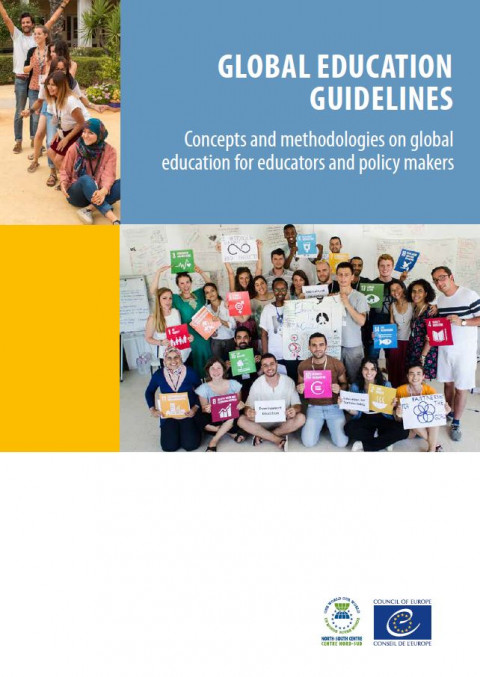 Pautas para una Educación Global: Manual para que las y los educadores entiendan e implementen una educación global Année de publication: 2019 Auteur institutionnel: North-South Centre of the Council of Europe | Council of Europe Esta guía práctica para la educación para la ciudadanía mundial responde a una necesidad expresada por los profesionales de la red de la Semana de Educación para la Ciudadanía Mundial del Centro Norte-Sur (CNS) del Consejo de Europa, quienes expresaron su deseo de tener un instrumento común, configurado a la luz de la experiencia adquirida por la red y otros socios, que pueden ayudar a los educadores a diseñar y llevar a cabo iniciativas en GCED. Esta guía práctica para la educación para la ciudadanía mundial responde a una necesidad expresada por los profesionales de la red de la Semana de Educación para la Ciudadanía Mundial del Centro Norte-Sur (CNS) del Consejo de Europa, quienes expresaron su deseo de tener un instrumento común, configurado a la luz de la experiencia adquirida por la red y otros socios, que pueden ayudar a los educadores a diseñar y llevar a cabo iniciativas en GCED.
 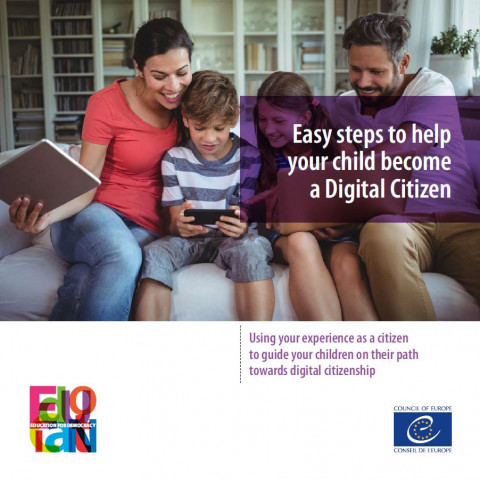 Easy Steps to Help Your Child Become a Digital Citizen Année de publication: 2020 Auteur: Janice Richardson | Veronica Samara Auteur institutionnel: Council of Europe A guide to help you use your experience as a citizen to guide your children on their path towards digital citizenship.Young people today inhabit a world that has been transformed by digital technologies, effortlessly enabling connectedness through social media and access to vast quantities of information. Making sense of this hyper rich information and engaging effectively and responsibly poses a whole set of new challenges for educators as they seek to prepare young people as citizens, exercising their rights and participating effectively in the affairs of the community.Parents, and “non-tech” grandparents too, can help children become digital citizens. In this guide, we explain some of the easy steps to follow, to help children master what it takes to act responsibly and respectfully online. Étapes simples pour aider votre enfant à devenir un citoyen numérique Année de publication: 2020 Auteur: Janice Richardson | Veronica Samara Auteur institutionnel: Conseil de l'Europe Un guide pour vous aider à utiliser votre expérience en tant que citoyen pour guider vos enfants sur la voie de la citoyenneté numérique.Les jeunes habitent aujourd'hui un monde qui a été transformé par des technologies numériques, permettant la connexion sans effort via les médias sociaux et l'accès à de vastes quantités d'informations. Etre capable de décortiquer cette information hyper riche et s’engager de manière efficace et responsable pose toute une série de nouveaux défis pour les éducateurs dans la mesure où ils cherchent à préparer les jeunes en tant que citoyens, à exercer leurs droits et à participer efficacement aux affaires de la communauté.Les parents et les grands-parents (même les profanes en technologie), peuvent aider les enfants à devenir des citoyens numériques. Dans ce guide, nous présentons quelques étapes faciles à suivre afin d’aider les enfants à maîtriser l’essentiel pour agir de façon responsable et respectueuse en ligne.
 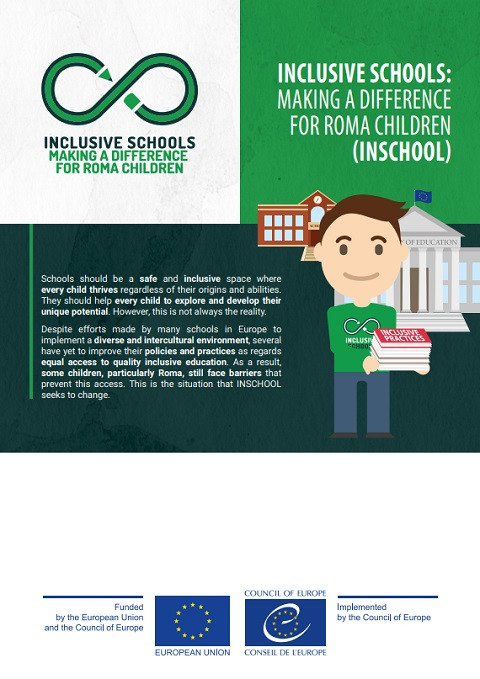 Inclusive Schools: Making a Difference for Roma Children (Inschool) Auteur institutionnel: European Union (EU) | Council of Europe This leaflet presents a joint project of the European Union and the Council of Europe on “Inclusive schools: making a difference for Roma children” targeting schools where Roma children learn, in the Czech Republic, Hungary, Romania, Slovak Republic and United Kingdom. The project aims at enhancing social inclusion of Roma by promoting inclusive education policies and practices in Europe.
 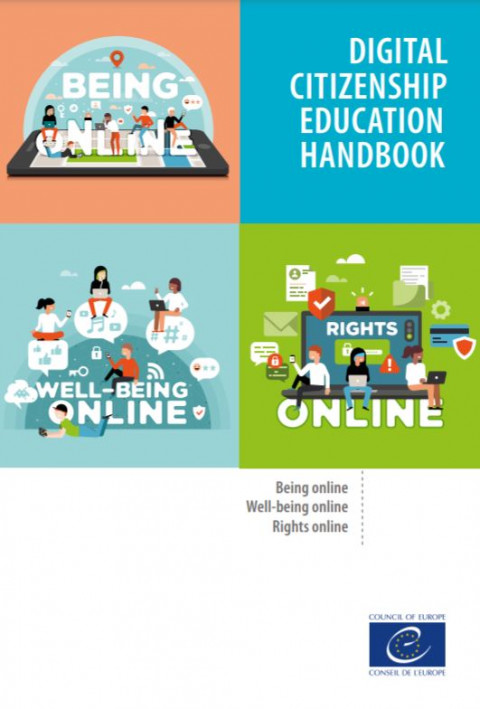 Digital Citizenship Education Handbook Année de publication: 2019 Auteur: Janice Richardson | Elizabeth Milovidov Auteur institutionnel: Council of Europe Digital citizenship and engagement involves a wide range of activities, from creating, consuming, sharing, playing and socialising, to investigating, communicating, learning and working. Competent digital citizens are able to respond to new and everyday challenges related to learning, work, employability, leisure, inclusion and participation in society, respecting human rights and intercultural differences.This Digital citizenship education handbook is designed to help educators and other interested adults understand and deal with them. It builds on the Council of Europe’s Reference Framework of Competences for Democratic Culture and the achievements of our longstanding Education for Democratic Citizenship programme, and complements the Internet literacy handbook as part of a coherent approach to educating citizens for the society of the future.
  T-KIT 4: Intercultural Learning Année de publication: 2018 Auteur: Oana Nestian Sandu | Nadine Lyamouri-Bajja Auteur institutionnel: Council of Europe | European Commission Intercultural learning is an important topic for the priorities of both the European Commission and the Council of Europe, and of their partnership in the field of youth.Intercultural learning is an educational approach that can lead to social transformation, so that people from different cultural backgrounds can develop positive relations based on the values and principles of human rights and on seeing cultural differences as positive things. It is a form of political and social education that needs to pay attention not only to intercultural relations, but also to different understandings of culture and diversity, power relations, distribution of resources, political and social context, human rights, discrimination, history and daily interactions among different groups.This T-Kit was developed for the context of youth work and non-formal education with young people, both of which support the personal development, social integration and active citizenship of young people. Educators and youth workers have an important role in addressing intercultural learning in their work with young people. They can stimulate young people’s learning in their daily lives, so that they can question and extend their perception, develop competences to interact positively with people from different cultural backgrounds and embrace the values of diversity, equality and dignity. In today’s Europe, these values and skills are fundamental for young people and for society as a whole in order to continue building peace and mutual understanding.
  General Policy Recommendation No. 15 of the European Commission against Racism and Intolerance: On Combating Hate Speech Année de publication: 2016 Auteur institutionnel: Council of Europe | European Committee against Racism and Intolerance (ECRI) The file is the recommendations of the European Committee against Racism and Intolerance on combating hate speech for countries. The file contains statistics and criteria established by the Commission. There are 10 recommendations made by the committee. توصية السياسة العامة رقم 15 للجنة الأوروبية لمناهضة العنصرية والتعصب: بشأن مكافحة خطاب الكراهية Année de publication: 2016 Auteur institutionnel: Council of Europe | European Committee against Racism and Intolerance (ECRI) الملف هو عبارة عن توصيات اللجنة الأوروبية لمناهضة العنصرية والتعصب بشأن مكافحة خطاب الكراهية للدول. يحتوي الملف على إحصائيات ومعايير وضعتها اللجنة. هناك 10 توصيات وضعتها اللجنة.
 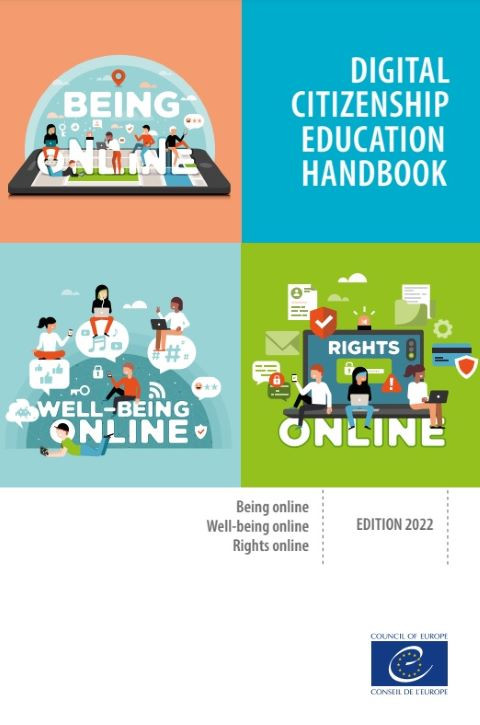 Digital Citizenship Education Handbook (Edition 2022) Année de publication: 2022 Auteur: Janice Richardson | Elizabeth Milovidov Auteur institutionnel: Council of Europe Digital citizenship competences define how we act and interact online. They comprise the values, attitudes, skills and knowledge and critical understanding necessary to responsibly navigate the constantly evolving digital world, and to shape technology to meet our own needs rather than to be shaped by it. The Digital citizenship education handbook offers information, tools and good practice to support the development of these competences in keeping with the Council of Europe’s vocation to empower and protect children, enabling them to live together as equals in today’s culturally diverse democratic societies, both on- and offline.The Digital citizenship education handbook is intended for teachers and parents, education decision makers and platform providers alike. It describes in depth the multiple dimensions that make up each of 10 digital citizenship domains, and includes a fact sheet on each domain providing ideas, good practice and further references to support educators in building the competences that will stand children in good stead when they are confronted with the challenges of tomorrow’s digital world. The Digital citizenship education handbook is consistent with the Council of Europe’s Reference Framework of Competences for Democratic Culture and compatible for use with the Internet literacy handbook.