
Ressources
Explorez une large gamme de ressources sur le GCED afin d’approfondir votre compréhension et de renforcer vos activités de recherche, de plaidoyer, d’enseignement et d’apprentissage.
1,444 résultats trouvés
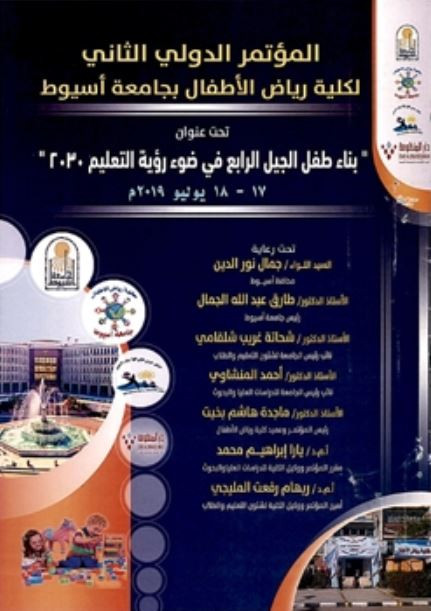 Raising a Child for Sustainable Development: Problems and Solution Année de publication: 2019 Auteur: Fathy Mohamed Auteur institutionnel: Assiut University This paper aims to study the problems that hinder raising a child for sustainable development. After discussing the problems, the paper ends with a vision to activate education for sustainable development in kindergarten institutions. تربية الطفل من أجل التنمية المستدامة: المشكلات والحل Année de publication: 2019 Auteur: Fathy Mohamed Auteur institutionnel: Assiut University تهدف هذه الورقة لدراسة المشكلات التي تعوق تربية الطفل من أجل التنمية المستدامة. بعد مناقشة المشكلات تنتهي الورقة بوضع رؤية لتفعيل التربية من أجل التنمية المستدامة في مؤسسات رياض الأطفال.
 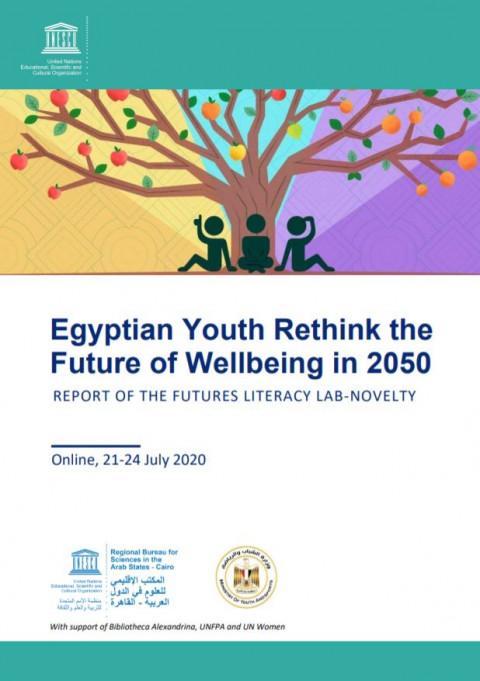 Egyptian Youth Rethink the Future of Wellbeing in 2050: Report of the Futures Literacy Lab-novelty; Online, 21-24 July 2020 Année de publication: 2020 Auteur institutionnel: UNESCO Cairo The UNESCO (Cairo Office and Research, Policy and Foresight Section) and the Egyptian Ministry of Youth and Sport, with support of Bibliotheca Alexandrina, UNFPA and UN Women, organized a Futures Literacy Laboratory - Novelty (FLL-N) entitled “Egyptian Youth Rethink the Future of Wellbeing in 2050”. Held online during 21-24 July 2020, and deploying the latest advances in anticipatory systems thinking and collective intelligence processes, the Lab brought together around 30 persons from across Egypt for 8-hours intensive work spread over a week’s time.Thirty young participants explored the topic of ‘wellbeing’ in Egypt in 2050 using a tool called the Futures Literacy Lab-Novelty (FLL-N). Wellbeing is an open concept that invites many different ways of defining what it means to ‘live well’. The participants engaged in learning-by-doing activities that exercised their imaginations, exploring questions like, how do people in 2050 in Egypt describe ‘wellbeing’? What is daily life like such that people in 2050 believe that they have achieved ‘wellbeing’? By working together to imagine the future this Lab provided an opportunity to better understand the origins of what we imagine, why and how we create the images of the future, and crucially the powerful influence such images have on our fears and hopes, perceptions and choices.
 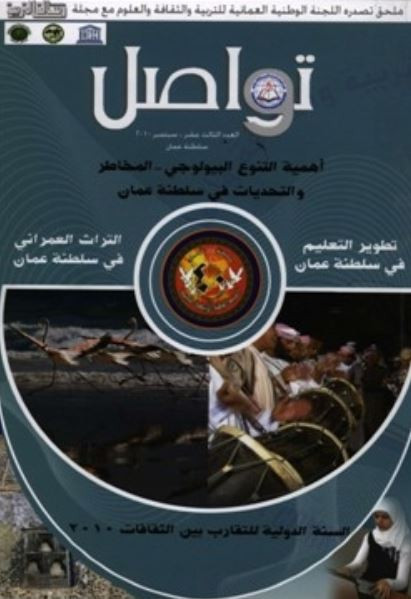 Education for Sustainable Development Conference in Support of Cultural and Biological Diversity, 24-26 January 2011 Année de publication: 2011 Auteur: Salem bin Hilal Al-Habsi | Mahmoud bin Abdullah Al-Abri Auteur institutionnel: Oman National Commission for Education, Culture and Science The text talks about a conference held in the Omani capital, Muscat. The conference focuses on sustainable development to support cultural and biological diversity. This conference comes to support international efforts and help educational systems understand diversity and its importance in the renaissance of peoples. مؤتمر التربية من أجل التنمية المستدامة لدعم التنوع الثقافي والبيولوجي 24 - 26 يناير 2011م Année de publication: 2011 Auteur: Salem bin Hilal Al-Habsi | Mahmoud bin Abdullah Al-Abri Auteur institutionnel: Oman National Commission for Education, Culture and Science يتحدث النص عن مؤتمر تم إقامته في العاصمة العمانية مسقط، ويركز المؤتمر على التنمية المستدامة لدعم التنوع الثقافي والبيولوجي. ويأتي هذا المؤتمر لدعم الجهود الدولية ومساعدة الانظمة التعليمية في فهم التنوع وأهميته في نهضة الشعوب.
 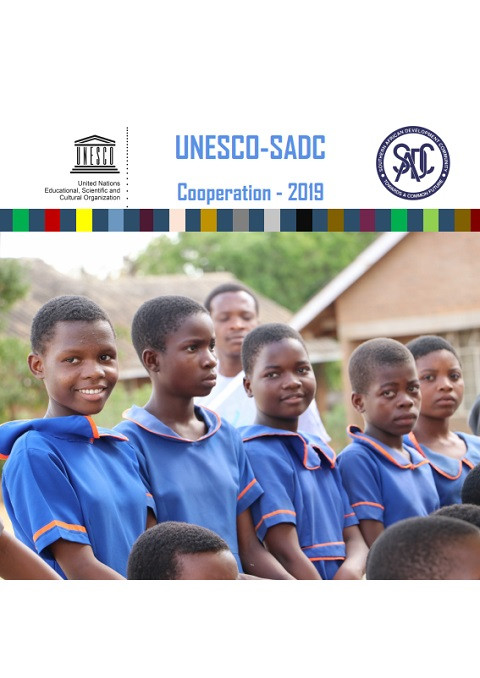 UNESCO-SADC: Cooperation 2019 Année de publication: 2020 Auteur institutionnel: UNESCO Harare UNESCO and SADC have a long standing history that culminated in the signing of a Memorandum of Understanding (MOU) in 1996. In 2017, UNESCO and SADC developed a Joint Programme of Action (JPA) which identifies concrete area of cooperation. These include education; technical and vocational education and training (TVET); youth; HIV and health education; science, technology and innovation (STI); water security, renewable energy and disaster risk management; culture; communication and information (including media for SDGs); and data for development.The purpose of this magazine is to highlight UNESCO’ work to improve education quality in the southern Africa region in partnership with SADC.
  Eighth National Communication and Fifth Biennial Report of the Republic of Kazakhstan to the UN Framework Convention on Climate Change Année de publication: 2023 Auteur institutionnel: UNDP Kazakhstan The 8th National Communication and the 5th Biennial Report of the Republic of Kazakhstan to the UN Framework Convention on Climate Change was prepared by a group of national experts under a joint project of the Ministry of Ecology, Geology and Natural Resources of the Republic of Kazakhstan and the United Nations Development Programme in Kazakhstan with the financial support of the Global Environment Facility. The publication contains all available information on climate change issues in accordance with internationally available guidance. Information from open sources, data from national and international organizations, including governmental departments and agencies were used for composing this report.
 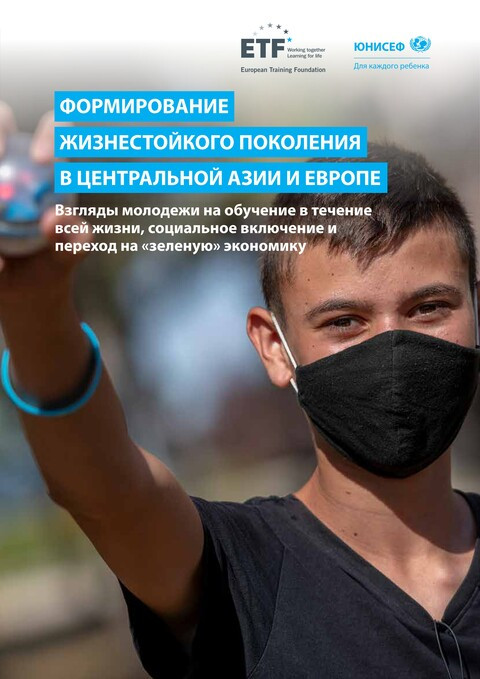 Formation of a Resilient Generation in Central Asia and Europe Année de publication: 2021 Auteur institutionnel: ЮНИСЕФ | Европейский фонд образования In this joint report of the United Nations Children's Fund (UNICEF) and the European Education Foundation (ETF) reflect the views, views and sentiments of young people in Central Asia and Europe, which will be taken into account in regional and international discussions on options for creating more effective lifelong learning systems, more inclusive communities and a more "green" society. Формирование жизнестойкого поколения в Центральной Азии и Европе Année de publication: 2021 Auteur institutionnel: ЮНИСЕФ | Европейский фонд образования В этом совместном отчете Детского фонда ООН (ЮНИСЕФ) и Европейского фонда образования (ЕФО) отражены точки зрения, взгляды и настроения молодежи в регионе ЕЦА, которые будут учитываться в региональных и международных обсуждениях вариантов создания более эффективных систем обучения в течение всей жизни, более инклюзивных сообществ и более «зеленого» общества.
  Le guide qui rend ton évènement plus éco-citoyen Auteur institutionnel: eventecocitoyen Ce guide sert à faciliter le passage à l’action de tous et toutes en proposant des conseils, outils, témoignages et ressources pratiques pour rendre les concerts et/ou festivals de Belgique plus éco-citoyens ! Pour permettre un questionnement, une remise en question en soi, qui implique ensuite des changements de comportements. Ici on vous donne des conseils/trucs et astuces mais aussi des ressources pour vous permettre de réfléchir autrement, d’agrandir notre angle de vue. This guide serves: To help everyone take action by offering advice, tools, testimonials and practical resources to make Belgium's concerts and/or festivals more eco-citizen! To enable questioning, self-questioning, which then implies changes in behavior. Here we give you tips and tricks, but also resources to help you think differently, to widen our angle of vision.