
Ressources
Explorez une large gamme de ressources sur le GCED afin d’approfondir votre compréhension et de renforcer vos activités de recherche, de plaidoyer, d’enseignement et d’apprentissage.
3,790 résultats trouvés
 A Desirable and Practical Approach to Global Citizenship Education: An Exploration of “Global Storylines” in Scotland (Studies in Foreign Education; Vol. 47, No. 3) Année de publication: 2020 Auteur: Rao Shuqi Auteur institutionnel: Northeast Normal University The problems that global citizenship education has to deal with are threefold. “Global Storylines”, which provides corresponding solutions to practical difficulties, has emerged as the most effective approach to global citizenship education in Scotland. Firstly, global citizenship education has enjoyed a long continuity of government support. Through integrating with the current curriculum landscape, “Global Storylines” experiences secure curriculum status. Secondly, by utilizing “storylines” and educational drama, global society and global issues are introduced in subtle forms, which benefits students’ experienced-based learning. The contradiction between students’ cognitive need and ability is resolved accordingly. Thirdly, WOSDEC as the co-creator of “Global Storylines” offers a professional learning program. Teachers are universally supported in terms of theoretical knowledge, practical skills and being involved in the teaching community of global citizenship education.
 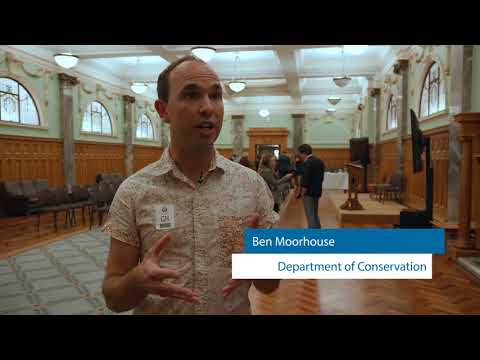 What Does Global Citizenship Education Mean to You? Année de publication: 2018 Auteur institutionnel: New Zealand National Commission for UNESCO At our 2018 Global Citizenship Education Awards (GCED) ceremony, hosted at Parliament by Associate Minister for Education Hon Jenny Salesa, people were asked what GCED meant to them.
 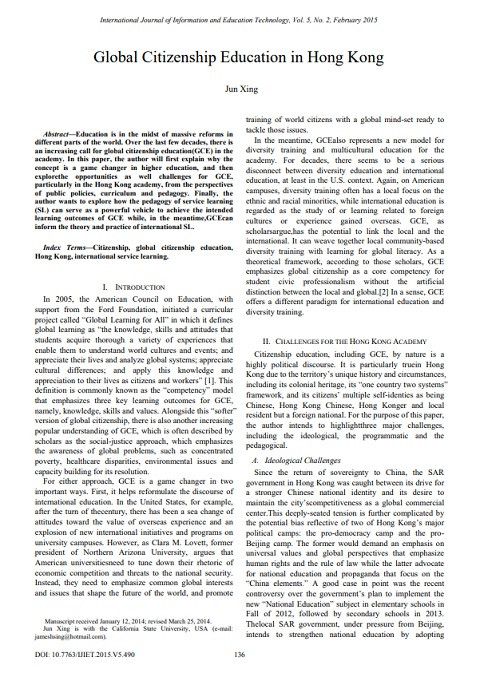 Global Citizenship Education in Hong Kong Année de publication: 2015 Auteur: Jun Xing Auteur institutionnel: IACSIT Press Education is in the midst of massive reforms in different parts of the world. Over the last few decades, there is an increasing call for global citizenship education(GCE) in the academy. In this paper, the author will first explain why the concept is a game changer in higher education, and then explorethe opportunities as well challenges for GCE, particularly in the Hong Kong academy, from the perspectives of public policies, curriculum and pedagogy. Finally, the author wants to explore how the pedagogy of service learning (SL) can serve as a powerful vehicle to achieve the intended learning outcomes of GCE while, in the meantime, GCEcan inform the theory and practice of international SL.
  What's in a Word? The Problem with 'Development' with Dr Karen Pashby Année de publication: 2020 Auteur: Karen Pashby Auteur institutionnel: Bridge 47 Dr Karen Pashby is a Reader at Manchester Metropolitan University and is also part of Bridge 47's Knowledge Exchange Partnership.In this episode, Karen explores development through a post/de-colonial lens, discussing how development is viewed in public discourse and how these effects the field of Development Education.
 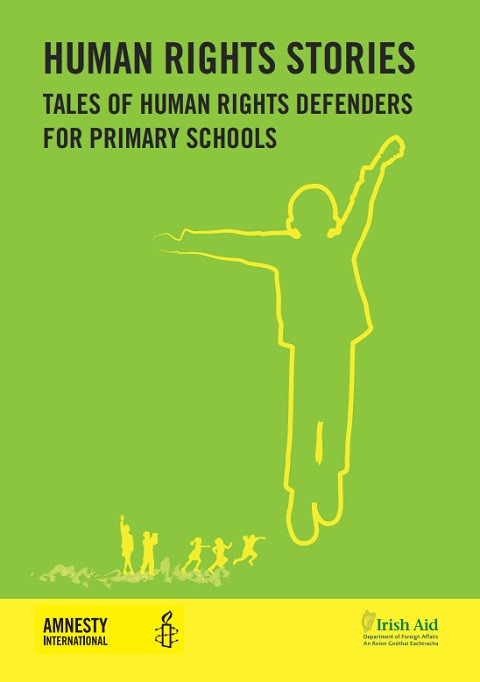 Human Rights Stories: Tales of Human Rights Defenders for Primary Schools Année de publication: 2012 Auteur: Claire Glavey | Fiona O’Shea | Valeria Navarro Auteur institutionnel: Amnesty International Ireland | Irish Aid This resource pack has been developed by Amnesty International Ireland in consultation with an advisory and piloting group of primary school teachers. The concept for the resource pack originated with primary school teachers who identified storytelling as a powerful medium through which a range of concepts and topics can be introduced in the classroom. Human rights issues can appear daunting, distant and theoretical. Through the familiar medium of storytelling, human rights situations can be explored on a level at which children can encounter the real life impact of human rights in practice. Engaging with stories through discussion, creative thinking and character exploration develops the skill of empathy. This brings about the realisation that human rights belong to everyone and that we all have a role to play in ensuring that human rights are protected locally and globally.
  From Rhetoric to Reality: Identifying Teacher Opportunities and Barriers in Educating for Human Rights (Journal of Global Citizenship & Equity Education; Vol. 7, No. 1) Année de publication: 2020 Auteur: Wanda Cassidy | Özlem Sensoy | Kumari Beck Auteur institutionnel: Centennial College In this paper we report findings from a four-year study into legal literacy that examined educational opportunities and barriers when teaching about legal literacy, citizenship education, and human rights education. Detailed findings are drawn from interviews with eleven teachers who self-identify as valuing and embedding legal literacy and related themes (human rights, identity, citizenship, and ecological sustainability) in their classrooms. Results show that despite deep rhetorical commitments to human rights education, teachers are stymied by perceived barriers to implementing HRE, particularly the action dimension. We name these perceived barriers and examine the case of one of the teachers who seemingly has overcome them, in order to identify potential constructive interventions in teacher education.
  Mapping Digital Literacy Policy and Practice in the Canadian Education Landscape Année de publication: 2015 Auteur: Michael Hoechsmann | Helen DeWaard Auteur institutionnel: MediaSmarts This paper Mapping Digital Literacy Policy and Practice in the Canadian Landscape draws on policy and curriculum documents from across Canada to synthesize key concepts and best practices in current digital literacy education.
 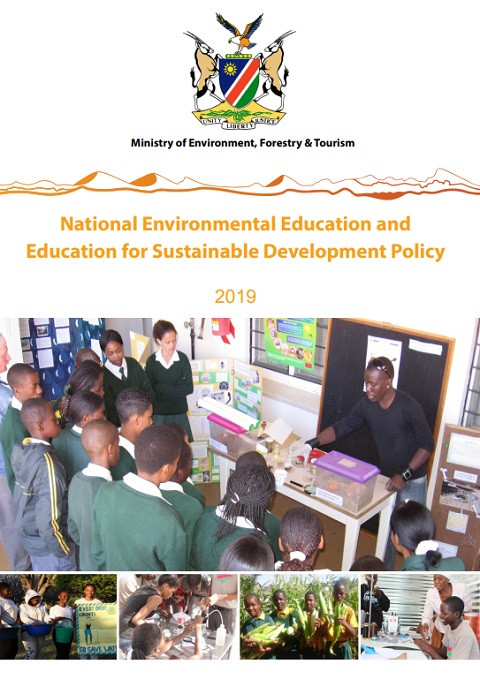 National Environmental Education and Education for Sustainable Development Policy Année de publication: 2019 Auteur institutionnel: Namibia. Ministry of Environment, Forestry and Tourism Namibia has become the first country in the SADC region to have a stand-alone National Environmental Education (EE) and Education for Sustainable Development (ESD) Policy. The development of the policy was a long time collaboration between government ministries and civil society. UNESCO through the Sustainability Starts with Teachers programme also supported the process.The vision of the national EE/ESD Policy is an “educated and empowered Namibia with environmentally literate people taking responsibility and action for a sustainable future”.The policy is designed to support EE and ESD in formal, non-formal and informal education processes across all sectors of the Namibian society including higher education, teacher education, technical and vocational education institutions, and general education. It gives Namibia the much-needed foundation to work towards ESD for 2030 and the sustainable development goals (SDGs).
  Metodologías para la educación transformadora y la ciudadanía global Année de publication: 2018 Auteur: Rubén Gallego Auteur institutionnel: InteRed | Agencia Vasca de Cooperación al Desarrollo | Diputación Foral de Bizkaia La Pedagogía de los cuidados hace necesaria buscar metodologías que sean coherentes con lo que busca, y por ello, diferentes de la tradicional forma enseñanza – aprendizaje. Necesitamos una metodología que haga primero vivenciar las cosas, sentirlas, para teorizarlas después; una metodología que rescate el valor pedagógico del juego, del encuentro, que apueste por el impacto terapéutico del afecto. Es necesario estar convencidos de que una sola vivencia, una experiencia, puede más que miles de palabras. Por ello, en este módulo, presentamos tres grupos de metodologías, con dos propuestas metodológicas cada una: Las metodologías lúdicas: juego cooperativo y Ludopedagogía Las metodologías artísticas: técnicas ludicoteatrales y Arteterapia. Las metodologías experienciales: Aprendizaje-Servicio con enfoque de derechos y Aprendizaje Basado en Proyectos transformadores con mirada global.
 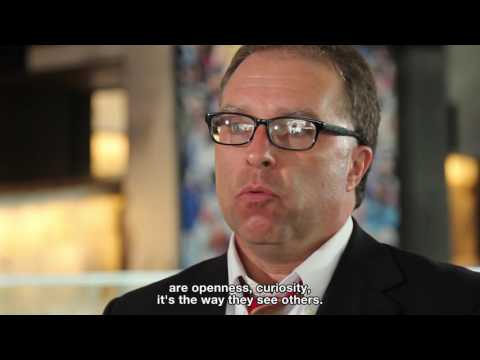 Citoyenneté mondiale: Citoyens du monde au 21e siècle Année de publication: 2016 Auteur institutionnel: Conseil Arts Canada Des participants de la Conférence nationale des écoles UNESCO se sont exprimés sur la définition de la citoyenneté mondiale et sur les qualités d'un citoyen du monde. L’événement avait lieu dans le cadre de la 56e Assemblée générale annuelle de la Commission canadienne pour l’UNESCO et avait pour but de promouvoir le rôle de chef de file de l'UNESCO dans l'Agenda 2030 pour l'éducation. Cette vidéo a été produite au Musée canadien pour les droits de la personne, à Winnipeg, au Manitoba.