
Ressources
Explorez une large gamme de ressources sur le GCED afin d’approfondir votre compréhension et de renforcer vos activités de recherche, de plaidoyer, d’enseignement et d’apprentissage.
2,781 résultats trouvés
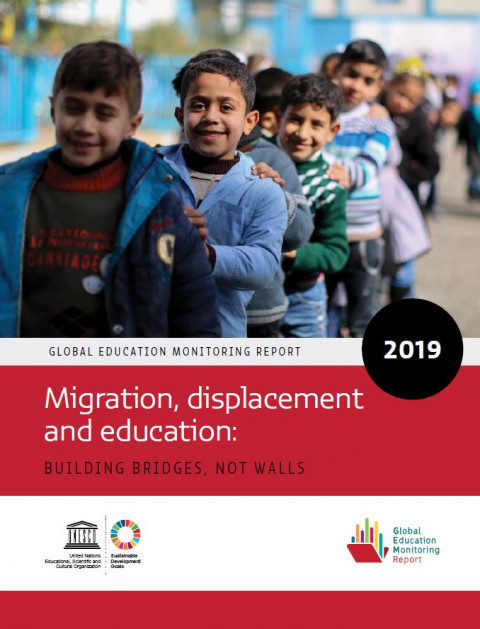 全球教育监测报告2019:移徙、流离失所和教育:要搭建桥梁,不要筑起高墙 Année de publication: 2018 Auteur institutionnel: 联合国教科文组织 (UNESCO) | Global Education Monitoring Report Team 2019年《全球教育监测报告》结合各种形式的人口流动情况 (境内和跨境、自愿和强迫、寻找工作和求学深造),深入探讨 了移徙和流离失所问题在教育方面产生的影响。本报告还回顾了 《2030年可持续发展议程》的教育内容取得的进展。关于移民和难民问题的两项新的全球契约承认教育的作用,并依据 “不让任何一个人掉队”的全球承诺制定了目标。本报 告是这两份契约的重要工具包,其中涉及的政策问题包括以下方 面:季节性移徙者的教育;农村学校合并;跨文化课程;将难民 纳入国家教育系统并消除隔离;承认资历;着力解决学校资金问 题;提供更有成效的人道主义教育援助;培养教师学会应对各种 课堂情况。报告呼吁各国将教育作为管理移徙和流离失所问题的工具,并认识到教育为需要这项工具的国家带来了机会。 Global Education Monitoring Report, 2019: Migration, Displacement and Education: Building Bridges, Not Walls Année de publication: 2018 Auteur institutionnel: UNESCO | Global Education Monitoring Report Team The 2019 Global Education Monitoring Report examines the education impact of migration and displacement across all population movements: within and across borders, voluntary and forced, for employment and education. It also reviews progress on education in the 2030 Agenda for Sustainable Development.Two new global compacts on migrants and refugees recognize education’s role and set objectives aligned with the global commitment to leave no one behind. This report is a vital toolkit for these compacts. It covers policy issues that address seasonal migrants, rural school consolidation, intercultural curricula, refugee inclusion in national education systems and elimination of segregation, qualifications recognition, targeting of school funding, more effective humanitarian education aid and teacher preparedness for diverse classrooms in emergency, protracted and “new normal” contexts.The report calls on countries to see education as a tool to manage migration and displacement and an opportunity for those needing one.
 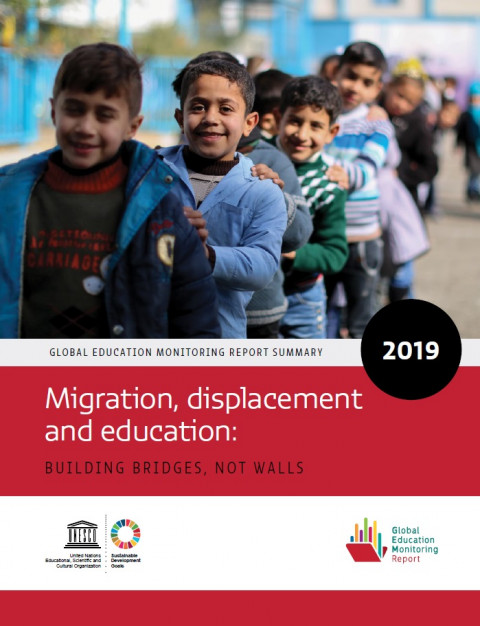 [Summary] Global Education Monitoring Report Summary 2019: Migration, Displacement and Education: Building Bridges, Not Walls Année de publication: 2018 Auteur institutionnel: UNESCO | Global Education Monitoring Report Team This Report points directly to a major challenge: How can teachers be supported to practise inclusion? It offers us fascinating insights into humanity and the age-old phenomenon of migration. I invite you to consider its recommendations and to act on them. This report is a vital toolkit for these compacts. It covers policy issues that address seasonal migrants, rural school consolidation, intercultural curricula, refugee inclusion in national education systems and elimination of segregation, qualifications recognition, targeting of school funding, more effective humanitarian education aid and teacher preparedness for diverse classrooms in emergency, protracted and “new normal” contexts. This summary of the 2019 GEM Report calls on countries to see education as a tool to manage migration and displacement and an opportunity for those needing one.
 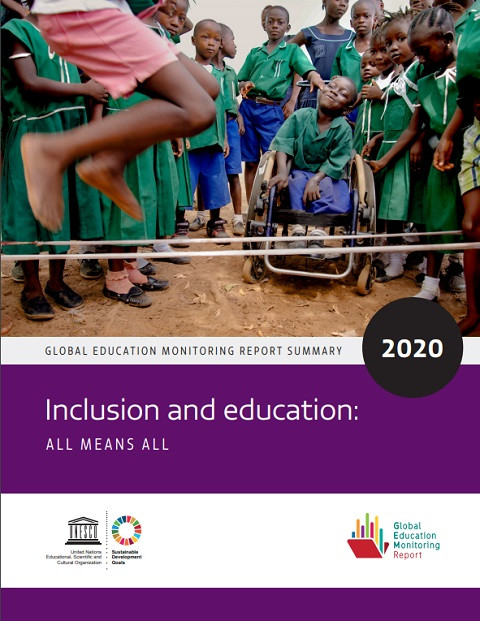 [Summary] Global Education Monitoring Report Summary 2020: Inclusion and Education; All Means All Année de publication: 2020 Auteur institutionnel: UNESCO | Global Education Monitoring Report Team The 2020 Global Education Monitoring Report looks at social, economic and cultural mechanisms that discriminate against disadvantaged children, youth and adults, keeping them out of education or marginalized in it. Spurred by their commitment to fulfil the right to inclusive education, countries are expanding their vision of inclusion in education to put diversity at the core of their systems. Yet implementation of well-meaning laws and policies often falters. Released at the start of the decade of action to 2030, and in the middle of the Covid-19 crisis, which has exacerbated underlying inequalities, the Report argues that resistance to addressing every learner’s needs is a real threat to achieving global education targets. [Résumé] Résumé du rapport mondial de suivi sur l’éducation 2020: Inclusion et éducation; Tous, sans exception Année de publication: 2020 Auteur institutionnel: Organisation des Nations Unies pour l'éducation, la science et la culture (UNESCO) | Global Education Monitoring Report Team L’édition 2020 du Rapport mondial de suivi sur l’éducation examine les mécanismes sociaux, économiques et culturels qui discriminent les enfants, les jeunes et les adultes défavorisés, les tenant à l’écart de l’éducation ou les marginalisant en son sein. Encouragés par leur engagement à réaliser le droit à l’éducation inclusive, les pays élargissent leur vision de l’inclusion dans l’éducation afin de placer la diversité au cœur de leurs systèmes. Pourtant, la mise en œuvre de lois et de politiques bien intentionnées échoue souvent. Publié au début de la décennie d’action à l’horizon 2030, et en pleine crise de COVID-19 qui a exacerbé les inégalités existantes, rapport affirme que la résistance à la prise en compte des besoins de chaque apprenant constitue une menace réelle pour la réalisation des objectifs mondiaux d’éducation. [Resumen] Resumen del informe de seguimiento de la educación en el mundo 2020: Inclusión y educación; Todos sin excepción Année de publication: 2020 Auteur institutionnel: Organización de las Naciones Unidas para la Educación, la Ciencia y la Cultura (UNESCO) | Global Education Monitoring Report Team En el Informe de Seguimiento de la Educación en el Mundo 2020 se examinan los mecanismos sociales, económicos y culturales que discriminan a niños, jóvenes y adultos desprotegidos, manteniéndolos excluidos de la educación o marginados dentro de ella. Estimulados por su compromiso de hacer realidad el derecho a la educación inclusiva, los países están ampliando su visión de la inclusión en la educación y otorgando a la diversidad un lugar central en sus sistemas. Sin embargo, la aplicación de leyes y políticas bienintencionadas suele flaquear. El informe, publicado a principios del decenio de acción que culmina en 2030 y en el contexto de la crisis de Covid-19 que ha exacerbado las desigualdades subyacentes, sostiene que la resistencia a atender las necesidades de todos los educandos es una verdadera amenaza para el logro de los objetivos mundiales de educación. Pезюме всемирного доклада по мониторингу образования 2020: Инклюзивность и образование; для всех означает для всех Année de publication: 2020 Auteur institutionnel: Организация Объединенных Наций по вопросам образования, науки и культуры (UNESCO) | Global Education Monitoring Report Team Во Всемирном докладе по мониторингу образования за 2020 г. рассматриваются социальные, экономические и культурные механизмы, которые служат источниками дискриминации обездоленных детей, молодых людей и взрослых, не позволяя им получать образование или отводя им маргинальное место. В подтверждение своей приверженности делу осуществления права на инклюзивное образование страны расширяют свое видение инклюзивности в образовании, отводя разнообразию центральное место в рамках своих систем. Однако воплотить в жизнь правильные, по сути, законы и стратегии часто не удается. В настоящем докладе, вышедшем в начале десятилетия действий на период до 2030 г., в разгар кризиса COVID-19, усугубившего основные формы неравенства, утверждается, что отказ обеспечить удовлетворение потребностей каждого учащегося представляет собой реальную угрозу для решения глобальных задач в области образования.
  Enforcing the right to education of refugees: a policy perspective Année de publication: 2019 Auteur institutionnel: UNESCO This paper, aimed at education policymakers, provides analysis and insights on how the right to education for refugees could be ensured from a policy perspective. It does so by reviewing the current status of access to education of refugees, using the scant data that is available in this area. It also outlines some of the extensive barriers to education that refugees face, with recognition of the multifaceted, interlinked and complex nature of exclusion. It provides an overview of the international normative frameworks and global agendas on education that can be applied to refugees to ensure their right to education and achieve SDG 4. Additionally, this document presents practical examples, good practices, and promising measures taken by countries in order to ensure the inclusion of refugees in their national systems and better guarantee the fulfilment of their right to education. As a result of this research, collaboration and the invaluable contributions from the participants in a dedicated Expert Meeting in Barcelona (2018), a set of policy recommendations are provided in the last chapter which aims to guide policymakers to ensure equal access to good quality education for refugees.
  I'd blush if I could: closing gender divides in digital skills through education Année de publication: 2019 Auteur: Mark West | Rebecca Kraut | Han Ei Chew Auteur institutionnel: UNESCO | EQUALS Skills Coalition This publication seeks to expose some of these biases and put forward ideas to begin closing a digital skills gender gap that is, in most parts of the world, wide and growing. Today, women and girls are 25 per cent less likely than men to know how to leverage digital technology for basic purposes, 4 times less likely to know how to programme computers and 13 times less likely to file for a technology patent. Ata moment when every sector is becoming a technology sector, these gaps should make policy-makers, educators and everyday citizens ‘blush’ in alarm. The publication explains the role gender-responsive education can play to help reset gendered views of technology and ensure equality for women and girls. This publication was prepared by UNESCO for the EQUALS Skills Coalition, one of three coalitions that comprise the EQUALS partnership. EQUALS is a global partnership of governments and organizations dedicated topromoting gender balance in the technology sector by championing equality of access, skills and leadership for women and men alike. The Skills Coalition, Access Coalition, Leadership Coalition and a transversal Research Group release knowledge products periodically, organize competitions and funds, and take actions in countries and internationally to advance EQUALS’smission. The German Federal Ministry for Economic Cooperation and Development (BMZ) generously supported this publication financially and co-leads the EQUALS Skills Coalition with UNESCO. A dedicated working group composed of digital skills and gender experts guided the development of the content.
  برنامج الملك عبد الله بن عبد العزيز الدولي لثقافة السلام والحوار: أهم منجَزات المرحلة الأولى Année de publication: 2016 Auteur institutionnel: منظمة الأمم المتحدة للتربية والعلم والثقافة (UNESCO) انبثق برنامج الملك عبد الله بن عبد العزيز الدولي لثقافة السلام والحوار من الإطار المؤسسي لبرنامج اليونسكو لثقافة السلام واللاعنف.إن ثقافة السلام لا تقتصر على كونها مفهوماً بل تتعداه إلى كونها التزاماً بجعل السلام واقعاً ملموساً للجميع. فهي تعبِّ عن “مجموعة من القيم والمواقف والتقاليدوأنماط السلوك وأساليب الحياة تستند إلى [...] احترام الحياة وإنهاء العنف [... و] التمسك بمبادئ الحرية والعدل والديمقراطية والتسامح والتضامنوالتعاون والتعددية والتنوع الثقافي والحوار والتفاهم على مستويات المجتمع كافة وفيما بين الأمم” (المادة 1 من إعلان وبرنامج العمل بشأن ثقافة السلام،اليونسكو، 1999 ). وتثابر اليونسكو على العمل لغرس ثقافة السلام مع مراعاة اعتبارات التنمية، بمضافرة القوى مع أصحاب المصلحة الملتزمين فيمجال التربية والعلوم والثقافة، والاتصال والإعلام.