
Ressources
Explorez une large gamme de ressources sur le GCED afin d’approfondir votre compréhension et de renforcer vos activités de recherche, de plaidoyer, d’enseignement et d’apprentissage.
3,453 résultats trouvés
 UNESCO's Contribution to the Prevention of Violant Extremism Année de publication: 2016 Auteur institutionnel: UNESCO This document provides a summary of recent efforts by UNESCO to step up its action to prevent violent extremism, in the context of the United Nations Secretary-General’s Plan of Action on Violent Extremism, launched in January 2016. Building on its mandate and existing activities, UNESCO has adopted an intersectoral approach, paying particular attention to the needs of young people particularly at risk of radicalization.
 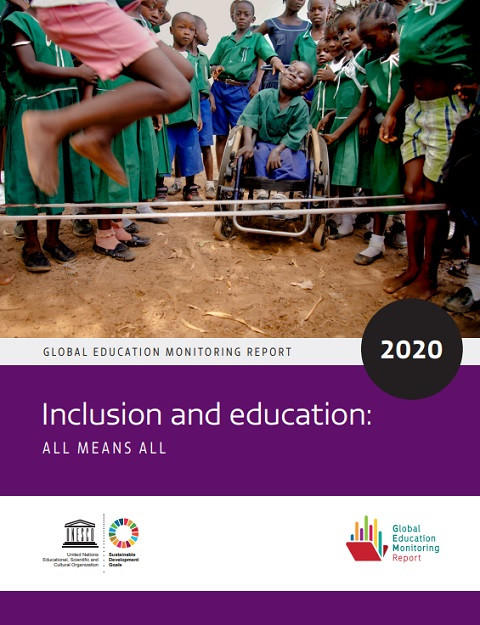 Informe de seguimiento de la educación en el mundo 2020: Inclusión y educación: Todos y todas sin excepción Année de publication: 2020 Auteur institutionnel: Global Education Monitoring Report Team | Organización de las Naciones Unidas para la Educación, la Ciencia y la Cultura (UNESCO) En el Informe de Seguimiento de la Educación en el Mundo 2020 se examinan los mecanismos sociales, económicos y culturales que discriminan a niños, jóvenes y adultos desprotegidos, manteniéndolos excluidos de la educación o marginados dentro de ella. Estimulados por su compromiso de hacer realidad el derecho a la educación inclusiva, los países están ampliando su visión de la inclusión en la educación y otorgando a la diversidad un lugar central en sus sistemas. Sin embargo, la aplicación de leyes y políticas bienintencionadas suele flaquear. El informe, publicado a principios del decenio de acción que culmina en 2030 y en el contexto de la crisis de Covid-19 que ha exacerbado las desigualdades subyacentes, sostiene que la resistencia a atender las necesidades de todos los educandos es una verdadera amenaza para el logro de los objetivos mundiales de educación.En Inclusión y educación: todos y todas sin excepción se definen prácticas en materia de gobernanza y finanzas; planes de estudios, manuales escolares y evaluaciones; formación de los docentes; infraestructura escolar; y relaciones con los alumnos, los padres y las comunidades que pueden desbloquear el proceso hacia la inclusión. Se formulan recomendaciones de política para que la diversidad de los educandos sea una fuerza que se valora, una fuerza de cohesión social.Dos nuevos sitios web complementan la cuarta edición del Informe de Seguimiento de la Educación en el Mundo. Education Profiles (Perfiles educativos) describe la manera en que los países abordan la inclusión, y constituye un medio útil para el diálogo sobre políticas. Education Progress (El Progreso de la educación) brinda la oportunidad de interactuar con los datos y explorar una serie de indicadores del ODS 4.
 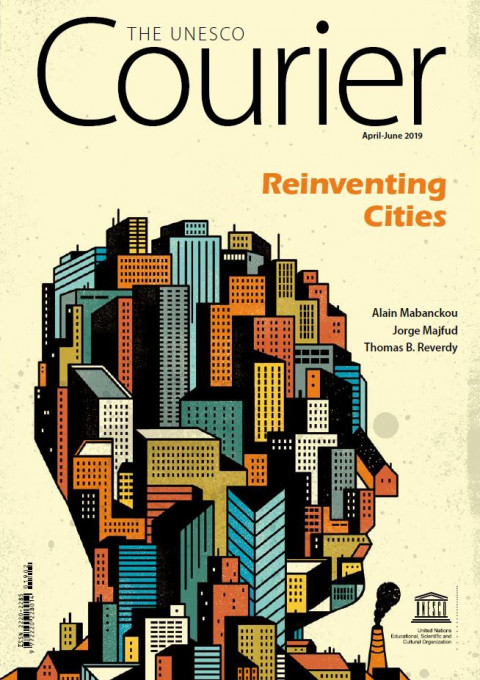 Cuando las ciudades se renuevan (El Correo de la UNESCO no. 2, abril-junio 2019) Année de publication: 2019 Auteur: Alain Mabanckou | Jorge Majfud | Thomas B. Reverdy Auteur institutionnel: Organización de las Naciones Unidas para la Educación, la Ciencia y la Cultura (UNESCO) Las ciudades siempre han sido centros de poder, atracción y prosperidad. Pero la urbanización descontrolada que ha tenido lugar en las últimas décadas pone en peligro su función histórica de crisoles de culturas.A medida que aumenta la población, las ciudades se deshumanizan: violencia, desigualdad, discriminación… Mientras más crecen, mayores dimensiones adquieren esos males que las asedian.Pero al tiempo que se deshumanizan, las ciudades se renuevan. Del ingenio para buscarse la vida en Kinsasa (RDC) a los grandes proyectos nacionales de rehabilitación de urbes monoindustriales en Rusia; de la iniciativa personal de un galerista que sacó de su somnolencia a la pequeña villa de Erriadh (Túnez) a la movilización de masas contra la apropiación autoritaria del espacio público en Varsovia (Polonia); de los movimientos de solidaridad con los migrantes que operan en Londres (Reino Unido) a las sinergias que hacen revivir el casco antiguo de La Habana (Cuba), surgen y se organizan fuerzas creadoras que dan a la vida urbana nuevo sentidos y perspectivas inéditas. Cabe pensar que se trata de “minúsculas resistencias”, para usar la expresión del escritor francés Thomas B. Reverdy, pero son esas mínimas fuerzas las que marcan la diferencia.Otros dos escritores comparten sus puntos de vista con nuestros lectores en el presente número. Nuestro invitado, el franco-congoleño Alain Mabanckou, nos habla de las “Áfricas móviles” y del coraje de escribir, mientras hace hincapié en pasajes contradictorios de la historia colonial. Por su parte, el escritor uruguayo-estadounidense Jorge Majfud denuncia las actitudes racistas hacia los migrantes en la sección Ideas, en la que además se ofrece un análisis de las políticas migratorias de Estados Unidos.En la sección De actualidad, publicamos , con motivo del Día de África (25 de mayo), una entrevista con Tshilidzi Marwala (Sudáfrica) sobre el auge de la inteligencia artificial (IA) en ese continente. Para festejar el Día Internacional de la Diversidad Biológica (22 de mayo), visitamos el Gran Pajatén (Perú) con Roldán Rojas Paredes, el hombre que promovió la inscripción de este sitio en la Red de Reservas de Biosfera de la UNESCO. Asimismo viajamos a Sharjah (Emiratos Árabes Unidos), que en abril de 2019 presenta su programa de capital mundial del libro.Por último, en la sección Zoom, visitamos lugares carentes de electricidad en la India, México, Myanmar y Uganda. ¡Una vuelta al mundo modesta pero muy luminosa! Города: в поисках новых перспектив (Курьер ЮНЕСКО no. 2, апрель-июнь 2019 года) Année de publication: 2019 Auteur: Alain Mabanckou | Jorge Majfud | Thomas B. Reverdy Auteur institutionnel: Организация Объединенных Наций по вопросам образования, науки и культуры (UNESCO) На протяжении всей истории человечества города всегда оставались синонимом мощи, привлекательности и процветания. Однако в результате стремительной урбанизации, наблюдаемой в последние десятилетия, они могут лишиться своей функции «плавильных котлов», где встречались и смешивались представители самых разных слоев общества. По мере роста городского населения мегаполисы все больше утрачивают человеческий облик. Насилие, неравенство и дискриминация становятся обыденным явлением, и масштабы этих проблем зачастую прямо пропорциональны размеру города.Однако наряду с дегуманизацией города претерпевают целый ряд других коренных изменений. В стремлении преодолеть возникающие трудности, наполнить городскую жизнь новым смыслом и открыть новые перспективы развития они задействуют весь свой творческий потенциал.Примеров изобретательности городов целое множество. Основанные на находчивости стратегии выживания, которыми в совершенстве овладели жители Киншасы (Демократическая Республика Конго), крупные национальные проекты по возрождению промышленных моногородов в России, личная инициатива галериста, выведшая тунисский городок Эррияд из оцепенения, всеобщая мобилизация против захвата властями общественного пространства в Варшаве (Польша), движения солидарности с мигрантами в Лондоне (Соединенное Королевство), проект по реставрации центра города Гаваны (Куба) с активным привлечением местного населения – вот лишь некоторые примеры изобретательности городов, о которых мы рассказываем в этом выпуске «Курьера».На первый взгляд может показаться, что это лишь единичные случаи «мелкого противостояния», если позаимствовать выражение французского писателя Тома Б. Реверди, но именно благодаря им перемены становятся возможны.Своими взглядами с читателями этого номера делятся и два других литератор а. Наш гость франко-конголезский писатель Ален Мабанку рассказывает нам о своих «трех Африках», о противоречивом колониальном прошлом и о писательском мужестве. В свою очередь, уругвайско-американский писатель Хорхе Махфуд, чью статью вы найдете в рубрике «Идеи», указывает на расистское отношение к мигрантам. Эту тему продолжает другой текст из тойже рубрики, предлагающий анализ иммиграционнойполитики США.В разделе «Новости» читателя ждут статьи, посвященные знаменательным событиям этого триместра. Так, по случаю Всемирного дня Африки (25 мая) мы публикуем интервью с южноафриканским ученым Тшилидзи Марвалой, который расскажет нам о зарождении Индустрии 4.0 на этом континенте. 22 мая в мире отмечается Международный день биологического разнообразия, в связи с чем мы посетили биосферный заповедник Гран-Пахатен в Перу и побеседовали с Ролданом Рохас Паредесом, по инициативе которого он был включен в Сеть биосферных заповедников ЮНЕСКО. Еще один текст перенесет нас в Шарджу (Объединенные Арабские Эмираты), которая в апреле 2019 года вступит в звание Всемирной столицы книги.Наконец, рубрика «Фокус» прольет свет на лишенные электричества районы И ндии, Мексики, Мьянмы и Уганды. Приятного путешествия по страницам «Курьера»! Reinventing Cities (The UNESCO Courier no. 2, April-June 2019) Année de publication: 2019 Auteur: Alain Mabanckou | Jorge Majfud | Thomas B. Reverdy Auteur institutionnel: UNESCO Cities have always been centres of power, attractiveness and prosperity. But the renetic urbanization of recent decades is jeopardizing their historical function as elting pots that integrate and absorb newcomers. As they become more populated, they become dehumanized. Violence, inequality, discrimination – the larger the cities, the more these ills overwhelm them.Nevertheless, even as they are dehumanized, cities are reinventing themselves. From street smarts as a survival strategy in Kinshasa (Democratic Republic of the Congo) to major national projects for the rehabilitation of single-industry cities in Russia; from the personal initiative of a gallery owner who revitalized the small town of Erriadh (Tunisia) to the mobilization of the masses against the authoritarian ppropriation of public spaces in Warsaw (Poland); and from solidarity movements with migrants in London (United Kingdom) to synergies that revive the heart of Havana (Cuba) – creative forces are emerging and organizing themselves to give urban life new meanings and new perspectives. We may believe these are “tiny resistances” – to use the expression of the French writer Thomas B. Reverdy – but they make all the difference.Two other writers share their views with our readers in this issue. Our Guest, the French-Congolese author Alain Mabanckou, talks about “mobile Africas” and the courage to write, while highlighting contradictory moments in colonial history. The Uruguayan-American writer Jorge Majfud condemns the racist attitude towards migrants in the Ideas section, which also provides an analysis of migration policies in the United States.In the Current Affairs section – on the occasion of World Africa Day, 25 May – we publish an interview with Tshilidzi Marwala (South Africa), on the emergence of artificial intelligence (AI) on the continent. To mark the International Day for Biological Diversity, 22 May, we visit Gran Pajatén, Peru, with Roldán Rojas Paredes – the man who initiated its inscription on UNESCO’s World Network of Biosphere Reserves.We also go to Sharjah (United Arab Emirates), which launches its World Book Capital programme in April 2019. Finally, with Zoom, we travel to India, Mexico, Myanmar and Uganda, to visit places without electricity. An illuminating trip around the world! Ces villes qui se réinventent (Le Courrier de l'UNESCO no. 2, Avril-juin 2019) Année de publication: 2019 Auteur: Alain Mabanckou | Jorge Majfud | Thomas B. Reverdy Auteur institutionnel: Organisation des Nations Unies pour l'éducation, la science et la culture (UNESCO) Les villes ont toujours été des centres de pouvoir, d’attractivité, de prospérité. Mais l’urbanisation effrénée, enregistrée ces dernières décennies, met en péril leur fonction historique de melting-pots.Au fur et à mesure qu’elles se peuplent, elles se déshumanisent : violences, inégalités, discriminations… Plus les villes sont grandes, plus ces fléaux qui les accablent prennent de l’ampleur.Néanmoins, en même temps qu’elles se déshumanisent, les villes se réinventent. De la débrouille comme stratégie de survie à Kinshasa (RDC) aux grands projets nationaux de réhabilitation des villes mono-industrielles en Russie, de l’initiative personnelle d’un galeriste qui a sorti de sa torpeur la petite ville d’Erriadh (Tunisie) à la mobilisation des masses contre l’appropriation autoritaire de l’espace public à Varsovie (Pologne), des mouvements de solidarité avec les migrants à Londres (Royaume-Uni) aux synergies qui font revivre le coeur de La Havane (Cuba), des forces créatrices surgissent et s’ordonnent pour doter la vie urbaine de nouveaux sens, de nouvelles perspectives. On peut croire que ce sont de « minuscules résistances », pour reprendre l’expression de l’écrivain français Thomas B. Reverdy, mais ce sont elles qui font la différence.Deux autres écrivains partagent leurs points de vue avec nos lecteurs, dans ce numéro. Notre invité, le Franco-Congolais Alain Mabanckou, nous parle des « Afriques mobiles » et du courage d’écrire, tout en soulignant des passages contradictoires de l’histoire coloniale. Quant à l’écrivain uruguayen-américain Jorge Majfud, il dénonce l’attitude raciste à l’égard des migrants, dans la rubrique Idées, qui propose par ailleurs une analyse des politiques migratoires aux États-Unis.Dans la rubrique Actualités, nous publions, à l’occasion de la Journée mondiale de l’Afrique (25 mai), un entretien avec Tshilidzi Marwala (Afrique du Sud) sur l’émergence de l’intelligence artificielle (IA) dans le continent. Pour marquer la Journée internationale de la diversité biologique (22 mai), nous visitons le Gran Pajatén, au Pérou, avec Roldán Rojas Paredes, l’homme qui a initié son inscription dans le Réseau des réserves de biosphère de l’UNESCO. Nous allons également à Sharjah, aux Émirats arabes unis, qui lance son programme de Capitale mondiale du livre en avril 2019.Enfin, avec Zoom, nous allons en Inde, au Mexique, au Myanmar et en Ouganda, dans des lieux privés d’électricité. Un petit tour du monde tout en lumière !
 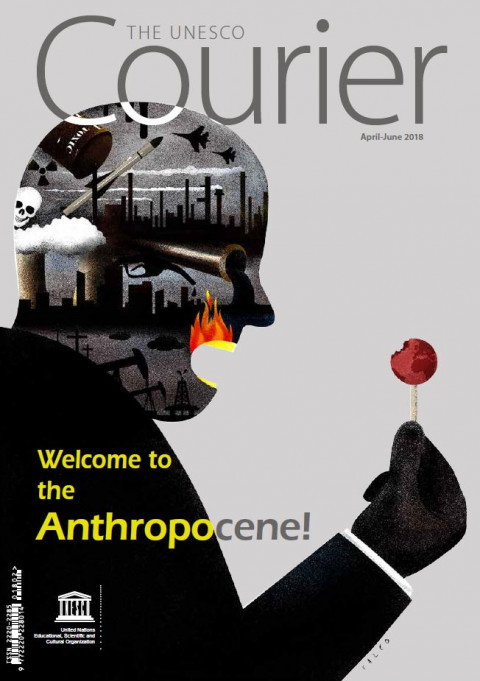 Welcome to the Anthropocene! (The UNESCO Courier no. 2, April-June 2018) Année de publication: 2018 Auteur institutionnel: UNESCO In the Ideas section of this issue, three internationally celebrated academics consider the notion of diversity – Mireille Delmas-Marty, a member of the Institut de France; Souleymane Bachir Diagne, Senegalese philosopher; and Abdourahman Waberi, novelist and diarist from Djibouti. With these articles, the Courier marks the celebrations of the World Day for Cultural Diversity for Dialogue and Development (21 May) and the International Day for Biological Diversity (22 May).Our Guest for this issue is Bibi Russell, a fashion designer from Bangladesh. A former top model in London, she quit the catwalk to devote herself to using fashion for development. She is currently working in India, helping young women, some of whom were trafficked as children, to find their bearings and start a new life.To mark UNESCO’s Africa Week in May, we focus on youth in the West and the South of the continent, in our Current Affairs section. After visiting Athens, World Book Capital 2018, we travel to Canada’s Northwest territories, on the other side of the world, to discover the people of Great Bear Lake, in the Tsá Tué biosphere reserve – established and looked after by the indigenous community that lives there.Finally, Zoom invites us to follow an ordinary day in the life of Qello, a 13-year old girl in Ethiopia, hour by hour.The UNESCO Courier celebrates its 70th birthday in 2018. Each issue this year will feature an article that looks back at this extraordinary adventure. In this issue, Roberto Markarian, Rector of the University of the Republic, Uruguay, recounts the story of the role the Courier has played in his life. Bienvenue dans l'Anthropocène! (Le Courrier de l'UNESCO no. 2; Avril-Juin 2018) Année de publication: 2018 Auteur institutionnel: Organisation des Nations Unies pour l'éducation, la science et la culture (UNESCO) Selon les uns, l’Anthropocène n’est qu’un autre nom pour l’époque que nous appelons Holocène, les humains ayant commencé à exercer une pression sur l’environnement depuis 10 000ans, c’est-à-dire depuis leur sédentarisation et l’invention de l’agriculture. Selon d’autres, l’Anthropocène commencerait autour de 1800, avec la révolution industrielle. D’autres encore voient l’Anthropocène éclore dupremier champignon atomique de 1945. Malgré ces divergences, très rares sont ceux qui ne reconnaissent pas qu’au cours du dernier demi-siècle l’état de la planète s’est dégradé plus rapidement et plus dramatiquement que jamais : amasgigantesques de plastique sur les plages et dans les mers, développement sans précédent de nouveaux matériaux qui couvrent la surface terrestre et ne se recyclent que très peu, sols gorgés d’engrais, augmentation du taux d’acidité des mers, tauxde pollution sans précédent, érosion des forêts tropicales, dérèglement desécosystèmes, extinction massive des espèces et diminution drastique de la biodiversité, réchauffement climatique...À qui la faute ? Auxhumains – répond lamajorité des scientifiques. Reste à savoir si nous devrions tous porter la même charge deresponsabilité. Certains blâmant avant tout le système capitaliste né en Occident, parlent de Capitalocène ou d’Occidentalocène. Courons-nous à la catastrophe? Des voix s’élèvent pour prophétiser la fin du monde! Des notions comme Chtulhucène ou Thanatocène sont avancées pour signifier que le monstre rôde, quela mort nous guette... Des experts, bien plus modérés, n’en sont pas moins inquiets face à l’indécision des décideurs. «Tout se passe comme si l’humanité, léthargique, attendait la fin du film et le moment où les héros viendront tout arranger et où nous serons tous heureux pour toujours», lira-t-on dans ces pages.Le débat fait rage, les solutions tardent à venir. Le Courrier fait le point.
  Holocaust Education in a Global Context: Report Année de publication: 2013 Auteur institutionnel: UNESCO Teaching and learning about the Holocaust, which until this point had largely been a matter of regional interest, for Europeans, as well as North Americans and Israelis, became officially an issue of universal concern. Other countries are now invited to teach about the Holocaust even if they do not have a direct link to the event. This raises many issues concerning the pedagogical implications of this global perspective on Holocaust education. Why and how is the Holocaust taught in countries that have no connections with the genocide and the history of the Jewish people? How does this history connect and resonate with the preoccupations of these countries? Generally speaking, what could be the purposes and the benefits of teaching about the Holocaust globally?In order to address these issues, UNESCO organized an experts-meeting on 27 April 2012, in partnership with the Topography of Terror Foundation (Berlin, Germany). The purpose was specifically to clarify the following questions: What are the current trends of Holocaust education worldwide? How can the Holocaust be studied in a comparative fashion in the classroom? In which ways does Holocaust education contribute to the prevention of genocide? Furthermore, how is it taught in a human rights education perspective? Can the Holocaust provide a suitable framework to address other traumatic events of the past?
 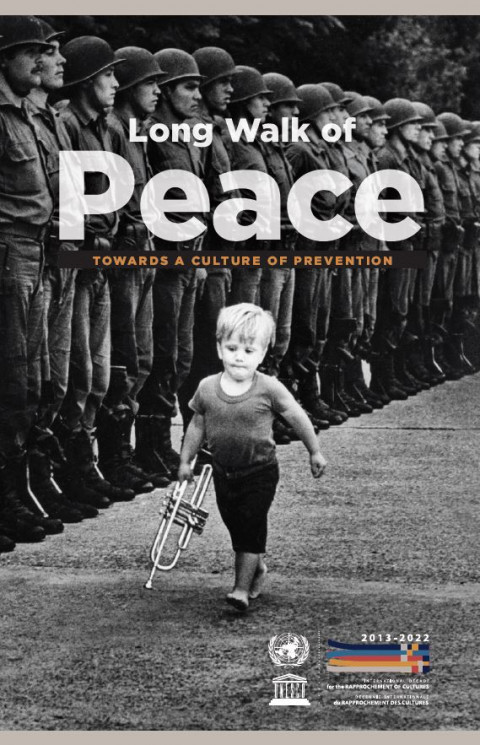 Long Walk of Peace: Towards a Culture of Prevention Année de publication: 2018 Auteur institutionnel: UNESCO How can the United Nations best address the imperatives of peace? Long Walk of Peace presents a fresh review of the conceptual and practical approaches to peace since the creation of the UN. Through an in-depth theoretical analysis, combined with a presentation of innovative practices across 32 UN bodies, it explores the long, steady haul towards peace and provides inspiration for the way forward.This book represents the collaborative efforts of scholars, experts and UN staff from a wide range of backgrounds. Long Walk of Peace, through its conceptual history and robust analysis, shows that peace is a dynamic process and a continuous journey of discovery. Thereby, the book provides a unique understanding of the emerging priorities of ‘sustaining peace’ and promoting ‘a culture of prevention’.As such it is an expression of UNESCO’s mandate to serve as a laboratory of ideas and thereby help advance the imperatives underscored by Agenda 2030.